Metformin Renal Dosing: What You Need to Know About Kidney Safety and Dosage
When you take metformin, a first-line oral medication for type 2 diabetes that lowers blood sugar by reducing liver glucose production and improving insulin sensitivity. It's one of the most prescribed drugs in the world, but it's not safe for everyone—especially if your kidneys aren't working well. That’s where renal dosing, the adjustment of medication dose based on kidney function, typically measured by eGFR comes in. Your kidneys clear metformin from your body. If they’re weak, the drug builds up, raising your risk of a rare but serious condition called lactic acidosis. That’s why doctors don’t just hand out metformin like candy—they check your kidney numbers first.
eGFR, estimated glomerular filtration rate, a blood test that estimates how well your kidneys filter waste is the key number they look at. If your eGFR is below 30, metformin is usually stopped. Between 30 and 45, they might lower your dose or avoid it entirely. Above 45, most people can take the standard dose. But it’s not just a one-time check. Kidney function can drop over time, especially with aging, high blood pressure, or diabetes itself. That’s why people on long-term metformin get their kidneys tested at least once a year—and sometimes more often.
It’s not just about the number, though. Some people think if their eGFR is okay, they’re fine. But other things matter too: dehydration, contrast dye from CT scans, heart failure, or even a bad infection can temporarily hurt kidney function. That’s why your doctor might pause metformin before a scan or during illness. It’s not because the drug is dangerous—it’s because your body’s ability to handle it changed.
You’ll also see metformin called by its brand name, Glucophage, the original brand version of metformin, now widely available as a generic. But whether it’s generic or brand, the rules for kidney safety stay the same. And if you’re switching from another diabetes drug—like an SGLT2 inhibitor or a GLP-1 agonist—you still need to think about your kidneys. Metformin isn’t the only drug that needs kidney checks, but it’s one of the most common ones that can cause trouble if ignored.
What you’ll find in the posts below isn’t just theory. Real stories. Real numbers. Real advice from people who’ve been there. You’ll see how kidney function affects dosing, what labs to track, when to ask your doctor for a change, and how other diabetes meds compare when metformin isn’t an option. No fluff. No guesswork. Just what you need to keep your blood sugar under control without risking your kidneys.
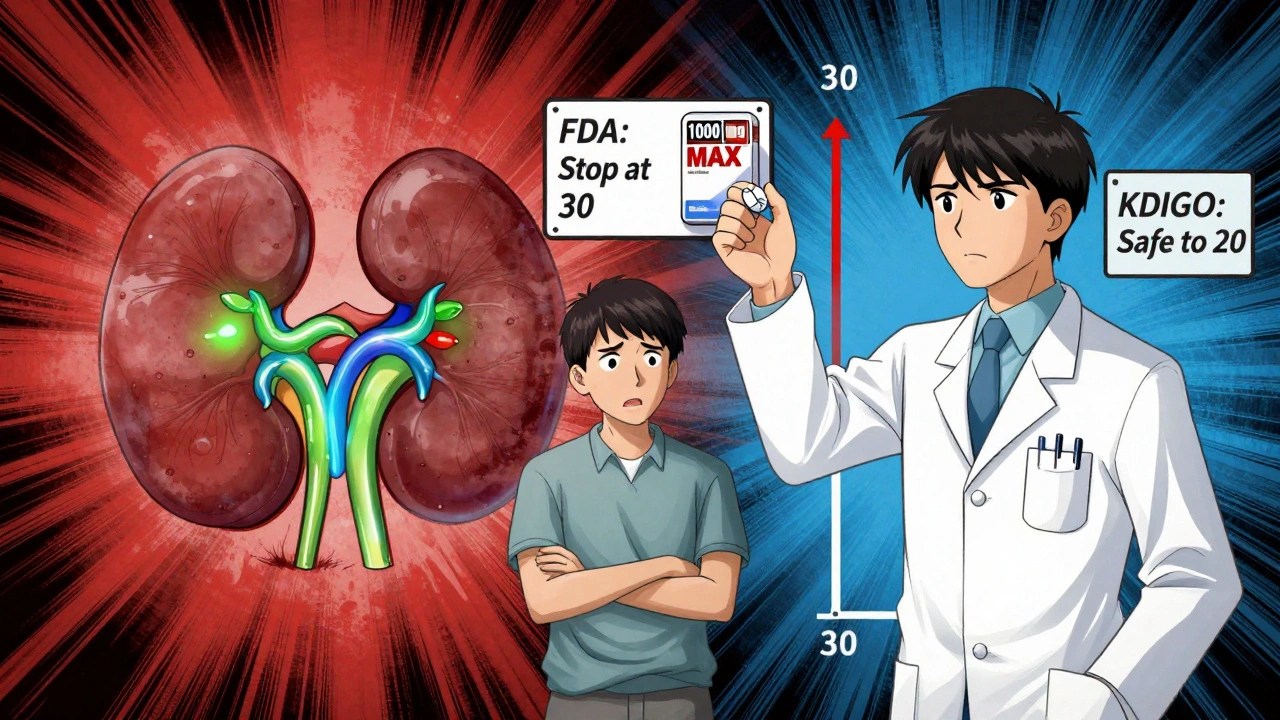
Renal Dosing for Metformin and SGLT2 Inhibitors: When to Adjust in 2025
Updated 2025 guidelines on when to adjust metformin and SGLT2 inhibitor doses in kidney disease. Know the eGFR thresholds, what to do when levels drop, and how to fight insurance denials.
DetailRelated Posts