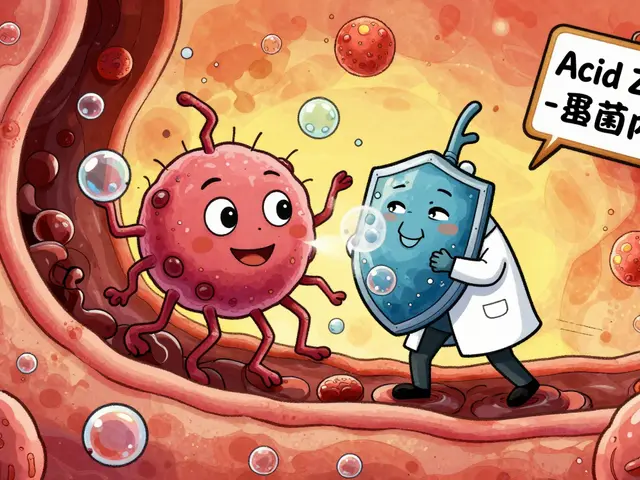
Expired Medications: What Happens When Pills Go Bad and How to Stay Safe
When you find an old bottle of pills in your medicine cabinet, you might wonder: expired medications, drugs that have passed their manufacturer’s labeled expiration date. Also known as out-of-date prescriptions, they’re not always harmless—even if they look fine. The date on the bottle isn’t just a suggestion. It’s based on real testing by drug makers to prove the medicine stays safe and effective up to that point. After that, it doesn’t suddenly turn toxic, but it can weaken. A weakened antibiotic might not kill your infection. An expired EpiPen could fail when you need it most. And some drugs, like nitroglycerin or insulin, can break down in ways that make them unsafe to use.
There’s more to this than just potency. medication disposal, the proper way to throw away old or unused drugs is just as important. Flushing pills down the toilet or tossing them in the trash without precautions can lead to environmental harm—or worse, someone else finding them. People have been poisoned by grabbing old prescriptions that looked like their own. And if you don’t remove personal info from the bottle, you’re risking identity theft. That’s why drug safety, the practice of using, storing, and discarding medications without harm includes both knowing when to stop using a drug and how to get rid of it right.
Counterfeit drugs are another hidden danger tied to expired or unsecured medications. When people can’t afford prescriptions or can’t find them locally, they turn to shady online sellers or unregulated pharmacies. That’s how fake versions of Ozempic, heart meds, or antibiotics end up in homes. These fakes might have no active ingredient, or worse—they could contain rat poison, fentanyl, or industrial chemicals. The counterfeit drugs, illegally made versions of real medications that mimic packaging but not safety are often sold as expired stock or "discounted" generics. The FDA and global health agencies seize millions of these pills every year. If your meds came from a website you didn’t recognize, or the price was way too low, you’re playing Russian roulette.
You don’t need to be a pharmacist to handle this right. Check your meds once a year. Toss anything that’s expired, discolored, smells weird, or has changed texture. Use a drug take-back program if your pharmacy or local government offers one. If not, mix pills with coffee grounds or cat litter, seal them in a bag, and throw them in the trash—never leave bottles open or labeled. And never share your meds, even if they’re "just expired" and you think they might help someone else. Your body is different. Their condition is different. And that old pill could do more harm than good.
Below, you’ll find real stories and practical guides on how to protect yourself when dealing with old prescriptions, where to get affordable alternatives if you can’t afford new ones, how to spot fake drugs, and what to do with your medicine cabinet before it becomes a hazard. This isn’t about fear—it’s about being smart with what’s in your home.
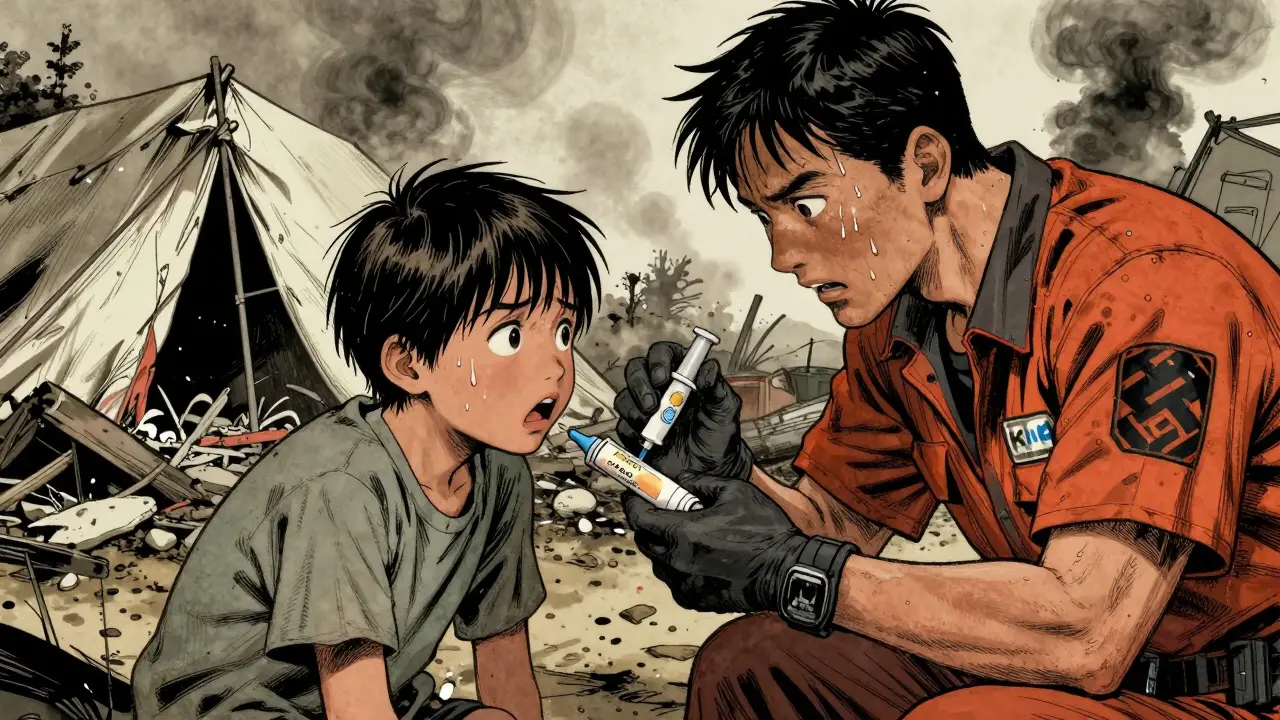
Emergency Use of Sub-Potent Expired Medications: When It Might Save a Life
Most expired medications don't turn dangerous - they just lose strength. Learn which ones are safe to use in emergencies, which to avoid, and how to make smart decisions when no alternatives exist.
Detail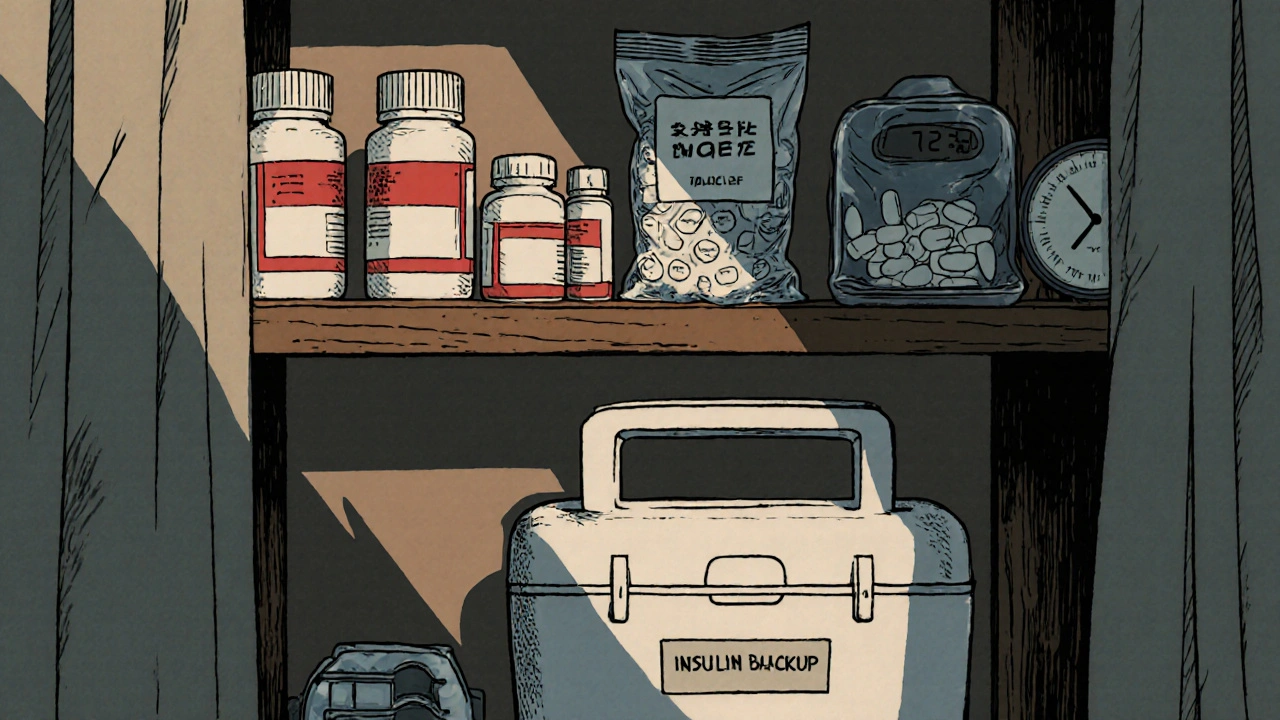
How to Store Emergency Kits to Maximize Medication Shelf Life
Learn how to store emergency medications properly to prevent spoilage and ensure they work when you need them most. Avoid common mistakes and use proven methods to extend shelf life during power outages and disasters.
DetailRelated Posts