
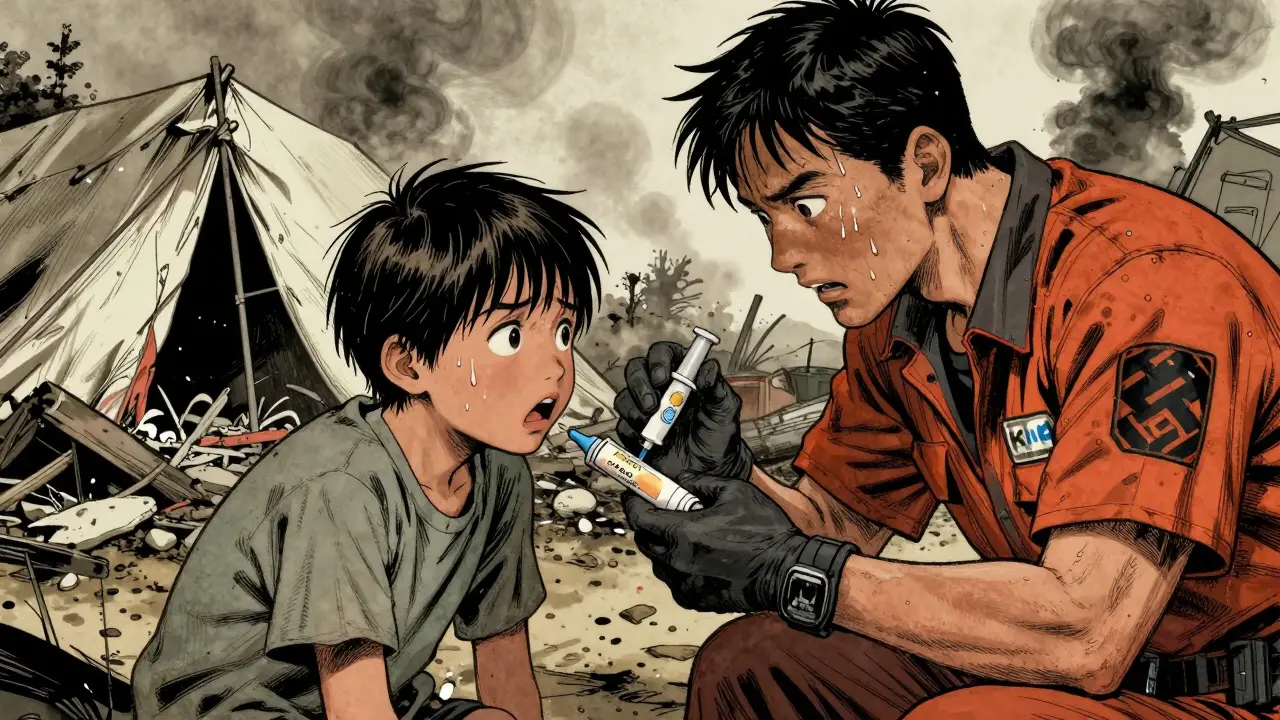
Most people toss out pills after the date on the bottle. But what if that’s the only medicine you’ve got - and someone’s life is on the line?
Expiration Dates Aren’t Kill Switches
The date printed on your medicine bottle doesn’t mean the drug suddenly turns toxic or useless. It’s a manufacturer’s guarantee - not a scientific deadline. The FDA requires companies to prove their drugs stay safe and effective up to that date under ideal storage conditions. But after that? It’s not black and white.Real-world data from the FDA’s Shelf Life Extension Program (SLEP), run since 1985 with the Department of Defense, shows that about 90% of medications retain at least 90% of their original potency for years after expiration. Some drugs tested 15 years past their label date still worked. Military stockpiles of antibiotics, painkillers, and heart meds have been used safely long after their printed dates. This isn’t theory. It’s tested fact.
So why do companies put expiration dates on bottles? Mostly for legal protection. If a drug fails after two years and someone gets hurt, the company wants to be able to say, “It was past its date.” They don’t test every pill for 10, 15, or 20 years - it’s expensive and unnecessary. So they pick a conservative number.
Not All Medicines Are Created Equal
Some expired drugs are low-risk. Others? A bad idea.Tablets and capsules - like ibuprofen, acetaminophen, or diphenhydramine - hold up well. University of Utah studies show these often keep 85-90% potency for 4-5 years after expiration if kept dry and cool. Even 10-year-old aspirin in a sealed bottle might still relieve a headache.
But liquids? They degrade faster. Insulin, epinephrine, and antibiotics in liquid form lose strength quickly - especially if left out of the fridge. Insulin can drop 20% potency per month at room temperature. Epinephrine auto-injectors lose about 25% potency each year after expiration. In an anaphylactic emergency, that could mean the difference between life and death.
Then there are the dangerous ones. Tetracycline antibiotics can break down into compounds that damage kidneys. Nitroglycerin, used for heart attacks, breaks down with light and heat - a yellowish or cloudy bottle means it’s likely useless. And seizure meds like phenytoin? A 15% drop in potency can triple seizure risk.
When It’s Okay - and When It’s Not
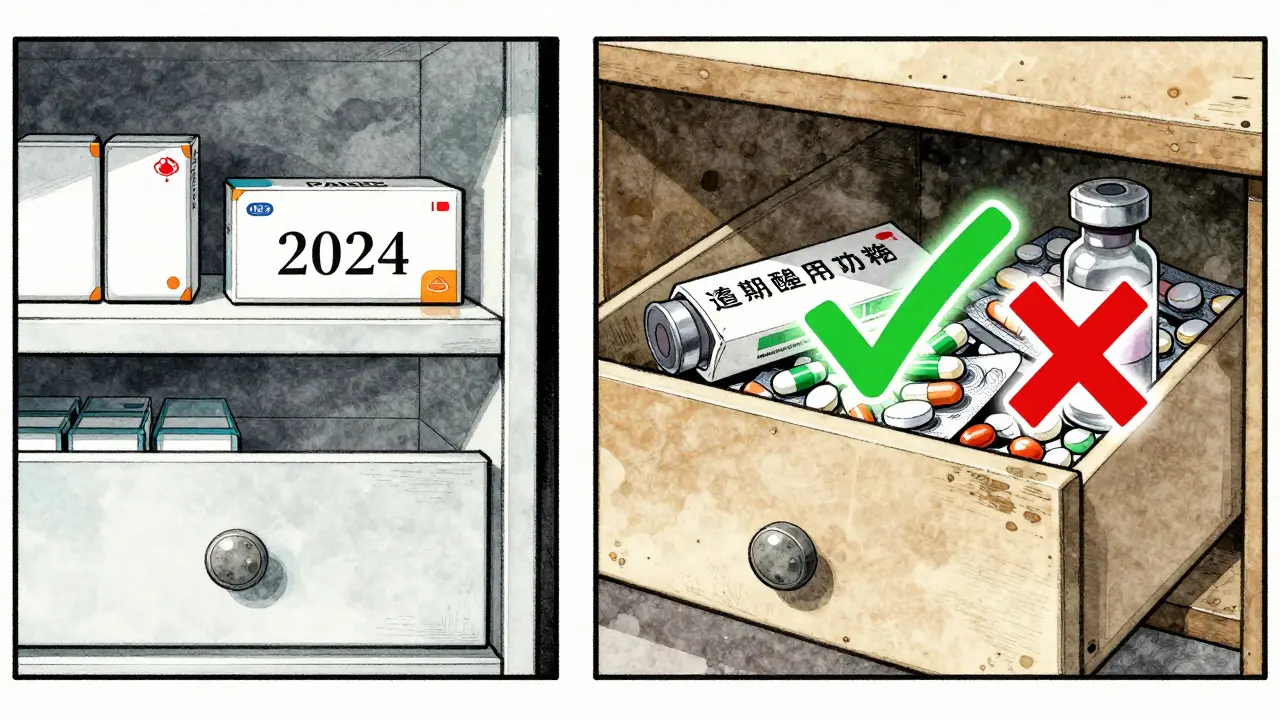
The American College of Emergency Physicians (ACEP) has clear guidance. They rank expired meds by risk:- Never use expired: Insulin, epinephrine, nitroglycerin, liquid antibiotics.
- Use only in true emergencies: Warfarin, seizure meds, thyroid meds.
- Generally safe: Acetaminophen, ibuprofen, antihistamines.
Here’s the reality: if you’re in a remote area after a disaster, your only painkiller is 3 years past its date, and you’re in agony - taking it is better than nothing. But if you’re at home with a full medicine cabinet and your blood thinner is expired? Don’t risk it.
EMS agencies in Denver and elsewhere have formal protocols. They only use expired meds when no other option exists and the condition is life-threatening. They check for discoloration, cloudiness, or particles. They log the storage temperature. They document every use. And they always transport the patient to a hospital afterward.
Real Stories - Successes and Failures
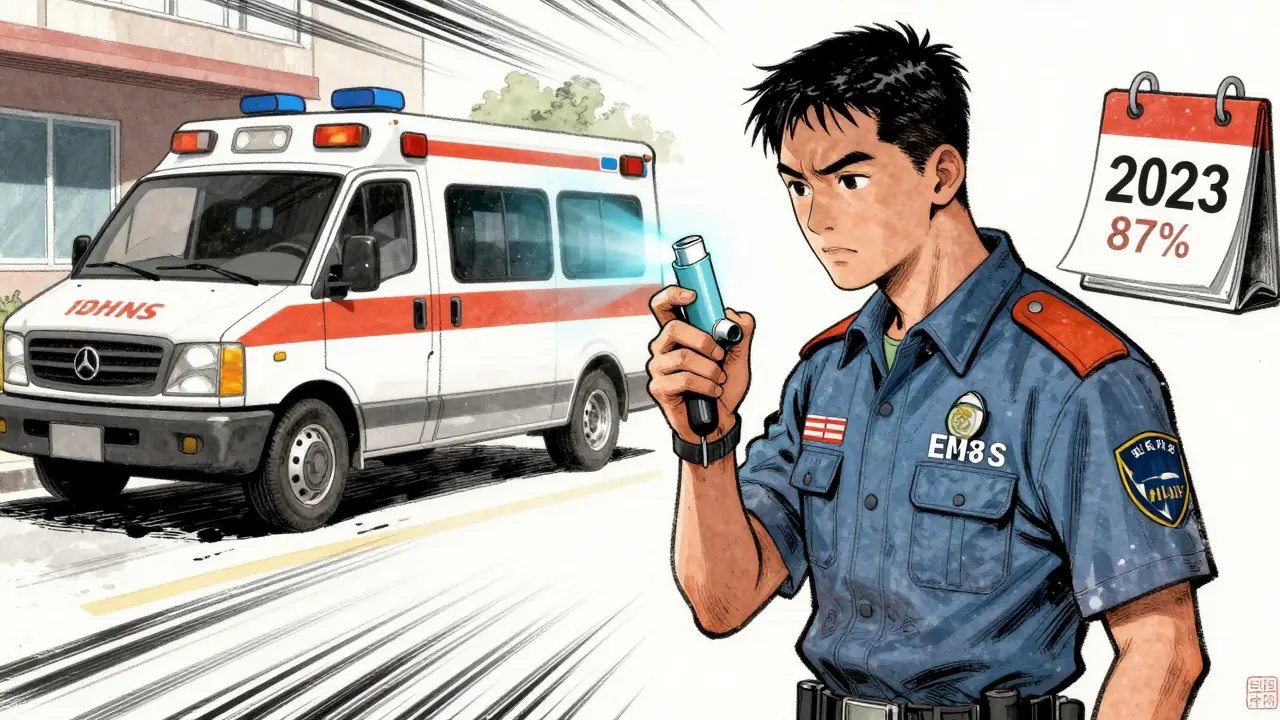
In 2023, a paramedic in Oregon used a 3-month-expired EpiPen on a child having a severe allergic reaction. The patient improved within minutes. They still went to the ER, as protocol requires. No harm done.But in another case, a 6-month-expired albuterol inhaler failed to open an asthmatic’s airway. The patient went into respiratory failure and needed intubation. The difference? The inhaler had been stored in a hot car for months. The drug had degraded beyond usable levels.
Surveys show 74% of Americans keep meds past their expiration date. Over 40% admit using them in emergencies - mostly for headaches or allergies. But only 12% of those cases involve rescue inhalers or epinephrine. Most people are smart enough to avoid the high-risk stuff.
What You Can Do Now
You don’t need to stockpile expired drugs. But you can prepare.- Store meds properly: Keep them in a cool, dry place - not the bathroom or a hot car. A bedroom drawer is fine.
- Check your emergency kit: Replace epinephrine and insulin every year. For painkillers and antihistamines, check the date every 2 years.
- Know your meds: If you’re on warfarin, thyroid meds, or seizure drugs, don’t use expired versions. Period.
- Don’t guess: If a pill looks cracked, smells odd, or has changed color - throw it out.
During the 2021-2023 drug shortages, hospitals and EMS teams started using extended expiration dates for critical meds like albuterol and antibiotics. In Denver, 1,200 bronchodilators were used 90 days past their date - with zero adverse events. That’s not luck. That’s protocol.
The Bigger Picture
Drug shortages are getting worse. In 2022, the FDA recorded 312 shortages - up 27% from the year before. Injectable drugs, like those used in ERs and ICUs, make up two-thirds of the problem. The cost? Over $234 million in extra healthcare spending in the U.S. alone.That’s why the FDA is now drafting new guidance to allow temporary extensions for 12 life-saving drugs during emergencies. The Department of Defense has expanded its shelf-life program to cover 35 drug classes. Portable devices that test drug potency with a laser (Raman spectroscopy) are being tested in the field - soon, EMS crews might be able to scan a vial and know if it’s still good.
But here’s the bottom line: expiration dates are a safety net, not a trap. If you’re in a crisis and have no other choice, a slightly weakened pill is better than no pill at all - as long as you know which drugs are safe to stretch, and which are not.
Don’t use expired meds because it’s convenient. Don’t hoard them. But don’t panic and toss out a bottle of ibuprofen just because the date passed. Use your head. Know the risks. And when it matters - make the call.
Is it dangerous to take expired medication?
Most expired medications don’t become toxic - they just lose strength. Very few drugs turn harmful after expiration. The real danger is reduced effectiveness. For example, an expired antibiotic might not fully kill an infection, leading to worse illness or antibiotic resistance. But for pain relievers like ibuprofen or acetaminophen, taking a pill 2-5 years past its date is unlikely to cause harm - it might just not work as well.
Which expired medications are safest to use in an emergency?
Solid oral medications like ibuprofen, acetaminophen, diphenhydramine (Benadryl), and aspirin are generally the safest to use after expiration, especially if stored properly. Studies show they often retain 85-90% potency for 4-5 years past the expiration date. Antihistamines and some allergy meds also hold up well. Avoid liquids, insulin, epinephrine, nitroglycerin, and antibiotics - these degrade faster and carry higher risks.
Can expired epinephrine still work in an allergic reaction?
Yes - sometimes. Studies show that epinephrine auto-injectors up to 12 months past expiration can still retain enough potency to treat anaphylaxis in about 78% of cases. But potency drops by about 25% per year. If you have no other option and someone is having a severe allergic reaction, using an expired EpiPen is better than doing nothing. Still, you must get to a hospital immediately afterward. Never rely on an expired injector as your primary defense.
How do I know if an expired medicine is still good?
Look for changes: discoloration, cracking, crumbling, unusual odor, or cloudiness in liquids. If a pill looks normal and you’ve stored it in a cool, dry place, it’s likely still effective - especially for pain relievers. But if it’s a liquid, injection, or antibiotic, and it looks off, don’t use it. Temperature matters too. If the bottle was left in a hot car or bathroom, even a fresh-looking pill might be degraded.
Should I keep expired medications in my home emergency kit?
Only if you’re prepared to use them responsibly. Include non-critical meds like ibuprofen or antihistamines - they’re low-risk and useful. But replace epinephrine, insulin, and seizure meds on schedule. If you’re using expired meds in an emergency, document the date, condition, and outcome. Never use them as a regular substitute. Your best strategy is to rotate your kit every 1-2 years and replace anything near expiration.
Are pharmacies or hospitals allowed to use expired medications?
In normal conditions, no - they’re bound by strict regulations. But during public health emergencies or documented drug shortages, hospitals and EMS agencies can apply for exceptions. The FDA allows temporary extensions under Emergency Use Authorization or internal protocols, like those used in Denver and by the Department of Defense. These require strict documentation, visual inspection, and approval by a medical director. It’s not legal to use expired meds casually - only in life-threatening situations with no alternatives.


Geri Rogers
February 2, 2026 AT 21:25OMG YES. I kept my mom’s expired ibuprofen after her stroke when we were stranded in a snowstorm-no pharmacy open, no way out. Took two pills. She slept through the night. No side effects. 🙌
Expiration dates are corporate fear-mongering. The FDA’s own data proves it. 🤷♀️
Prajwal Manjunath Shanthappa
February 4, 2026 AT 04:04How quaint. You're casually endorsing pharmacological negligence under the guise of 'pragmatism.' The FDA's Shelf Life Extension Program is a military logistics initiative-not a public health endorsement. Your anecdotal 'heroic' pill-taking is a textbook case of confirmation bias masquerading as common sense. 🤦♂️
Alex LaVey
February 4, 2026 AT 06:56Really appreciate this breakdown. I’ve been telling my grandma for years not to toss her old Tylenol-she’s on a fixed income and it’s not like she’s got a CVS on every corner. 🌍
Also, props to the EMS teams doing the right thing with protocols. Real heroes.
Let’s stop shaming people who use common sense in crises. We’re all just trying to survive.
And yes, I’ve got my EpiPen on a yearly rotation. But if it’s the only thing between my kid and anaphylaxis? I’m not letting a date stamp decide that.
❤️
caroline hernandez
February 4, 2026 AT 09:05From a clinical pharmacy standpoint: the degradation kinetics of solid oral dosage forms are well-documented. Stability data for NSAIDs and antihistamines under ambient storage conditions (25°C/60% RH) show >90% potency retention up to 5 years post-expiration. Liquid formulations, however, exhibit first-order decay-especially with pH instability (e.g., epinephrine).
Bottom line: pharmacokinetics > marketing dates. But document. Inspect. Transport. Always.
Also-storage matters more than the date. A pill in a humid bathroom? Gone. One in a drawer? Still good.
Knowledge > panic.
🩺
Jhoantan Moreira
February 4, 2026 AT 23:35Really glad someone’s talking about this without fear-mongering. I’m from the UK and we’ve got a national shortage of antibiotics right now-people are literally reusing old prescriptions. Not ideal, but it’s what’s happening.
My uncle used a 4-year-expired aspirin during a heart attack in rural Nepal. He made it to the hospital. He’s alive today.
Let’s stop pretending expiration dates are gospel. They’re guidelines. With exceptions.
🙏
And yes, I check my kit every 6 months. No drama. Just responsibility.
Joseph Cooksey
February 6, 2026 AT 20:37Let’s be real here-this whole ‘expired meds are fine’ narrative is a dangerous fantasy peddled by people who think ‘natural’ means ‘safe’ and ‘corporate’ means ‘evil.’
Do you know how many people end up in the ER because they took expired antibiotics and developed resistant infections? Do you know how many kids nearly died because their ‘just a little expired’ albuterol didn’t open their airways? And then they blame the hospital for ‘not doing enough’?
It’s not about fear. It’s about science. It’s about liability. It’s about the fact that your ‘emergency’ is someone else’s nightmare.
And no, ‘I’ve done it before’ doesn’t make it right. That’s how you become a statistic.
Don’t be the reason someone’s kid ends up on a ventilator because you were too lazy to replace a $20 inhaler.
💀
Justin Fauth
February 7, 2026 AT 13:44Y’all are out here debating expired pills like it’s a TED Talk. Meanwhile, Big Pharma is laughing all the way to the bank. They make billions off you throwing out perfectly good meds every year.
My cousin in Arizona used a 7-year-old Benadryl during a wildfire evacuation. Saved his whole family from swelling. No hospital visit. No lawsuit. Just common sense.
They want you scared. They want you buying new bottles every 12 months. Don’t fall for it.
USA. Fight back. 💪🇺🇸
Sherman Lee
February 8, 2026 AT 16:52They’re hiding the truth. The FDA doesn’t test drugs past expiration because they’re in bed with the pharma giants. The real data? It’s all classified. Why do you think the DoD has stockpiles of 20-year-old antibiotics? Because they know.
And the laser scanners? That’s just the beginning. Soon they’ll be able to ‘read’ your pills with your phone. They don’t want you to know that.
They want you dependent. Buying. Consuming.
They’re poisoning us slowly. And this? This is just one piece of the puzzle.
👁️🗨️
Coy Huffman
February 10, 2026 AT 13:40man i used a 10 year old aspirin during a mountain hike when my head was splitting. worked fine. didn't die. didn't even feel weird.
weird how we treat medicine like milk that goes bad after a date. it's not like it turns into poison. it just... doesn't work as well.
maybe we should stop acting like our bodies are made of glass. 🤷♂️
Amit Jain
February 12, 2026 AT 12:29Simple truth: If you have pain, and you have pills that look normal, take them. If you have allergy, take antihistamine. If you have EpiPen that is expired, use it-then go to hospital.
Don’t overthink. Don’t waste. Stay alive.
That’s it.
Keith Harris
February 13, 2026 AT 01:33Oh wow, so now we’re celebrating pill hoarding as some kind of revolutionary act? 🙄
You’re not a hero-you’re a liability. You think you’re saving money? You’re just creating a public health time bomb.
And don’t even get me started on the ‘I used it before’ crowd. That’s not wisdom, that’s dumb luck. You got lucky once. Doesn’t mean you’re right.
Next you’ll be saying it’s fine to drink expired milk because ‘it didn’t kill me last time.’
Grow up.
Kunal Kaushik
February 14, 2026 AT 14:05My uncle’s a paramedic in Mumbai. He told me they use expired meds all the time in slums during monsoons-no choice. No ER. No pharmacy.
He said: ‘We check the color, smell, texture. If it looks okay, we give it. Then we carry them to the hospital.’
Not ideal. But human.
❤️
Mandy Vodak-Marotta
February 16, 2026 AT 03:31Okay but can we just talk about how ridiculous it is that we treat medicine like a yogurt carton? Like, I’ve had ibuprofen that expired in 2018 and it still works fine. I keep it in a drawer. Not the bathroom. Not the car. Just... a drawer.
And yet, I’m supposed to throw it out and buy a new one every two years? For what? So the pharmaceutical industry can make another $5? I’m not buying it.
Also, my grandma used expired thyroid meds for 8 months during the pandemic and she didn’t keel over. She’s fine. So maybe-just maybe-some of this is overblown?
Not saying go wild. But don’t panic. Use your brain. And maybe stop buying into the ‘replace it or die’ marketing.
Also, I’ve got a whole drawer of expired meds. I’m not ashamed. I’m prepared.
✌️
Nathan King
February 17, 2026 AT 14:20While the anecdotal evidence presented is compelling, it remains insufficient to override the regulatory framework established by the FDA and other international bodies. The absence of documented toxicity does not equate to therapeutic equivalence. Pharmacokinetic variability, bioavailability degradation, and patient-specific metabolic factors introduce unacceptable risk in uncontrolled settings. One must also consider the ethical and legal ramifications of deviating from approved labeling in clinical practice. The argument for pragmatism must be weighed against the principle of non-maleficence.
-N. King, MD
Harriot Rockey
February 18, 2026 AT 15:16Thank you for this. I’m a nurse and I’ve seen both sides. I’ve seen people die because their expired insulin didn’t work. I’ve also seen people get relief from 5-year-old Tylenol when they had no other option.
It’s not about being reckless. It’s about being informed.
So here’s my rule: If it’s for pain, allergies, or a headache? Maybe. If it’s for your heart, lungs, or allergies that could kill you? No. Replace it.
And if you’re gonna use it? Check it. Smell it. Look at it. And go to the hospital anyway.
We’re not here to scare you. We’re here to help you stay alive.
❤️🩺