
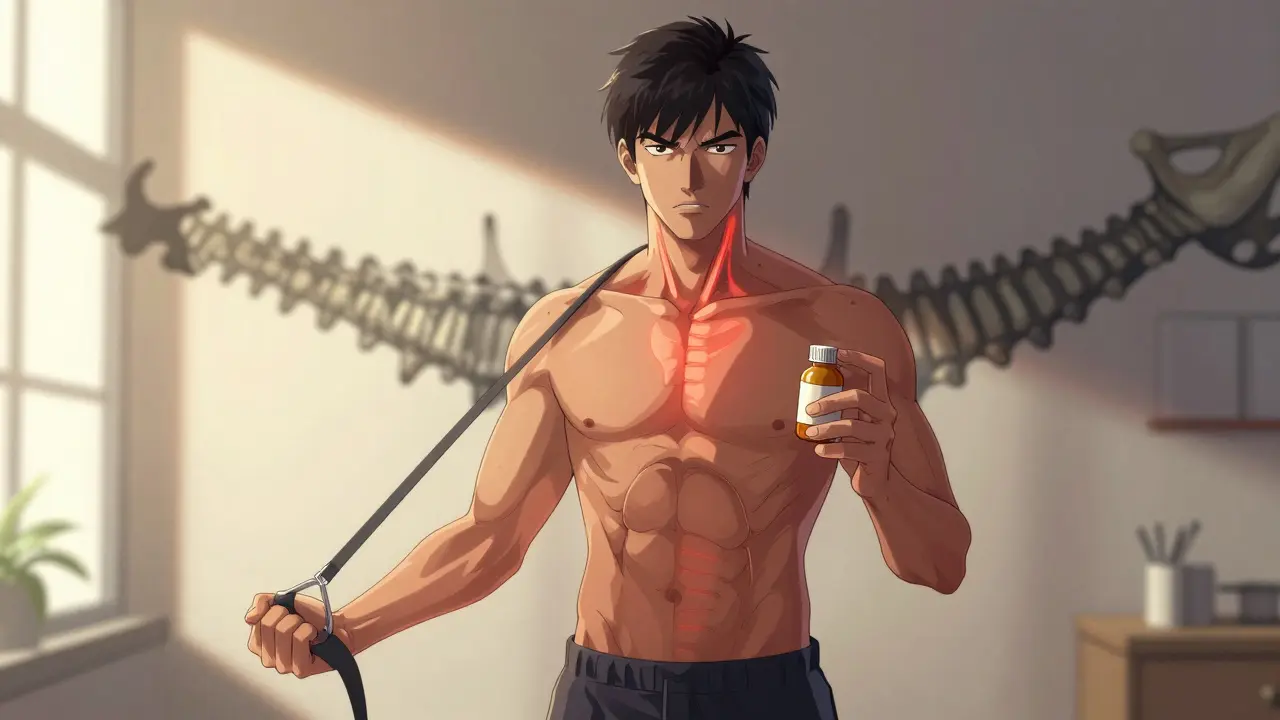
When your back pain doesn’t go away with rest, gets worse at night, and makes it hard to take a deep breath in the morning, it’s not just a bad posture or a pulled muscle. For more than 2.7 million people in the U.S., this is the daily reality of ankylosing spondylitis - a chronic autoimmune disease that attacks the spine and sacroiliac joints, slowly fusing vertebrae together and stealing mobility. Unlike typical back pain that fades with time, AS is relentless. Left unchecked, it can turn a flexible spine into a rigid, bamboo-like structure. But here’s the truth: you don’t have to accept that fate.
What Ankylosing Spondylitis Really Does to Your Spine
Ankylosing spondylitis isn’t just arthritis in the back. It’s an inflammatory storm that targets the entheses - the spots where ligaments and tendons meet bone. The sacroiliac joints, where your spine connects to your pelvis, are usually the first to flare. Over time, the body tries to heal the damage by laying down new bone. But instead of fixing the problem, this creates bony bridges called syndesmophytes between vertebrae. Eventually, these bridges fuse, locking your spine in place.
That’s what doctors call “bamboo spine.” It doesn’t happen overnight. In 30-40% of cases, full fusion develops within 10 to 20 years after symptoms start. The damage is irreversible once it’s done. But the inflammation that causes it? That’s treatable.
Most people with AS notice their first symptoms between ages 17 and 45. The pain creeps in slowly - dull, deep, and constant. It wakes you up between 3 and 6 a.m. You feel stiff for more than 30 minutes after waking. Movement helps. Rest makes it worse. That’s the opposite of mechanical back pain. If you’ve been told it’s just “aging” or “stress,” but your pain won’t quit, you might have AS.
Why Diagnosis Takes So Long - And What to Do About It
On average, people see four doctors and wait over three years before getting a correct AS diagnosis. Why? Because early symptoms look like every other kind of back pain. Many are misdiagnosed with herniated discs, sciatica, or even depression.
Doctors use three tools to spot AS: your symptoms, blood tests, and imaging. The HLA-B27 gene is a strong clue - present in up to 96% of Caucasian patients with AS, though it’s not a guarantee. A negative test doesn’t rule it out. Blood tests for inflammation (like CRP and ESR) can be normal even when the disease is active.
That’s where MRI comes in. Unlike X-rays, which only show bone changes after they’ve happened, MRI can detect inflammation in the sacroiliac joints years before fusion begins. The 2022 ASAS-EULAR guidelines now recommend MRI as the first imaging step for anyone under 45 with persistent inflammatory back pain. If your doctor won’t order one, ask why.
The Two Pillars of Treatment: Medicine and Movement
There’s no cure for AS - but there’s control. And it comes down to two non-negotiables: medication and movement.
NSAIDs like naproxen or celecoxib are the first-line treatment. Studies show they don’t just reduce pain - they can cut radiographic progression by half over two years. If NSAIDs aren’t enough, biologics step in. TNF inhibitors (like adalimumab or etanercept) and IL-17 inhibitors (like secukinumab) block the specific proteins driving inflammation. Clinical trials show 40-60% of patients achieve a 40% improvement in symptoms within 12 weeks.
But here’s what most people don’t realize: medicine alone won’t save your spine. Physical therapy is just as critical. A 2023 study from the Cleveland Clinic found that patients who stuck with daily exercise improved their spinal mobility by 25-30% in just six months. That’s not a small gain - it’s the difference between tying your shoes and needing help.
Proven Mobility Strategies That Actually Work
Not all exercises help. Yoga might feel good, but if it’s all forward bends, it’s making your spine stiffer. AS demands movement that fights the natural tendency to hunch forward.
Here’s what works, backed by research:
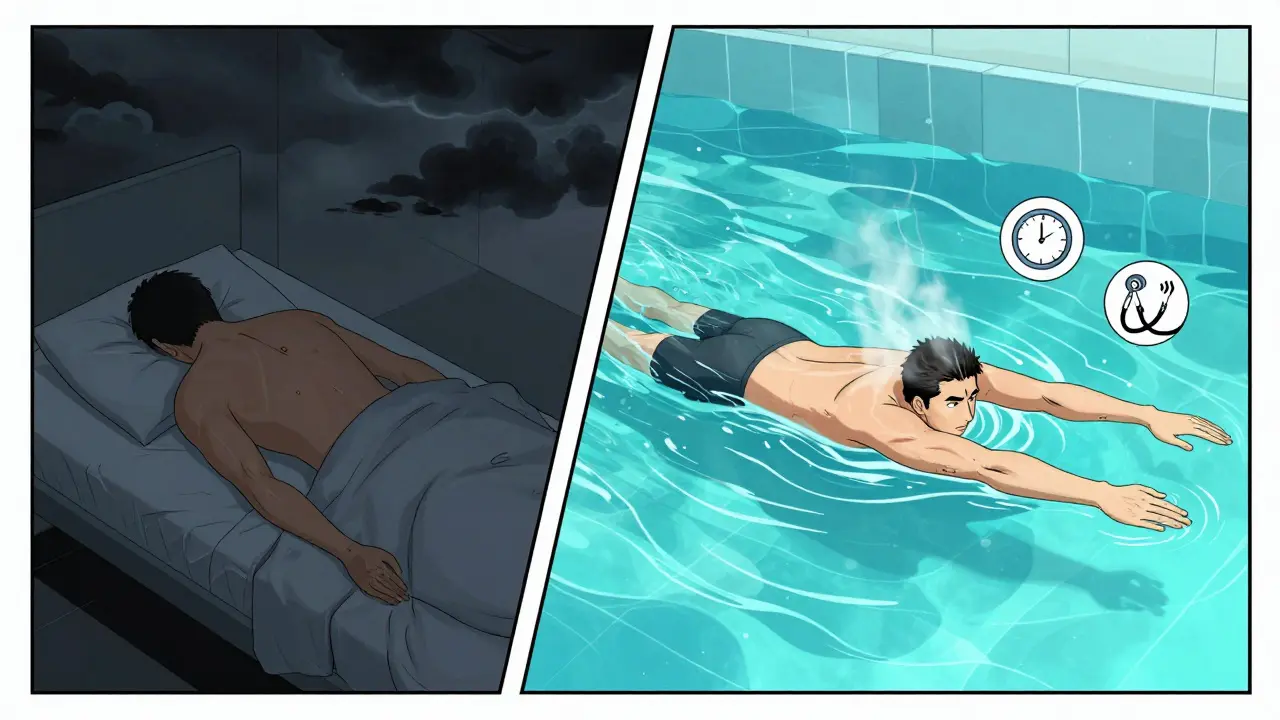
- Spinal extension exercises: Lie on your stomach and lift your chest off the floor. Do 10 reps daily. This counters the forward curve that AS creates.
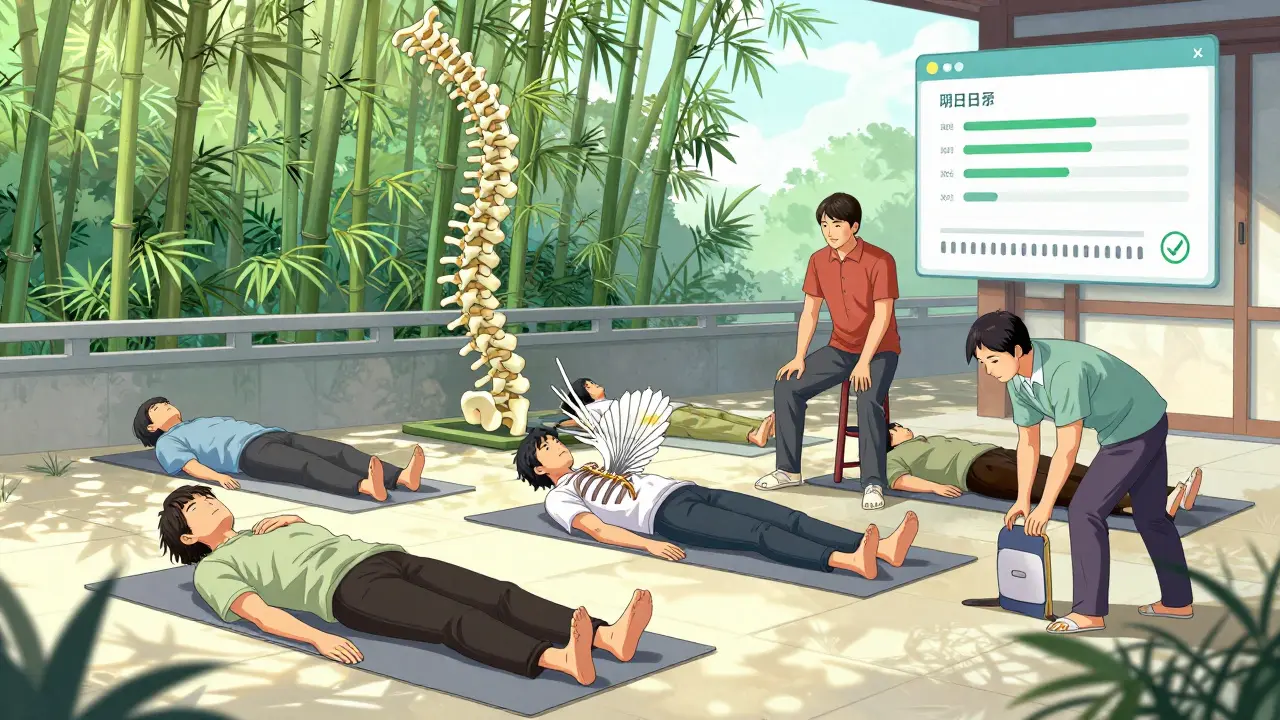
- Deep breathing: Inhale slowly through your nose, expanding your ribcage. Hold for 3 seconds. Exhale fully. Do 10 cycles. This keeps your chest flexible - crucial because AS can stiffen the ribs too.
- Aquatic therapy: Swimming or water aerobics reduces joint stress while allowing full range of motion. One patient reported cutting morning stiffness from 90 minutes to 20 minutes after just three months of daily swimming.
- Posture training: Sit with your back straight, shoulders back. Use a lumbar roll. Sleep on a firm mattress without a pillow under your head. These small changes reduce pain scores by 35% in clinical trials.
Start slow. If you’re stiff in the morning, do five minutes of gentle movements in bed before getting up. Apply heat for 20 minutes before exercising - it loosens stiff joints. Use apps or digital trackers to log your routine. Adherence jumps from 45% to 78% when people track progress.
What Doesn’t Work - And Why
Some “helpful” advice for AS is actually harmful. Avoid these myths:
- “Rest will help.” Rest makes stiffness worse. Movement is medicine.
- “Stretching is enough.” Passive stretching doesn’t build strength. You need active, resistance-based movement.
- “I’ll start exercising when I feel better.” You won’t feel better until you start moving. It’s counterintuitive, but true.
- “Biologics are dangerous.” Yes, they increase infection risk slightly. But the risk of permanent disability from untreated AS is far higher.
Also, don’t ignore extra-articular symptoms. About one in three AS patients develop uveitis - sudden eye redness, pain, and blurred vision. That’s a medical emergency. If you have it, see an ophthalmologist immediately.
The Real Cost - And How to Manage It
Biologics cost $5,000 to $6,000 a month without insurance. That’s why many patients delay treatment. But here’s the math: untreated AS leads to lost workdays, early retirement, and disability claims. The 2022 National Health Interview Survey found 42% of AS patients need workplace accommodations. One missed promotion or job change can cost more than a year of medication.
Check if you qualify for patient assistance programs. Many drugmakers offer free or discounted biologics for low-income patients. Nonprofits like the Spondylitis Association of America provide free exercise videos, support groups, and guidance on insurance appeals.
What’s Next in AS Treatment
Science is moving fast. In 2023, the FDA approved upadacitinib (Rinvoq), a JAK inhibitor that showed a 45% improvement rate in AS symptoms - faster than some TNF blockers. Researchers are now testing whether combining early biologics with high-intensity exercise can stop fusion before it starts. The STABILITY trial, tracking 500 patients across 35 U.S. centers, is looking at whether 150 minutes a week of moderate-to-vigorous activity can preserve spinal flexibility better than current guidelines.
One thing is clear: the future of AS care isn’t just drugs. It’s digital tools - apps that remind you to stretch, wearables that track posture, and virtual PT sessions that keep you accountable.
You’re Not Alone - And You’re Not Helpless
AS doesn’t define you. But how you respond to it? That does.
People who stick with daily movement, take their meds as prescribed, and speak up when they’re not heard live full, active lives. One patient documented on HealthUnlocked how a personalized physical therapy plan kept his spine flexible for 15 years - even with the HLA-B27 gene. Another switched from sitting all day to standing desk and walking meetings. His productivity didn’t drop. His pain did.
If you’ve been told it’s “just back pain,” get a second opinion. If you’re scared of biologics, talk to a rheumatologist who specializes in AS. If you think exercise is too hard, start with five minutes of breathing in bed. Progress isn’t about perfection. It’s about persistence.
Your spine doesn’t have to become a prison. With the right strategy, you can keep it moving - for decades to come.
Can ankylosing spondylitis be cured?
No, there is no cure for ankylosing spondylitis. But with early diagnosis and consistent treatment - including medication and daily exercise - most people can control inflammation, prevent spinal fusion, and maintain mobility for life. The goal isn’t to eliminate the disease, but to stop it from controlling your life.
Is ankylosing spondylitis the same as rheumatoid arthritis?
No. Rheumatoid arthritis (RA) is a seropositive disease - it shows up in blood tests through rheumatoid factor or anti-CCP antibodies. AS is seronegative, meaning those markers are absent. RA typically attacks small joints like fingers and wrists, while AS targets the spine and sacroiliac joints. RA causes joint erosion; AS causes bone fusion. The treatments overlap, but the disease mechanisms are different.
Can I still exercise during a flare-up?
Yes - but modify it. During flares, avoid high-impact or intense movements. Focus on gentle range-of-motion exercises: slow neck rotations, shoulder rolls, deep breathing, and seated stretches. Heat therapy before movement helps. Swimming in warm water is ideal. The key is to keep moving, even if it’s at 30% capacity. Stopping completely makes stiffness worse and recovery longer.
Does the HLA-B27 gene mean I will definitely get AS?
No. While 88-96% of Caucasian AS patients carry HLA-B27, only about 1-5% of people with the gene actually develop the disease. Genetics load the gun, but environment pulls the trigger. Infections, gut health, and lifestyle factors play major roles. A positive gene test supports diagnosis, but it doesn’t predict your future.
What happens if I stop taking my medication?
Inflammation returns quickly - often within weeks. Without ongoing treatment, the immune system resumes attacking your spine and joints. Studies show that stopping biologics leads to symptom flare-ups in over 70% of patients within six months. More importantly, uncontrolled inflammation increases the risk of permanent bone fusion. Medication isn’t optional if you want to keep your spine mobile.
Are there natural remedies that help AS?
Some people find relief from heat therapy, omega-3 fatty acids, or turmeric for mild inflammation. But no supplement stops disease progression. The only proven, science-backed methods are NSAIDs, biologics, and structured exercise. Natural remedies can complement treatment, but they’re not substitutes. Relying on them alone risks irreversible spinal damage.

Christina Widodo
January 10, 2026 AT 20:18I never realized how much my morning stiffness was AS until I read this. I used to think it was just aging, but now I know it’s inflammation. Started doing those spine extensions in bed and wow - 10 minutes of movement changed my whole day. Still stiff, but not frozen anymore.
Also, the part about MRI being the first step? My doctor said it was ‘too expensive’ - I pushed back and got it. Turned out I had early sacroiliitis. This post saved me years of misdiagnosis.
Rinky Tandon
January 11, 2026 AT 07:16Let me be blunt - most people with AS are just lazy and refuse to move. You think stretching helps? It doesn’t. You need STRUCTURED, HIGH-INTENSITY, RESISTANCE-BASED TRAINING. No yoga. No ‘gentle’ nonsense. If you’re not deadlifting 3x a week, you’re letting your spine rot. The science is clear: mechanical loading inhibits syndesmophyte formation. Stop pretending rest is medicine. It’s not. It’s surrender.
Ben Kono
January 11, 2026 AT 16:31Biologics cost a fortune and I’ve been on adalimumab for 4 years. It works but my insurance keeps denying refills. I had to go to 3 different rheum docs before one actually listened. Now I’m on a patient assistance program but it’s a nightmare. You think this is medical care? It’s a bureaucratic maze with a side of guilt trips.
Also the exercise stuff is real. I do 20 mins of water aerobics every morning. If I skip it I’m a zombie. No exaggeration.
Darryl Perry
January 13, 2026 AT 05:58There is no cure. There is only management. The data is unequivocal. NSAIDs reduce radiographic progression by 50%. Biologics suppress TNF-alpha and IL-17. Exercise preserves spinal mobility. These are not opinions. These are evidence-based interventions. If you are not following this protocol, you are choosing disability. Period.
Amanda Eichstaedt
January 14, 2026 AT 17:31I’ve lived with AS for 12 years. I used to think I was broken. Then I found a physical therapist who didn’t treat me like a patient but like a person who still wanted to hike, dance, and carry groceries. I started with 5 minutes of breathing in bed. Now I swim three times a week. I don’t have a perfect spine - but I have a life.
And yes, the HLA-B27 test? Mine was positive. But I didn’t get AS until I had a bad gut infection and stopped sleeping. It’s not just genes. It’s your whole system.
Also - please stop telling people to ‘just exercise more.’ That’s like telling someone with depression to ‘just be happy.’ It’s not helpful. It’s cruel.
Jose Mecanico
January 15, 2026 AT 18:31I’ve been on secukinumab for a year. My CRP dropped from 18 to 2. I still do the belly lifts and deep breathing every morning. I don’t post about it online because I don’t need applause. I just need to move. And I do.
Also - the part about uveitis? I had it. Went blind in one eye for 3 days. Never ignored eye pain again.
Eileen Reilly
January 16, 2026 AT 02:32Okay but like… why are we all pretending biologics are the answer? They’re expensive, they make you immunocompromised, and half the people I know who took them got shingles or worse. And the exercise stuff? Sure, it helps - but only if you’re young and already fit. What about the 50-year-old factory worker with two kids and a 60-hour week? You think they got time to do water aerobics?
Also I tried the spine lifts. Broke my back. Literally. Just kidding. But I did get worse for two weeks. So maybe don’t just copy-paste advice from some blog. This stuff is personal.
Cecelia Alta
January 16, 2026 AT 08:14Look I get it. You want to be the hero who beat AS with yoga and deep breathing. But let’s be real - most of us aren’t 25-year-old fitness influencers with flexible spines and unlimited time. I’m 47, I work nights, I have two teens, and my spine feels like a rusted hinge. I tried everything. The biologics made me nauseous. The PT made me cry. The swimming? I drowned in my own shame because I couldn’t even do a lap without gasping.
And now you’re telling me to do 150 minutes a week of ‘moderate-to-vigorous activity’? Like I’m some kind of Olympic athlete? No. I’m just trying to get out of bed without screaming. This post is full of good info - but it’s written like it’s for people who already have privilege. For the rest of us? We’re just surviving.
And don’t even get me started on the ‘natural remedies are useless’ line. My turmeric tea and infrared sauna didn’t cure me - but they kept me from quitting. And sometimes that’s enough.
steve ker
January 17, 2026 AT 05:20AS is a Western disease. Too much sitting. Too much sugar. Too much medical industrial complex selling drugs. In Nigeria we don’t have biologics. We have movement. We have sun. We have community. We don’t need your expensive pills. Just stand up. Walk. Lift. Breathe. That’s all. Your spine isn’t broken. Your lifestyle is.
Audu ikhlas
January 17, 2026 AT 06:11Yall need to stop blaming the system. This is a spiritual issue. AS is punishment for weak will. I’ve seen people in my village walk 10 miles to market with heavy loads. No pain. No meds. No MRI. Just discipline. You want to fix your spine? Stop being soft. Stop asking for help. Stop waiting for a pill. Move. Now. Or accept your fate.
Sonal Guha
January 18, 2026 AT 10:36TL;DR: Move or die. Medication helps. But only if you’re rich. Exercise works. But only if you’re young. MRI is gold standard. But only if your insurance cares. This post is 90% true. The rest is hope sold as science. I’ve been here 15 years. Still standing. Still stiff. Still angry. Still alive.