

St. John’s Wort might seem like a harmless natural fix for low mood. After all, it’s been used for centuries, sold on drugstore shelves, and even endorsed by some holistic practitioners. But here’s the truth most people don’t tell you: St. John’s Wort isn’t just another supplement. It’s a powerful biological switch that can turn off the effectiveness of life-saving prescription drugs - often without you noticing until it’s too late.
How St. John’s Wort Changes How Your Body Handles Medications
St. John’s Wort doesn’t just sit there. It actively rewires your body’s ability to process drugs. The key player is hyperforin, a compound in the plant that turns on a genetic switch called the pregnane-X-receptor (PXR). When this switch flips, your liver starts producing more enzymes - especially CYP3A4, CYP2C9, and CYP1A2 - that break down medications faster than normal.
Think of it like this: if your medication is a key that unlocks a door, St. John’s Wort is a thief who melts the key before you even get to the lock. The result? The drug doesn’t work. And because this happens slowly over days or weeks, you might think your treatment isn’t working - not that your supplement is sabotaging it.
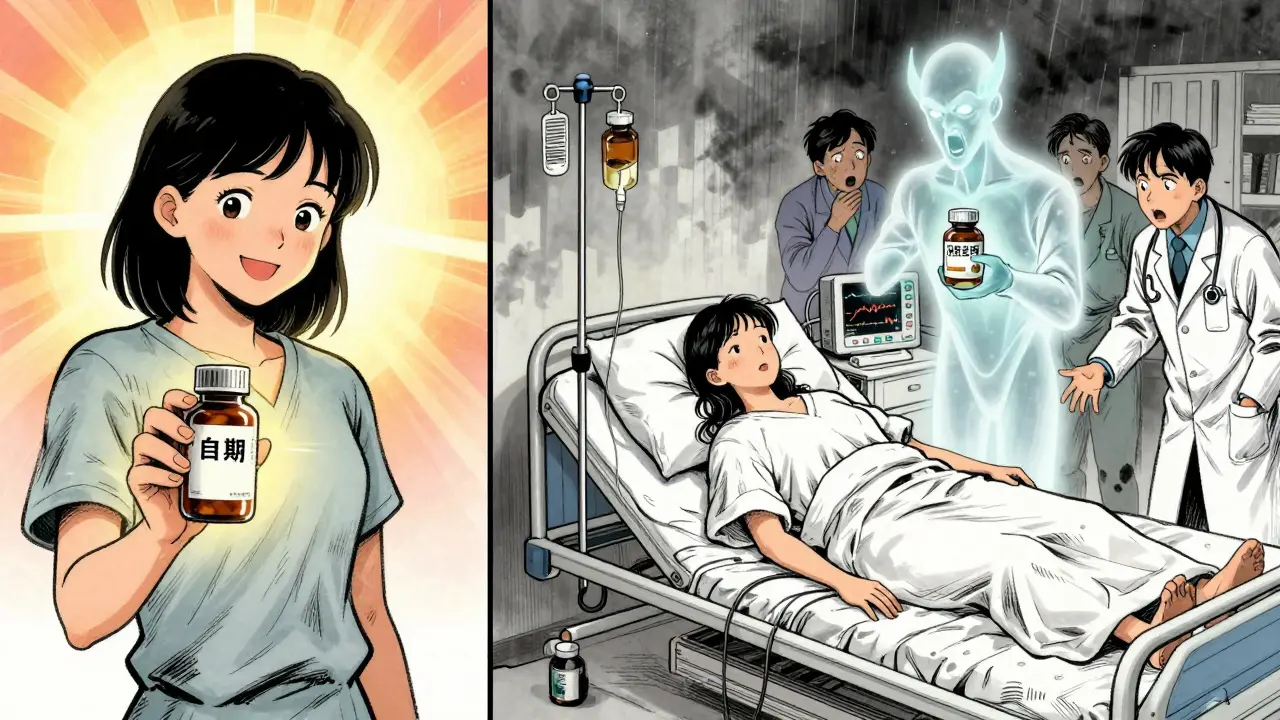
This isn’t theoretical. In 2019, a 34-year-old woman after a kidney transplant had her tacrolimus levels crash from safe therapeutic range to near zero. She didn’t feel sick. No vomiting, no dizziness. Just a quiet, deadly drop in drug levels. Her body was rejecting the new organ - all because she started taking St. John’s Wort for ‘a little anxiety.’
Medications That Can Become Useless - or Dangerous - With St. John’s Wort
Over 120 prescription drugs have documented interactions with St. John’s Wort. About 28 of them are classified as major - meaning they can cause hospitalization, organ failure, or death. Here’s what you need to watch out for:
- Immunosuppressants - cyclosporine, tacrolimus, sirolimus: Used after organ transplants. St. John’s Wort can cause organ rejection. In documented cases, rejection happened within weeks of starting the supplement.
- Antiretrovirals - HIV medications like protease inhibitors: These drugs keep the virus in check. St. John’s Wort cuts their levels so low that the virus can rebound, leading to drug resistance.
- Oral contraceptives: Birth control pills, patches, rings. There are real cases of women getting pregnant while on the pill - because they took St. John’s Wort. The supplement lowers estrogen levels enough to make contraception ineffective.
- Anticoagulants - warfarin: A patient’s INR (blood-thinning measure) dropped from 2.5 to 1.4 in just 10 days after starting St. John’s Wort. That’s the difference between safe protection and a high risk of stroke or clotting.
- Antidepressants - SSRIs, SNRIs, MAOIs: Combining St. John’s Wort with these can trigger serotonin syndrome - a dangerous spike in serotonin that causes agitation, rapid heart rate, high fever, and seizures. It’s rare, but fatal.
- Opioid painkillers - oxycodone, methadone, tramadol: St. John’s Wort reduces their pain-relieving effect. People end up in more pain, increasing their dose - which can lead to overdose when they stop the herb.
These aren’t edge cases. The European Medicines Agency and the FDA have issued public warnings. The Mayo Clinic calls it one of the most dangerous herbal supplements for drug interactions. Dr. David A. Flockhart, a leading pharmacologist, called it ‘the single most important herbal supplement in terms of drug interactions.’
Why People Don’t Realize It’s Happening
Here’s the trap: the effects are delayed. It takes about 10 days for St. John’s Wort to fully activate those liver enzymes. So if you start taking it while on your blood thinner or birth control, nothing seems wrong at first. You feel fine. Your mood improves. Your pain is still there, but you assume the medicine isn’t working.
And then there’s the labeling problem. In the U.S., St. John’s Wort is sold as a dietary supplement - meaning the FDA doesn’t review it for safety or interactions before it hits shelves. Labels often say ‘may interact with medications’ in tiny print. In Europe, warnings are required for 12 specific drug classes. In the U.S.? Often just a vague disclaimer.
One Reddit user shared: ‘I took St. John’s Wort for 3 months while on birth control. Thought it was safe because I read it was ‘natural.’ Got pregnant. No one warned me.’
Who’s Most at Risk?
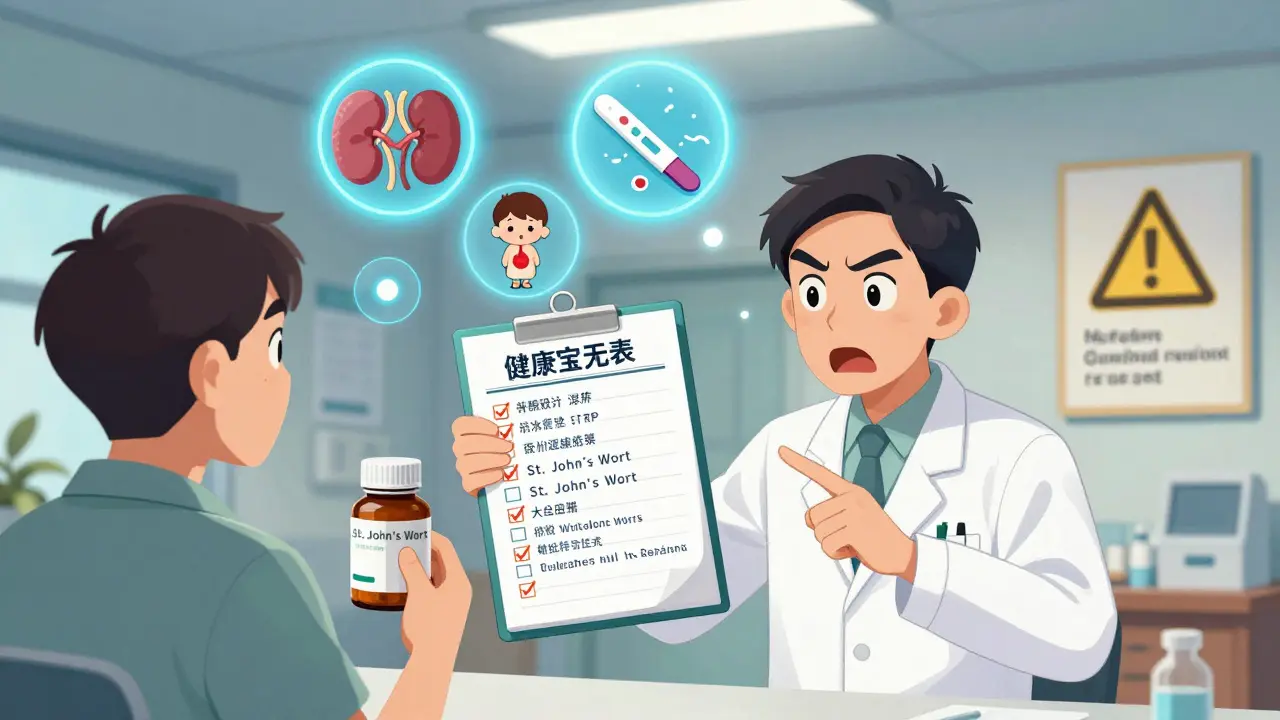
It’s not just older adults. People aged 35 to 54 - especially women - are the biggest users of St. John’s Wort. Why? They’re more likely to seek alternatives to prescription antidepressants, and they’re more likely to be on birth control or managing chronic conditions.
But the real danger is polypharmacy - taking multiple medications. If you’re on even two drugs that are metabolized by CYP3A4 - say, a statin and a blood pressure pill - St. John’s Wort can throw off both at once. And because most people don’t tell their doctors about herbal supplements, the risk stays hidden.
Studies show that 4.7% of U.S. adults use St. John’s Wort. Among women 35-54, that number jumps to 8.2%. Meanwhile, usage drops sharply after age 65 - likely because older adults are already on so many meds they’re more cautious.
What to Do If You’re Taking St. John’s Wort
If you’re currently taking it, here’s what to do right now:
- Stop immediately if you’re on any of the high-risk medications listed above. Don’t wait. Don’t taper. Stop.
- Call your pharmacist. Pharmacists are trained to spot interactions. Bring your full list of medications - including vitamins and supplements. Ask: ‘Could any of these be affected by St. John’s Wort?’
- Don’t assume ‘natural’ means safe. Natural doesn’t mean harmless. Many of the most dangerous drugs in history come from plants - like digitalis from foxglove or morphine from poppies.
- If you need help with depression, talk to your doctor about alternatives. SAM-e and 5-HTP have fewer interactions, but they’re not magic bullets. Prescription SSRIs like sertraline or escitalopram have decades of safety data and known interaction profiles.
- If you’ve been on St. John’s Wort for more than a few weeks, wait two weeks after stopping before restarting any critical medication. The enzyme induction lingers. Your body doesn’t reset instantly.
Is There a Safer Version?
Researchers are working on it. Some new extracts are being developed with hyperforin removed or reduced. Early studies show these versions cause 90% less enzyme induction. That’s promising. But they’re not widely available yet. And even if they were, you’d still need to know what you’re taking - because labels won’t tell you.
Right now, the only safe approach is to avoid St. John’s Wort entirely if you’re on any prescription medication. Period.
The Bigger Picture
St. John’s Wort isn’t the only herbal supplement with risks. But it’s the most common and the most dangerous. Global sales have dropped 37% since 2000, mostly because people are learning the hard way. In Germany, where it’s prescribed like a drug, doctors now screen every patient for herbal use before writing prescriptions.
Here’s the bottom line: if you’re taking any prescription medicine - even if it’s for something ‘minor’ like high blood pressure or acne - St. John’s Wort could be quietly undoing its effect. No warning. No symptoms. Just a silent failure.
There’s no shortcut to safety. If you want to treat depression naturally, there are safer ways. But St. John’s Wort isn’t one of them if you’re on medication. The risk isn’t worth it.
Can I take St. John’s Wort with antidepressants?
No. Combining St. John’s Wort with SSRIs, SNRIs, or MAOIs can cause serotonin syndrome - a potentially fatal condition marked by high fever, rapid heartbeat, confusion, and seizures. Even if you feel fine at first, the risk builds over time. There are safer herbal and prescription options for depression.
Does St. John’s Wort affect birth control?
Yes. Multiple documented cases show women on birth control pills, patches, or rings became pregnant after starting St. John’s Wort. The herb lowers estrogen levels enough to make contraception ineffective. If you’re using hormonal birth control, avoid St. John’s Wort completely.
How long does St. John’s Wort stay in your system?
The herb itself clears in a few days, but its effects on liver enzymes can last up to two weeks after you stop taking it. That means if you’ve been on it for more than a week, you still need to wait two weeks before restarting medications like blood thinners, immunosuppressants, or birth control.
Is St. John’s Wort safe after a transplant?
Absolutely not. St. John’s Wort reduces levels of cyclosporine, tacrolimus, and other immunosuppressants - leading to organ rejection. Even one dose can be enough to trigger rejection in transplant patients. It is strictly contraindicated.
What are safer alternatives to St. John’s Wort for depression?
SAM-e and 5-HTP have fewer documented interactions with medications, though they’re not risk-free. For proven, safe treatment, SSRIs like sertraline or escitalopram are first-line options with well-understood safety profiles. Always talk to your doctor - don’t self-treat.
Why isn’t St. John’s Wort regulated like a drug?
In the U.S., it’s classified as a dietary supplement, so the FDA doesn’t require pre-market testing for safety or interactions. Manufacturers only need to report serious side effects after the product is on the market. That’s why warnings are often missing or vague - and why patients are at risk.

Jennifer Glass
January 4, 2026 AT 12:24It’s wild how something so widely available can quietly sabotage your meds. I had a friend on cyclosporine after a transplant who started taking it for ‘mild depression’-no one told her it was risky. She ended up in the hospital. This post should be mandatory reading for anyone buying herbal supplements at CVS.
Joseph Snow
January 6, 2026 AT 09:47Of course the FDA lets this fly. They’re in bed with Big Pharma. St. John’s Wort is a threat to their billion-dollar antidepressant market. Natural remedies don’t have patents. That’s why they’re demonized. The real danger? Trusting regulators who profit from your dependence on pills.
melissa cucic
January 7, 2026 AT 06:26I appreciate the thoroughness of this post-truly, it’s one of the clearest summaries I’ve seen on this topic. The enzyme induction mechanism is so under-discussed; most people think ‘natural’ = ‘gentle,’ but biology doesn’t care about your intentions. Hyperforin’s activation of PXR is a well-documented, reproducible phenomenon-this isn’t anecdotal. And the two-week washout period? Critical. I’ve seen patients restart SSRIs too soon and experience breakthrough symptoms because they didn’t account for enzyme half-life.
Also, the labeling issue is a systemic failure. In Europe, the EMA mandates clear warnings; here, we rely on consumers to read 8-point font disclaimers. That’s not informed consent-that’s negligence.
Akshaya Gandra _ Student - EastCaryMS
January 7, 2026 AT 11:40so i was on birth control and took st johns wort for like 2 months and then got pregant 😭 i thought it was safe bc its herbal… why no one tell us this???
en Max
January 8, 2026 AT 15:09While the pharmacokinetic data regarding CYP3A4 induction by hyperforin is robust and clinically validated, the generalization that all users of St. John’s Wort are at equal risk requires contextual nuance. Individual metabolic variability, genetic polymorphisms in CYP enzymes, and concomitant medication load significantly modulate the magnitude of interaction. Furthermore, the absence of standardized dosing in commercial preparations introduces an unquantifiable variable. Thus, while the risk is real, blanket contraindications without pharmacogenomic assessment may be overly reductive.
Angie Rehe
January 10, 2026 AT 13:22Oh my god, I’ve been taking this for my anxiety for years while on Lexapro. I’m literally going to die. Why didn’t my doctor tell me? Why does every supplement label say ‘may interact’ like it’s a suggestion? This is malpractice. I’m suing someone. Someone needs to be held accountable.
Jacob Milano
January 12, 2026 AT 12:25Man, this hits different. I used to pop St. John’s Wort like candy when I was burned out in college. Thought I was being ‘natural’ and ‘self-aware.’ Turns out I was just playing Russian roulette with my brain chemistry. The fact that it can quietly kill your meds without you feeling a thing? That’s terrifying. I’m so glad I found this before I lost something important. Thanks for the wake-up call.
Enrique González
January 13, 2026 AT 22:51Just stopped taking it last week after reading this. Been on blood pressure meds for 5 years. I’m waiting the full two weeks before I restart. Better safe than sorry. Small step, big impact.
saurabh singh
January 15, 2026 AT 02:34in India we call it hypericum and use it in ayurveda too-people think it’s fine because ‘our grandmas used it.’ but modern meds? Different ballgame. my cousin took it with her antiepileptic and had a seizure. this isn’t just a western problem. we need better education everywhere.
Dee Humprey
January 15, 2026 AT 16:38My pharmacist flagged it before I even asked. 🙏 I was about to buy it for ‘mood support’-she pulled me aside and said, ‘If you’re on anything, don’t.’ I’m so grateful. Always talk to your pharmacist. They’re the unsung heroes.
John Wilmerding
January 17, 2026 AT 04:46It is imperative to underscore that the pharmacodynamic interference induced by St. John’s Wort extends beyond metabolic enzyme induction. The herb also modulates serotonin transporter activity, which may potentiate serotonergic effects independently of CYP interactions. Therefore, even in the absence of concomitant SSRIs, the risk of serotonin syndrome may persist in individuals with endogenous serotonergic dysregulation. Caution is warranted regardless of medication regimen.
Peyton Feuer
January 18, 2026 AT 16:02Just wanted to say thanks for writing this. I’m the guy who thought ‘natural’ meant ‘safe’ until I almost lost my kidney transplant. I didn’t know. Nobody told me. Now I tell everyone. Please, if you’re on meds-don’t risk it.