
Medicare Part D: What It Covers, How It Works, and How to Save on Prescription Drugs
When you enroll in Medicare Part D, a federal program that helps pay for prescription medications for people on Medicare. It’s not automatic—you have to choose a plan, and the wrong choice can cost you hundreds or even thousands a year. This isn’t just about getting pills. It’s about managing costs, avoiding coverage gaps, and knowing which drugs are covered under your plan’s formulary. Many people assume all medications are treated the same, but that’s not true. Some plans cover generic versions of drugs like metformin at $5 a month, while others charge $50 for the same pill. Others don’t cover St. John’s Wort at all, even though it’s widely used for mild depression.
Medicare Part D plans are offered by private companies approved by Medicare. Each one has its own list of covered drugs, called a formulary. These lists change every year. A drug that’s covered in January might be moved to a higher tier—or dropped entirely—by July. That’s why checking your plan’s formulary before you fill a prescription matters. If your doctor prescribes a brand-name drug like Glucophage, your plan might require you to try the generic version first. And if you’re on multiple medications, like those managing diabetes, high blood pressure, or autoimmune conditions, you need to make sure they all work together under one plan. The coverage gap, also known as the donut hole, used to be a big problem. Now it’s mostly closed, but you still pay more out of pocket until you hit the catastrophic coverage threshold.
What you pay isn’t just about the drug price. It’s about your deductible, copays, and whether your pharmacy is in-network. Some plans have low monthly premiums but high out-of-pocket costs. Others charge more each month but cover more of your meds. If you’re on a fixed income, you might qualify for Extra Help—a federal program that cuts your Part D costs significantly. And if you’re uninsured or underinsured, you can still find free or low-cost medications at community clinics, even if you’re on Medicare. Many people don’t realize that generic medications are just as safe and effective as brand-name drugs, and they often cost 80% less. You don’t need to pay more just because your doctor writes a brand-name prescription. The key is asking the right questions: Is there a generic? Is my pharmacy in-network? Does this drug have a prior authorization requirement? This collection of articles walks you through real-world scenarios: how to compare plans, how to handle drug interactions, how to avoid counterfeit medications, and how to store your prescriptions safely during emergencies. You’ll find practical advice on managing side effects, understanding bioequivalence standards, and using your benefits wisely—so you don’t overpay for what you need.
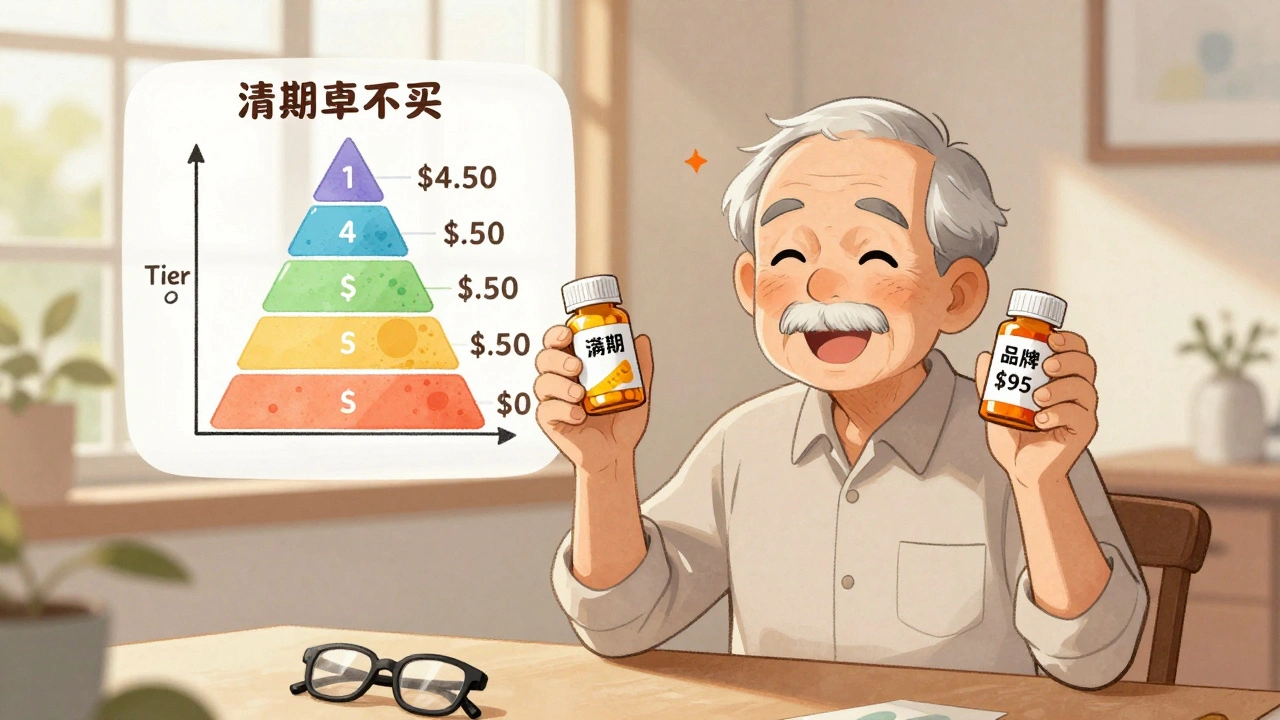
Generic Copays vs Brand Copays: Average 2024 Costs Explained
Learn the real costs of generic vs brand-name drug copays in 2024. See how Medicare and private plans charge differently, what’s changing in 2025, and how to save money on prescriptions.
Detail