
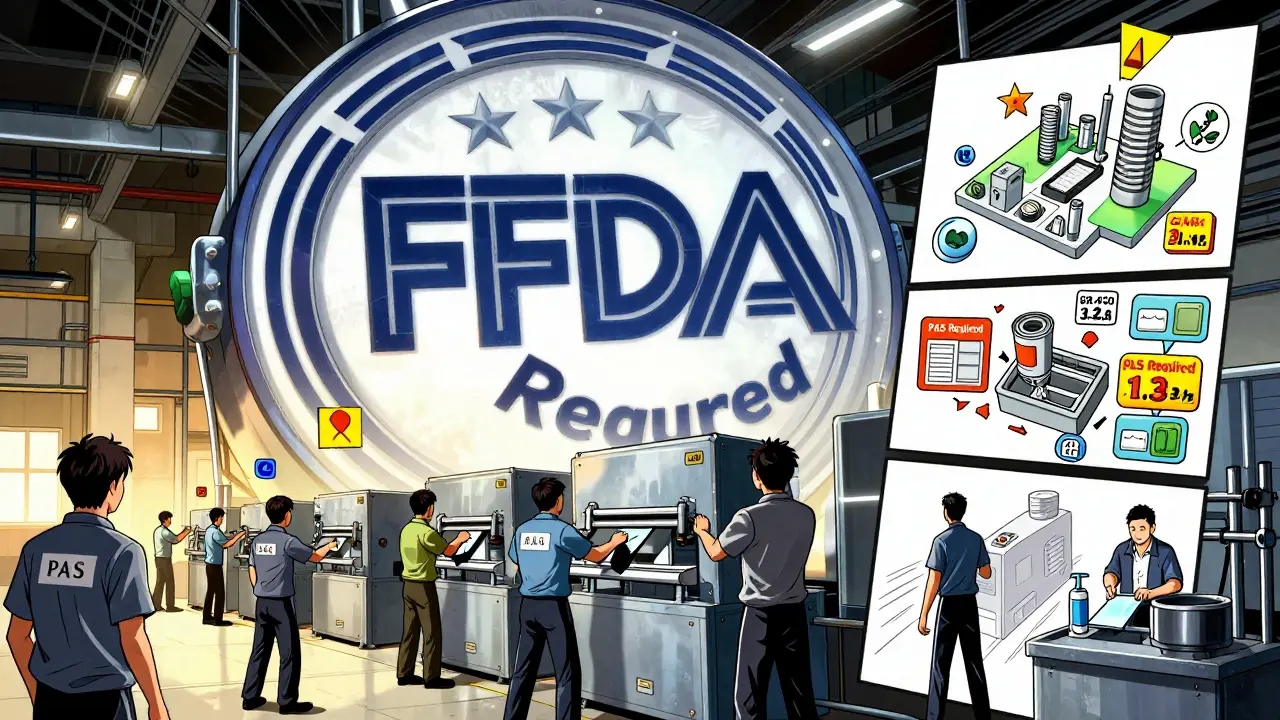
When a generic drug hits the market, it’s not the end of the story - it’s just the beginning of a long, regulated journey. The FDA doesn’t just approve a drug once and walk away. If the manufacturer changes anything about how it’s made - even something small - the FDA might require a full re-evaluation. And that can mean delays, extra costs, or even a temporary shortage. So what actually triggers this re-evaluation? And why does it matter so much?
Why Manufacturing Changes Matter for Generic Drugs
Generic drugs aren’t copies. They’re legally required to be identical in strength, purity, and performance to the brand-name drug. That’s why the FDA calls the original the Reference Listed Drug (RLD). If you change the manufacturing process, you risk changing the drug’s behavior in the body - even if the ingredients stay the same. A different mixing speed, a new machine, or a relocated factory can alter how quickly the drug dissolves, how stable it is over time, or how pure the final product is.That’s why the FDA treats manufacturing changes seriously. It’s not about distrust - it’s about control. Every change must be scientifically proven to have no negative impact on safety or effectiveness. Otherwise, patients could get a version that doesn’t work the same way, even if the label looks identical.
The Three Tiers of Change: PAS, CBE, and AR
Not all changes are treated the same. The FDA groups them into three categories based on risk:- Prior Approval Supplements (PAS): These are the biggest changes. You can’t make them until the FDA says yes. Think: switching to a new synthetic route for the active ingredient, moving production to a new country, or changing the tablet press to a completely different model.
- Changes Being Effected (CBE): These are moderate changes. You can implement them right away - but you must notify the FDA within 30 days. Examples: updating a specification for an impurity, changing the packaging material, or adjusting a process parameter within a previously approved range.
- Annual Reports (AR): The lowest risk. You just log it in your yearly report. Minor label updates, small equipment replacements, or cleaning procedure tweaks usually fall here.
The key? It’s not about how big the change looks - it’s about how much it could affect the drug’s quality. A tiny tweak to a critical step in a complex peptide drug might need a PAS. A major factory upgrade for a simple pill might only need a CBE if the process is well understood.
What Triggers a Full Re-evaluation (PAS)?
Here’s what typically forces a manufacturer to file a Prior Approval Supplement:- Changing the synthesis route for the active ingredient - even if the final molecule is identical. New chemicals or steps can introduce unknown impurities.
- Transferring production to a new facility, especially overseas. The FDA needs to inspect the new site and verify it can consistently produce the same product.
- Scaling up or down by more than 20% in batch size. Larger batches can behave differently during mixing, drying, or compression.
- Replacing a key raw material supplier - especially for critical components like the active pharmaceutical ingredient (API). Even if the new supplier meets specs, the FDA wants proof the drug performs the same.
- Modifying the formulation - changing a binder, lubricant, or coating. These can affect how fast the pill dissolves in your stomach.
- Introducing new technology like continuous manufacturing. It’s innovative, but the FDA needs to see data proving it’s as reliable as traditional batch production.
Between 2018 and 2022, PAS submissions for manufacturing changes jumped 27.3%. Why? Not just because companies are making more changes - but because more changes are being flagged as high-risk. A 2022 case study showed a 30% batch size increase for a common oral tablet triggered a 14-month FDA review. Why? Because they had to prove stability over six months, validate the new process, and show bioequivalence to the brand drug.
The Hidden Cost: Time, Money, and Risk
Getting a PAS approved isn’t cheap or fast. The average cost per submission is around $287,500. Review times average 10 months - and that’s if everything goes smoothly. If the FDA asks for more data, it can stretch to 18 months or longer. One company reported an 18-month delay just to upgrade a tablet press, even though the final product met every quality test.Small manufacturers suffer the most. Companies with fewer than five generic products face 43% longer review times than big players. Why? They don’t have the teams or experience to anticipate FDA questions. A 2023 survey found 78.4% of manufacturers struggled to know which category their change belonged in. That uncertainty leads to hesitation - and sometimes, no change at all.
And here’s the catch: many of these changes are meant to improve things. A new machine might reduce waste, cut costs, or make the drug more stable. But if the regulatory path is too slow or unpredictable, companies avoid them. That’s bad for patients. It means outdated, inefficient, or less reliable manufacturing stays in use longer than it should.
How Smart Companies Avoid the Bottleneck
The best manufacturers don’t wait for a problem to trigger a change. They plan ahead.One approach is Quality by Design (QbD). Instead of just testing the final product, they map out the entire manufacturing process during initial development. They identify which variables matter most - temperature, pressure, mixing time - and define a “design space” where the product will still meet specs. That way, future changes within that space don’t need full re-evaluation.
Companies using Process Analytical Technology (PAT) - real-time sensors that monitor production - saw 32.6% fewer PAS submissions over five years. Why? Because they catch issues early. They know exactly how the process is behaving, so they can prove changes won’t affect quality without needing years of stability data.
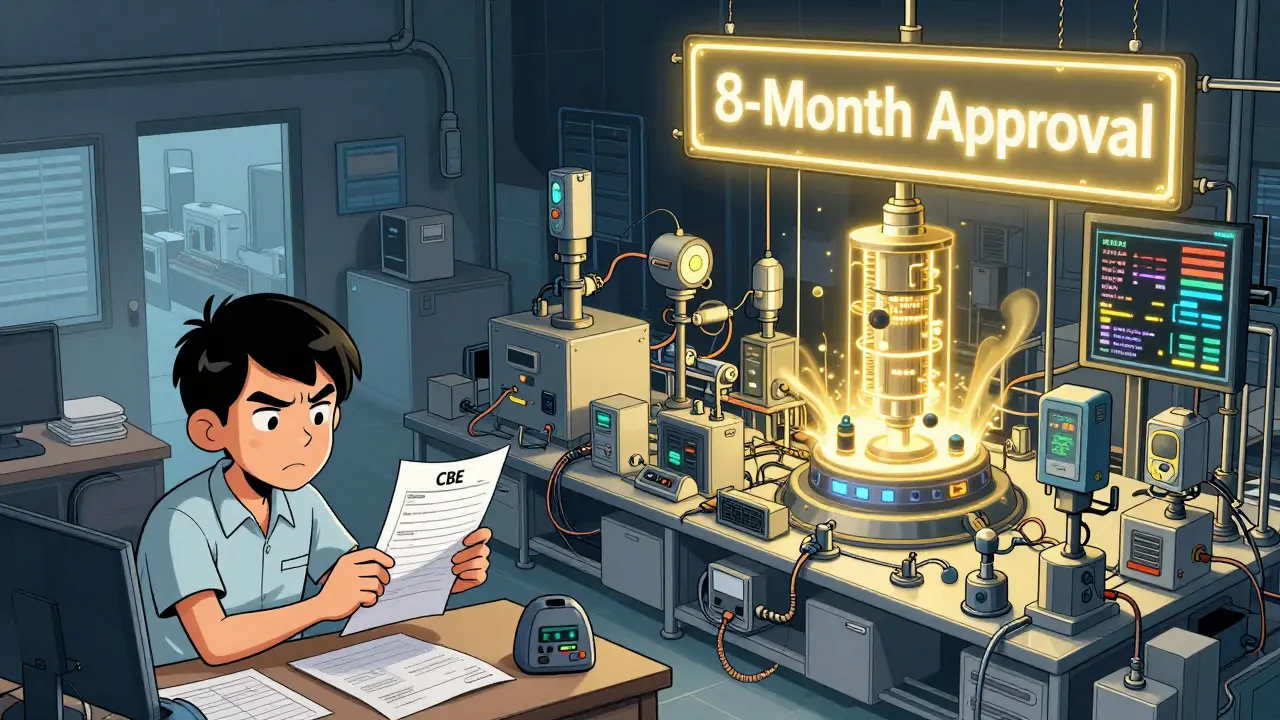
Tea’s successful approval of amlodipine using continuous manufacturing in 2022 took just 8 months - far faster than average. How? They held six pre-submission meetings with the FDA, shared every bit of data early, and showed exactly how their new system matched the old one in every way.
New FDA Programs Are Changing the Game
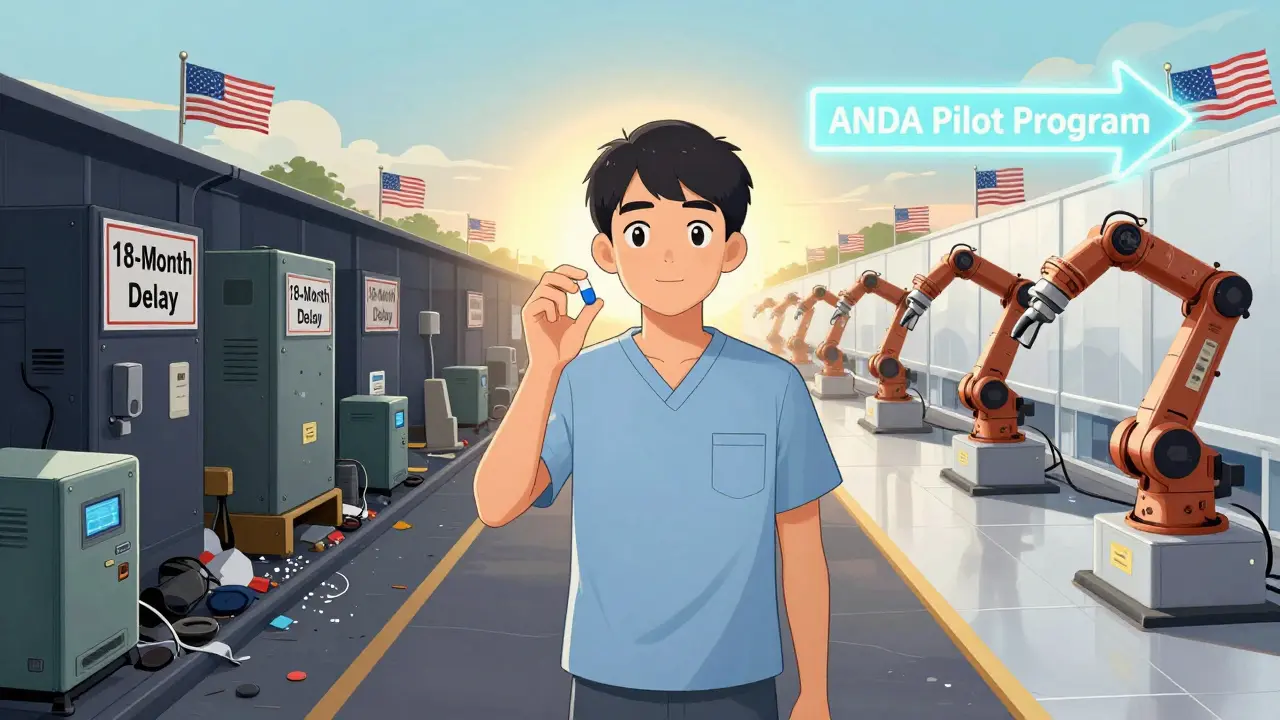
The FDA knows the system is slow. In September 2023, it launched the ANDA Prioritization Pilot Program. If you make your generic drug - including the active ingredient - in the U.S., your review can be cut from 30 months to just 8 months. That’s a game-changer.Why? It turns regulatory burden into an incentive. Companies are now investing in U.S.-based manufacturing. The FDA estimates this could bring $4.2 billion in new domestic investment by 2027. It’s not just about speed - it’s about security. Less reliance on overseas suppliers means fewer shortages.
In January 2024, the FDA released draft guidance proposing a new tiered system for complex generics. If approved, it could reduce PAS submissions by up to 35% for minor changes. And the new PreCheck program for facilities could cut approval times for factory transfers from 18 months to 9.
What This Means for Patients
You might never see the paperwork behind your generic pill. But you feel the impact. When manufacturers avoid improvements because of slow approvals, you get older, less efficient production. When delays happen, shortages follow - and prices spike.But the tide is turning. Faster reviews, smarter processes, and U.S.-based manufacturing mean better, more reliable generics are on the way. The goal isn’t to block change - it’s to ensure every change is safe. And with better tools and clearer rules, the system is finally catching up to modern science.
What You Can Do
If you’re a patient: trust your generic. The FDA’s system, while slow, is designed to protect you. If you notice a change in how your pill looks or feels, report it to your pharmacist.If you’re in the industry: invest in QbD and PAT early. Build strong relationships with the FDA. Don’t wait for a crisis to fix your process.
Manufacturing changes aren’t the enemy. Poorly managed changes are. And with smarter rules, better tech, and more transparency, the future of generics is looking more reliable than ever.
What is a PAS in FDA generic drug approval?
A Prior Approval Supplement (PAS) is a formal request to the FDA that must be approved before a manufacturer can make a significant change to a generic drug’s manufacturing process. This includes changes like moving production to a new facility, altering the drug’s synthesis method, or scaling up batch size by more than 20%. The FDA reviews PAS submissions thoroughly - typically taking 10 months or longer - to ensure the change doesn’t affect the drug’s safety, strength, or effectiveness compared to the brand-name version.
Can a generic drug be changed without FDA approval?
Yes, but only for low-risk changes. Manufacturers can implement Changes Being Effected (CBE) or Annual Reports (AR) without waiting for FDA approval. CBE changes - like updating a specification or changing packaging - must be reported to the FDA within 30 days. AR changes - such as minor equipment adjustments - are only documented in the annual report. But any change that could affect the drug’s performance, purity, or bioequivalence requires prior FDA approval through a PAS.
Why do manufacturing changes take so long to get approved?
Manufacturing changes require extensive data to prove the drug remains identical in performance. The FDA needs to review analytical testing, stability studies, and sometimes bioequivalence data. Complex changes - like facility transfers or new production technologies - often require multiple rounds of feedback, facility inspections, and additional studies. On average, PAS reviews take 10 months, but can extend to 18 months or more if the FDA requests more information. The process is slow because safety is non-negotiable.
What is the ANDA Prioritization Pilot Program?
Launched in September 2023, the ANDA Prioritization Pilot Program speeds up FDA review for generic drugs made entirely in the U.S. - including the active ingredient and final product. If eligible, approval can happen in as little as 8 months, compared to the standard 30-month average. The goal is to encourage domestic manufacturing, reduce supply chain risks, and get more reliable generics to market faster.
How do companies reduce the number of PAS submissions?
Companies use Quality by Design (QbD) during initial development to define a safe operating range for their manufacturing process. If future changes stay within that range, they don’t require a PAS. They also use Process Analytical Technology (PAT) to monitor production in real time, reducing uncertainty. Early and frequent communication with the FDA - including pre-submission meetings - helps avoid surprises. Companies that do this report up to 40% fewer major change submissions over time.



asa MNG
January 25, 2026 AT 11:19Dolores Rider
January 26, 2026 AT 11:10John McGuirk
January 27, 2026 AT 08:47Michael Camilleri
January 27, 2026 AT 16:10Darren Links
January 29, 2026 AT 01:13Kevin Waters
January 30, 2026 AT 16:56Don Foster
January 31, 2026 AT 02:05siva lingam
February 1, 2026 AT 02:00Himanshu Singh
February 1, 2026 AT 11:45Elizabeth Cannon
February 1, 2026 AT 11:48Juan Reibelo
February 1, 2026 AT 21:56venkatesh karumanchi
February 2, 2026 AT 00:17Jenna Allison
February 3, 2026 AT 20:28Vatsal Patel
February 4, 2026 AT 20:12