eGFR Guidelines for Diabetes: What You Need to Know
When you have diabetes, your eGFR, estimated glomerular filtration rate, a measure of how well your kidneys filter waste from your blood is one of the most important numbers to watch. It’s not just a lab result—it’s an early warning system for kidney damage, which affects nearly 40% of people with diabetes over time. The American Diabetes Association recommends checking eGFR at least once a year for everyone with diabetes, because kidney problems often show no symptoms until they’re advanced.
Normal eGFR is above 90 mL/min/1.73m². Once it drops below 60 for three months or more, it signals chronic kidney disease, a progressive loss of kidney function that can lead to dialysis or transplant if unchecked. For people with diabetes, even a slight dip in eGFR—say, from 85 to 75—can mean early kidney damage from high blood sugar. That’s why doctors pair eGFR with urine tests for albumin, another key sign of kidney stress. If both are off, it’s not just about controlling sugar anymore—it’s about protecting your kidneys with specific medications like SGLT2 inhibitors or ACE inhibitors, which studies show slow kidney decline better than blood pressure meds alone.
Not all eGFR drops are bad. A temporary drop after starting metformin or an SGLT2 inhibitor is normal and often means the drug is working to reduce kidney pressure. But if your eGFR keeps falling, especially below 45, your care team may need to adjust your diabetes meds, limit salt, or refer you to a kidney specialist. People over 65 with diabetes often have lower eGFR naturally due to aging, but that doesn’t mean you ignore it—it just means you need to interpret it differently. The key is tracking trends, not single numbers.
You’ll find real-world advice in the posts below: how diabetes medications impact kidney function, what lab results actually mean, and how to spot early signs of trouble before it’s too late. Some posts even cover how to talk to your doctor about eGFR trends without sounding confused. This isn’t theory—it’s what people with diabetes are doing right now to protect their kidneys and stay healthy longer.
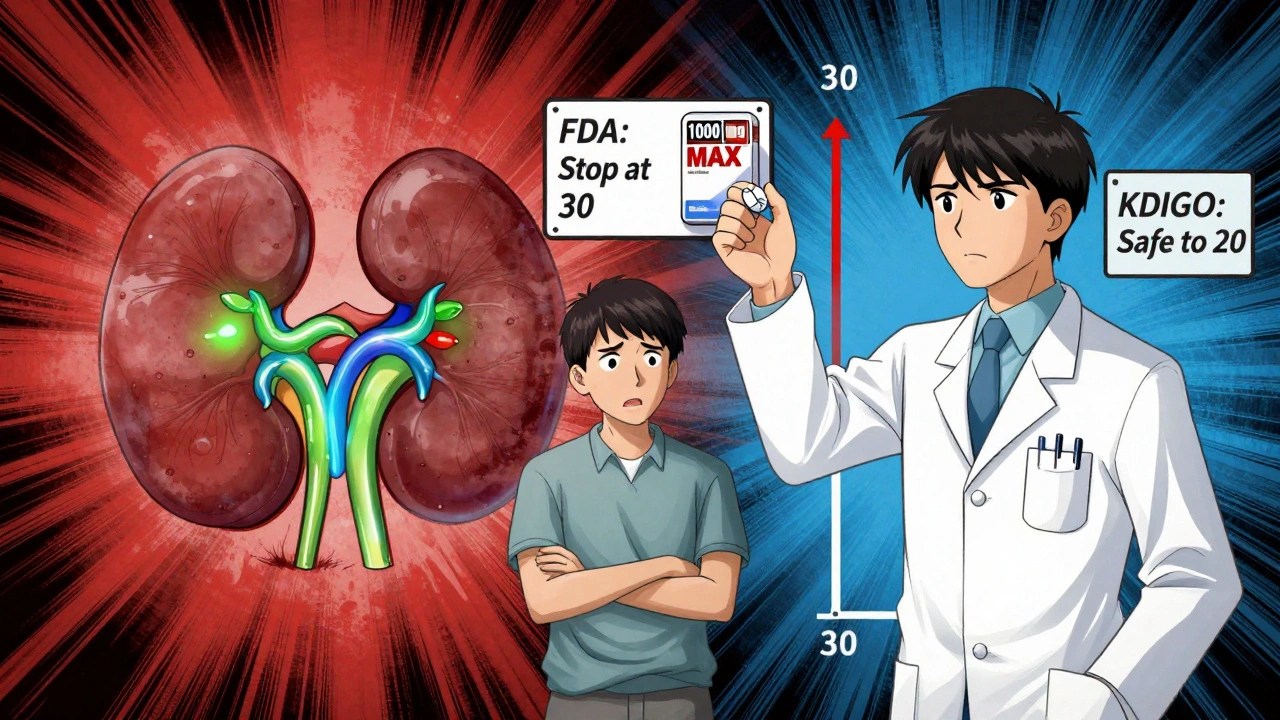
Renal Dosing for Metformin and SGLT2 Inhibitors: When to Adjust in 2025
Updated 2025 guidelines on when to adjust metformin and SGLT2 inhibitor doses in kidney disease. Know the eGFR thresholds, what to do when levels drop, and how to fight insurance denials.
DetailRelated Posts