Medication Reaction Severity Checker
This tool helps you understand the severity of your symptoms based on the information from the article. It is not a substitute for medical advice. If you experience severe symptoms, seek emergency medical care immediately.
Imagine you pop a pill for a headache, and an hour later, your throat feels tight. Or maybe you take a new antibiotic, and by the third day, your skin is covered in a rash that won't stop itching. Your first thought is often, "Is this an allergy?" The answer isn't always a simple yes or no. In fact, distinguishing between a side effect and a true allergic reaction can be tricky, but understanding the severity is life-saving. Not all reactions are created equal, and knowing the difference between a mild itch and a severe medical emergency is crucial for your safety.
We often hear about allergies in the context of food or pollen, but medication allergies are abnormal immune responses to pharmaceutical compounds that can range from annoying to fatal. According to recent data from the European Academy of Allergy and Clinical Immunology, about 10-15% of adverse drug reactions are true immunologically mediated allergies. The rest are side effects or intolerances. This distinction matters because how you treat a mild reaction is vastly different from how you handle a severe one. Let's break down exactly what happens at each level of severity so you can recognize the signs and act fast.
Understanding the Basics: Allergy vs. Side Effect
Before we dive into severity, we need to clarify what we are actually talking about. A side effect is a predictable outcome of a drug, like feeling drowsy from an antihistamine or getting a stomach ache from ibuprofen. These are chemical effects, not immune system attacks. An allergy, however, is when your immune system mistakenly identifies the medication as a threat. It launches a defense that causes inflammation and damage to your body.
The medical community classifies these using the Gell and Coombs system is a classification system established in 1963 that categorizes hypersensitivity reactions into four distinct immunological mechanisms (Type I-IV). While the science behind Types I through IV is complex, the practical takeaway for patients is the speed and severity of the reaction. Type I reactions happen fast (minutes to hours) and involve IgE antibodies. Type IV reactions are slower (days to weeks) and involve T-cells. Knowing this helps explain why some rashes appear immediately while others take a week to show up.
Mild Reactions: The Warning Signs
Mild reactions are the most common, accounting for about 60-70% of all medication allergies. These are often what people describe as "just a rash." They are uncomfortable but usually not dangerous if managed correctly. You might experience localized urticaria, which is the medical term for hives. These are raised, itchy welts that appear on the skin where the medication is affecting the mast cells.
Typically, a mild reaction affects less than 10% of your body surface area. You might see a few spots on your arm or a patch on your chest. Itching (pruritus) is the main symptom, often rated between 1-3 on a severity scale of 10. Another common sign is a mild headache or a runny nose. The key here is that your vital signs remain stable. Your blood pressure doesn't drop, your breathing doesn't get harder, and you don't feel faint.
Common culprits for mild reactions include penicillin and certain over-the-counter pain relievers. If you experience this, the standard approach is to stop taking the medication and take an oral antihistamine. Most mild reactions resolve within 24 to 48 hours with this simple treatment. However, ignoring a mild reaction can sometimes be risky if it escalates, so keeping a close eye on symptoms is vital.
Moderate Reactions: When It Gets Systemic
Moderate reactions are where things start to get serious. These occur in about 20-30% of cases. The difference between mild and moderate is the involvement of the whole body (systemic symptoms) rather than just a patch of skin. You might develop widespread hives covering 10-30% of your body. Your face or lips might swell, a condition known as angioedema.
Another sign of a moderate reaction is a fever. If you take a drug and develop a temperature between 38.5°C and 39.5°C, that's a red flag. You might also feel generally unwell, with joint pain or swollen lymph nodes. This is often seen in serum sickness-like reactions, which typically happen 7-14 days after exposure. Unlike mild reactions, moderate ones often require more than just an antihistamine. Doctors usually prescribe corticosteroids to reduce the inflammation and may require you to be observed for 4 to 6 hours to ensure the reaction doesn't progress.
NSAIDs like ibuprofen are frequent causes of moderate reactions, affecting about 0.1% of patients. The risk here is that a moderate reaction can tip into a severe one if the medication is continued. If you notice swelling spreading to your tongue or throat, or if you start wheezing, you are no longer in the moderate category. You need immediate medical attention.

Severe Reactions: The Life-Threatening Emergencies
Severe reactions make up only 5-10% of cases, but they account for the majority of hospital admissions related to drug allergies. These are medical emergencies that require immediate intervention. The most well-known severe reaction is anaphylaxis is a severe, potentially life-threatening allergic reaction that can occur within minutes of exposure to an allergen. This is a Type I hypersensitivity reaction where the immune system releases a massive amount of histamine and other chemicals.
Symptoms of anaphylaxis include a drop in blood pressure (systolic BP <90 mmHg), difficulty breathing due to bronchospasm, and swelling of the airway. You might feel a sense of impending doom, which is a classic psychological symptom of this reaction. The treatment is immediate injection of epinephrine is a hormone and medication used to treat life-threatening allergic reactions by constricting blood vessels and opening airways (0.3-0.5 mg IM for adults) followed by a trip to the emergency department. Waiting to see if it gets better is not an option; anaphylaxis can lead to cardiovascular collapse.
There are other severe reactions that aren't anaphylaxis but are equally dangerous. Stevens-Johnson Syndrome (SJS) and Toxic Epidermal Necrolysis (TEN) are severe skin reactions where the skin blisters and peels off. SJS involves less than 10% of body surface area, while TEN involves more than 30%. These are Type IV reactions, often caused by drugs like carbamazepine or sulfonamides. The mortality rate for TEN is between 25-35%. Another severe condition is DRESS syndrome (Drug Reaction with Eosinophilia and Systemic Symptoms), which involves a rash, fever, and internal organ inflammation.
Severe reactions require hospitalization, often in specialized burn units for skin conditions, or intensive care for anaphylaxis. The key differentiator is the presence of hemodynamic instability or multi-organ involvement. If you have trouble breathing, a racing heart, or confusion after taking a medication, treat it as severe until proven otherwise.
Comparing Severity Levels
| Feature | Mild | Moderate | Severe |
|---|---|---|---|
| Body Surface Area Affected | <10% | 10-30% | >30% or Systemic |
| Key Symptoms | Localized hives, mild itch | Widespread hives, swelling, fever | Airway swelling, low BP, skin peeling |
| Onset Time | Minutes to days | Hours to 2 weeks | Minutes (Anaphylaxis) or days (SJS) |
| Typical Treatment | Antihistamines | Corticosteroids, observation | Epinephrine, hospitalization |
| Medical Attention | Primary care or self-care | Urgent care or ER | Emergency (911) |
Diagnosis and Testing
Knowing what you are allergic to is half the battle. Many people avoid necessary medications because they think they are allergic, when they actually had a side effect. Dr. Markus Böhm notes that about 80% of reported penicillin allergies are not true IgE-mediated allergies when tested. This leads to inappropriate antibiotic avoidance, which can make treating infections harder.
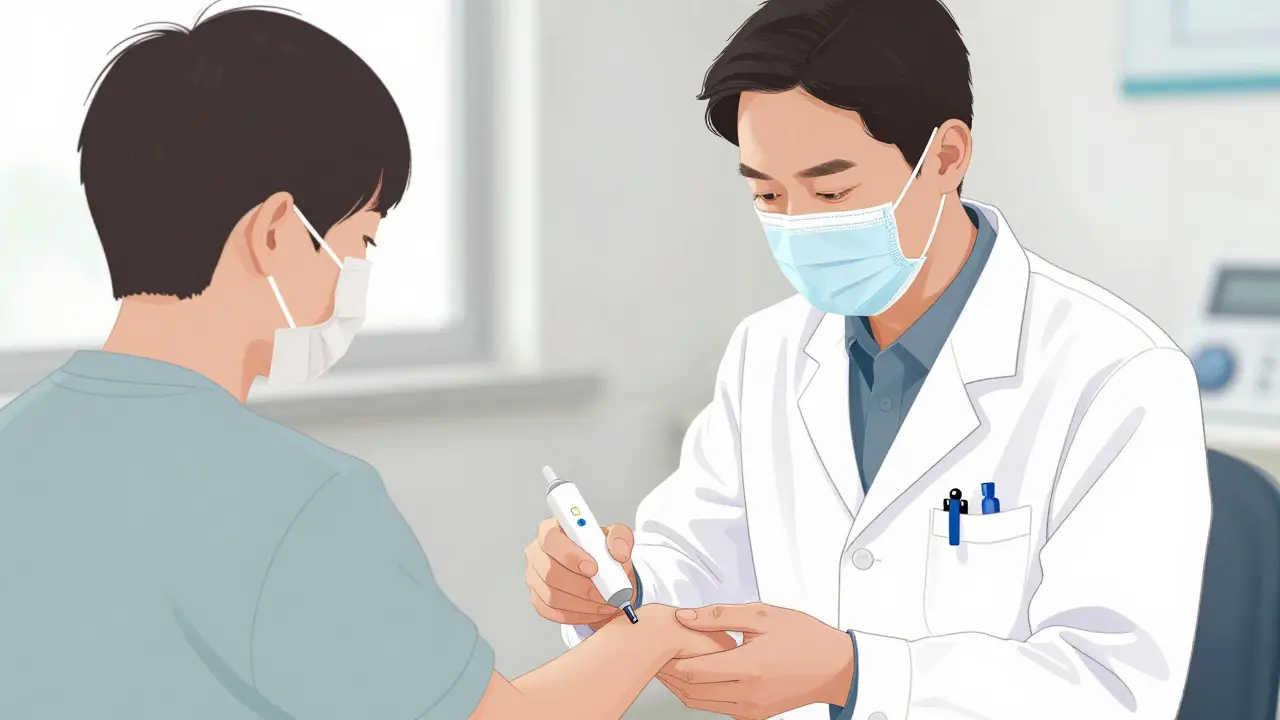
Doctors use several methods to diagnose these reactions. Skin testing is the most common, with a 65% market share in diagnostics. This involves pricking the skin with a small amount of the drug to see if a reaction occurs. Blood tests for specific IgE antibodies are also used. For delayed reactions, like SJS, doctors might use lymphocyte transformation tests. The American Academy of Allergy, Asthma & Immunology recommends that all severe reactions be evaluated by a specialist to confirm the diagnosis and identify safe alternatives.
Prevention and Future Outlook
Prevention is always better than cure. If you have a known allergy, wear a medical alert bracelet and ensure your medical records are updated. The FDA has mandated severity-specific labeling for new drugs since 2022, which helps doctors and patients understand the risks better. Looking ahead, genetic screening is becoming more common. For example, testing for the HLA-B*15:02 gene marker before prescribing carbamazepine can reduce the risk of severe skin reactions by 70-80% in high-risk populations.
By 2026, we expect more electronic health records to incorporate standardized severity assessment tools. This means your doctor will have a clearer picture of your risk profile before prescribing. If you suspect a reaction, document it precisely. Note the timing, the specific symptoms, and how much of your body was affected. This information is gold for your allergist.
Frequently Asked Questions
Can a mild allergy turn into a severe one?
Yes, it is possible. While many mild reactions stay mild, continuing to take the medication can increase the sensitivity of your immune system. A mild rash could progress to widespread hives or even anaphylaxis with subsequent exposure. This is why stopping the medication immediately is crucial.
What is the difference between a side effect and an allergy?
A side effect is a predictable chemical reaction to the drug, like nausea from chemotherapy. An allergy is an immune system response that treats the drug as a threat. Side effects happen to many people, while allergies are specific to individuals with a sensitized immune system.
How quickly does anaphylaxis occur?
Anaphylaxis is usually rapid, occurring within minutes to an hour after exposure. However, in rare cases, it can be biphasic, meaning symptoms return hours after the initial reaction seems to have resolved. This is why observation in a hospital is often required.
Can I take antihistamines for a severe reaction?
No. Antihistamines are for mild reactions like hives. They are not strong enough to treat anaphylaxis or severe airway swelling. Epinephrine is the only effective treatment for severe allergic reactions and must be administered immediately.
Do I need to avoid all antibiotics if I'm allergic to penicillin?
Not necessarily. Cross-reactivity between penicillin and other antibiotics like cephalosporins is lower than previously thought (less than 1%). Many people labeled as penicillin-allergic can safely take other antibiotics after proper testing by an allergist.