
When you or a loved one needs a simple, life-saving generic drug-like an antibiotic, an insulin shot, or a chemotherapy agent-and the pharmacy says it’s out of stock, it’s not just bad luck. It’s the result of deep, systemic problems in how these medicines are made and moved around the world. Generic drugs make up over 90% of all prescriptions filled in the U.S., yet they’re the source of nearly 95% of all drug shortages. Why? Because the system that makes them is fragile, underfunded, and built on razor-thin margins.
Manufacturing Failures Are the Top Cause
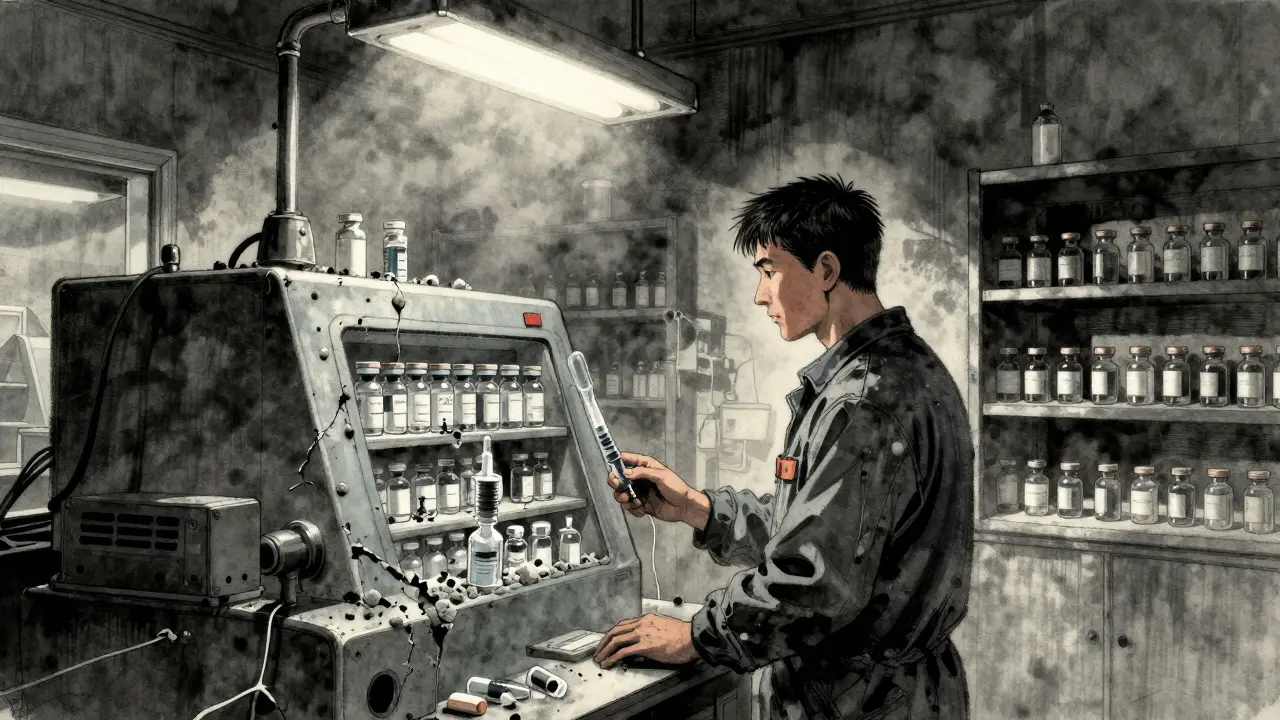
The single biggest reason generic drugs disappear from shelves isn’t a pandemic, a war, or a natural disaster. It’s manufacturing problems. According to the FDA, over 62% of all drug shortages between 2010 and 2023 were caused by issues at the factory level. Think contamination, broken equipment, or failed inspections.
One facility in North Carolina shut down in 2021 after the FDA found mold in a sterile injectable production line. That one plant made over 30 different life-saving drugs, including antibiotics and heart medications. When it closed, hospitals scrambled. Patients waited. Some had to switch to more expensive alternatives-or go without.
These aren’t rare accidents. They’re common. Many generic drug manufacturers operate with minimal safety buffers. No extra machines. No backup lines. No surplus inventory. When one piece of equipment breaks, production stops. And because these drugs are low-margin, companies don’t invest in redundancy. They can’t afford to.
Global Supply Chains Are a Single Point of Failure
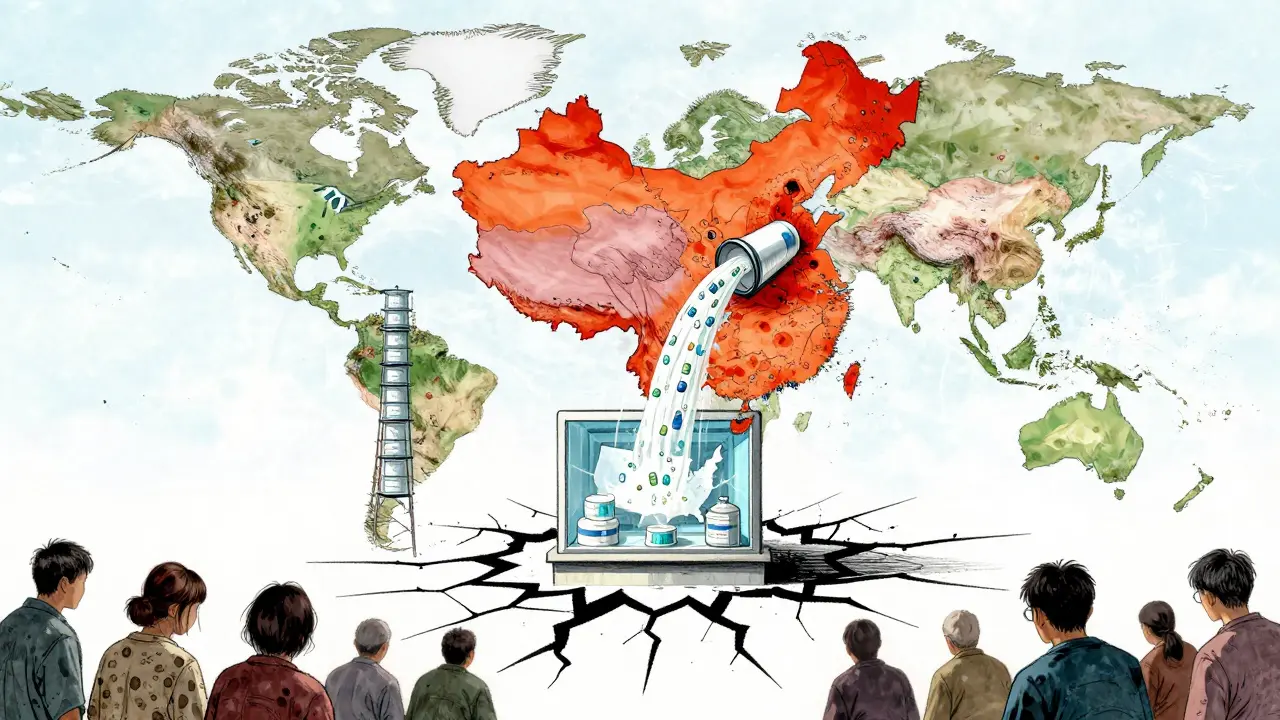
Most of the raw ingredients for generic drugs-called active pharmaceutical ingredients, or APIs-come from just two countries: China and India. Together, they produce 80% of the world’s APIs. That means a single factory fire in Hyderabad, a flood in Shanghai, or a customs delay at a port can ripple across the entire U.S. healthcare system.
One 2020 study found that nearly one in five drug shortages involved a product made by a single manufacturer. No backups. No alternatives. Just one supplier. And if that supplier gets hit by a regulatory shutdown, a labor strike, or a shipping bottleneck, there’s no Plan B.
Even when a company tries to switch suppliers, it can take years. The FDA requires rigorous testing and approval before a new facility can make a drug. That process isn’t fast. It’s not designed for speed. It’s designed for safety. But in a crisis, that safety process becomes a bottleneck.
Low Profits Mean Fewer Manufacturers
Generic drugs aren’t supposed to be profitable. That’s the whole point-they’re cheaper versions of brand-name drugs. But the system has gone too far. Many generic drugs now sell for less than $1 per pill. Some cost pennies.
Manufacturers have to compete on price. And the biggest buyers-pharmacy benefit managers (PBMs)-hold nearly 85% of the market. They demand the lowest bids. So companies slash costs. They cut corners on maintenance. They delay upgrades. They stop investing in quality control. Eventually, they stop making the drug altogether.
Since 2010, over 3,000 generic products have been discontinued. Not because they’re unsafe. Not because they’re outdated. But because no one wants to make them anymore. The profit margin is too thin. The risk is too high.
Too Few Facilities, Too Many Drugs
There used to be dozens of factories making the same generic drug. Now, there are one or two. And those factories don’t just make one drug-they make dozens.
A single plant might produce 50 different generic medications. That sounds efficient. But it’s dangerous. If one drug in that plant gets pulled for quality issues, the whole facility shuts down. And suddenly, 50 other drugs vanish from shelves.
This is called “concentration risk.” The industry has centralized production to cut costs. But that centralization created a single point of failure. And when it breaks, it breaks hard.
Why the U.S. Is Worse Off Than Canada
Canada has the same generic drug market. Same manufacturers. Same supply chains. But they have far fewer shortages. Why?
Canada doesn’t rely on the free market to fix this. They use coordination. Health agencies, hospitals, pharmacies, and manufacturers talk to each other. They share data. They build stockpiles. When a shortage starts, they move drugs around before it gets bad.
The U.S. doesn’t do that. Our drug stockpile is only for emergencies like bioterrorism or mass casualties. It doesn’t include everyday medicines like insulin, antibiotics, or blood pressure pills. And our system is fragmented. Hospitals, pharmacies, and PBMs don’t share information. They compete. And when one player hoards inventory, others go without.
Research from the University of Toronto and the University of Pittsburgh found that Canada’s approach cuts shortage duration in half. They fix problems before they become crises.
What’s Being Done-and Why It’s Not Enough
There are efforts to fix this. The U.S. Congress introduced the Rolling Active Pharmaceutical Ingredient and Drug Reserve (RAPID) Reserve Act in 2023. It proposes building a national stockpile of critical generic drugs and offering incentives for domestic manufacturing.
The Federal Trade Commission is also investigating pharmacy benefit managers (PBMs) for anti-competitive behavior. They’ve found that PBMs often push drugs into formularies that are already in short supply-just because they get higher rebates. Meanwhile, perfectly good drugs sit on shelves because they don’t pay enough.
But these are band-aids. The real problem is economic. Generic drugmakers can’t make money. And if they can’t make money, they won’t make drugs. No amount of regulation will fix that.
The Human Cost
This isn’t just about logistics. It’s about lives.
Hospital pharmacists now spend 50-75% more time managing shortages than they did 10 years ago. That’s time they’re not spending counseling patients, checking for drug interactions, or ensuring safe dosing.
Cancer patients get delayed treatments. Diabetics ration insulin. Newborns go without life-saving antibiotics. Clinicians are forced to use less effective alternatives-or worse, go without.
And here’s the worst part: in one-quarter of all shortage reports, no reason is given at all. The system doesn’t even track why drugs are gone. It just says: out of stock.
What Needs to Change
Fixing this won’t be easy. But it’s possible.
- Incentivize domestic production: Tax breaks, grants, or guaranteed minimum prices for critical generics could bring manufacturers back to the U.S.
- Build strategic reserves: Stockpile essential drugs-not just for disasters, but for everyday shortages.
- Require transparency: Manufacturers and PBMs should be forced to report supply risks before they become crises.
- Break up monopoly buying power: Limit how much control PBMs have over which drugs are available.
- Encourage multiple suppliers: No drug should rely on one factory or one country.
There’s no magic bullet. But if we keep treating this like a temporary glitch, we’ll keep seeing the same headlines: “Drug out of stock. Patients at risk.”
The system was designed to save money. But it’s costing us more-in lives, in stress, in fear. It’s time to rebuild it.
Why do generic drug shortages happen more often than brand-name drug shortages?
Brand-name drugs are protected by patents, which let manufacturers charge higher prices and make bigger profits. That money funds better manufacturing, backup systems, and quality control. Generic drugs, by contrast, face fierce price competition. Their margins are often below 15%, so companies cut corners, skip upgrades, and avoid redundancy. When a problem hits, there’s no safety net.
Are drug shortages getting worse?
Yes. The number of drug shortages hit its peak in 2018 and remained high through 2023. The pandemic made it worse, but the trend started long before. Since 2010, manufacturing sites have declined while the number of drugs produced per site has risen. This creates a fragile system where one failure can knock out dozens of medicines.
Can the U.S. make its own generic drugs again?
It’s possible, but expensive. Building a modern FDA-compliant drug factory in the U.S. costs over $100 million. Without government incentives-like guaranteed minimum prices or tax credits-no company will take the risk. Some small manufacturers are trying, but they’re still rare. The U.S. needs policy changes to make domestic production financially viable.
Do pharmacy benefit managers (PBMs) cause drug shortages?
Not directly. But their pricing pressure makes shortages worse. PBMs control 85% of prescription drug spending and demand the lowest prices. This forces generic manufacturers to cut costs so deeply that they can’t maintain quality or redundancy. They also sometimes push drugs into formularies that are already in short supply, just to earn rebates. This distorts supply and makes shortages worse.
Why don’t other countries have this problem?
Countries like Canada, the U.K., and Germany have centralized systems that coordinate drug supply across hospitals, pharmacies, and manufacturers. They use stockpiles, share data, and negotiate prices as a group. The U.S. system is fragmented, competitive, and driven by private profit. That makes it harder to respond quickly or cooperatively when shortages occur.
Vanessa Drummond
February 27, 2026 AT 08:07Nick Hamby
February 28, 2026 AT 05:45kirti juneja
March 2, 2026 AT 02:09Haley Gumm
March 3, 2026 AT 09:25Gabrielle Conroy
March 4, 2026 AT 18:14Spenser Bickett
March 5, 2026 AT 01:10Christopher Wiedenhaupt
March 5, 2026 AT 17:53John Smith
March 6, 2026 AT 17:50