
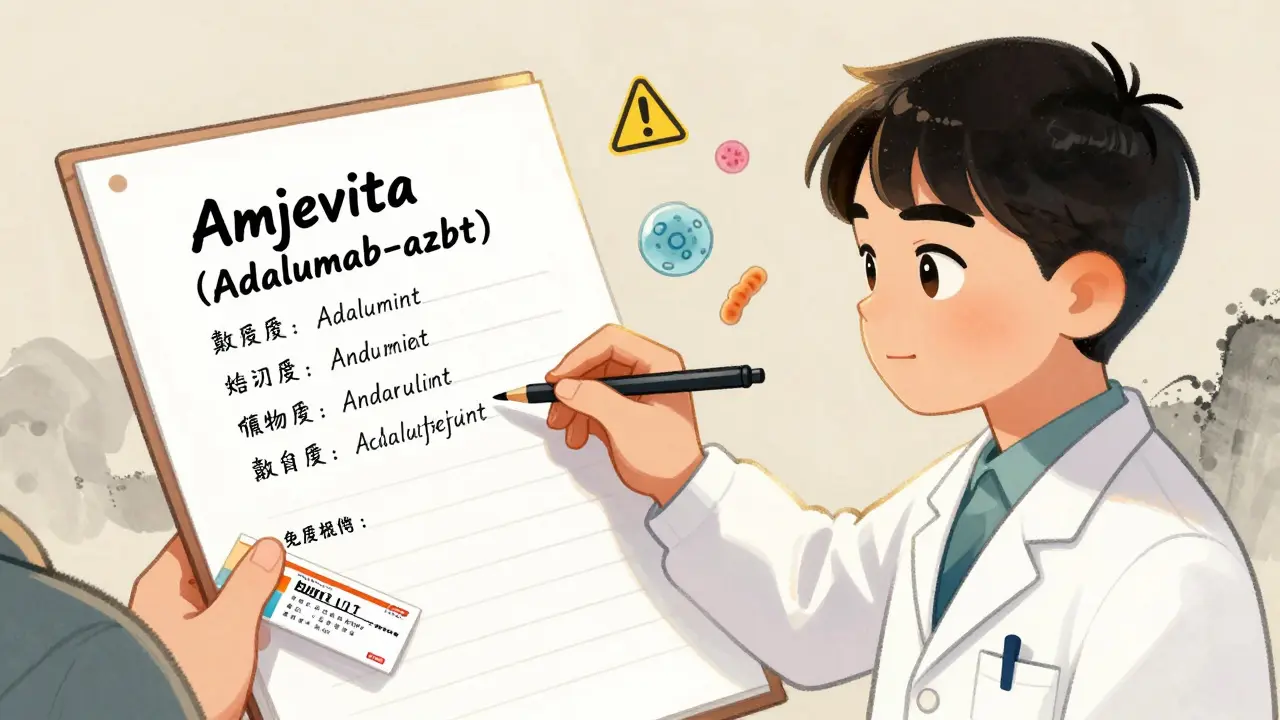
When a patient gets a biosimilar instead of the original biologic drug, they shouldn’t have to worry that the safety net has disappeared. But here’s the truth: biosimilars aren’t like generic pills. You can’t just swap them in and assume everything works the same. Their complexity means the way we track side effects has to be smarter, tighter, and more precise than ever before.
Why Biosimilars Need Special Monitoring
Biosimilars are made from living cells-not chemicals. That means even tiny changes in how they’re made can affect how the body reacts. A small difference in protein folding or sugar attachments might trigger an immune response that the original drug never did. That’s called immunogenicity. It’s not common, but when it happens, it can cause serious reactions like allergic responses, reduced effectiveness, or even autoimmune problems.
Unlike generics, which are exact copies of small-molecule drugs, biosimilars are highly similar, not identical. That’s why regulators don’t treat them like ordinary generics. The FDA, EMA, and Health Canada all require extra layers of safety tracking after approval. If a patient has a bad reaction, we need to know whether it came from the reference product or the biosimilar. Otherwise, we can’t tell if the biosimilar is truly safe.
How Adverse Events Are Reported
Most reports start with doctors, nurses, or pharmacists noticing something unusual and filing a form. These are called spontaneous reporting systems. In the U.S., that’s FAERS. In Europe, it’s EudraVigilance. In Canada, it’s the Canada Vigilance Program. These systems collect thousands of reports every year.
But here’s the problem: if a report just says “adalimumab,” we don’t know if it was Humira (the original) or a biosimilar like Amjevita or Cyltezo. That’s why product identification matters. The FDA started requiring a unique four-letter suffix on biosimilar names in 2017-like “-abda” for adalimumab biosimilars. But many providers still write the brand name only. A 2022 survey found 63% of U.S. physicians were confused about how to document biosimilar use correctly.
Health Canada and Spain have taken stronger steps. Canada now requires the manufacturer’s name to be included in every report. Spain made biosimilar tracking mandatory in electronic health records in 2020. Since then, accurate reporting jumped from 58% to 92%.
Active Surveillance: Going Beyond Spontaneous Reports
Waiting for people to report side effects isn’t enough. That’s why regulators use active surveillance. The FDA’s Sentinel Initiative scans millions of insurance claims and electronic health records to find patterns. It looks for spikes in hospital visits, lab abnormalities, or allergic reactions tied to specific drugs.
One study used Sentinel data to compare the biosimilar etanercept (Erelzi) with its reference product Enbrel. Over 18 months, they tracked over 10,000 patients. No difference in serious side effects was found. That’s the kind of real-world evidence that gives doctors confidence.
Europe is pushing further. In 2022, the EMA launched VigiLyze-an AI tool that scans 1.2 million new case reports each year. It flags unusual patterns automatically, like a sudden rise in skin rashes after switching to a new biosimilar. It’s 92.4% accurate, according to EMA’s 2023 report.
The Role of Risk Management Plans
Every biosimilar must come with a Risk Management Plan (RMP). This isn’t just paperwork. It’s a live document that says: “Here’s what we’re watching for, how we’ll watch it, and what we’ll do if we find something.”
Health Canada requires RMPs to include specific plans for immunogenicity monitoring. The FDA expects them to cover all approved uses of the reference product, even if the biosimilar hasn’t been tested in every single one. And unlike the EU, which treats biosimilars the same as originator biologics, the U.S. and Canada demand extra steps just for biosimilars.
One key requirement: manufacturers must report serious adverse events within 15 days. Non-serious ones within 90 days. In the U.S., they also have to submit a safety update every six months for the first two years after approval. That’s more frequent than for most other drugs.
Why Underreporting Is a Silent Problem
Biosimilars made up 8.7% of biologic prescriptions in the U.S. in 2021. But only 0.3% of adverse event reports were linked to biosimilars. That doesn’t add up. Either biosimilars are miraculously safer, or people aren’t reporting them.
Patient surveys back up this gap. The Arthritis Foundation found that 41% of patients on biosimilars didn’t know which product they were getting. Pharmacists sometimes substitute without telling the patient or doctor. If a patient has a reaction and doesn’t know the brand name, they can’t report it correctly. And if the doctor doesn’t know either, the report gets lost.
Even worse: some pharmacies still don’t track lot numbers. That’s critical. If a batch of biosimilar causes a cluster of reactions, we need to know which batch it was. Right now, only 43% of U.S. hospitals have systems that capture lot numbers automatically.
What’s Changing in 2025 and Beyond
Regulators are waking up. On January 1, 2023, Health Canada started fining companies up to $500,000 if they don’t report the manufacturer’s name in adverse event reports. The FDA’s 2023 draft guidance for interchangeable biosimilars now requires post-market studies to test what happens when patients switch back and forth between the reference product and biosimilar.
Technology is catching up too. Companies like ArisGlobal and Oracle Health Sciences now offer cloud-based platforms that link electronic prescribing, pharmacy dispensing, and adverse event reporting in real time. These systems can auto-populate product names, lot numbers, and patient IDs into reports. Implementation costs $250,000 to $500,000, but they cut reporting errors by 60%.
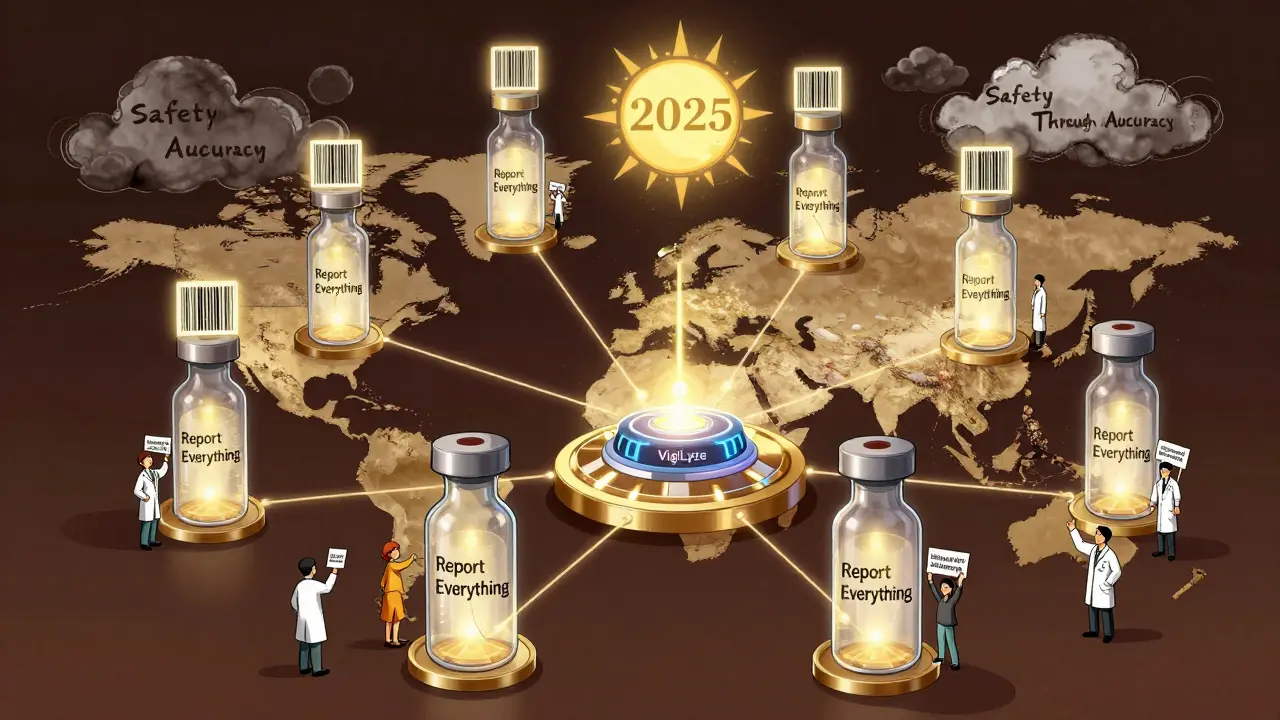
Looking ahead, the International Pharmaceutical Regulators Programme is pushing for a global unique identifier system for biologics-like a barcode for every vial. If adopted by 2026, it could reduce attribution errors by 74%. But it will cost $1.8 billion globally to roll out.
What Providers Need to Do Today
You don’t need AI or fancy software to make a difference. Start with these three steps:
- Write the full name-brand, biosimilar, manufacturer, and suffix. Don’t just write “adalimumab.” Write “Amjevita (adalimumab-azbt).”
- Ask patients what product they received. If they don’t know, check the pharmacy label or prescription slip.
- Report everything, even if you’re unsure. Better to report and have it filtered out than miss a signal.
Pharmacists, too: if you’re substituting, document it. Tell the patient. Update the record. A simple note like “Substituted Humira with Cyltezo” saves lives down the line.
The Bottom Line
Biosimilars are saving billions in healthcare costs. But cost savings shouldn’t come at the cost of safety. The systems we have now work-but only if we use them right. The difference between a safe biosimilar and a dangerous one isn’t in the lab. It’s in the chart, the pharmacy log, and the report that gets filed.
Every time you write down the full name, every time you ask a patient what they got, every time you report a side effect-you’re not just following rules. You’re protecting someone’s life.
Are biosimilars less safe than the original biologic drugs?
No. Extensive studies and real-world data from the U.S., Europe, and Canada show no clinically meaningful differences in safety between biosimilars and their reference products. The European Medicines Agency and FDA both require biosimilars to prove safety and effectiveness before approval. Post-market monitoring has not revealed new or unexpected risks. Any differences in rare side effects are too small to be detected without large-scale surveillance, and current systems are designed to catch them.
Why do biosimilars need a four-letter suffix?
The four-letter suffix helps distinguish one biosimilar from another and from the reference product in reports and records. For example, Humira is adalimumab, while Amjevita is adalimumab-azbt. This makes it possible to track which product caused a side effect. Without the suffix, reports get mixed up, and safety signals can be missed. The FDA introduced this requirement in 2017 to improve pharmacovigilance.
Can biosimilars cause more immune reactions than the original drug?
There’s no evidence that biosimilars cause more immune reactions than the reference product. Immunogenicity is a known risk with all biologics, not just biosimilars. Studies comparing biosimilars like Erelzi and Amjevita to Enbrel and Humira show similar rates of antibody development. However, because biosimilars are made differently, regulators require extra monitoring for this risk. Active surveillance and risk management plans are designed to detect any unusual patterns early.
What happens if a biosimilar is switched with the reference product?
For non-interchangeable biosimilars, switching is not recommended unless the prescriber approves it. For interchangeable biosimilars-approved by the FDA to be substituted without the prescriber’s permission-clinical studies have shown no increased safety risk from multiple switches. The FDA requires manufacturers of interchangeable biosimilars to prove safety through switching studies before approval. Real-world data from Sweden and Denmark, where switching is common, supports this conclusion.
Why are biosimilar adverse event reports so low compared to their usage?
Underreporting is the main reason. Many providers don’t know how to correctly identify the biosimilar, patients aren’t told which product they received, and electronic systems often don’t capture the manufacturer or lot number. In the U.S., biosimilars made up 8.7% of biologic prescriptions in 2021, but only 0.3% of adverse event reports were linked to them. This gap suggests many reactions are being missed or misattributed to the reference product. Better training, labeling, and technology are needed to fix this.


Astha Jain
January 20, 2026 AT 01:21so like… biosimilars are just fancy generics but with extra steps? why do we even bother with the suffixes if no one uses them right? i mean, come on. its adalimumab. its not rocket science.
Jacob Hill
January 20, 2026 AT 15:25Actually, it's not that simple-there's a critical distinction between small-molecule generics and complex biologics. Biosimilars aren't copies; they're highly similar, but not identical, due to inherent variability in biological production. The four-letter suffix? It's not bureaucracy-it's pharmacovigilance infrastructure. Without it, we can't trace adverse events to the correct product. And yes, 63% of physicians being confused? That's a systemic failure, not a minor oversight.
Aman Kumar
January 21, 2026 AT 12:59Let me be blunt: this entire system is a house of cards built on wishful thinking. You talk about 'immunogenicity' like it's some rare anomaly, but in clinical practice, we see flares, hypersensitivity, and loss of response daily-and half the time, we don't even know which product the patient received. The FDA's suffix system? A band-aid on a hemorrhage. And don't get me started on how pharmacies swap without documentation. This isn't safety-it's liability laundering.
Health Canada's $500K fines? Good. But until every single vial has a blockchain-tracked lot number and every prescriber is fined for sloppy documentation, we're just rearranging deck chairs on the Titanic.
And let's not pretend the EMA's AI tool is magic. It flags patterns, sure-but it doesn't fix the fact that nurses are still handwriting 'adalimumab' on paper forms. Technology won't save us if the culture refuses to change.
Christi Steinbeck
January 22, 2026 AT 11:43Y’all are overcomplicating this. If a patient has a reaction, you write down the full name. That’s it. No AI. No blockchain. Just: 'Cyltezo (adalimumab-adaz) - manufacturer: Boehringer Ingelheim - lot #12345'. Do that every time. Tell the patient. Document it. Report it. It’s not hard. It’s just inconvenient. And convenience is why we’re failing.
Stop waiting for the system to fix itself. Be the person who does it right-even when no one’s watching. That’s how you protect someone’s life.
Lydia H.
January 23, 2026 AT 04:26It’s wild to think that something so complex-living cells, protein folding, glycosylation patterns-is being treated like a pharmacy substitution game. We wouldn’t swap out different brands of insulin without tracking, right? So why do we treat biosimilars like generic ibuprofen? It’s not just about safety-it’s about respect for the science. And the patients. They deserve better than being guinea pigs in a cost-cutting experiment.
Also, I’ve seen patients cry because they thought they were getting 'the real one'-and then they had a reaction. No one told them they were switched. That’s not just a reporting problem. That’s a moral one.
Jackson Doughart
January 25, 2026 AT 02:28The data is clear: no clinically meaningful differences in safety profiles have been demonstrated between biosimilars and their reference products. The regulatory frameworks in the U.S., EU, and Canada are robust, and active surveillance systems such as Sentinel and VigiLyze have demonstrated high sensitivity and specificity. The underreporting issue is not a failure of the biosimilars themselves, but of documentation practices, communication gaps, and systemic inertia within clinical workflows. The solution lies not in radical overhauls, but in disciplined adherence to existing best practices.
Writing the full name. Asking the patient. Reporting the event. These are not burdens-they are professional obligations. The technology exists. The guidelines are published. What’s missing is consistency.
Jake Rudin
January 25, 2026 AT 18:48What if the real problem isn't biosimilars-but the fact that we’ve outsourced medical judgment to cost metrics? We're not monitoring safety because we're afraid of what we might find-we're monitoring it because regulators forced us to. The entire pharmacovigilance system is reactive, fragmented, and underfunded. We track side effects like it's a compliance checkbox, not a sacred duty.
And yet, we expect miracles: that a complex, living molecule, made in a bioreactor by human hands, will behave identically across 500 batches, in 10,000 patients, with no way to trace which vial went where.
That’s not science. That’s faith.
Lewis Yeaple
January 26, 2026 AT 08:19It’s statistically implausible that biosimilars are 29 times less likely to cause adverse events than their reference products when they account for nearly 9% of biologic prescriptions. The 0.3% reporting rate is not evidence of safety-it’s evidence of systemic failure. The FDA’s suffix system is a step in the right direction, but it’s undermined by inconsistent implementation. Until manufacturers, prescribers, pharmacists, and patients are all held to the same standard of documentation, we’re just pretending to monitor safety.
Phil Hillson
January 28, 2026 AT 07:41Why are we even talking about this? Biosimilars are just cheaper knockoffs. Of course people are having reactions. Of course no one knows what they’re taking. Of course hospitals don’t track lot numbers. This whole system is a joke. The pharma companies don’t care. The doctors are too busy. The patients don’t know. And now we’re gonna spend $1.8 billion on barcodes? Please. We need to stop pretending this is medicine and start admitting it’s corporate accounting dressed in a lab coat.
Tracy Howard
January 29, 2026 AT 04:34Canada’s doing it right. We don’t play around. We mandate manufacturer names. We track lots. We fine violators. And yes-we’re better than the U.S. at this. You want to know why your biosimilar reporting is a mess? Because you let pharmacies and insurance companies dictate medical practice. We don’t. In Canada, we put patient safety above profit margins. End of story.
Stop comparing yourselves to the U.S. You’re not even in the same league.
Malikah Rajap
January 29, 2026 AT 07:13Okay, but… what if we’re all missing the point? What if the real question isn’t whether biosimilars are safe-but whether we’re ready to care enough to make them safe? We have the tools. We have the data. We have the laws. But do we have the heart? Do we really care if Mrs. Rivera gets a reaction because her pharmacist didn’t write down the lot number? Or are we just waiting for someone else to fix it?
Maybe safety isn’t about systems. Maybe it’s about showing up.