
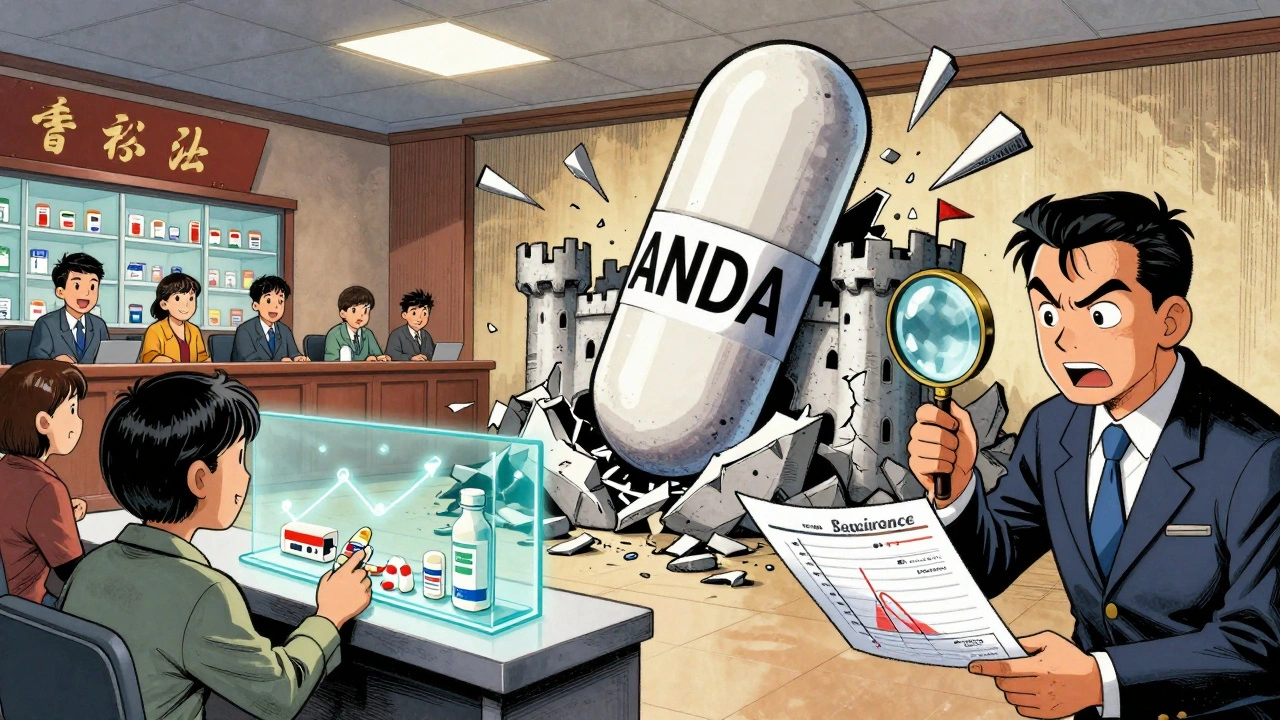
When you pick up a prescription and see a generic label instead of the brand name, you’re seeing the result of one of the most impactful public health policies in modern medicine. The FDA’s authorization of generic drugs isn’t just about saving money-it’s a carefully designed legal and scientific system that ensures safety, effectiveness, and access. At its core, this system was built by the Hatch-Waxman Act of 1984, a law that changed how drugs reach patients in the U.S.
How the Hatch-Waxman Act Created the Generic Drug Pathway
Before 1984, bringing a generic drug to market meant repeating every single clinical trial done by the brand-name company. That meant years of work, millions in costs, and few generics ever made it to shelves. The Hatch-Waxman Act, officially called the Drug Price Competition and Patent Term Restoration Act, fixed that. It created the Abbreviated New Drug Application, or ANDA, a streamlined process that lets generic manufacturers prove their drug works without redoing clinical studies. The law didn’t lower standards-it lowered waste. Instead of testing safety and effectiveness from scratch, generic makers only need to show their product matches the brand drug in key ways: same active ingredient, same strength, same way it’s taken (pill, injection, etc.), and same effect on the body. The FDA already confirmed the original drug was safe and effective. The generic just has to prove it does the same thing. This wasn’t just a win for manufacturers. It was a win for patients. Today, 9 out of 10 prescriptions filled in the U.S. are for generic drugs. That’s not luck. It’s the result of a legal framework designed to make medicine affordable without sacrificing quality.What the FDA Actually Requires for Approval
The FDA doesn’t approve generics based on trust. They demand proof. Every generic drug must meet five strict criteria:- Same active ingredient as the brand drug
- Same dosage form (tablet, capsule, liquid, etc.)
- Same route of administration (oral, topical, injected)
- Same strength and use indications
- Same bioequivalence profile
The ANDA Submission and Review Process
Getting an ANDA approved isn’t a quick form-filling exercise. It’s a complex, multi-step process that takes months, sometimes years. First, the applicant submits the application with detailed Chemistry, Manufacturing, and Controls (CMC) data. This includes how the drug is made, how it’s tested, and how quality is maintained batch after batch. Then comes labeling-everything on the box and the patient information leaflet must match the brand drug exactly. The FDA’s Division of Filing Review checks if the application is complete. If it’s missing key data, they issue a Refuse-to-Receive letter. No review happens. No refund. The company must fix it and pay again. If it passes, the clock starts. Under the Generic Drug User Fee Amendments (GDUFA), the FDA has performance goals: 10 months for a standard ANDA, 8 months for priority applications-like first generics or drugs in shortage. That’s a big improvement from the old 180-day target, which rarely worked in practice. The review team digs into every page. They check bioequivalence data, manufacturing processes, stability tests, and even the packaging. One mistake in the labeling or a flawed study can send the application back for more data. First-time applicants often get multiple rounds of questions. Experienced companies, like Teva or Sandoz, have teams dedicated to getting it right the first time.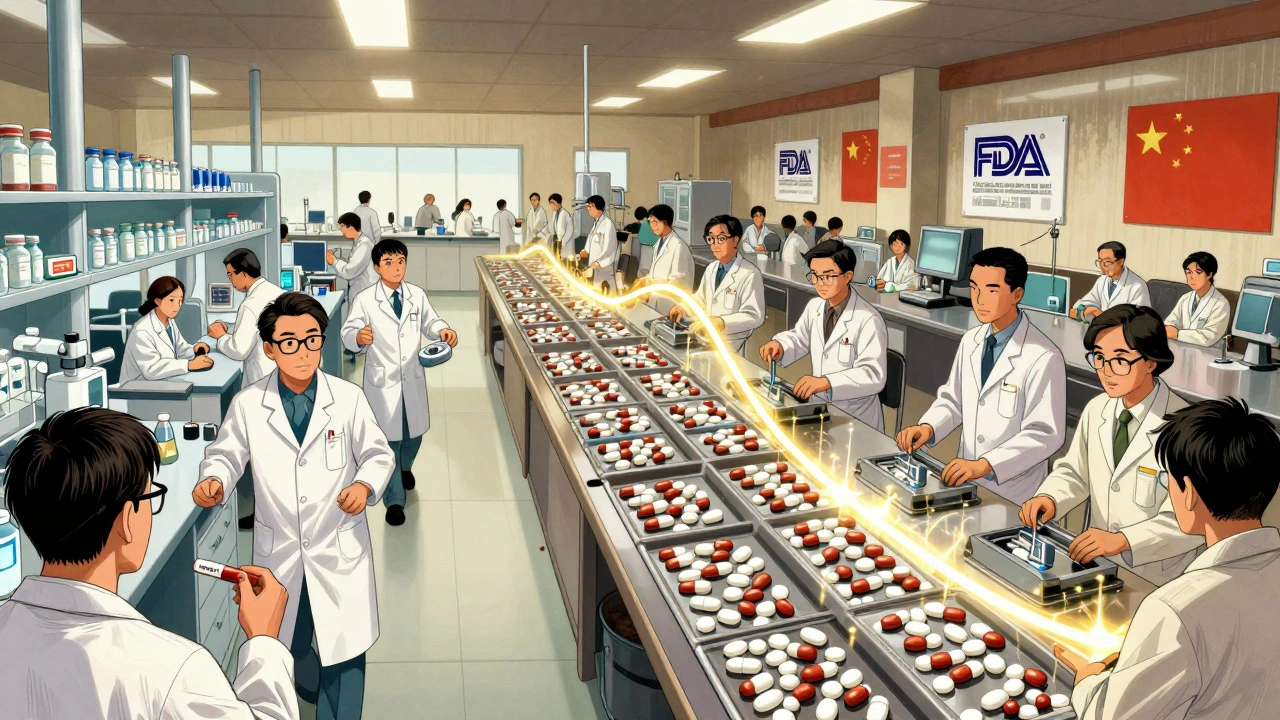
Patents, Exclusivity, and Legal Hurdles
Here’s where things get messy. The Hatch-Waxman Act gave brand-name companies a 5-year exclusivity period for new drugs. But it also gave generic makers a tool to challenge those patents. Generic companies can file a Paragraph IV certification-basically saying, “Your patent is invalid or we don’t infringe it.” This triggers a 30-month stay. If the brand company sues, the FDA can’t approve the generic until the lawsuit is resolved or the 30 months are up. This is where delays happen. Some companies file dozens of weak patents to stretch out exclusivity. The FDA calls this “patent thickets,” and it’s a major reason some generics take years to appear. But the system isn’t broken-it’s being updated. The FDA’s Drug Competition Action Plan pushes back against these tactics. In 2023, they approved the first generic of Vivitrol, an extended-release naltrexone injection used to treat opioid addiction. That approval was fast-tracked because of the public health need. The FDA is getting better at cutting through legal noise when real patients are waiting.Complex Generics: The New Frontier
Not all drugs are easy to copy. Inhalers, topical creams, injectable suspensions, and extended-release pills are far more complicated than a simple tablet. Their performance depends on how the drug is delivered, not just how much is in the bloodstream. For these, bioequivalence studies aren’t enough. The FDA requires additional data-like how the drug disperses in the lung or how it’s absorbed through the skin. These are called “complex generics,” and they’ve been a bottleneck for years. That’s why the FDA launched its Complex Generic Drug Product Development Resources initiative. They’re publishing guidance, hosting workshops, and working with manufacturers to build better testing methods. In 2023, they approved 90 first-time generic drugs. A third of those were complex products. Progress is slow, but it’s happening.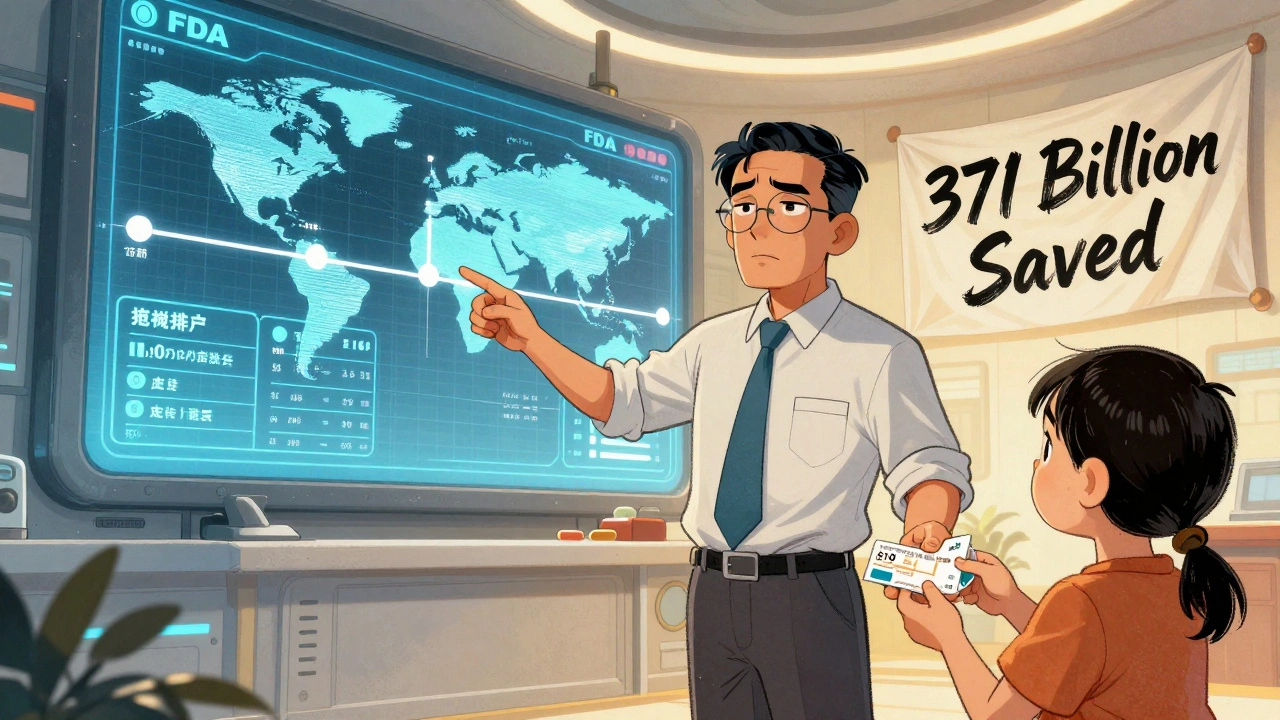
Why This Matters for Patients and the System
The real impact of FDA generic approval isn’t in the numbers-it’s in the lives. A generic version of a diabetes drug can cost $10 instead of $500. A heart medication can go from $300 a month to $20. For people on fixed incomes, that’s the difference between taking their medicine and skipping doses. The U.S. generic drug market was worth $125 billion in 2022. That’s not just profit-it’s savings. Patients saved an estimated $371 billion in 2023 alone by using generics instead of brand drugs. And it’s not just about cost. More competition means brand-name companies can’t raise prices without losing market share. The FDA’s goal isn’t to replace brands-it’s to make sure there’s always a cheaper, equally safe option available.What’s Next for Generic Drugs?
In October 2025, the FDA announced a new pilot program to speed up reviews for generic drugs made and tested in the U.S. This is a direct response to supply chain concerns. If a company builds its manufacturing plant in Ohio instead of India, they get faster approval. It’s a way to bring production home without sacrificing quality. Biosimilars-generic versions of biologic drugs like Humira or Enbrel-are the next wave. They’re not covered under the ANDA pathway. They have their own rules under the BPCIA. But the same principle applies: make effective drugs cheaper and more accessible. The system isn’t perfect. Patent delays, complex products, and global supply chains still cause problems. But the framework-the Hatch-Waxman Act, the ANDA process, GDUFA, and FDA oversight-works. It’s been tested, refined, and proven over 40 years. Every time you fill a prescription and see a generic, you’re benefiting from a system built to put health before profit. And that’s not just policy. It’s public health in action.Are generic drugs as safe as brand-name drugs?
Yes. The FDA requires that generic drugs meet the same strict standards for safety, strength, quality, and performance as brand-name drugs. They use the same active ingredients and must prove bioequivalence through clinical testing. The only differences are in inactive ingredients like fillers or dyes, which cannot affect how the drug works.
How long does it take for the FDA to approve a generic drug?
Under current FDA performance goals, a standard ANDA application takes about 10 months to review. Priority applications-such as first generics or drugs in shortage-are reviewed in 8 months. These timelines are set by the Generic Drug User Fee Amendments (GDUFA), which replaced older, slower review periods.
Why are some generic drugs not available even after the patent expires?
Even after a patent expires, generic versions may be delayed by legal challenges. Brand-name companies can file lawsuits under the Hatch-Waxman Act, triggering a 30-month stay that blocks FDA approval. Other reasons include complex drug formulations that require extra testing, or a lack of manufacturer interest if the market is too small.
Do generic drugs come from the same factories as brand-name drugs?
Yes. Many brand-name drugs are made in the same facilities as their generic versions. The FDA inspects all manufacturing sites-whether they produce brand or generic drugs-to ensure they meet the same quality standards. In fact, up to half of all generic drugs are made by companies that also produce brand-name products.
Can a generic drug be different in appearance from the brand version?
Yes. U.S. law requires generic drugs to look different from brand-name drugs to avoid trademark infringement. This means they can have a different color, shape, or size. But the active ingredient, strength, dosage form, and effect must be identical. Appearance has no impact on how the drug works.
What is bioequivalence and why is it important?
Bioequivalence means the generic drug delivers the same amount of active ingredient into the bloodstream at the same rate as the brand drug. It’s proven through studies in healthy volunteers, measuring blood levels over time. This ensures the generic will work the same way in the body-no more, no less. Without bioequivalence, the FDA cannot approve the drug.


Akash Sharma
December 3, 2025 AT 20:28The Hatch-Waxman Act was a masterstroke in balancing innovation and access. I’ve worked in pharma compliance in Bangalore, and seeing how ANDAs are handled here versus the U.S. is fascinating. Indian manufacturers have become global leaders not because they cut corners, but because they mastered the science behind bioequivalence. The 80-125% range? It’s not arbitrary-it’s based on pharmacokinetic variance in human populations. What’s wild is that some generics from India are now being re-imported into the U.S. as cheaper alternatives to brand drugs. The system works, but only if regulators stay sharp.
Justin Hampton
December 5, 2025 AT 01:14Let’s be real-the FDA doesn’t care about patients. They care about lawsuits. Every time a generic fails, it’s the same story: someone dies, the family sues, the FDA gets blamed. So they over-test, over-regulate, and delay approvals just to cover their asses. The 10-month timeline? That’s a joke. I’ve seen ANDAs sit for 2 years because some analyst in Silver Spring didn’t like the font on the label.
Pamela Mae Ibabao
December 6, 2025 AT 17:36Actually, Justin, your take is dangerously reductive. The FDA’s job isn’t to prevent lawsuits-it’s to prevent deaths. And guess what? Generic drugs have saved millions of lives precisely because they’re rigorously tested. You think the 80-125% bioequivalence window is arbitrary? Try explaining that to someone whose blood pressure spiked because their ‘generic’ was actually under-dosed. The system’s not perfect, but it’s science, not bureaucracy.
Gerald Nauschnegg
December 8, 2025 AT 00:59Wait, so if a generic pill looks different, it’s still the same drug? But what if I’m allergic to the dye? I had a cousin who broke out in hives from a generic metformin because of the red coating. The FDA says inactive ingredients don’t matter-but they clearly do. Why isn’t there a database for this? Why can’t I look up which dye is in my pill before I take it? This feels like a massive oversight.
Palanivelu Sivanathan
December 9, 2025 AT 21:09Bro… the whole system is a paradox, man. We want cheap drugs, but we punish the companies that make them with endless paperwork. The Hatch-Waxman Act? It was supposed to be a bridge-but now it’s a maze. Patents are weapons. The FDA is a gatekeeper. And patients? We’re just… collateral. I mean, think about it-why does a pill that costs 2 cents to make sell for $500? It’s not science-it’s capitalism with a lab coat. The real question isn’t ‘is it safe?’-it’s ‘who benefits?’
Joanne Rencher
December 9, 2025 AT 22:22So generics are just as good? Yeah right. I’ve had three different versions of my thyroid med and each one felt different. One made me shaky, another made me sleepy. The FDA says it’s all in my head. But my body knows better. Why should I risk my health for a $10 pill when the brand works perfectly? This whole thing feels like a scam.
Erik van Hees
December 11, 2025 AT 05:02Actually, Joanne, you’re wrong. The FDA’s bioequivalence standards are stricter than most countries’. In Europe, the range is 80-125% too, same as the U.S. The WHO accepts it. The EMA accepts it. It’s not placebo-it’s pharmacokinetics. And your thyroid story? That’s a classic case of patient variability. Your body absorbs meds differently depending on gut health, diet, even stress. Switching generics doesn’t change the drug-it changes your physiology. The brand isn’t magic-it’s just the first one you tried.
Cristy Magdalena
December 12, 2025 AT 23:28It’s not just about absorption. I’ve read the FDA’s inspection reports. Some generic facilities have had multiple 483s for contamination, but still get approved because the bioequivalence data looks clean. That’s not safety-it’s prioritization. They’re not inspecting the same way they do for brand-name drugs. And don’t get me started on the fact that 80% of generic APIs come from China and India. The FDA inspects less than 5% of those facilities. That’s not oversight. That’s negligence dressed up as policy.
Adrianna Alfano
December 14, 2025 AT 04:43Okay, I just want to say how much this post means to me. I’m a nurse in rural Ohio, and my patients live on $1200 a month. One of them told me she was skipping her insulin because the brand cost $400. Then she got the generic-$12. She cried. That’s not a statistic-that’s a human being. I don’t care if the dye is different or if the pill is blue instead of green. What matters is she’s alive today because this system works. Thank you for explaining it so clearly.
Casey Lyn Keller
December 15, 2025 AT 17:03Let’s not pretend this isn’t a controlled monopoly. The FDA approves generics, sure-but only after the brand company’s patent expires. And even then, they delay it with lawsuits and patent thickets. The real reason we don’t have cheaper insulin is because Big Pharma owns the FDA through lobbying. The Hatch-Waxman Act was never meant to help patients-it was meant to delay competition for 12 years. And now they’re doing it with biosimilars too. This isn’t public health. It’s corporate theater.
Jessica Ainscough
December 15, 2025 AT 23:28Thank you for writing this. I’ve been trying to explain this to my mom for years-she still thinks generics are ‘fake medicine.’ I printed out the bioequivalence data and showed her the FDA inspection reports. She finally got it. Sometimes the science is boring, but it’s the only thing keeping people alive. You did good.
May .
December 16, 2025 AT 05:26Sara Larson
December 16, 2025 AT 15:40This is everything. 🙌 I’ve been researching this for my dad’s heart meds and this post literally saved me hours. The bioequivalence thing? Mind blown. I had no idea the FDA does blood draws on healthy volunteers. And the fact that they inspect factories in India like they do in New Jersey? That’s insane. We need more people talking about this. This isn’t just policy-it’s justice. 💙