
Most people think a runny nose and sore throat mean they’ve caught a cold. But what if it’s the flu? The difference isn’t just in how bad you feel-it’s in how dangerous it can be. Every year, millions of people in the U.S. mistake flu for a bad cold, delay treatment, and end up in the hospital. And too often, they take antibiotics that do nothing-because these illnesses are caused by viruses, not bacteria.
How to Tell a Cold From the Flu
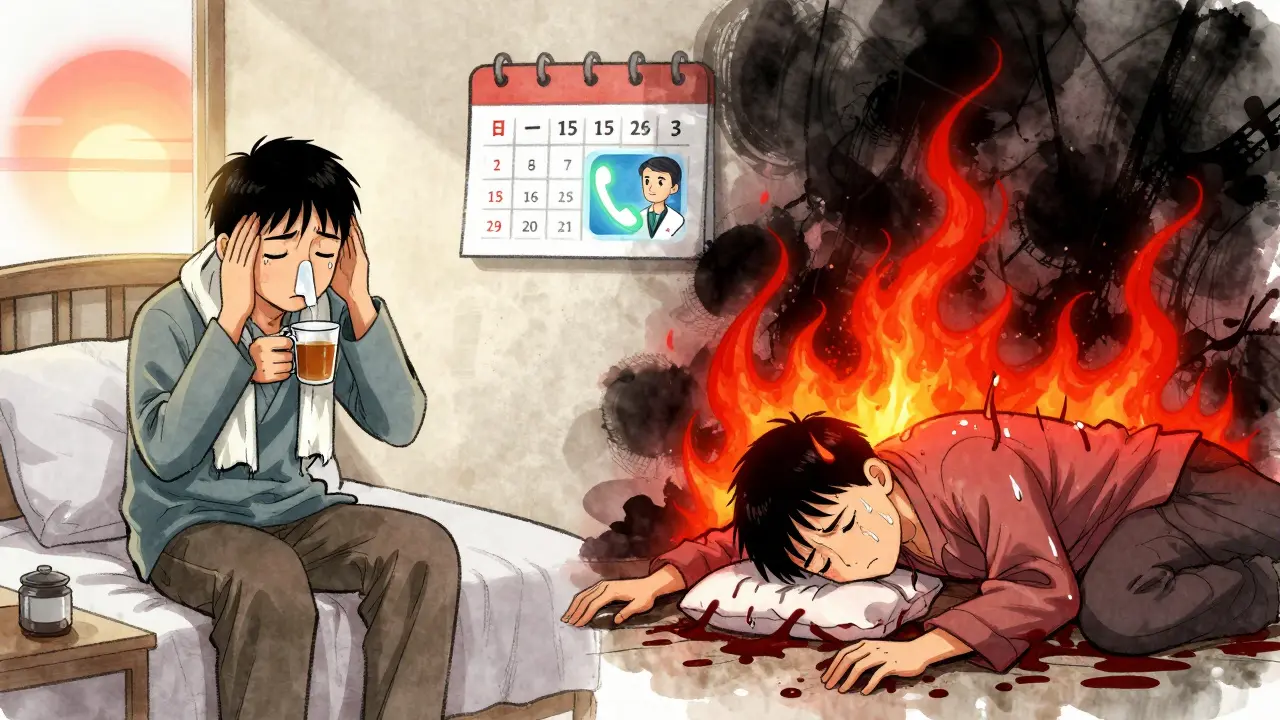
The common cold and influenza start with similar symptoms: cough, sore throat, congestion. But that’s where the similarities end. A cold creeps in. You wake up with a scratchy throat, then a stuffy nose, then a mild headache. It takes two or three days to fully hit. Fever? Rare in adults-only 1 in 5 might get a low-grade one under 100°F. Most colds fade in a week. Sometimes 10 days.
Flu hits like a truck. One moment you’re fine. The next, you’re shaking, achy, and burning up. Fever hits fast-often above 102°F-and lasts 3 to 4 days. Muscle pain is severe, not just a little soreness. Fatigue isn’t just being tired-it’s exhaustion that drags on for weeks. Headaches are common. Chest discomfort? That’s a red flag. About 7 in 10 flu patients feel pressure or tightness in their chest. In colds? Only 2 in 10.
The biggest giveaway? Extreme exhaustion. If you feel like you’ve been hit by a bus and can’t get out of bed, it’s not a cold. It’s flu. And that level of fatigue doesn’t happen with rhinoviruses-the main cause of colds. The CDC says 60% of flu patients report this kind of collapse. Zero percent of cold patients do.
What Happens When It Gets Worse
Colds rarely turn serious. Maybe you get a sinus infection-about 5% of cases-or an ear infection, mostly in kids. That’s it. But flu? It’s a different story.
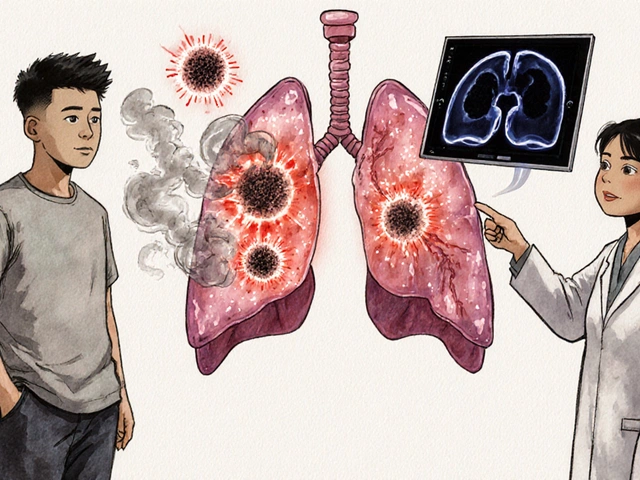
Every year, flu sends 140,000 to 710,000 people to U.S. hospitals. About 1 in 5 hospitalized flu patients develop pneumonia. Some get bacterial pneumonia on top of the viral infection. Others develop sepsis, heart inflammation, or worsening of chronic conditions like asthma or heart failure. The CDC estimates flu kills between 12,000 and 52,000 Americans annually-mostly people over 65, pregnant women, or those with weakened immune systems.
Older adults account for 70 to 85% of flu-related deaths. Why? Their immune systems don’t respond as strongly. That’s why the flu vaccine is so critical for this group-but even then, effectiveness varies. That’s why antivirals matter.
Antivirals: Only for Flu, Not Colds
If you have the flu, there are four FDA-approved antivirals that actually work: oseltamivir (Tamiflu), zanamivir (Relenza), peramivir (Rapivab), and baloxavir (Xofluza). These drugs don’t cure the flu. But they can shorten the illness by 1 to 2 days and lower your risk of complications-especially if taken within 48 hours of symptoms starting.
Oseltamivir is the most common. A 5-day course of generic Tamiflu costs $15 to $30. Brand-name? Around $105 to $160 without insurance. Baloxavir is a single-dose pill that cuts viral load by 99% in 24 hours. But it costs $150 to $200. Insurance helps, but not always enough. One patient on Reddit said, “Paid $180 with insurance. Felt like a waste for my mild case.”
Here’s the catch: antivirals do nothing for colds. Rhinoviruses have over 160 different strains. No single drug can target them all. That’s why you won’t find an antiviral pill for your runny nose. Trying to use Tamiflu for a cold is like using a fire extinguisher on a candle-it’s the wrong tool.
For colds, stick to symptom relief: decongestants like pseudoephedrine can reduce nasal blockage by 30-40%. Acetaminophen brings down fever and aches. Zinc lozenges? Some studies say they can shorten a cold by 1.6 days-if you start within 24 hours and take at least 75mg daily. But many people report a terrible metallic taste. One WebMD reviewer gave them a 2.4 out of 5 rating: “Tasted like licking a battery.”
Why Timing Matters
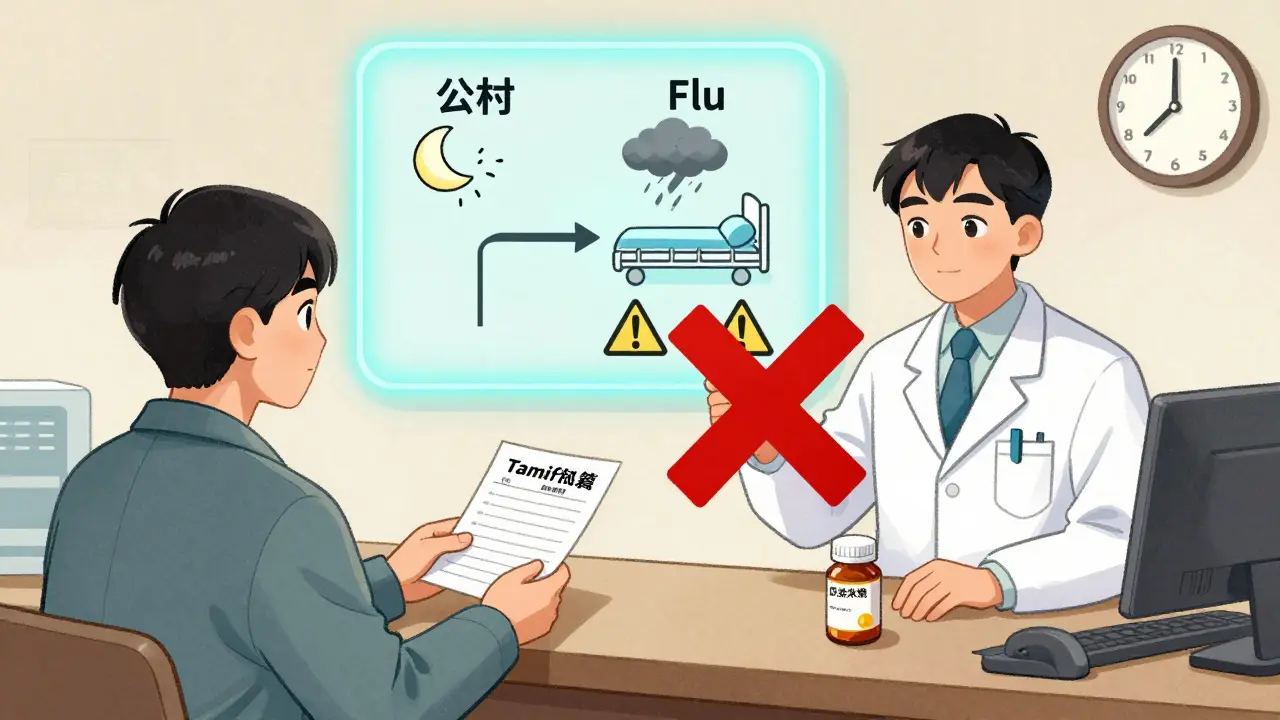
Flu antivirals work best the sooner you take them. After 48 hours, their benefit drops sharply. A 2019 study in the New England Journal of Medicine showed that high-risk patients who started antivirals within 48 hours had a 34% lower chance of being hospitalized. But only 18% of those patients actually get them in time.
Why? Because most people wait. They think, “I’ll just rest it off.” Or they go to a clinic on day 3, and the doctor says, “It’s probably just a cold.” That’s dangerous. Dr. William Schaffner from Vanderbilt, who advises the CDC, says: “We’re missing a huge opportunity to prevent serious outcomes.”
If you’re at risk-over 65, pregnant, diabetic, on immunosuppressants-and you feel flu-like symptoms, don’t wait. Call your doctor. Ask for a rapid molecular test. These tests give results in 15 minutes and are 95% accurate. Costs range from $25 to $50. Some urgent care centers offer them for free if you have insurance.
What About the Flu Shot?
The flu vaccine is still the best defense. The 2023-2024 vaccine protects against four strains: H1N1, H3N2, and two B strains. It’s updated every year based on global surveillance. Even if you get the flu after vaccination, your symptoms are usually milder.
But vaccines aren’t perfect. Effectiveness swings between 40% and 60% each year. That’s why antivirals are still essential. They’re the safety net when the vaccine doesn’t fully protect you.
And new vaccines are coming. Moderna is testing an mRNA flu vaccine-similar to the ones used for COVID-19-with Phase III results expected in mid-2024. Scientists are also working on a “universal” flu vaccine that targets parts of the virus that don’t change every year. Early animal studies show 70% protection across multiple strains. That could change everything.
What to Do If You’re Sick
If you’re feeling sick, ask yourself:
- Did symptoms start suddenly, with fever and body aches? → Likely flu. Call your doctor within 24 hours.
- Did it creep in over days, with mostly nasal stuffiness? → Likely a cold. Rest, hydrate, use OTC meds.
- Are you over 65, pregnant, or have a chronic illness? → Don’t wait. Get tested and ask about antivirals even if symptoms seem mild.
- Do you have trouble breathing, chest pain, or confusion? → Go to the ER. These are emergency signs.
And please-don’t take antibiotics. They don’t kill viruses. Using them for colds or flu contributes to antibiotic resistance, which kills 35,000 Americans every year. The CDC says 30% of outpatient antibiotic prescriptions are unnecessary. Don’t be part of that statistic.

When to See a Doctor
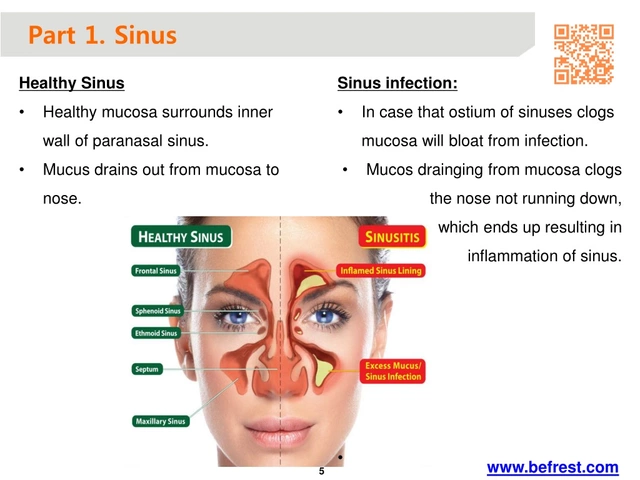
For colds: See a doctor only if symptoms last more than 10 days, you develop a high fever after day 3, or you have thick green nasal discharge with facial pain-that could mean a sinus infection needing antibiotics.
For flu: See a doctor within 48 hours of symptoms. Especially if you’re high-risk. Even if you’re young and healthy, if you’re not improving after 3 days, or if you’re getting worse after seeming better, get checked. That’s when secondary infections like pneumonia often start.
What’s New in 2025
This season, flu activity started earlier than usual in Australia and parts of the southern hemisphere, a sign that cold and flu seasons may be lengthening due to climate change. Studies show flu seasons have grown by about 12 days since 2000.
Antiviral resistance is rising, too. About 1.5% of circulating H1N1 strains are now resistant to oseltamivir. That’s still low, but it’s growing. That’s why having multiple antiviral options matters.
Workplaces are catching on. Nearly 80% of Fortune 500 companies now offer free flu shots and on-site testing. Some even pay for antivirals. Reducing absenteeism saves money-and lives.
Can you get the flu from the flu shot?
No. The flu vaccine contains either inactivated virus or just a piece of the virus-it can’t cause infection. Some people feel mild side effects like soreness, low-grade fever, or muscle aches, but that’s your immune system responding, not the flu. If you get sick right after the shot, you were likely exposed before vaccination or caught another virus.
Is it safe to take antivirals if I’m pregnant?
Yes. The CDC and the American College of Obstetricians and Gynecologists recommend antivirals like oseltamivir for pregnant women with flu. Pregnancy increases your risk of severe illness, and antivirals reduce hospitalization risk by up to 35%. The benefits far outweigh any potential risks.
Do zinc lozenges really help with colds?
Some studies show zinc lozenges can shorten a cold by about 1.6 days if taken within 24 hours of symptoms and at a dose of 75mg daily. But results are mixed. Many people can’t tolerate the metallic taste. The CDC warns that long-term use may cause copper deficiency. It’s not a guaranteed fix, but it’s worth trying if you’re okay with the taste.
Why don’t we have an antiviral for the common cold?
There are over 160 different strains of rhinovirus, the main cause of colds. Each one is slightly different, making it nearly impossible to create a single drug or vaccine that works against all of them. Flu viruses change too, but they’re far fewer in number and easier to target. That’s why flu antivirals exist-and cold ones don’t.
Can you have flu and COVID-19 at the same time?
Yes. Both viruses circulate at the same time, and it’s possible to get infected with both. Symptoms overlap, so testing is key. Loss of taste or smell is more common with COVID-19, but not always. If you’re feeling unusually sick, get tested for both. Treatment differs-flu gets antivirals, COVID-19 gets different antivirals like Paxlovid.
How do I know if I need a rapid flu test?
If you’re high-risk (over 65, pregnant, immunocompromised, or have asthma or heart disease) and have flu-like symptoms, ask for a rapid molecular test. Even if you’re young and healthy, if symptoms are severe or you’re not improving after 2 days, testing helps guide treatment. Don’t rely on symptom charts alone-they’re only 60-70% accurate.
Final Thoughts
Knowing the difference between a cold and the flu isn’t just about comfort-it’s about safety. Flu can kill. Colds usually don’t. Antivirals save lives, but only if you use them at the right time. Don’t wait for symptoms to get worse. Don’t assume it’s just a cold. If you’re at risk or feel sudden, severe illness, act fast. Talk to your doctor. Get tested. Start treatment. Your body will thank you.


John Hay
December 21, 2025 AT 22:52Flu hits like a freight train. I had it last year-thought it was a cold until I couldn’t stand up. Fever at 103, muscles felt like they’d been run over by a truck. Took Tamiflu on day two. Didn’t cure it, but I was out of bed two days sooner. No antibiotics. Never again.
And yes, the shot isn’t perfect, but it’s the only shield we’ve got. Skip it and you’re gambling with your life-and everyone around you.
Stacey Smith
December 22, 2025 AT 22:59Antivirals should be free. Why are we paying $180 for a pill that only cuts a few days? This is healthcare in America-broken. Flu kills. But the system doesn’t care until it’s too late.
Ben Warren
December 23, 2025 AT 13:10It is, in fact, a matter of considerable public health concern that the general populace continues to conflate the common cold with influenza, a condition which, as elucidated in the foregoing exposition, possesses a significantly elevated morbidity and mortality profile. The failure to recognize the temporal onset, intensity of systemic symptoms, and potential for secondary bacterial complications constitutes a critical deficit in health literacy. Moreover, the widespread and unwarranted prescription of antibiotics for viral etiologies-particularly in outpatient settings-represents not merely a therapeutic misstep, but a contributory factor to the global crisis of antimicrobial resistance, which the World Health Organization has unequivocally classified as one of the top ten threats to human health. The data presented herein, drawn from CDC surveillance and peer-reviewed clinical trials, are unequivocal: early antiviral intervention in high-risk populations reduces hospitalization rates by nearly one-third. The persistence of misinformation and delay in care is, therefore, not merely negligent-it is ethically indefensible.
Teya Derksen Friesen
December 24, 2025 AT 05:42I’ve lived in Canada for over 20 years, and I’ve never paid for a flu test or antiviral. Our public system covers it. No one here thinks a fever and body aches are ‘just a cold.’ We get tested. We get treated. We don’t wait. It’s not magic-it’s policy. Maybe if the U.S. stopped treating health like a luxury, fewer people would end up in ICU.
Sandy Crux
December 25, 2025 AT 09:50…And yet… you all seem to forget that the ‘flu vaccine’ is developed based on predictions… made months in advance… by a consortium of corporations… who profit from its sale… and who have, historically, been wrong more often than not… and who, in 2017, predicted the wrong strain… and then… blamed the public for ‘not being vaccinated enough’… while their profits soared…
…And now… you want me to trust… another ‘antiviral’… that costs $200… when the real problem… is… corporate greed… disguised as medicine…?
…I’d rather eat garlic… and pray… than take another pill… from the same system… that sold me… 5G towers… as ‘safe’…
Hannah Taylor
December 25, 2025 AT 10:59lol the flu shot is just a microchip to track you. i got sick after mine and my phone started buzzing in my pocket at night. they're using the flu to implant nanobots. also zinc lozenges are banned in europe because they make you forget your own name. and tamiflu? that's just the government's way of making you docile. ask your neighbor who works at the CDC. they'll tell you.
Jason Silva
December 25, 2025 AT 21:52Bro, I got the flu last year and took Xofluza. One pill. Done. Felt like a superhero. 🦸♂️
But my boss made me come in on day 2 because ‘we’re short-staffed.’ I almost died. Companies need to stop treating sick people like disposable tools. If you’re running a fever, STAY HOME. Your life > your productivity.
Theo Newbold
December 27, 2025 AT 17:34The entire premise of this article is flawed. Antivirals are not a ‘safety net.’ They’re a Band-Aid on a hemorrhage. The real issue is that we’ve outsourced public health to pharmaceutical companies whose only incentive is profit, not prevention. Vaccines are underfunded. Testing is expensive. Antivirals are priced to exclude the poor. The fact that we’re even debating whether someone should pay $180 for Tamiflu is proof that the system is broken. Stop treating symptoms. Fix the infrastructure.
Cara C
December 28, 2025 AT 19:42Thanks for laying this out so clearly. I work in a clinic and see people every week who come in on day 4 saying, ‘I thought it was just a cold.’ We’ve got to do better at education. Not just in hospitals-but in schools, workplaces, social media. A simple post like this could save someone’s life. Keep sharing facts like this.
Michael Ochieng
December 29, 2025 AT 05:12Coming from Kenya, I’ve seen how access to medicine changes everything. Here, people wait until they’re dying to see a doctor. In Nairobi, a flu test costs more than a week’s pay. No one takes antivirals unless they’re rich. I’m glad this info is out there-because awareness is the first step. Maybe one day, flu won’t be a privilege to treat. It’ll just be something we all get help for.