OTC Interactions: What You Need to Know About Over-the-Counter Drug Risks
When you pick up an OTC interaction, a harmful reaction between over-the-counter medications and other drugs or supplements. Also known as non-prescription drug clash, it happens when something you buy without a prescription changes how another medicine works in your body. This isn’t rare. Millions of people take ibuprofen with blood pressure pills, antihistamines with antidepressants, or St. John’s Wort with birth control—and don’t realize they’re risking side effects, hospital visits, or even life-threatening drops in drug effectiveness.
Many think over-the-counter medications, drugs sold without a prescription like pain relievers, cold medicines, and antacids are harmless because they’re easy to get. But that’s the trap. Acetaminophen can wreck your liver if you’re on seizure meds. Antacids can block thyroid pills from absorbing. Even common sleep aids like diphenhydramine can make confusion worse in older adults taking heart or dementia drugs. And then there’s herbal supplements, natural products like St. John’s Wort, garlic pills, or ginkgo that act like drugs in your body. They’re not regulated like prescriptions, so their strength varies, and their interactions are often ignored by doctors who assume they’re "safe." But St. John’s Wort can drop warfarin levels by 30%, making blood clots likely. Garlic pills thin your blood like aspirin—dangerous before surgery.
Drug interactions, when two or more substances affect each other’s effects in your body don’t always cause immediate symptoms. Sometimes, they slowly reduce your medication’s power. You might think your blood pressure isn’t dropping because your pills stopped working—but it’s the antacid you take with them. Or your cholesterol meds aren’t helping because you’ve been popping fish oil daily. These aren’t accidents. They’re predictable. And they’re preventable.
You don’t need to stop using OTC drugs. You just need to know what’s in them and what else you’re taking. Check labels. Ask your pharmacist. Keep a list of everything you swallow—even gummy vitamins. The OTC interactions you don’t know about are the ones that hurt you. Below, you’ll find real cases, clear breakdowns, and practical steps to avoid dangerous mix-ups. No fluff. Just what you need to stay safe.
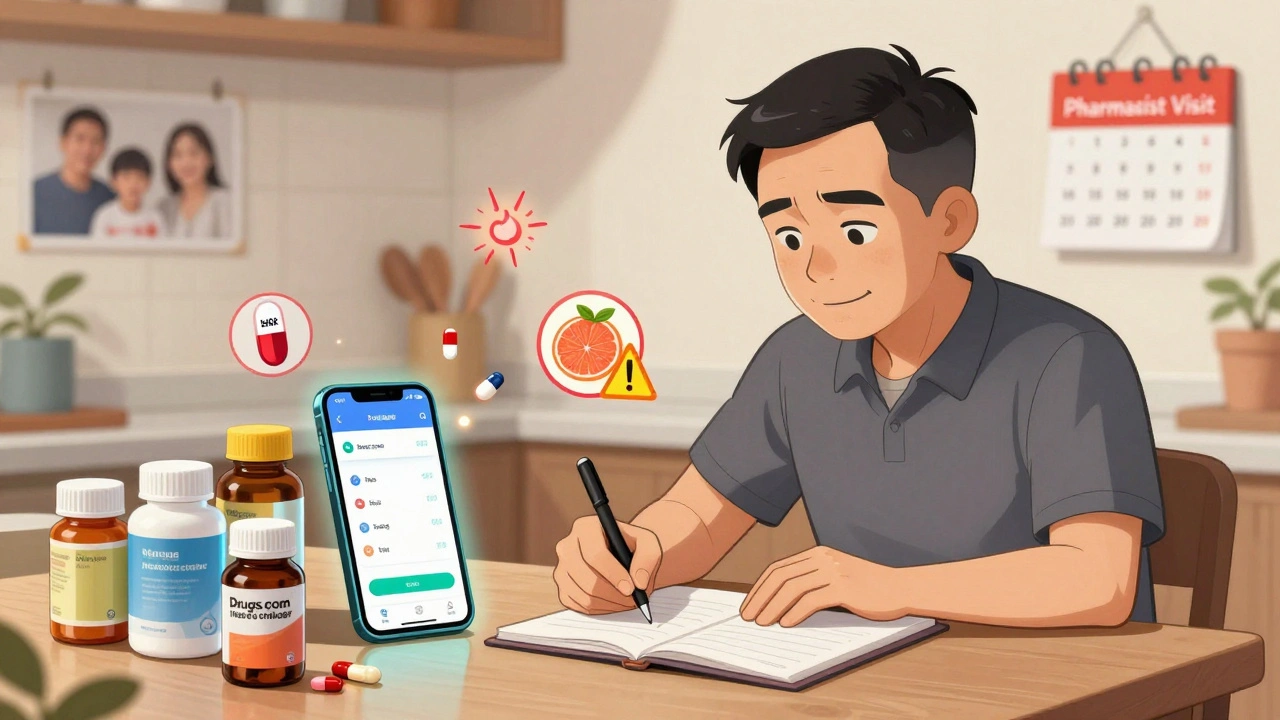
How to Check for Drug Interactions at Home Safely
Learn how to safely check for drug interactions at home using free tools, what to look for, and when to call your pharmacist. Avoid dangerous combos between prescriptions, OTC meds, and supplements.
DetailRelated Posts