
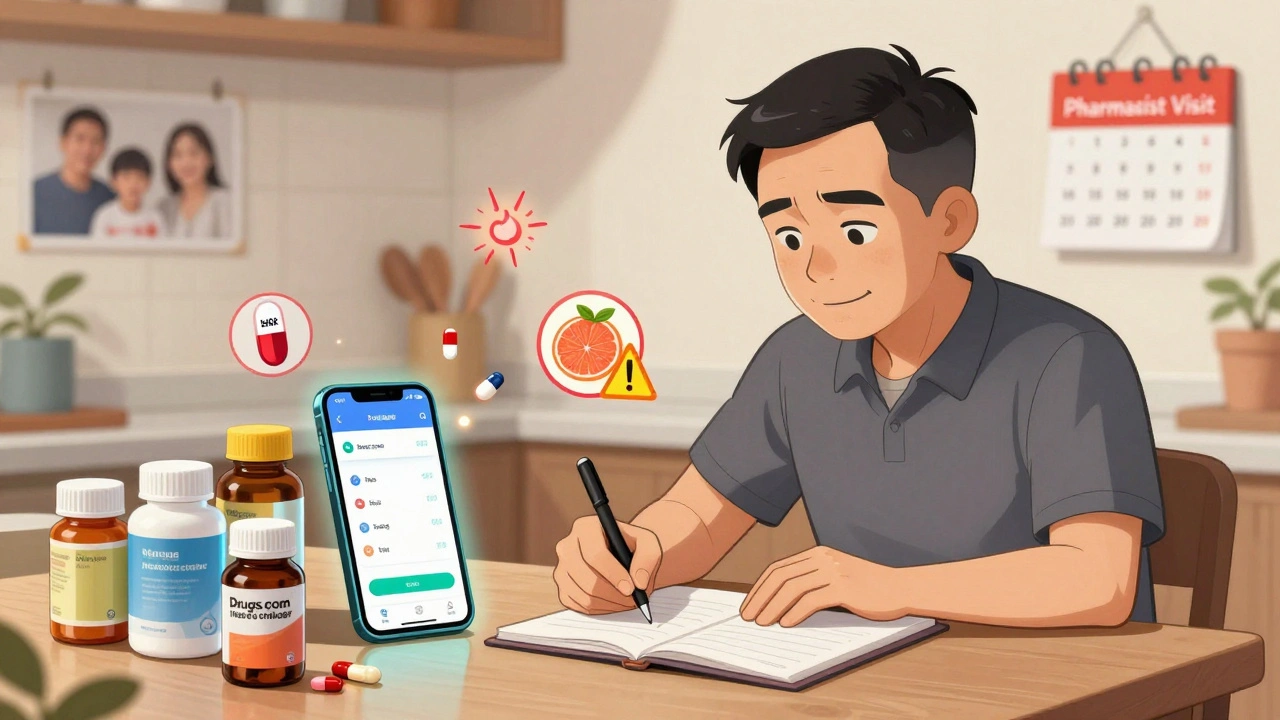
Every year, over a million people in the U.S. end up in the emergency room because of dangerous drug interactions. Many of these cases could have been avoided with a simple check at home-before symptoms even start. If you’re taking more than one medication, supplement, or even over-the-counter pain relievers, you’re at risk. And it’s not just about prescription drugs. That daily turmeric pill, the antacid you grab without thinking, or the cough syrup you use on weekends? They can all clash with your regular meds in ways you’d never expect.
What Exactly Is a Drug Interaction?
A drug interaction happens when two or more substances affect each other’s behavior in your body. This can make a drug stronger, weaker, or cause unexpected side effects. There are three main types:- Drug-drug interactions - like mixing blood thinners with ibuprofen
- Drug-food/drink interactions - such as grapefruit ruining the effect of your cholesterol medicine
- Drug-condition interactions - where a medication harms you because of an existing health issue, like taking decongestants if you have high blood pressure
According to the CDC, about 40% of Americans over 65 take five or more medications daily. That’s a recipe for trouble if you don’t know what you’re mixing. Even younger adults aren’t safe-25% of all U.S. adults take five or more drugs, and that number keeps rising.
How to Check for Interactions at Home
You don’t need a doctor’s office to start checking. Here’s how to do it safely and effectively:- Make a complete list of everything you take - not just prescriptions. Include every OTC medicine (like Tylenol, Pepto-Bismol, or cold tablets), vitamins, herbal supplements (like St. John’s Wort or ginkgo), and even occasional use items like melatonin or magnesium. Write down the dose and how often you take it. If you’re unsure what’s in a product, check the label for the active ingredient. For example, many cold medicines contain acetaminophen-you don’t want to double up.
- Use a trusted, free drug interaction checker - The best tools for this are Drugs.com Interaction Checker and WebMD’s Drug Interaction Checker. Both are free, updated daily, and used by millions. Drugs.com covers over 80,000 possible interactions, including supplements and foods. WebMD is easier to read but has fewer entries. Avoid random apps or websites that aren’t backed by medical institutions. The FDA has flagged 17 fake interaction checkers since 2022.
- Input everything accurately - Don’t skip anything. Even if you think it’s harmless, like a single daily vitamin, enter it. Many interactions happen with things people assume are “safe.” Type in the exact name. For example, enter “sertraline” instead of “Zoloft” if you’re unsure. Some tools let you scan barcodes with your phone camera-apps like Medisafe do this well.
- Read the results carefully - Tools will label interactions as major, moderate, or minor. Major means stop the combo and call your doctor immediately. Moderate means you might need a dose change or extra monitoring. Minor usually just means “watch for dizziness or upset stomach.” Don’t ignore moderate ones-they’re the most common cause of hospital visits.
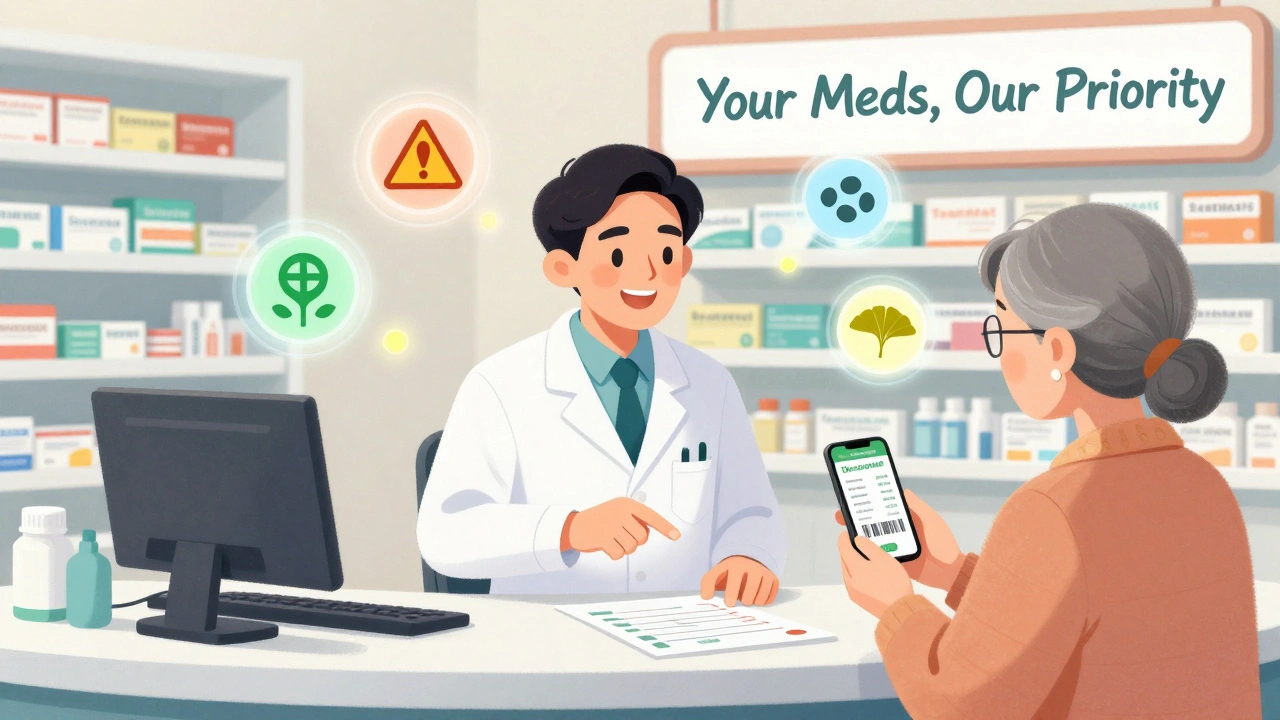
- Take the results to your pharmacist - This is the most important step. Pharmacists see hundreds of medication combinations every day. They know which interactions are real threats and which are just noise. Bring your printed report or show it on your phone. Ask: “Is this something I should worry about? Should I change anything?”
Best Tools for Checking at Home
Here’s how the top free tools compare:| Tool | Drugs Covered | Supplements Included | Ease of Use | Special Features |
|---|---|---|---|---|
| Drugs.com | 24,000+ prescription | 3,000+ herbs and supplements | Technical language | Most comprehensive database; detects 12% more moderate interactions than competitors |
| WebMD | 18,000+ prescription | 1,500+ supplements | Simple visuals, color-coded severity | Clear explanations; good for beginners |
| GoodRx | 18,000+ prescription | 1,000+ supplements | Very user-friendly | Shows cheaper alternatives if a dangerous interaction is found |
| Medisafe App | Integrated checker | Yes | App-based with reminders | Tracks doses, sends alerts, scans pill barcodes |
Drugs.com is the most thorough, but WebMD and GoodRx are better if you’re not comfortable with medical jargon. Medisafe is ideal if you want to track your meds daily and get reminders.
What These Tools Can’t Do
No app replaces a pharmacist or doctor. Here’s what you should never rely on a checker for:- Diagnosing symptoms - If you feel dizzy, nauseous, or your heart is racing after starting a new med, don’t wait for a checker result. Call your doctor.
- Handling complex regimens - If you take five or more drugs, the risk of hidden interactions goes up sharply. Tools miss up to 20% of these cases.
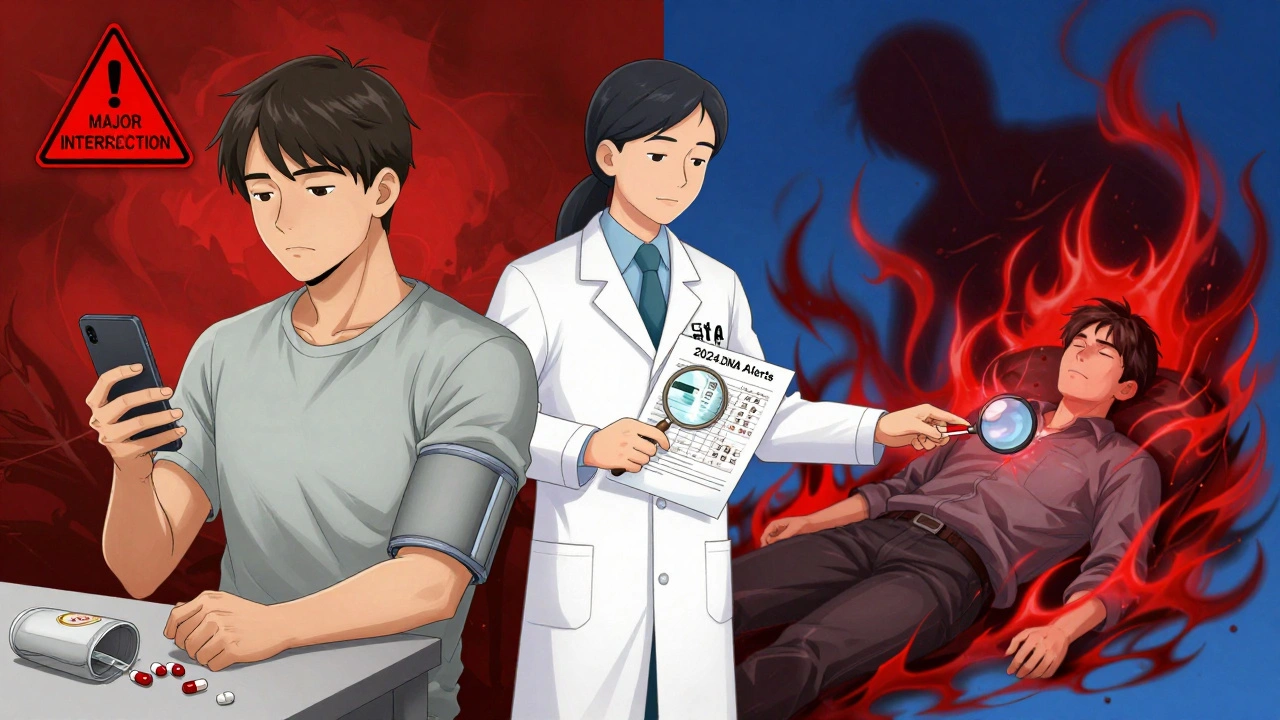
- Accounting for your genetics - Some people metabolize drugs slower or faster due to genes. These tools don’t know your DNA.
- Spotting brand-new interactions - If a drug was approved in the last 6 months, it might not be in the database yet.
One 2023 case in Minnesota involved a cancer patient who developed a rare reaction to a new drug. None of the top checkers flagged it. That’s why professional advice is non-negotiable.
Real Stories: What Works and What Doesn’t
A 68-year-old woman in Ohio was taking sertraline for depression and daily St. John’s Wort for “natural mood support.” She felt fine-until she started sweating, trembling, and had rapid heartbeats. Her pharmacist found the interaction: serotonin syndrome. It’s life-threatening. The checker had flagged it as major. She stopped the supplement immediately and recovered. On the flip side, a man in Florida stopped his blood pressure pill after a checker flagged a “moderate” interaction with his magnesium supplement. He ended up in the hospital with a stroke. The interaction was real, but the risk was minimal for him. He didn’t consult his doctor first.These stories show the same truth: tools are great for spotting red flags-but only a professional can tell you whether to ignore, adjust, or stop.
How to Avoid False Alarms
About 18% of flagged interactions are false positives-meaning the tool says there’s a risk when there really isn’t one. Common culprits:- Generic names vs. brand names (e.g., “ibuprofen” vs. “Advil”)
- Low-dose supplements (like 100mg of vitamin C) flagged as if you’re taking 1,000mg
- Food interactions that only matter with large amounts (e.g., grapefruit juice-eating one grapefruit won’t do much, but drinking a whole bottle daily might)
Always check the details. If a tool says “avoid grapefruit,” look for the exact drug and the amount of grapefruit involved. If you’re unsure, ask your pharmacist. They’ve seen it all.
Pro Tips for Safer Medication Use
- Use one pharmacy for all your prescriptions - This lets your pharmacist see everything you’re taking in one place. Studies show this reduces interaction risks by 31%.
- Update your list every 30 days - Even small changes matter. Add a new supplement? Remove an old one? Update your list.
- Keep a printed copy - In an emergency, paramedics won’t ask for your phone. Have a paper list in your wallet or purse.
- Ask your pharmacist to review your meds once a year - Many pharmacies offer this for free. It’s like a tune-up for your medication plan.
What’s Coming Next
By 2024, the CDC plans to link interaction checkers directly to Medicare accounts, so millions of seniors will get alerts automatically. In late 2024, 23andMe and GoodRx will start offering genetic-based interaction alerts-checking if your genes make you more sensitive to certain drugs. That’s powerful. But even then, you’ll still need a human to interpret it.These tools are not magic. They’re like a seatbelt. You wouldn’t skip wearing one because your car has airbags. Similarly, don’t skip checking for interactions just because you trust your doctor. Use the tech. Then talk to your pharmacist.
Can I use a drug interaction checker if I’m on Medicare?
Yes. Medicare beneficiaries can use all major free tools like Drugs.com and WebMD. Starting in 2024, the CDC plans to integrate these checkers directly into MyMedicare accounts, so you’ll get automated alerts when new prescriptions are added. But even with these updates, always confirm results with your pharmacist.
Are herbal supplements really risky with prescription drugs?
Absolutely. Many people assume supplements are safe because they’re “natural,” but that’s not true. St. John’s Wort can make birth control, antidepressants, and blood thinners ineffective. Garlic and ginkgo can increase bleeding risk with aspirin or warfarin. Turmeric can interfere with diabetes meds. Always list every supplement on your medication list.
What should I do if a checker says my meds interact?
Don’t stop taking anything on your own. Note the severity level: major means call your doctor or pharmacist right away. Moderate means schedule a quick call to discuss alternatives or adjustments. Minor usually just means watch for side effects. Always bring the report with you-your provider needs to see what the tool flagged and why.
Why do some interaction checkers give different results?
Because they use different databases. Drugs.com has the largest, with over 80,000 possible interactions. WebMD has fewer entries and sometimes misses supplements. Some tools are designed for doctors and use clinical terminology that can confuse everyday users. For the most reliable results, use Drugs.com or GoodRx, then double-check with your pharmacist.
Is it safe to rely on my pharmacy’s app instead of a dedicated checker?
Yes, if it’s from a major pharmacy chain like CVS, Walgreens, or Walmart. Their apps connect directly to your prescription history and flag interactions in real time. Apps like Medisafe also work well because they let you add supplements manually. But if you’re using a random app from the App Store, avoid it. Stick to trusted names backed by medical institutions.
Can food really cause dangerous drug interactions?
Yes. Grapefruit is the most well-known-it can make cholesterol and blood pressure drugs dangerously strong. Alcohol can worsen drowsiness from painkillers or anxiety meds. High-sodium foods can reduce the effect of blood pressure pills. Even leafy greens can interfere with blood thinners like warfarin. Always ask your pharmacist: “Is there anything I should avoid eating or drinking with this medicine?”
Maria Elisha
December 6, 2025 AT 22:40Ugh I just checked my meds on Drugs.com and it flagged my magnesium and blood pressure pill. I didn’t even know they could do that. Guess I’m calling my pharmacist tomorrow. 🙃
Ajit Kumar Singh
December 8, 2025 AT 17:07So many people in India take turmeric with everything and never think twice I mean its just spice right But then they get sick and blame the doctor lol Same with ashwagandha and thyroid meds You think its natural so its safe But its not its like putting diesel in a gasoline car
Angela R. Cartes
December 9, 2025 AT 09:08OMG I just realized I’ve been taking melatonin with sertraline for 2 years 😱 I’m so done with these apps that say ‘minor’ like that’s a vibe not a medical emergency. Also why does WebMD look like it was designed in 2007? 💀
Andrea Beilstein
December 10, 2025 AT 10:41It’s funny how we treat medicine like it’s a puzzle you solve with a Google search. But the body isn’t code. It’s a living ecosystem. A drug isn’t just a molecule-it’s a conversation between your liver your kidneys your genes your diet your stress levels. No app can hear that conversation. Only a human who’s seen 500 patients can. We outsource our health to algorithms then panic when they fail. We forgot how to be patients. We became data points.
Lisa Whitesel
December 11, 2025 AT 21:05Anyone who uses supplements without a PhD in pharmacology deserves what they get. You think turmeric is harmless? It’s a blood thinner. You think vitamin D is just sunshine in a pill? It’s a hormone. Stop being lazy. If you can’t read a drug label you shouldn’t be allowed to buy anything past ibuprofen.
Larry Lieberman
December 12, 2025 AT 23:09Just tried Medisafe app. Scanned my pills and it told me my fish oil + blood thinner = moderate risk. I didn’t even know I was taking fish oil 😅 But it also suggested cheaper alternatives and reminded me to take my BP med. Like… this is actually kind of cool? 🤖💊
Sabrina Thurn
December 14, 2025 AT 05:37One thing the post doesn’t emphasize enough: pharmacists are the unsung heroes of medication safety. They don’t just fill scripts-they audit your entire regimen. I’ve had mine catch interactions I didn’t even know existed. One time she flagged a combo of my antihistamine and a sleep aid that would’ve caused QT prolongation. That’s not minor. That’s cardiac arrest territory. Use the tools, yes-but your pharmacist is your real-time safety net. Go see them. Don’t just email them. Talk. Ask questions. They’re paid to care.
Courtney Black
December 16, 2025 AT 02:50It’s not just about the drugs or the apps or the checkers. It’s about the illusion of control. We want to believe that if we just input the right data into the right system we can outsmart biology. But the body doesn’t care about your checklist. It doesn’t care if you’re ‘doing everything right.’ It just responds. And sometimes the response is silent. Until it isn’t. And then it’s too late. So maybe the real question isn’t how to check for interactions-it’s how to stop pretending we can control everything.
iswarya bala
December 17, 2025 AT 03:49thank you for this post!! i never knew ginkgo can make bleeding worse with asprin 😱 i use it for memory and now im scared but also so happy i found out before something bad happened 💕
Simran Chettiar
December 17, 2025 AT 22:30It is imperative to recognize that the contemporary paradigm of pharmaceutical self-management, while ostensibly empowering, paradoxically engenders a profound epistemological vulnerability among laypersons who, lacking formal biomedical training, are compelled to navigate a labyrinthine pharmacopeia through algorithmic intermediaries whose semantic frameworks are neither transparent nor universally accessible. The commodification of health literacy, therefore, must be interrogated not as a technological advancement, but as a structural abdication of professional responsibility.
Anna Roh
December 18, 2025 AT 12:14My pharmacist told me to stop taking St. John’s Wort with my antidepressant. I ignored it for six months. Then I had a panic attack that felt like my heart was trying to escape my chest. Turns out serotonin syndrome. Lesson learned. Don’t be an idiot.