
NTI Drugs: What They Are, Why They Matter, and How to Use Them Safely
When a medication has a Narrow Therapeutic Index, a small difference in dose or blood level can lead to serious toxicity or treatment failure. Also known as NTI drugs, these are not your average prescriptions—they demand precision. Think warfarin, lithium, phenytoin, levothyroxine, or cyclosporine. One pill too much, or a generic swap that shifts absorption just a little, and you could end up in the hospital—or worse. These aren’t drugs you take lightly. They’re used for life-threatening or chronic conditions like seizures, heart rhythm problems, organ rejection, or thyroid failure. That’s why getting the dose right isn’t just important—it’s life-or-death.
NTI drugs are especially tricky when it comes to generics. While most generic drugs are just as safe and effective as brand names, NTI drugs break that rule. A 2019 FDA study found that switching between different generic versions of levothyroxine caused measurable changes in thyroid hormone levels in nearly 1 in 5 patients. That’s not a fluke—it’s a pattern. Even small differences in fillers, coating, or manufacturing can change how the body absorbs the drug. Your body doesn’t care if the pill says "Warfarin" or "Coumadin"—it only cares about the amount that actually gets into your bloodstream. And with NTI drugs, that margin is razor-thin.
That’s why doctors and pharmacists often stick to one brand or generic version once they find what works. Switching isn’t banned, but it’s treated like a medical decision—not a cost-saving convenience. If you’re on an NTI drug, don’t let your pharmacy switch your prescription without telling you. Ask: "Is this the same version I’ve been taking?" Keep your dose consistent. Track symptoms like unusual fatigue, dizziness, or heart palpitations. And if you’re switching insurers or moving to a new pharmacy, double-check that your new provider won’t swap your medication without warning.
NTI drugs also interact with other substances in ways that surprise people. St. John’s Wort can drop warfarin levels by 30%. Grapefruit juice can turn cyclosporine into a poison. Even changes in diet or supplements can throw off your balance. That’s why the posts below cover everything from generic substitution risks to drug interactions and safe storage—because with NTI drugs, every detail matters. You won’t find fluff here. Just clear, practical info on how to manage these high-stakes medications without guessing.
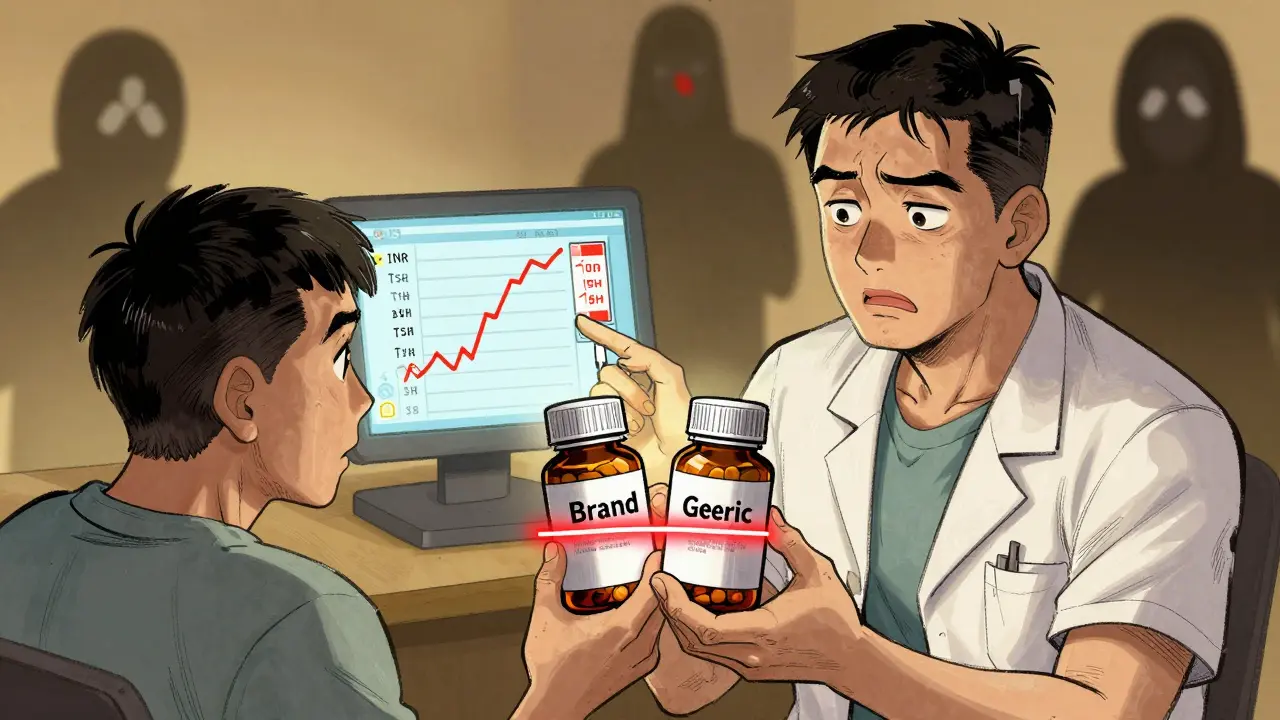
When Doctors Adjust Doses After Switching to Generic Medications
Switching to generic medications can be safe - but for drugs with a narrow therapeutic index, even small changes in absorption can cause serious effects. Learn when dose adjustments are needed and how to protect your health.
Detail
FDA Bioequivalence Standards for NTI Drugs: What You Need to Know
The FDA enforces stricter bioequivalence standards for narrow therapeutic index (NTI) drugs like warfarin, phenytoin, and digoxin. Learn how 90-111% limits, replicate studies, and tighter quality controls ensure patient safety with generic versions.
Detail