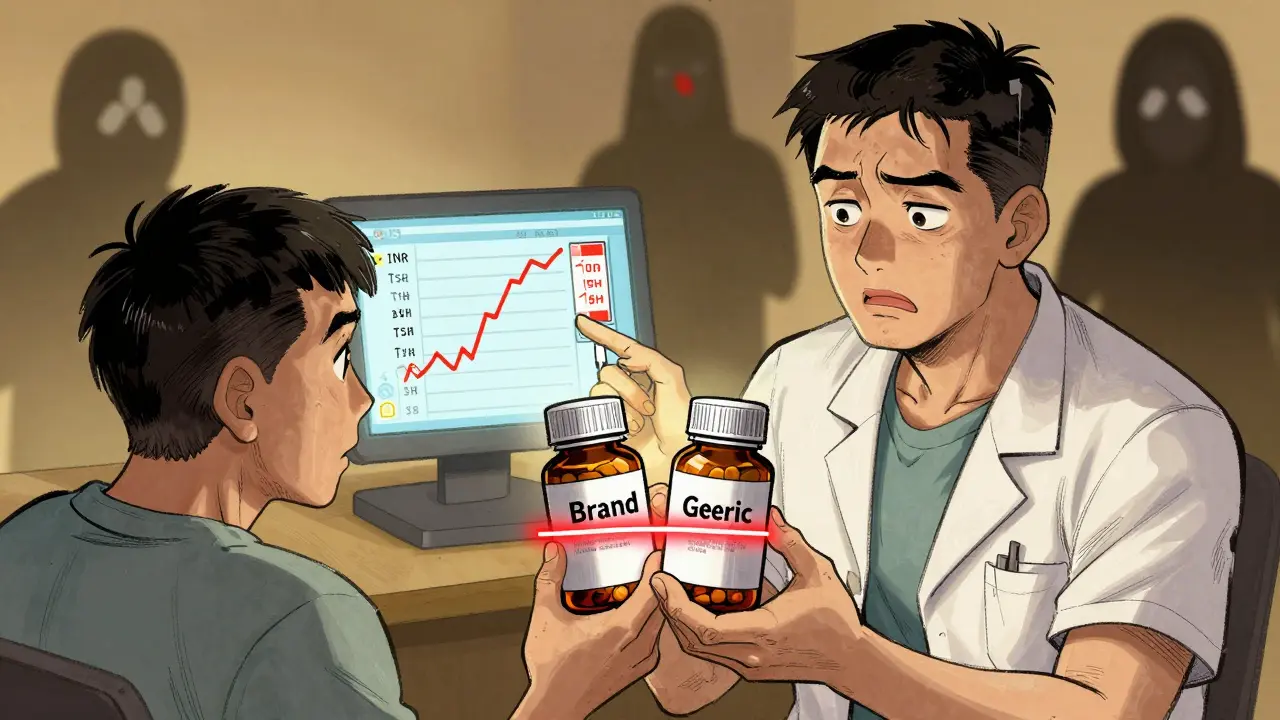
Switching from a brand-name drug to a generic version seems simple: same active ingredient, lower cost, same pill. But for some medications, that switch can trigger unexpected changes in how your body responds - and doctors may need to adjust your dose. This isn’t about generics being inferior. It’s about narrows therapeutic index drugs, where tiny differences in how the drug is absorbed can make a big difference in your health.
What Makes Some Drugs Tricky to Switch?
Not all medications are created equal when it comes to switching. Most drugs have a wide safety margin - if you take a little more or less, you’re probably fine. But for drugs with a narrow therapeutic index (NTI), the line between effective and dangerous is thin. These drugs need to stay within a very tight range in your bloodstream. Too little, and they don’t work. Too much, and you risk serious side effects. Examples include:- Levothyroxine (for thyroid conditions)
- Warfarin (a blood thinner)
- Phenytoin and carbamazepine (for seizures)
- Tacrolimus and cyclosporine (for organ transplant patients)
- Digoxin (for heart rhythm problems)
Why Do Dose Changes Happen After a Switch?
Regulators require generics to be bioequivalent to the brand-name drug. That means the amount of drug absorbed into your bloodstream should be within 80% to 125% of the original. Sounds close enough, right? But for NTI drugs, that 45% window is too wide. A 10% difference in absorption might be harmless for an antibiotic. For warfarin, it could mean your blood doesn’t thin enough - raising your risk of stroke - or too much, causing dangerous bleeding. Studies show real-world consequences:- Patients switched from one warfarin generic to another had a 23% higher chance of unstable INR levels within 30 days.
- After switching tacrolimus in transplant patients, nearly 19% needed a dose change within two weeks - compared to just 5% who stayed on the same brand.
- One study found levothyroxine patients switching generics had TSH levels that drifted outside target range in 18% of cases, even when no dose change was made.
What Doctors Look For After a Switch
When a patient switches from a brand to a generic (or from one generic to another), doctors don’t just wait for symptoms. They monitor closely. For warfarin, INR levels are checked within 7 to 14 days after the switch. If the INR is more than 10% off the previous target, the dose is adjusted. For levothyroxine, TSH levels are retested at 6 to 8 weeks. Even a 12.5 mcg change - less than half a pill - can fix fatigue, weight gain, or brain fog that started after the switch. For antiepileptic drugs like phenytoin, blood levels are checked within two weeks. A 20% drop from previous steady-state levels often triggers a dose increase. Many hospitals and clinics now have protocols in place. At the University of Florida Health System, pharmacists automatically flag NTI drug switches and schedule follow-up tests. Lexicomp and other clinical tools now include alerts that pop up when a prescriber tries to switch a patient on tacrolimus or digoxin.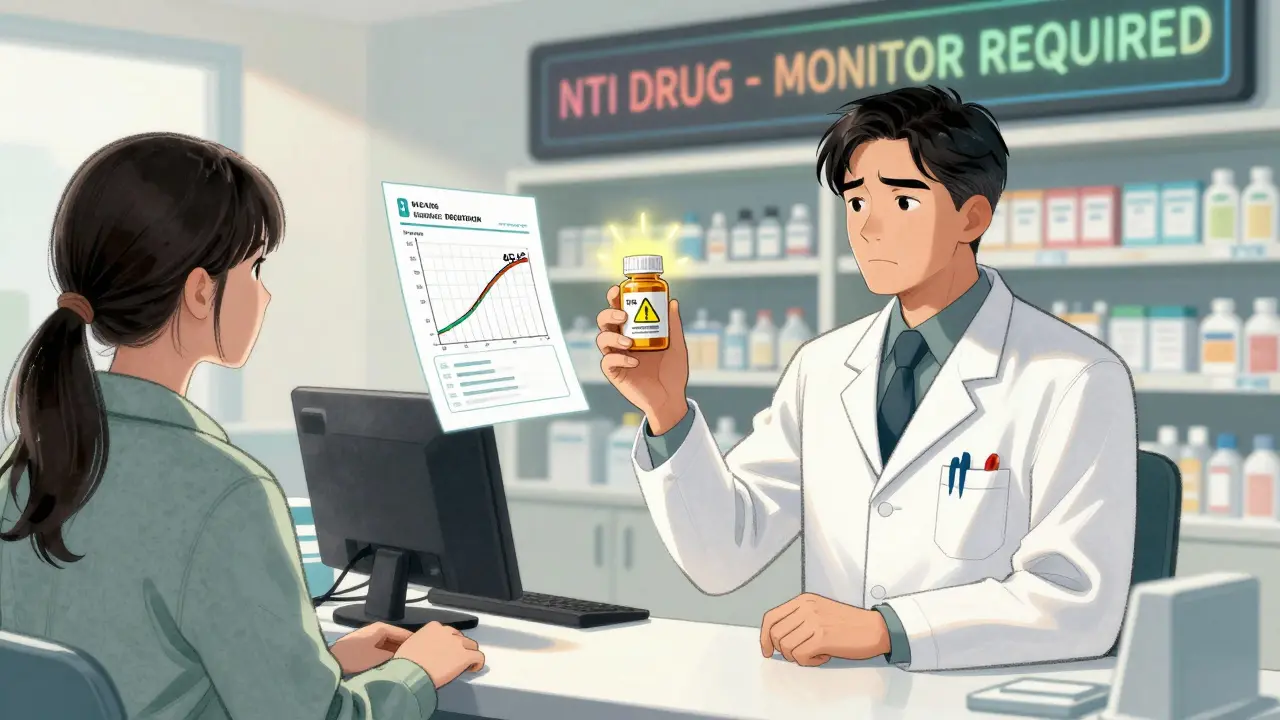
Real Stories: When the Switch Went Wrong
One patient in Melbourne, on a stable dose of levothyroxine for 10 years, was switched to a cheaper generic without warning. Within three weeks, she felt exhausted, gained 5 kilos, and struggled to concentrate. Her TSH was 8.2 - far above the target of 1 to 3. Her doctor increased her dose by 12.5 mcg. Within a month, she felt like herself again. Another case: a man on warfarin after a heart valve replacement was switched from one generic to another by his pharmacy. His INR dropped from 2.5 to 1.7. He didn’t feel different - until he developed a blood clot in his leg. His dose had to be increased, and he spent a week in hospital. These aren’t rare. A 2022 survey of over 1,200 hospital pharmacists found that 68% had seen patients need dose changes after switching NTI drugs. Antiepileptics, warfarin, and immunosuppressants were the top three.But Not Everyone Needs a Dose Change
It’s important to say: most people switch generics without any issues. For antibiotics, blood pressure meds, or cholesterol drugs, the switch is seamless. Even for NTI drugs, many patients stay stable. One patient switched from Synthroid to generic levothyroxine and had identical TSH levels at six weeks. No change needed. Another person on phenytoin had no seizures or side effects after switching generics twice over five years. The key is knowing your drug and knowing your body. If you’ve been stable for years on a brand or a specific generic, switching to a different one - even if it’s still labeled “generic” - might not be worth the risk.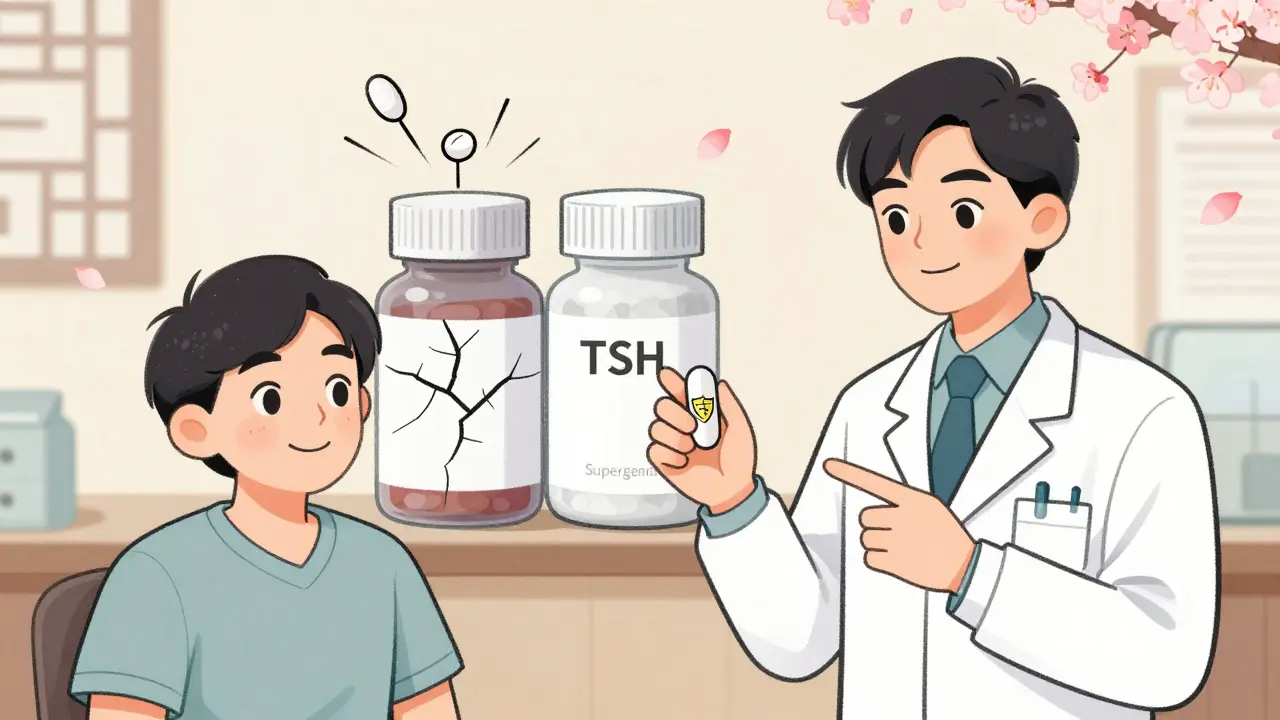
What You Can Do
You don’t have to accept a switch blindly. Here’s what to ask:- Is this drug on the NTI list? If you’re on warfarin, levothyroxine, or one of the others, ask your doctor or pharmacist.
- Can I stay on the same brand or generic? If you’re stable, ask for a prescription that says “dispense as written” or “do not substitute.”
- Will I need a blood test after the switch? Don’t assume it’s automatic. Schedule it yourself if your doctor doesn’t bring it up.
- What symptoms should I watch for? For thyroid meds: fatigue, weight gain, cold intolerance. For warfarin: unusual bruising, bleeding gums, dark stools. For seizure meds: new or worsening seizures.
The Future: Better Generics, Fewer Switches
Regulators are catching on. The FDA is considering tighter bioequivalence standards for NTI drugs - narrowing the acceptable range from 80-125% to 90-111%. That would make generics more consistent. Some manufacturers are already stepping up. Teva’s “TacroBell” tacrolimus formulation, for example, shows 32% less variability between doses than standard generics. These “supergenerics” are designed specifically for NTI drugs. In academic medical centers, automatic pharmacy substitutions for NTI drugs are now banned in 68% of cases. Community pharmacies? Only 32% have similar rules. The goal isn’t to stop generics. It’s to make sure the right drug gets to the right patient - without surprises.When to Call Your Doctor
If you’ve recently switched a generic medication and notice:- New or worsening symptoms
- Unexplained fatigue, dizziness, or confusion
- Changes in heart rhythm, seizures, or bleeding
- Lab results that are suddenly off-target
Switching to generics saves money. But for some drugs, safety isn’t a trade-off you should make without knowing the risks. Stay informed. Stay vigilant. And never assume that “generic” means “exactly the same” - especially when your life depends on precision.
Do all generic medications require dose adjustments?
No. Only medications with a narrow therapeutic index (NTI) - like warfarin, levothyroxine, phenytoin, and tacrolimus - often need close monitoring or dose changes after switching. Most common drugs, like statins or blood pressure pills, work fine with any generic version.
Can I ask my pharmacist not to switch my generic?
Yes. You can ask your doctor to write "dispense as written" or "no substitution" on your prescription. Some pharmacies will still try to switch unless the label says otherwise. If you’re on an NTI drug, it’s worth asking.
How long after switching should I get a blood test?
For warfarin, get an INR test within 7-14 days. For levothyroxine, check TSH at 6-8 weeks. For antiepileptics like phenytoin, a blood level test within two weeks is recommended. Don’t wait for symptoms - test early.
Why do some doctors say switching generics is fine?
The FDA and some experts argue that most patients don’t need dose changes, and concerns are often overstated. But clinical experience shows that a subset of patients - especially those with unstable conditions - do have problems. The truth is somewhere in between: most are fine, but some aren’t. That’s why monitoring matters.
Are there generic brands that are more reliable for NTI drugs?
Some manufacturers, like Teva and Aurobindo, have developed specialized formulations for NTI drugs with tighter quality controls. These are sometimes called “supergenerics.” Ask your pharmacist if your generic is from a manufacturer known for consistency in NTI products.