
Generic Copay: How Much You Really Pay for Generic Medications
When you pick up a generic copay, the fixed amount you pay for a generic version of a prescription drug at the pharmacy. Also known as a generic drug copayment, it’s often the only part of your prescription cost that you see on the receipt—but it’s not the whole story. Generic copays exist because insurers want you to choose cheaper, equally effective versions of brand-name drugs. They don’t just save you money—they save the whole system money. And yet, many people still don’t know why their $10 copay for metformin is so much lower than the $50 they paid last year for the brand-name version.
That difference isn’t random. It’s built into how insurance plans work. Most formularies put generics in the lowest tier, meaning the lowest copay. But not all generics are treated the same. Some insurers have tiered copays based on the drug’s cost, how many generics are available, or even which manufacturer makes it. A generic version of warfarin might cost you $5, while another generic for the same drug could be $12—same active ingredient, different price. Why? Because the pharmacy benefit manager (PBM) negotiated a better deal with one manufacturer over another. And if you’re not checking, you’re paying more than you need to.
Generic copays also vary wildly depending on your plan. Medicare Part D plans, employer plans, Medicaid, and even some online pharmacies all have different rules. One study found that patients on high-deductible plans paid up to 80% less for generics than brand-name drugs—but still paid more than they should because they didn’t know to compare prices across pharmacies. A $10 copay at CVS might be $3 at Walmart or $0 at a community clinic. That’s not a myth. It’s real. And it’s why knowing your generic medications, FDA-approved versions of brand-name drugs that contain the same active ingredients at the same strength and dosage isn’t just helpful—it’s essential.
What you’re really paying isn’t just the copay. It’s the time you spend comparing, the effort to ask for alternatives, and whether you even know your plan’s formulary. Many people skip generics because they think they’re less effective, but the FDA requires them to meet the same bioequivalence standards as brand drugs. For NTI drugs like digoxin or phenytoin, those standards are even tighter. So if your doctor prescribes a generic, it’s not a compromise—it’s a smart choice.
And if you’re uninsured or underinsured? Generic copay doesn’t even apply. You’re looking at cash prices. But even then, you can pay less. Community clinics, patient assistance programs, and mail-order pharmacies often offer generics for under $5 a month. Some drugs, like metformin or lisinopril, are available for $4 at Walmart and Target. That’s not a sale. That’s the standard price.
There’s a gap between what you think you’re paying and what you’re actually paying. A $10 copay sounds fair—until you realize you could’ve gotten the same pill for $2. Or $0. Or even free, if you knew where to look. That’s why this collection of articles exists: to cut through the noise. You’ll find real stories from people who saved hundreds by switching generics, guides on how to check your plan’s formulary, and deep dives into why some generics cost more than others—even when they’re identical. You’ll learn how patent loopholes delay cheaper versions, how biologics are changing the game, and where to find free or low-cost options if insurance isn’t helping.
Generic copay isn’t just a number on a receipt. It’s a reflection of how broken the system is—and how simple it can be to fix it, if you know where to look. Below, you’ll find the tools, facts, and real-world examples that help you take control of your prescription costs—no fluff, no jargon, just what works.
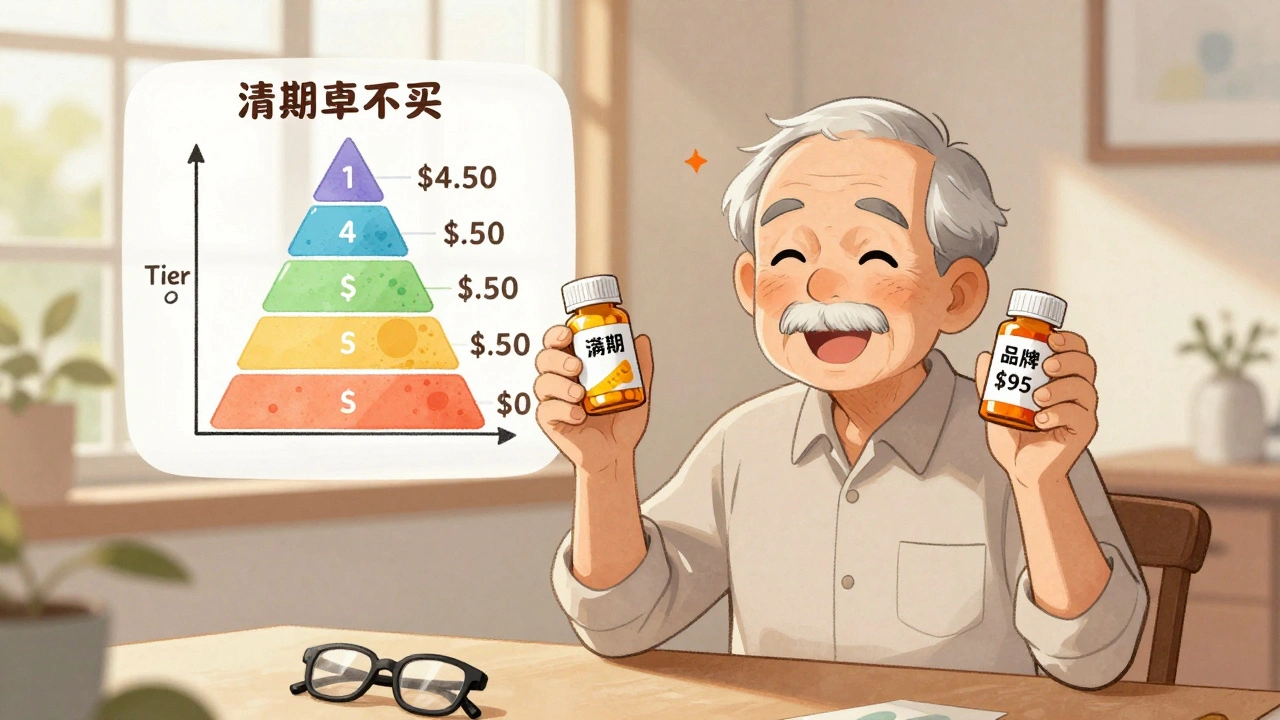
Generic Copays vs Brand Copays: Average 2024 Costs Explained
Learn the real costs of generic vs brand-name drug copays in 2024. See how Medicare and private plans charge differently, what’s changing in 2025, and how to save money on prescriptions.
Detail