
Bioequivalence Standards: What They Mean for Generic Drugs and Your Wallet
When you pick up a generic pill, you’re relying on bioequivalence standards, a set of scientific rules that prove a generic drug performs the same way in your body as the brand-name version. Also known as pharmaceutical equivalence, these standards are the reason your $4 generic metformin works just as well as the $300 brand. Without them, you’d have no way to know if the cheaper version actually does what it claims.
These standards aren’t just paperwork—they’re strict tests run by agencies like the FDA. A generic drug must release the same amount of active ingredient at the same rate as the original. If it doesn’t, it gets rejected. That’s why you don’t see random generics popping up overnight. The process takes time because regulators demand proof: blood tests, absorption curves, and real-world performance data. This isn’t about branding—it’s about making sure your blood pressure medicine, your thyroid pill, or your diabetes drug behaves exactly as expected in your body.
Related to this are FDA approval, the official green light a generic drug needs before hitting shelves. Also known as ANDA approval, this step comes after bioequivalence is confirmed. And then there’s drug equivalence, the broader concept that includes not just how the drug acts in your body, but also its strength, dosage form, and route of administration. These aren’t separate ideas—they’re layers of the same system. Bioequivalence is the core. FDA approval is the gate. Drug equivalence is the full picture.
Why does this matter to you? Because without these standards, you’d be gambling with your health every time you chose a cheaper pill. You might get a generic that’s too weak to work. Or one that hits your system too fast, causing side effects. Or worse—something that’s not even the right chemical. The system exists to stop that. And it works. Studies show generics perform nearly identically to brand-name drugs in real patients. The only real difference? The price tag.
But here’s the catch: bioequivalence doesn’t mean every generic is identical in every way. Fillers, coatings, or shapes can vary. That’s why some people notice a difference—maybe a pill tastes different, or causes mild stomach upset. But if the active ingredient meets bioequivalence standards, those differences don’t affect how well the drug treats your condition.
What you’ll find in this collection are real stories about how these standards play out in your life. From why some generics take years to appear after a patent expires, to how Medicare and insurers treat generic vs. brand copays, to how counterfeit drugs slip through cracks in the system. You’ll see how bioequivalence isn’t just a lab term—it’s the invisible rule keeping millions of people safe and saving billions every year.
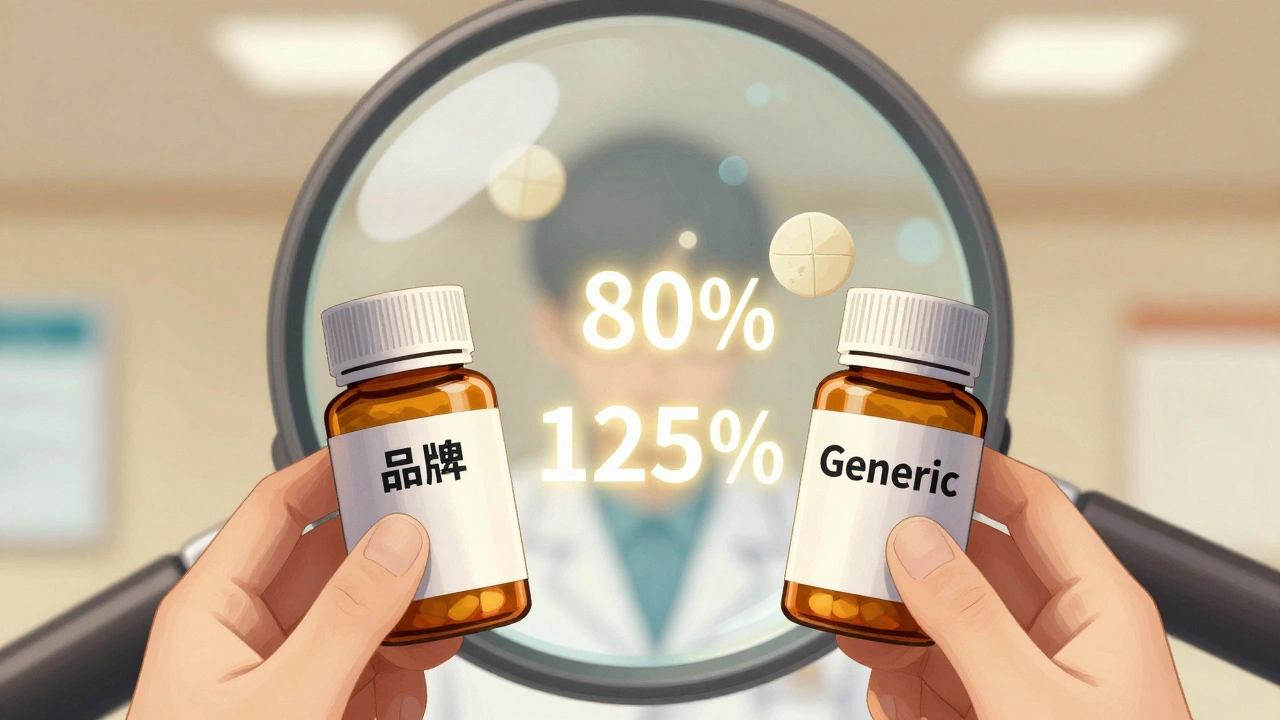
Batch Variability and Bioequivalence: What Acceptable Limits Really Mean for Generic Drugs
Batch variability can make or break generic drug safety. Learn how regulators are changing bioequivalence standards to ensure consistent, reliable generic medications-without compromising access or cost.
Detail
FDA Bioequivalence Standards for NTI Drugs: What You Need to Know
The FDA enforces stricter bioequivalence standards for narrow therapeutic index (NTI) drugs like warfarin, phenytoin, and digoxin. Learn how 90-111% limits, replicate studies, and tighter quality controls ensure patient safety with generic versions.
Detail