

Weight Gain Comparison Calculator
Compare Weight Gain Between Options
See how much weight you might gain with different depression augmentation options. This calculator uses data from clinical studies to show realistic expectations.
Expected weight gain after 3 months:
When SSRIs don’t fully work for depression, doctors often look for ways to boost their effect. One of the most quietly effective options is buspirone. It’s not an antidepressant on its own, but when added to an SSRI like sertraline, fluoxetine, or escitalopram, it can make a real difference-especially for people who still feel down, anxious, or emotionally flat despite taking their medication. What makes buspirone stand out isn’t just that it helps, but how it helps without adding new problems.
Why Buspirone Works as an Augmentation Tool
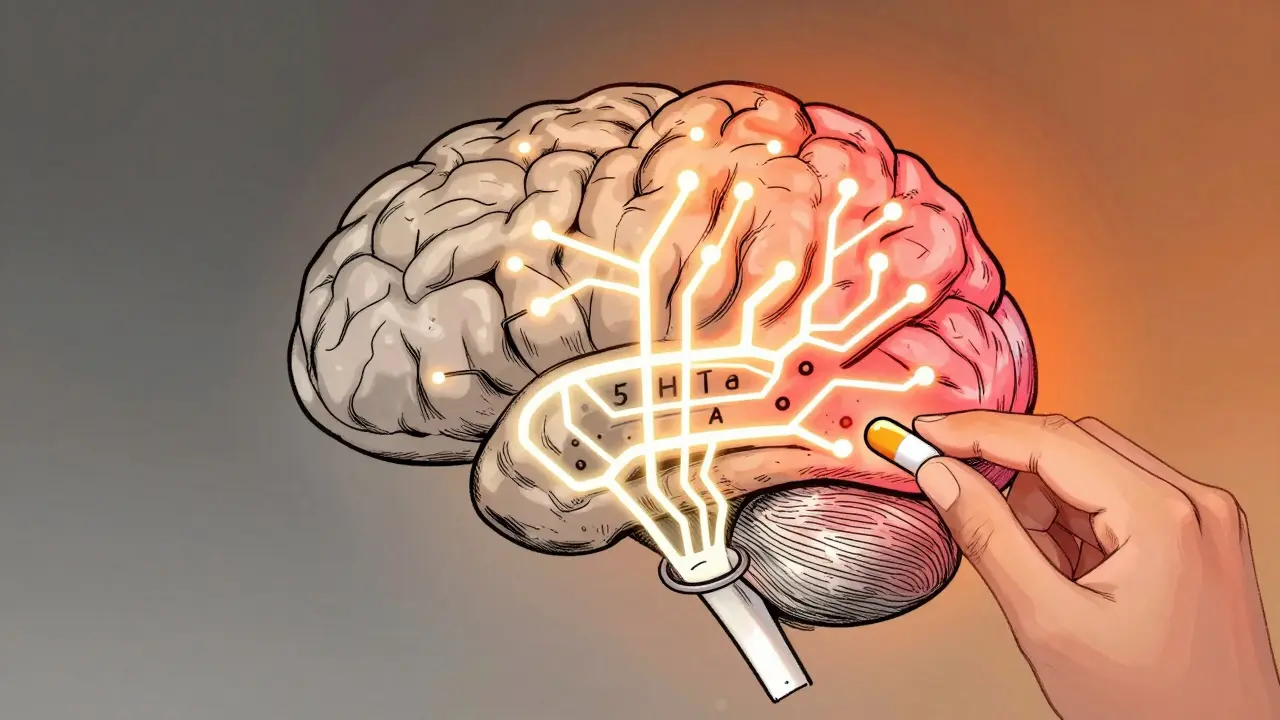
Buspirone was originally designed as an anxiety drug. It doesn’t work like benzodiazepines-no sedation, no risk of dependence. Instead, it targets serotonin 5-HT1A receptors, which are involved in both mood and anxiety regulation. This is different from SSRIs, which simply flood the brain with more serotonin by blocking its reabsorption. Buspirone fine-tunes how the brain uses that serotonin, especially in areas linked to emotional processing.
That difference matters. In the landmark STAR*D trial, researchers found that adding buspirone to an SSRI helped patients who hadn’t responded to one or two prior treatments. Since then, multiple studies have confirmed it: for people with treatment-resistant depression, buspirone can push response rates from around 40% up to 62%. The biggest gains? Seen in those with severe symptoms-people whose depression is heavy, paralyzing, and hasn’t budged with standard care.
How It Compares to Other Augmentation Options
Doctors have other tools to boost SSRIs. Atypical antipsychotics like aripiprazole (Abilify) or quetiapine (Seroquel XR) are FDA-approved for this. But they come with baggage: weight gain, higher blood sugar, increased triglycerides. On average, people gain 2.5 to 4.2 kg in the first few months. Some develop prediabetes. These side effects aren’t just inconvenient-they can lead people to quit their meds.
Buspirone? Almost none of that. Studies show an average weight gain of just 0.3 kg. No meaningful changes in glucose or lipids. No risk of movement disorders like tardive dyskinesia. It’s also cheaper. A 30-day supply of generic buspirone costs about $4.27. Abilify? Around $780. That’s not just a difference in price-it’s a difference in accessibility.
Other options like lithium or thyroid hormone require regular blood tests and carry risks like kidney damage or heart rhythm issues. Buspirone? No monitoring needed. No needles. No lab visits.
The Sexual Side Effect Fix
One of the most common reasons people stop taking SSRIs? Sexual dysfunction. Up to 60% of users report delayed orgasm, low libido, or erectile problems. It’s not just physical-it’s emotional. Relationships suffer. Self-esteem drops. Many feel trapped: better mood, but worse intimacy.
Buspirone flips that script. Studies show only 1.6% of people on buspirone report sexual side effects-compared to over 21% on SSRIs alone. In fact, it often fixes SSRI-induced sexual problems. A 2024 case study followed a 38-year-old man who lost sexual function after starting sertraline. Two weeks after adding 15 mg of buspirone daily, his function returned to normal. No other changes. Just the buspirone.
Why? Buspirone’s metabolite, 1-PP, blocks alpha-2 receptors in the brain. This seems to counteract the serotonin overload that causes sexual delays. A 2021 review found buspirone helped 63% of people with SSRI-related sexual dysfunction-better than sildenafil (42%) or yohimbine (38%).

What to Expect When Starting Buspirone
Most doctors start low: 5 to 10 mg twice a day. That’s half a tablet, twice daily. After 3 to 5 days, they might bump it up by 5 mg. The usual target is 20 to 30 mg daily-split into two doses. Some people need up to 60 mg, especially if depression is severe. But that’s rare.
It takes time. Unlike benzodiazepines, which work in hours, buspirone’s full effect on depression can take 4 to 6 weeks. But here’s the surprise: some people feel better in the first week. A 2023 study showed significant improvement in depression scores as early as day 7. That’s faster than lithium or antipsychotics.
Side effects? They’re mild and usually short-lived. The most common: dizziness (14.3% of users), headache (11.1%), nausea (9.6%), and nervousness (9.1%). These typically fade after the first week. If you feel dizzy, don’t drive or operate machinery until you know how it affects you. Take it with food if nausea is an issue.
Drug Interactions to Watch Out For
Buspirone is broken down by the liver enzyme CYP3A4. Anything that blocks that enzyme can make buspirone levels spike dangerously. Common culprits:
- Antifungals like ketoconazole
- Antibiotics like erythromycin
- Grapefruit juice (yes, really-just one glass can raise buspirone levels by 4 times)
If you’re on any of these, your doctor will likely lower your buspirone dose. Never start a new medication or supplement without checking with your prescriber. Even over-the-counter stuff like St. John’s Wort can interfere.
Who Benefits Most?
Buspirone isn’t for everyone. But it’s a top choice for:
- People with severe depression (MADRS score above 30)
- Those struggling with SSRI-induced sexual side effects
- Patients who can’t afford or tolerate weight gain from antipsychotics
- Elderly patients (it doesn’t affect memory, balance, or heart rhythm like other options)
- People who want to avoid blood tests or long-term monitoring
It’s less effective for mild depression or people who’ve already tried and failed multiple antidepressants. But for those stuck on an SSRI with lingering symptoms? It’s one of the most reliable next steps.
Real-World Use and Trends
In 2023, over 1.2 million U.S. outpatient visits included a buspirone prescription for depression augmentation. That’s up 17% from the year before. Psychiatrists under 50 are more likely to use it than older ones-probably because they’ve seen the data and the patient outcomes.
It’s also gaining traction in research beyond depression. Early trials are looking at buspirone for SSRI-induced emotional blunting-when people feel numb, detached, or just “not themselves.” In one study, 37% of participants reported improved emotional responsiveness after 8 weeks. That’s huge for people who say, “I’m less depressed, but I don’t feel alive.”
Final Thoughts
Buspirone isn’t magic. It won’t fix everything. But it’s one of the few tools that boosts antidepressant response without adding new problems. No weight gain. No sexual side effects. No blood tests. No addiction risk. Just a clean, quiet, effective way to help people who are still struggling.
If you’re on an SSRI and still feel stuck, talk to your doctor about buspirone. It’s not a first-line option, but for many, it’s the missing piece.
Can buspirone be used alone for depression?
Buspirone isn’t approved or effective as a standalone antidepressant. It’s designed to enhance the effects of SSRIs or SNRIs, not replace them. Using it alone for depression typically doesn’t produce meaningful improvement.
How long does it take for buspirone to work when added to an SSRI?
Most people start noticing improvements in mood and anxiety within 2 to 4 weeks. However, some studies show measurable changes as early as day 7, especially in severe cases. Full benefits usually take 6 to 8 weeks.
Does buspirone cause weight gain?
No. Unlike antipsychotics like aripiprazole or quetiapine, buspirone has no significant effect on weight. Studies show an average gain of just 0.3 kg-essentially negligible. This makes it ideal for people concerned about metabolic side effects.
Can I take buspirone with grapefruit juice?
No. Grapefruit juice blocks the CYP3A4 enzyme, which can cause buspirone levels to rise by up to 4 times. This increases the risk of dizziness, nausea, and other side effects. Avoid grapefruit juice entirely while taking buspirone.
Is buspirone safe for older adults?
Yes. Buspirone is one of the safest augmentation options for older adults. It doesn’t affect memory, balance, or heart rhythm. It doesn’t interact with warfarin and has no anticholinergic effects-unlike many other psychiatric medications. Many geriatric psychiatrists consider it a first-line choice for seniors on SSRIs.
What’s the best time to take buspirone?
Because buspirone has a short half-life (2-3 hours), it’s usually taken twice daily-once in the morning and once in the evening-to maintain steady levels. Taking it with food can help reduce nausea.
Can buspirone help with anxiety while treating depression?
Yes. Buspirone was originally approved for generalized anxiety disorder, and it remains effective for anxiety symptoms. When added to an SSRI for depression, it often reduces both depressive and anxious symptoms simultaneously, making it a dual-purpose tool.
Is buspirone addictive?
No. Buspirone has no potential for abuse or dependence. It doesn’t act on GABA receptors like benzodiazepines. There’s no withdrawal syndrome when stopping it, and it doesn’t produce euphoria or sedation. It’s considered non-addictive by the FDA.
Next Steps
If you’re considering buspirone augmentation:
- Track your symptoms: Use a mood journal to note changes in energy, sleep, anxiety, and sexual function.
- Review your current meds: List all medications and supplements you take-including OTC and herbal products.
- Ask your doctor: “Could buspirone help me? What dose would you start with?”
- Be patient: Give it 4-6 weeks before judging effectiveness.
- Report side effects: Dizziness or nausea usually fade, but tell your doctor if they persist.
Buspirone doesn’t make headlines. But for thousands of people stuck on SSRIs, it’s quietly changing their lives-without the weight gain, without the sexual side effects, without the risk. Sometimes, the best solution isn’t the newest drug. It’s the quiet one that’s been there all along.


Ashley Hutchins
February 8, 2026 AT 05:29Lakisha Sarbah
February 10, 2026 AT 00:37Ariel Edmisten
February 10, 2026 AT 12:50Savannah Edwards
February 12, 2026 AT 06:44AMIT JINDAL
February 13, 2026 AT 16:36Niel Amstrong Stein
February 15, 2026 AT 09:24Joey Gianvincenzi
February 15, 2026 AT 23:05Amit Jain
February 17, 2026 AT 06:52Ritu Singh
February 18, 2026 AT 02:32Catherine Wybourne
February 18, 2026 AT 17:37Eric Knobelspiesse
February 18, 2026 AT 20:56Heather Burrows
February 19, 2026 AT 13:29Mayank Dobhal
February 20, 2026 AT 10:31Gouris Patnaik
February 22, 2026 AT 01:51