
Simvastatin Interaction Checker
Check Your Simvastatin Safety
Enter your simvastatin dose and medications to see if dangerous interactions exist. Based on FDA guidelines and clinical evidence.
Results
Simvastatin is one of the most commonly prescribed statins in the world. It works well. It’s cheap. And for many people, it lowers cholesterol effectively. But here’s the part no one talks about until it’s too late: simvastatin can turn deadly when mixed with common medications-or even your morning glass of grapefruit juice.
Back in 2011, the FDA dropped a bombshell: the 80 mg dose of simvastatin was far more dangerous than anyone realized. Studies showed patients on that dose had nearly 8 times the risk of severe muscle damage compared to those on 20 or 40 mg. And it wasn’t just about the dose. It was about what else was in their system.
Why Simvastatin Is So Sensitive
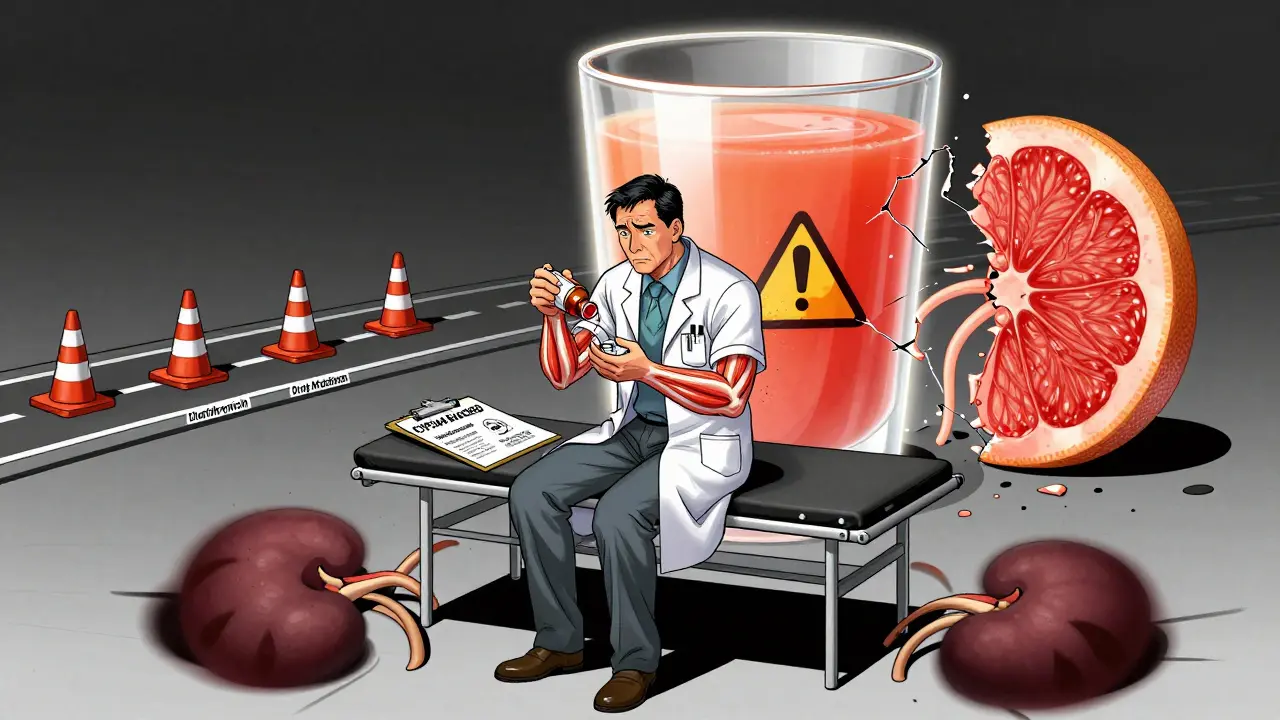
Simvastatin doesn’t just float through your body. It’s processed by one enzyme: CYP3A4. Think of this enzyme like a toll booth on a highway. Normally, it lets simvastatin pass through at a safe speed. But if something else blocks that toll booth-like another drug or grapefruit juice-the simvastatin piles up. It backs up. And then your muscles start breaking down.
This isn’t theoretical. In clinical settings, patients have been hospitalized within days after starting a simple antibiotic like clarithromycin while on simvastatin 40 mg. Their muscles turned painful, weak, and dark-signs of rhabdomyolysis. That’s when muscle tissue dies and leaks into the bloodstream, potentially crashing your kidneys. It’s rare. But when it happens, it can be fatal.
The Top 5 Dangerous Combinations
Not all drug interactions are created equal. Some are mild. Others are a one-way ticket to the ER. Here are the five most dangerous combos with simvastatin, backed by FDA data and real-world case reports:
- Clarithromycin and erythromycin - These antibiotics are among the worst offenders. They slam the brakes on CYP3A4 harder than almost anything else. A 2020 study found patients on simvastatin plus these antibiotics had over 10 times the risk of muscle injury compared to those taking simvastatin alone.
- Ketoconazole, itraconazole, voriconazole - These antifungal drugs are potent CYP3A4 blockers. The FDA explicitly says you should never take simvastatin 80 mg with any of these. Even 40 mg is risky.
- Cyclosporine - Used after organ transplants. It can increase simvastatin levels by up to 10-fold. One documented case involved a kidney transplant patient who developed rhabdomyolysis after starting cyclosporine while on simvastatin 40 mg.
- Amiodarone and amlodipine - These are common for heart rhythm and blood pressure. The FDA says if you must take them with simvastatin, your dose must be cut to 5 mg daily. Most doctors don’t even prescribe simvastatin at all in these cases anymore.
- Grapefruit juice - Yes, your breakfast smoothie. One 8-ounce glass can spike simvastatin levels by 260%. And it doesn’t matter if you drink it once a week. The effect lasts over 24 hours. Studies show 43% of patients on high-dose simvastatin still drink grapefruit juice despite warnings.
Why the 80 mg Dose Is Basically Off-Limits
The 80 mg dose of simvastatin used to be common for people with very high cholesterol. It was the go-to for aggressive treatment. But the numbers don’t lie:
- Myopathy (muscle damage) risk: 0.08% at 20-40 mg vs. 0.61% at 80 mg
- Deaths from rhabdomyolysis: 63% occurred in patients on 40 mg or higher
- New prescriptions of 80 mg: less than 2% since 2023 (IQVIA data)
The FDA pulled the plug on new 80 mg prescriptions in 2011. Since then, doctors have shifted to safer alternatives like rosuvastatin or pravastatin. Even the American College of Cardiology now says: Don’t start anyone on simvastatin 80 mg. If you’re on it now? Talk to your doctor about switching.
What to Do If You’re on Simvastatin
If you’re taking simvastatin, here’s what you need to do right now:
- Check your dose. If it’s 80 mg, ask if you can drop to 20 or 40 mg. You likely don’t need that much.
- Review every medication. Include over-the-counter drugs, supplements, and herbal products. Even St. John’s Wort can interfere.
- Absolutely avoid grapefruit juice. No exceptions. Not even a splash. Switch to orange juice or water.
- Get liver tests. Your doctor should check ALT and AST levels every 3 to 6 months. If they rise above 3 times normal, stop simvastatin.
- Watch for muscle pain. If your shoulders, thighs, or back ache without reason-especially if you feel weak or your urine turns dark-call your doctor immediately. Don’t wait.
What Your Pharmacist Can Do for You
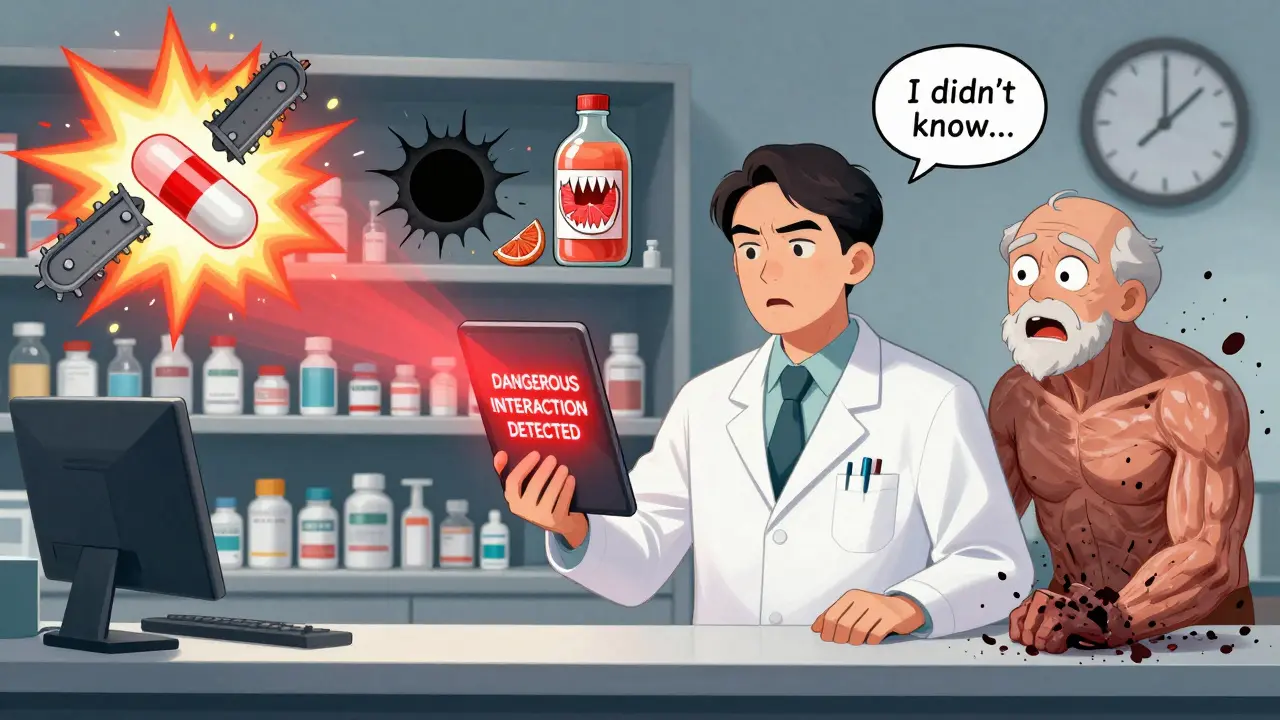
Most people think their doctor handles drug safety. But pharmacists are the real gatekeepers. They see every prescription you fill. A 2022 study found that when pharmacists proactively flagged dangerous combinations, dangerous simvastatin interactions dropped by 67% in patients over 65.
Ask your pharmacist to run a drug interaction check every time you get a new prescription-even if it’s for a cold or infection. They have software that flags these risks in seconds. And they’re trained to speak up when something’s wrong.
Alternatives That Are Safer
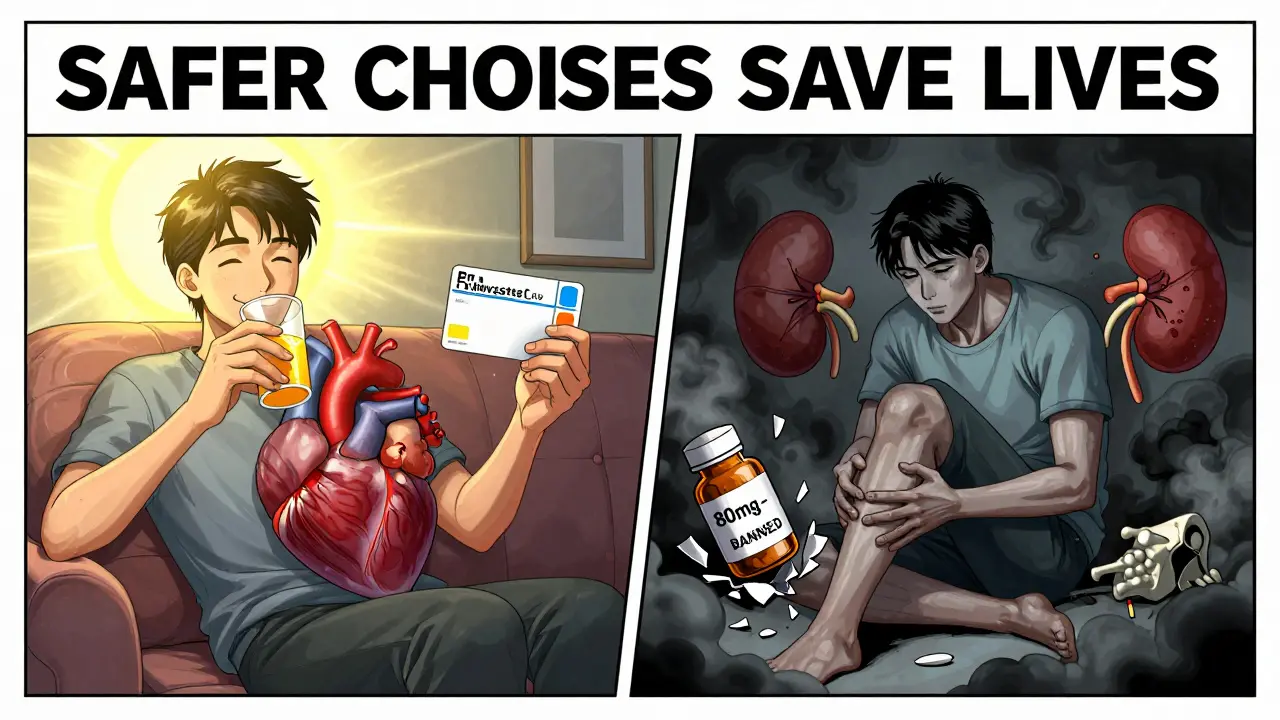
If you’re on simvastatin and have to take a drug that interacts with it, switching isn’t just smart-it’s necessary. Here are three safer statins:
- Pravastatin - Not processed by CYP3A4. Safe with most antibiotics and antifungals.
- Rosuvastatin - Strong cholesterol-lowering power, minimal interaction risk. Often used for high-risk patients.
- Pitavastatin - Newer, with very few drug interactions and good safety data.
These aren’t more expensive. Generic pravastatin costs under $5 a month. Rosuvastatin is often $10. And they work just as well-if not better-without the hidden danger.
What You Should Never Do
Don’t stop simvastatin on your own. High cholesterol can lead to heart attacks. But don’t keep taking it blindly either. Here’s what not to do:
- Don’t assume “it’s been fine for years” means it’s safe now. Your body changes. So do your meds.
- Don’t ignore muscle pain. It’s not just “getting old.”
- Don’t take new drugs without checking for interactions. Even a one-time antibiotic can trigger rhabdomyolysis.
- Don’t rely on memory. Use a pill organizer with a drug interaction checklist.
The truth? Simvastatin is still useful. But only if you treat it like a loaded gun. Not a candy.
Can I drink grapefruit juice if I take simvastatin 20 mg?
No. Even at 20 mg, grapefruit juice can increase simvastatin levels by over 200%. The risk of muscle damage doesn’t disappear with a lower dose-it just gets smaller. But it’s still there. There’s no safe amount. Switch to orange juice, apple juice, or water instead.
Is simvastatin still prescribed today?
Yes, but only at low doses-20 mg or less-and only for patients who can’t tolerate other statins. Since 2011, the 80 mg dose has been almost entirely phased out. New prescriptions for simvastatin have dropped by 82%, and most doctors now start patients on rosuvastatin or pravastatin instead. It’s still used because it’s cheap, but not because it’s the best option.
What are the signs of rhabdomyolysis?
The main signs are severe muscle pain, weakness, and dark-colored urine-like cola or tea. You might also feel nauseous, have a fever, or feel unusually tired. If you notice these symptoms after starting a new medication or eating grapefruit, stop simvastatin and seek medical help immediately. Rhabdomyolysis can cause kidney failure within hours.
Can I take simvastatin with a calcium channel blocker?
Only if your dose is cut to 5 mg or less. Calcium channel blockers like diltiazem and verapamil slow down how your body clears simvastatin. Even then, your doctor should monitor you closely. Most doctors will switch you to a different statin instead-like pravastatin-because the risk isn’t worth it.
Should I get genetic testing before taking simvastatin?
If you’re being considered for a high dose (40 mg or more), yes. A genetic variant called SLCO1B1 increases your risk of muscle damage by up to 4.5 times. The American Heart Association now recommends testing for this before starting high-dose simvastatin. It’s a simple blood test. If you have the variant, your doctor can choose a safer statin instead.



Ashlyn Ellison
February 8, 2026 AT 22:09My grandma took simvastatin for 12 years. Never had an issue. Then her doctor switched her to rosuvastatin because she started taking omeprazole. She said it felt like a whole new person-no more muscle aches. I wish more doctors told patients this stuff upfront.
Kathryn Lenn
February 10, 2026 AT 07:10Oh great. So now we’re supposed to trust Big Pharma’s ‘safe alternatives’? Funny how they quietly phased out the cheap one and pushed expensive generics like rosuvastatin. Coincidence? Or profit? 😏
Also-grapefruit juice is *literally* the only thing keeping my mornings tolerable. You want me to drink water? Pass.
Monica Warnick
February 10, 2026 AT 11:38Let me just say-I’ve been on simvastatin 40mg for 8 years. Took clarithromycin for a sinus infection last year. Didn’t think twice. Woke up three days later unable to lift my arms. Thought I had the flu. Turned out I was in rhabdo. Spent 5 days in the hospital. Kidneys were fine, thank god. But my thighs? Still feel like they’ve been run over by a truck.
And yes, I still drink grapefruit juice. I’m not giving up my smoothie. I just don’t tell my doctor.
Brett Pouser
February 11, 2026 AT 11:53As someone who works in a pharmacy in rural Ohio, I see this every single week. Elderly patients come in with 30+ prescriptions. They don’t even know what half of them do. We flag the simvastatin interactions-sometimes they’re grateful. Sometimes they get mad and leave. But we still do it.
One lady came in last month with her grandson. She was on simvastatin 80mg, amiodarone, and amlodipine. I asked if her cardiologist knew. She said, ‘He didn’t say no.’
That’s the problem. No one says ‘no’ until it’s too late.
Marie Fontaine
February 12, 2026 AT 23:44My doc switched me to pravastatin after I asked about grapefruit juice. Cost me $4.23 at Walmart. No muscle pain. No panic. Just… life. 🙌
Also-St. John’s Wort? I took it for anxiety. Didn’t know it messed with statins. My pharmacist caught it. She’s a hero.
Joshua Smith
February 14, 2026 AT 23:21Just curious-has anyone here gotten the SLCO1B1 genetic test? I asked my doctor last year and he laughed. Said it’s ‘not cost-effective.’ But I paid out of pocket for it anyway. Turned out I have the high-risk variant. Switched to pitavastatin. Zero issues since. Worth every penny.
John Watts
February 16, 2026 AT 00:39Hey-just want to say thank you to whoever wrote this. I’m a nurse in a cardiac unit. We see the fallout from this stuff every day. People think statins are candy. They’re not. They’re fine-tuned tools. Use them right.
Also-if you’re on simvastatin and take antibiotics, always ask your pharmacist. Don’t assume ‘it’s fine.’ I’ve seen too many patients come in with CK levels over 50,000. It’s not pretty.
Angie Datuin
February 16, 2026 AT 09:55I didn’t know any of this. I’m on simvastatin 20mg. I drink grapefruit juice every morning. I’m switching to orange juice today. Thanks for the wake-up call.
Ken Cooper
February 17, 2026 AT 19:50so like… i got my simva 40mg from my doc last year. then i started taking turmeric for my knees. didn’t think anything of it. then my leg started hurting like hell. went to the er. they said ‘stop everything’ and gave me a new script. turned out turmeric messes with cyp3a4 too. who knew??
now i use a pill organizer with a checklist. and i ask my pharmacist like a million times. they’re cool with it. i think they like it?
Susan Kwan
February 18, 2026 AT 15:47‘Switch to orange juice’? Cute. You know how many elderly people live on grapefruit because it’s the only thing they can afford? Or because it’s the only flavor they like after chemo? This isn’t a lifestyle blog. It’s a public health failure.
And no, I’m not ‘giving up’ my juice. I’m just not giving up my life either.
John McDonald
February 18, 2026 AT 18:59I’ve been on simvastatin for 15 years. 20mg. Never had a problem. My doctor says I’m fine. My bloodwork’s clean. My muscles feel great. But I still don’t drink grapefruit juice. I don’t take random supplements. I don’t take antibiotics without checking. Because I know how fragile this balance is.
It’s not about fear. It’s about respect.
glenn mendoza
February 19, 2026 AT 03:45Thank you for this meticulously researched and clinically grounded exposition. The data presented aligns precisely with current guidelines from the American College of Cardiology and the FDA’s 2011 Safety Communication. I would respectfully urge all patients on simvastatin to consult with their prescribing physician and clinical pharmacist to perform a comprehensive medication reconciliation, particularly in light of the documented pharmacokinetic interactions involving CYP3A4 inhibition. Proactive intervention remains the cornerstone of patient safety in this context.