
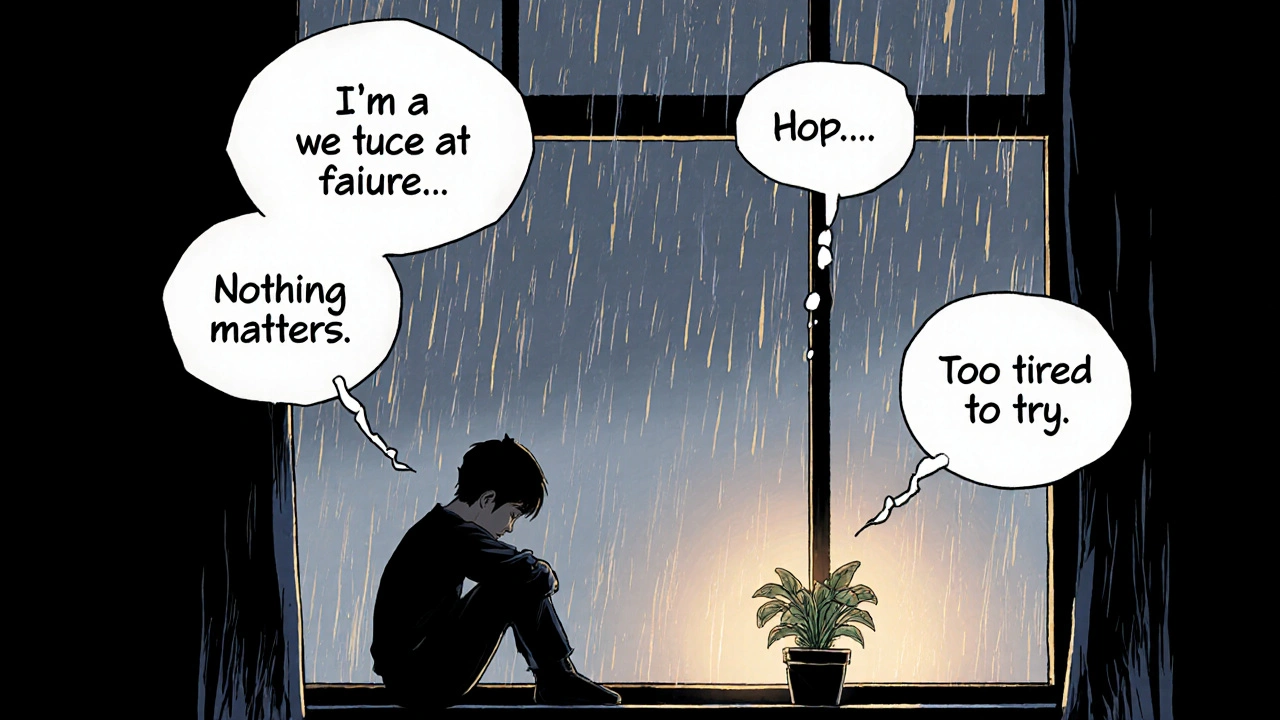
When you’re stuck in a low mood that won’t lift, no matter how hard you try to shake it off, it’s not just sadness-it’s major depressive disorder. This isn’t something you can snap out of with positive thinking. It’s a real, medical condition that affects how you think, feel, and even how your body functions. About 1 in 6 adults in the U.S. will experience it at some point in their life. The good news? There are proven ways to treat it-and you don’t have to choose between medication and therapy. Often, the best results come from using both.
What Major Depressive Disorder Actually Feels Like
Major Depressive Disorder isn’t just having a bad week. It’s persistent sadness, loss of interest in things you used to love, trouble sleeping or sleeping too much, fatigue, feelings of worthlessness, and sometimes thoughts of death or suicide. These symptoms last at least two weeks and make daily life hard-or impossible-to manage. It doesn’t care if you’re successful, have a great family, or seem fine on the outside. It shows up quietly and stays.Unlike normal sadness, which fades after a loss or setback, MDD lingers. It doesn’t respond to distractions or pep talks. And it’s not a character flaw. Brain imaging and decades of research show it’s tied to changes in brain chemistry, stress responses, and even how your genes regulate mood.
Two Main Paths to Recovery: Therapy and Medication
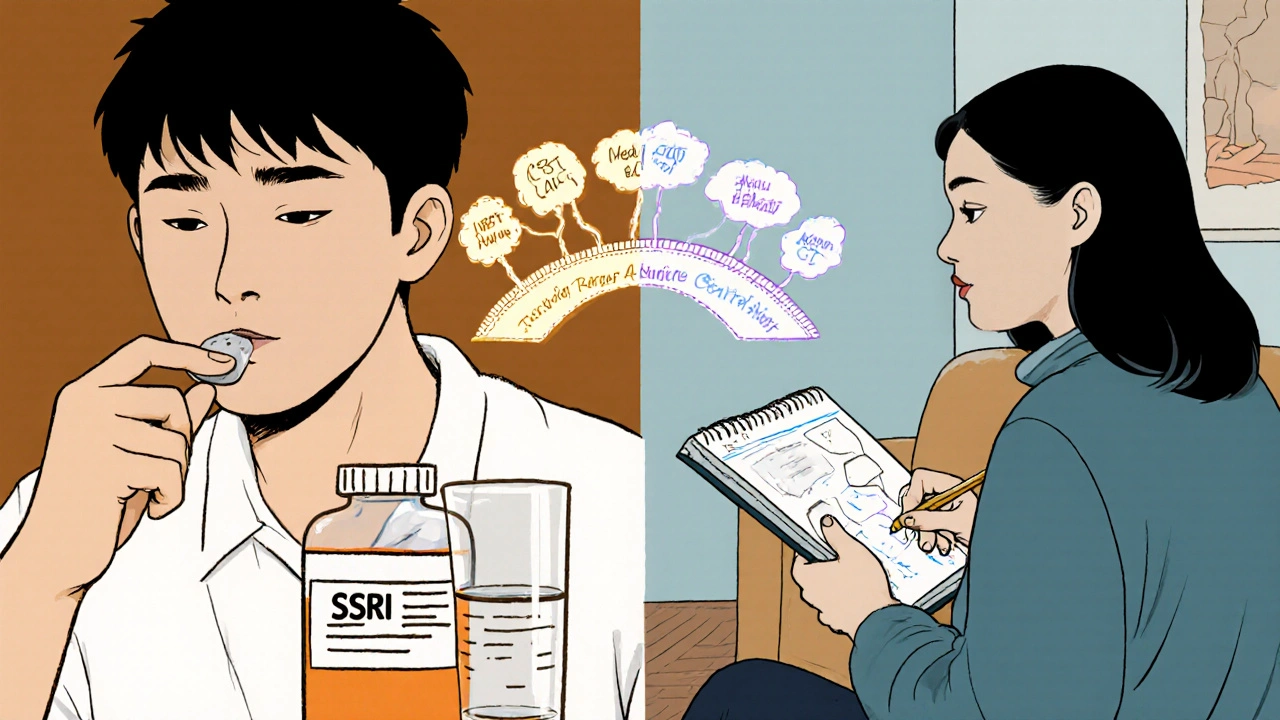
There are two primary tools doctors use to treat MDD: psychotherapy and antidepressants. Neither is a magic cure, but both are backed by solid science. The choice isn’t about which is better-it’s about what works best for you.Psychotherapy, or talk therapy, helps you understand and change the way you think and behave. Antidepressants help balance chemicals in your brain that affect mood. Many people think you have to pick one. But research shows that for moderate to severe depression, combining both gives you the best shot at lasting recovery.
Psychotherapy: The Mind’s Toolbox
Not all talk therapy is the same. The most effective types for MDD are structured, time-limited, and evidence-based.Cognitive Behavioral Therapy (CBT) is the gold standard. It teaches you to spot negative thought patterns-like “I’m a failure” or “Nothing ever goes right”-and replace them with more realistic ones. You don’t just talk about your problems; you learn skills to manage them. Studies show CBT works as well as antidepressants for many people, and its effects last longer because you’re building tools you can use for years.
Behavioral Activation is a simpler version of CBT. It’s all about action. When you’re depressed, you stop doing things you enjoy. That makes you feel worse. Behavioral activation helps you slowly rebuild your routine-going for a walk, calling a friend, cooking a meal-even when you don’t feel like it. The idea? Action comes before motivation.
Interpersonal Therapy (IPT) focuses on relationships. Depression often grows in the space between people-after a breakup, job loss, or death. IPT helps you work through those losses and improve how you connect with others. It’s especially helpful if your mood dips after conflict or isolation.
Acceptance and Commitment Therapy (ACT) is newer but growing fast. Instead of fighting negative thoughts, ACT teaches you to notice them without getting hooked. You learn to accept discomfort and still move toward what matters to you-like being a parent, holding a job, or staying connected to friends.
Most therapy sessions last 50 minutes, once a week. You’ll typically need 12 to 20 sessions to see real change. Some people feel better after just a few weeks. Others take longer. It’s not a race. Consistency matters more than speed.
Antidepressants: How They Work and What to Expect
Antidepressants don’t make you “happy.” They help your brain get back to functioning normally so you can respond to life again. Think of them like glasses for your mood-they don’t change who you are, but they help you see more clearly.Doctors usually start with second-generation antidepressants because they’re safer and have fewer side effects than older ones. The two main classes are:
- SSRIs (Selective Serotonin Reuptake Inhibitors): These include escitalopram, sertraline, and fluoxetine. They’re often the first choice for mild to moderate depression. They’re generally well-tolerated, but side effects like nausea, insomnia, or reduced sex drive can happen early on.
- SNRIs (Serotonin-Norepinephrine Reuptake Inhibitors): These include venlafaxine and duloxetine. They’re sometimes used when SSRIs don’t work or for people with physical pain along with depression.
Other effective options include mirtazapine (which can help with sleep and appetite) and amitriptyline (an older drug still used for severe cases). But not every drug works for every person. Finding the right one can take trial and error.
It takes 2 to 4 weeks before you start to feel any difference. Full benefits usually take 8 to 12 weeks. Many people quit too soon because they don’t feel better right away. That’s a mistake. Give it time. And if side effects are too much, talk to your doctor. Switching medications is common and safe.
Combination Therapy: Why Two Tools Are Better Than One
A 2025 study in Nature confirmed what many clinicians have seen for years: when you combine antidepressants with CBT, you’re more likely to get better-and stay better.Medication helps lift the heavy fog so you have the energy to engage in therapy. Therapy gives you skills so you don’t fall back into old patterns once the meds are stopped. Together, they tackle both the biology and the behavior of depression.
For severe depression (a PHQ-9 score of 16 or higher), guidelines from NICE and the AAFP strongly recommend combination therapy. For mild cases, therapy alone might be enough. For those who can’t access therapy, medication is still a valid and effective option.
What About Digital Therapy?
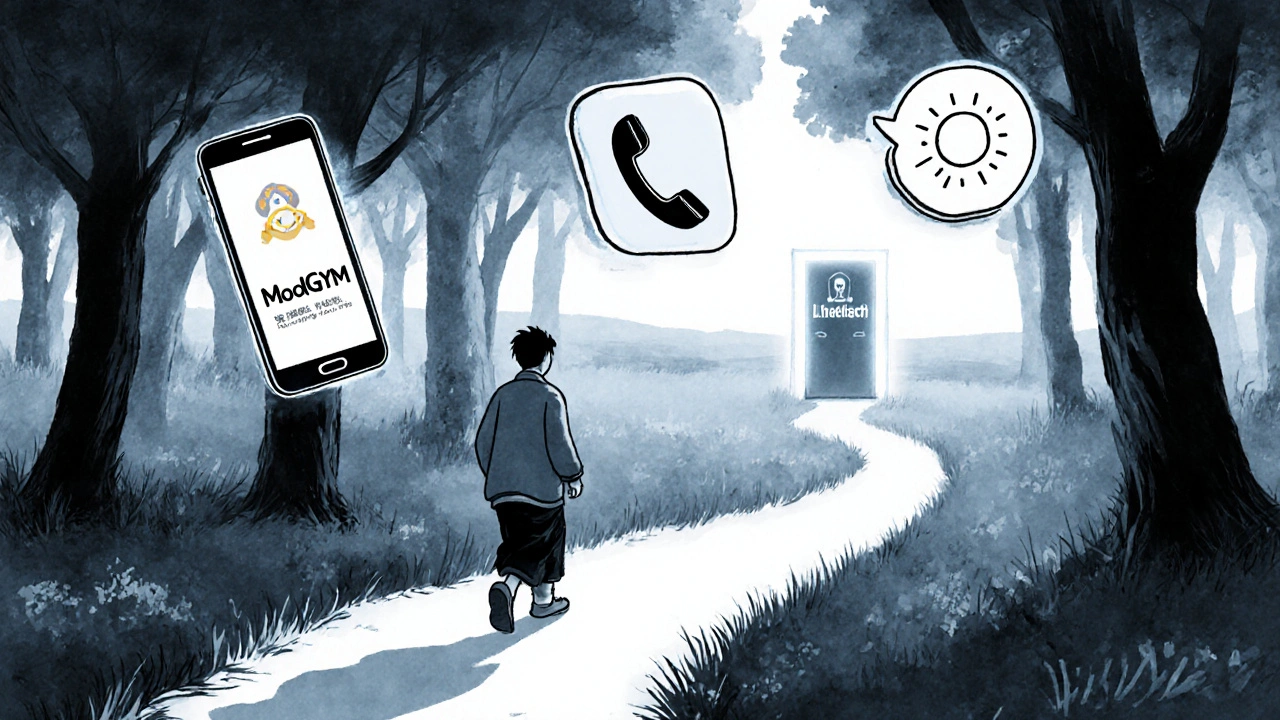
If you live far from a therapist, can’t afford in-person sessions, or feel uncomfortable talking face-to-face, computerized CBT (CCBT) is a real option. Programs like MoodGYM or SilverCloud are used in the NHS and other public health systems. They guide you through CBT exercises online, with feedback and progress tracking.They’re not perfect. You miss the human connection. And if you’re too overwhelmed to log in, it won’t help. But for motivated people, especially in rural areas or during crises, they’re a lifeline. Many studies show they work almost as well as in-person therapy for mild to moderate depression.
Side Effects and Real-Life Challenges
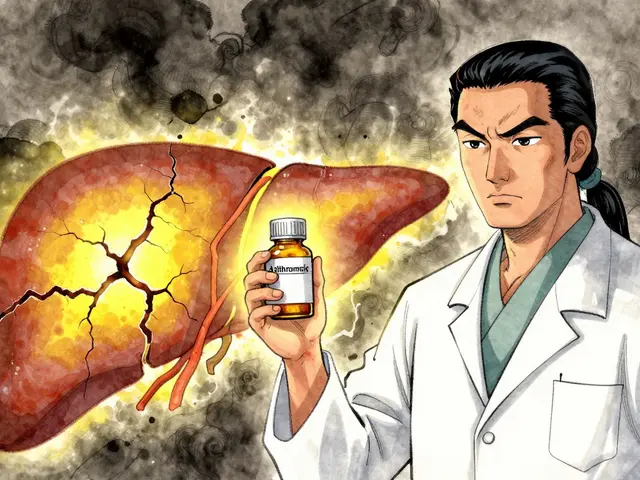
No treatment is without trade-offs.Antidepressants can cause nausea, weight gain, drowsiness, or sexual problems. These often fade after a few weeks. If they don’t, your doctor can adjust the dose or switch you to another medication. Never stop cold turkey-withdrawal can make you feel worse.
Therapy requires effort. You have to show up, do homework, and face uncomfortable thoughts. Some people quit because it’s hard. But those who stick with it say the hardest part was starting.
Waiting lists for therapy can be long-weeks or even months in some places. Telehealth has helped, but not everywhere has access. If you’re stuck, ask your doctor about CCBT or support groups while you wait.
What Doesn’t Work
Some things get marketed as “cures,” but they don’t hold up:- Supplements like St. John’s Wort can interact dangerously with other meds and aren’t regulated like pharmaceuticals.
- “Just exercise more” or “get more sunlight” helps some, but alone, they’re not enough for clinical depression.
- Online apps that promise quick fixes with no clinical backing? Skip them. They’re not substitutes for professional care.
Always talk to a doctor before trying anything new.
How to Start
If you think you might have MDD:- See your doctor or a mental health professional. They’ll ask about your symptoms, sleep, energy, and thoughts.
- Ask about a PHQ-9 screening test-it’s quick and helps measure severity.
- Discuss your preferences: Do you want to try therapy first? Are you open to medication?
- Ask about local resources: Is there a CBT therapist nearby? Are there free or low-cost CCBT programs?
- Don’t wait for “the right time.” Depression doesn’t pause for convenience.
Recovery isn’t linear. Some days will be harder than others. But with the right support, most people get better. In fact, 70 to 80% of those who stick with treatment see significant improvement.
When to Seek Emergency Help
If you’re having thoughts of harming yourself or others, don’t wait. Call 988 (the Suicide & Crisis Lifeline) anytime, day or night. You’re not alone. Help is available.Can antidepressants make you feel worse at first?
Yes, some people feel more anxious, nauseous, or emotionally numb in the first 1 to 2 weeks. This is common with SSRIs and SNRIs. It usually passes as your body adjusts. If symptoms are severe or you have suicidal thoughts, contact your doctor immediately. Never stop medication without medical advice.
How long should I stay on antidepressants?
Most doctors recommend staying on antidepressants for at least 6 to 12 months after symptoms improve. For people with recurrent depression, longer-term use-sometimes years-is common. Stopping too soon increases the risk of relapse. Always taper off under a doctor’s supervision.
Is therapy only for people who can’t handle medication?
No. Therapy isn’t a backup plan-it’s a powerful treatment on its own. Many people choose therapy first, especially if they prefer not to take meds. Others use it alongside medication. The best approach depends on your symptoms, history, and personal goals, not on weakness or strength.
What if therapy doesn’t work for me?
Therapy isn’t one-size-fits-all. If CBT isn’t helping, try IPT, ACT, or behavioral activation. The therapist matters too-chemistry and trust are key. If one therapist doesn’t click, try another. Also, therapy works best when combined with other supports, like medication, sleep, or exercise. Don’t give up after one try.
Can I use online therapy instead of seeing someone in person?
Yes, for mild to moderate depression, online therapy platforms with licensed therapists or structured CCBT programs can be very effective. They’re especially helpful if you live in a rural area, have mobility issues, or can’t find local providers. But for severe depression or complex trauma, in-person care is often preferred. Always check that the platform is licensed and uses evidence-based methods.
Are there alternatives to antidepressants if I don’t want to take medication?
Yes. Evidence-based psychotherapy alone can be just as effective as medication for mild to moderate depression. Other options include regular physical activity, light therapy (for seasonal depression), and sleep regulation. But avoid unproven supplements or extreme diets-they’re not substitutes for clinical care. Always discuss alternatives with your doctor.


edgar popa
November 13, 2025 AT 02:36just started sertraline and yeah the first week felt like my brain was on fire but im kinda better now lol
Mark Rutkowski
November 14, 2025 AT 17:50Depression isn’t a flaw in your character-it’s a glitch in the system, like a corrupted file that won’t load no matter how many times you reboot. Therapy helps you reprogram the software; meds help stabilize the hardware. Together? You stop just surviving and start remembering what it feels like to live.
And yeah, it’s messy. Some days you’ll feel like a ghost. Other days, you’ll cry over a commercial. That’s not weakness-it’s the rewiring happening. Be gentle with yourself. This isn’t a race to ‘fixed.’ It’s a slow dance back to your own skin.
Amie Wilde
November 16, 2025 AT 05:24CBT actually worked for me after 3 therapists and 2 meds. the homework sucked but i did it anyway. weirdly, it was the only thing that made me feel like i had control again.
Eve Miller
November 18, 2025 AT 01:23It’s alarming how many people still treat depression like a lifestyle choice. The fact that this post even has to explain that SSRIs aren’t ‘happy pills’ is a testament to the dangerous misinformation still circulating. If you wouldn’t tell someone with diabetes to ‘just eat better,’ why say it to someone with clinical depression? The science is clear. Stop romanticizing suffering.
Chrisna Bronkhorst
November 19, 2025 AT 00:17antidepressants are just corporate propaganda wrapped in white coats
the real cure is quitting your toxic job and getting off social media
also check if your water has fluoride
they want you dependent
Johnson Abraham
November 19, 2025 AT 10:50lol therapy? i tried it. guy just sat there nodding like a confused goldfish
then charged me 150 bucks
my dog understands me better
just drink more coffee and stop overthinking
:)
Erica Cruz
November 20, 2025 AT 11:05Oh please. CBT is just a fancy way of telling people to ‘think positive.’ If it were that simple, we’d all be fine. The real issue is systemic inequality, wage slavery, and the collapse of community. Therapy is a Band-Aid on a severed artery. And don’t get me started on pharmaceutical companies-this whole industry is built on keeping people medicated, not healed.
Gary Hattis
November 22, 2025 AT 02:15I’m from a country where mental health is still whispered about, and seeing this level of detail in English is… humbling.
Here, people think depression means you’re lazy or spiritually weak. We don’t have access to CBT or even basic SSRIs in rural areas. But I’ve seen people start with online programs-MoodGYM, like the post says-and slowly come back to life. It’s not perfect, but it’s a start. Maybe one day we’ll stop treating mental health like a luxury and start treating it like a human right.
Esperanza Decor
November 23, 2025 AT 00:30I tried every antidepressant under the sun. Each one had side effects that felt worse than the depression. Then I found a therapist who didn’t just ask ‘how are you feeling?’ but ‘what do you need right now?’ That shift-from fixing to listening-changed everything. I didn’t need to be fixed. I needed to be seen.
Also, walking 20 minutes a day without my phone? That helped more than I’ll admit. Not a cure. But a bridge.
Charles Lewis
November 24, 2025 AT 14:28It’s important to recognize that the narrative around depression has evolved significantly over the past two decades, shifting from a purely biochemical model to a biopsychosocial framework that acknowledges environmental, relational, and neurobiological factors in tandem. The integration of psychotherapy with pharmacological intervention is not merely additive-it is synergistic, with neuroimaging studies demonstrating increased prefrontal cortex activation and reduced amygdala hyperactivity when both modalities are employed. Furthermore, longitudinal data indicates that individuals who complete a full course of CBT in conjunction with medication exhibit significantly lower relapse rates over five-year follow-ups compared to those on monotherapy. This is not anecdotal; it is evidence-based clinical practice. The stigma persists not because of ignorance, but because of systemic underfunding of mental health infrastructure, which forces patients into binary choices that do not reflect the complexity of the condition. We must advocate for integrated care models that prioritize accessibility, continuity, and patient autonomy.
Deepa Lakshminarasimhan
November 26, 2025 AT 02:37you know what they don’t tell you? antidepressants are part of a bigger plan. the government and big pharma want you dependent. they don’t want you to heal-they want you to stay on pills so you don’t organize, don’t protest, don’t ask why your life sucks. therapy? same thing. it’s just a way to make you blame yourself instead of the system. and ccbt? that’s surveillance disguised as help. they track your thoughts, your moods, your clicks. it’s all connected. wake up.