

Pharmacy Language Access Checker
Check the services your pharmacy provided during medication counseling. Click Check My Rights to see if you received all required services.
Every year, thousands of people in the U.S. end up in the emergency room because they didn’t understand their medication instructions. Not because they were careless. Not because they didn’t care. But because no one spoke their language.
For people with Limited English Proficiency (LEP), getting the right medicine isn’t just about picking up a prescription. It’s about understanding how to take it, when to take it, and what to watch out for. And if you can’t ask questions or get clear answers, the risks are real: overdoses, dangerous interactions, skipped doses, hospital stays.
That’s why federal and state laws now require pharmacies to provide professional interpreters during medication counseling. This isn’t a courtesy. It’s a legal right. And it’s part of a safety plan that’s saving lives.
What the Law Actually Says
Under Section 1557 of the Affordable Care Act, any healthcare provider that takes federal money - including pharmacies that bill Medicare or Medicaid - must give LEP patients meaningful access to care. That means more than just handing out a translated label. It means real-time, accurate communication with a qualified interpreter.
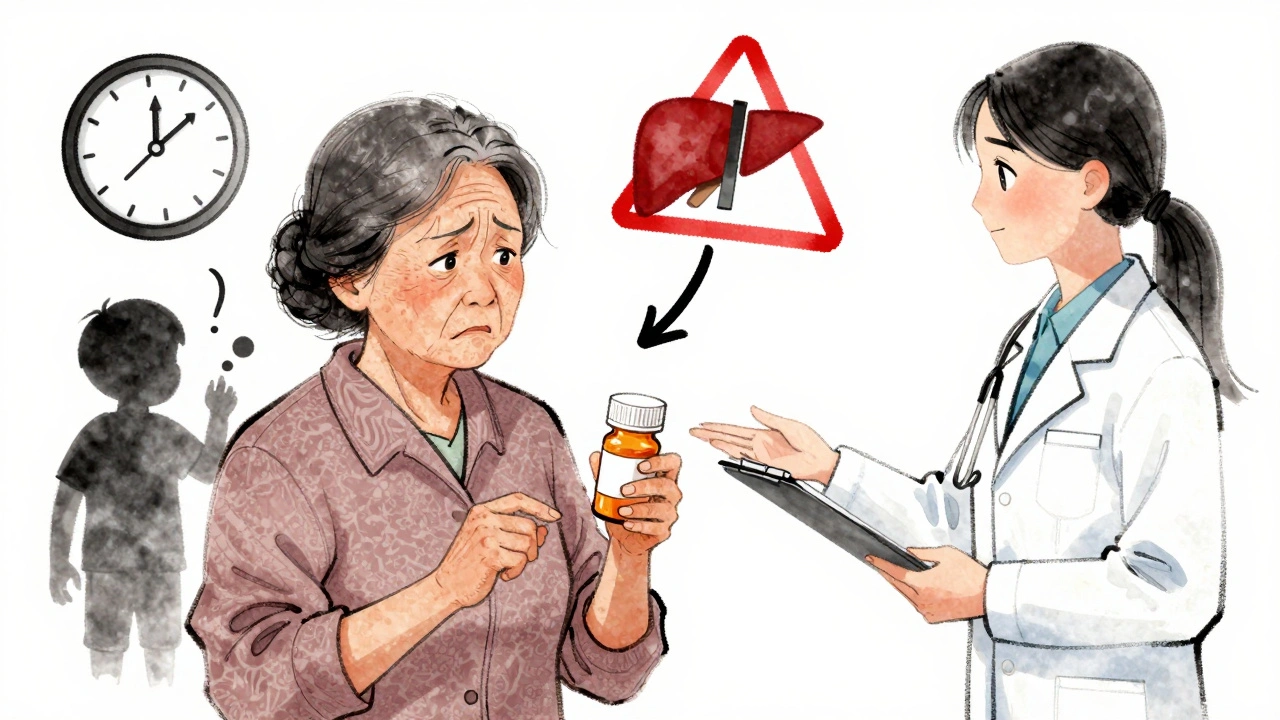
The rule changed on July 5, 2024. Now, pharmacies can’t ask patients to use family members as interpreters unless the patient specifically asks for it. Kids, spouses, cousins - none of them count as professional interpreters under the law. Why? Because a 12-year-old shouldn’t be explaining what a blood thinner does. And a spouse shouldn’t have to translate a warning about liver damage.
States like New York and California went even further. New York’s SafeRx regulations, updated in 2023, require pharmacies to offer free interpretation services in any language spoken by at least 1% of the local population. That could mean Spanish, Bengali, Mandarin, Arabic, Haitian Creole, Russian, or Punjabi - depending on the neighborhood. But there’s a cap: no more than seven languages per pharmacy location. If your language isn’t on the list, the pharmacy still has to find a way to serve you - through phone or video interpreters.
What You’re Entitled to Receive
If you’re an LEP patient, here’s what the law guarantees you at the pharmacy counter:
- Free oral interpretation during medication counseling - no extra charge, no waiting.
- Translated prescription labels and warning labels (like “May cause drowsiness” or “Take with food”).
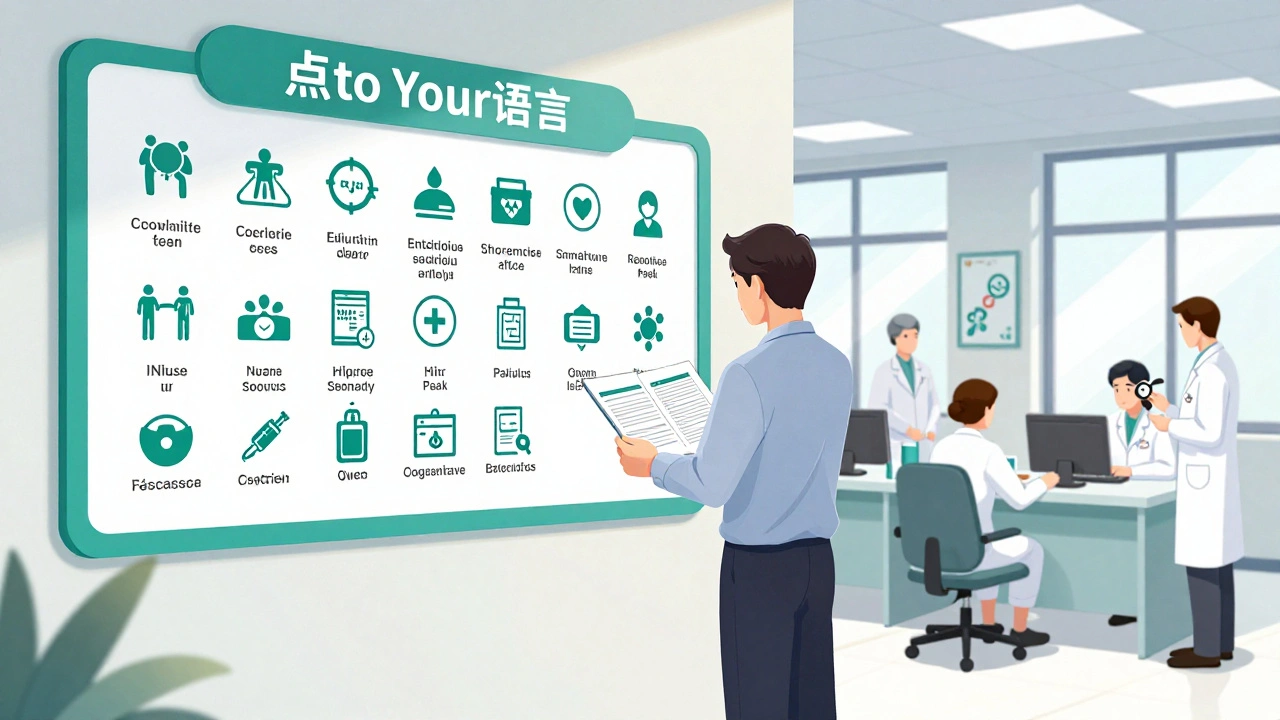
- Conspicuous signage near the counter that says “Point to your language.” This isn’t decorative. It’s a direct invitation to ask for help.
- Language preferences documented in your patient profile so you don’t have to repeat yourself every time.
- 24/7 access to interpretation services - even on weekends or holidays.
These aren’t suggestions. They’re requirements. And pharmacies that skip them can be fined - and they have been. In 2022, New York’s Attorney General found 147 violations. The most common? Missing signs and no one offering help when a patient looked confused.
How Pharmacies Are Supposed to Deliver
Big chains like CVS and Walgreens have invested heavily in compliance. They train staff for 10 hours on language access protocols. They contract with services like LanguageLine Solutions or TransPerfect to provide phone and video interpreters. They’ve installed tablets at the counter so pharmacists can connect instantly with someone who speaks your language.
But it’s not perfect. A patient in Queens reported in June 2024: “They have the signs, but no one knows how to use the service when I need it.” That’s a gap in training. Or a rushed shift. Or a lack of accountability.
Independent pharmacies struggle more. About 67% have full compliance systems. The rest? Many can’t afford the monthly fees for interpretation services. That’s why New York allows waivers - but only if the pharmacy can prove they’re actively trying to find a solution. No excuses. No ignoring the law.
Why This Matters Beyond the Law
Studies show this isn’t just about fairness. It’s about survival.
A 2018 study in the Journal of Patient Safety found that when professional interpreters were used, medication errors dropped by 67%. In New York City, the rate of translated medication instructions jumped from 42% in 2006 to 78% in 2015. Phone interpretation access went from 38% to 92%. That’s not luck. That’s policy working.
Dr. Lisa Weiss, who led that study, says: “Misunderstood instructions lead to overdoses, dangerous interactions, and people stopping their meds out of fear.” That fear? It’s real. A Chinese-speaking grandmother in Brooklyn didn’t know her blood pressure pill was supposed to be taken daily - she thought it was only for when she felt dizzy. She stopped taking it. Her stroke came six months later.
And it’s not just about physical health. When people understand their meds, they feel more in control. A 2023 survey by the Asian American Federation found 68% of LEP patients in NYC felt “more confident taking medications” after language services improved. That confidence? It’s the foundation of better health.
What You Can Do If Services Are Missing
Even with the law, you might still hit roadblocks. Here’s what to do:
- Ask directly. Say: “I need an interpreter. It’s my right.” Point to the sign if you need to.
- Ask for the manager. Front-line staff may not be trained. Managers are responsible for compliance.
- Document it. Note the date, time, pharmacy name, and what happened. Take a photo of the sign if it’s missing.
- Report it. Call the New York State Office of Language Access Services at 1-800-688-8814. Or file a complaint with the U.S. Department of Health and Human Services.
You’re not being difficult. You’re protecting your life.
What’s Coming Next
The rules are getting tighter. By June 2025, every federally funded pharmacy must have a written language access plan. By 2026, all Medicare and Medicaid providers must be fully compliant.
The FDA is testing new pictograms on pill bottles - simple icons showing “take daily” or “avoid alcohol.” But they’re meant to supplement, not replace, human interpreters. No image can explain side effects like nausea, dizziness, or allergic reactions.
Some pharmacies are experimenting with AI translation tools. But right now, the law still requires human verification for anything related to medication safety. Machines can’t catch cultural nuances. They can’t read fear in your eyes. They can’t ask, “Are you sure you understand?”
Final Thought: This Is About Safety, Not Service
Language access isn’t a luxury. It’s not a “nice-to-have” for diversity programs. It’s a medical necessity. Just like sterile needles or calibrated scales, it’s part of the equipment that keeps people alive.
If you’re an LEP patient, know your rights. If you’re a caregiver, speak up for those who can’t. If you’re a pharmacist - don’t wait for a fine to act. Do the right thing before someone gets hurt.
Medication safety doesn’t speak English. It speaks every language. And if you’re not listening - someone could die.
ian septian
December 9, 2025 AT 23:17William Umstattd
December 10, 2025 AT 20:07Sabrina Thurn
December 12, 2025 AT 10:51Simran Chettiar
December 14, 2025 AT 07:11Sarah Gray
December 15, 2025 AT 08:40Carina M
December 17, 2025 AT 06:53Ajit Kumar Singh
December 18, 2025 AT 01:28Lisa Whitesel
December 19, 2025 AT 17:23Larry Lieberman
December 20, 2025 AT 01:19Asset Finance Komrade
December 20, 2025 AT 03:17