
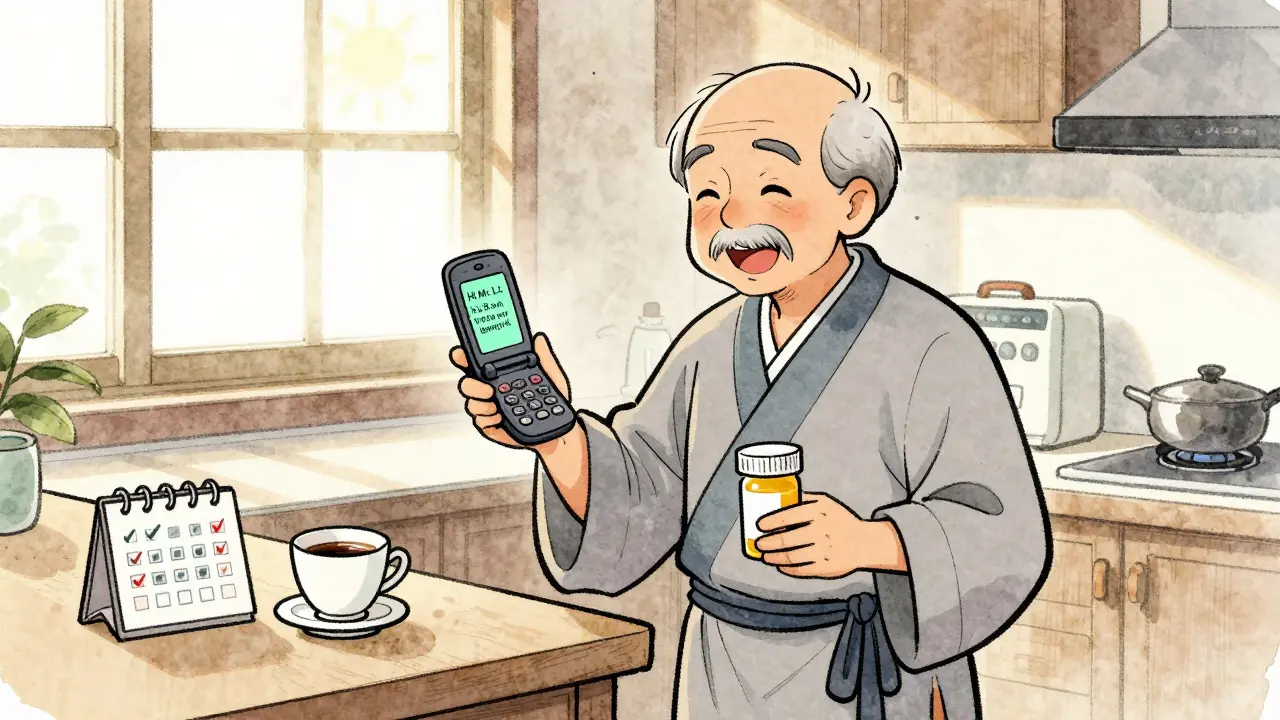
Missing a pill can seem like a small thing-until it isn’t. For people managing chronic conditions like high blood pressure, diabetes, or HIV, skipping doses isn’t just inconvenient; it can lead to hospital visits, drug resistance, or worse. About half of all people on long-term medication don’t take it as prescribed. Text message reminders are one of the simplest, cheapest, and most widely used tools to fix that-and they work, but only if done right.
Why Text Messages Work (When They Work)
Text messages aren’t magic. They don’t make you feel better or cure anything. But they do something simple: they remind you. And for many, that’s enough. A 2017 study tracked over 1,000 heart attack survivors for a year. Those who got daily text reminders were 14 percentage points more likely to take their meds than those who didn’t. That’s not a minor bump-it’s the difference between managing your condition and ending up back in the hospital. The key? Timing and personalization. A reminder that says “Take your pill” at 9:03 a.m. when you take your blood pressure medicine at 8:00 a.m. won’t help. But one that says, “Hi Maria, it’s 8:00 a.m. Time for your lisinopril,” delivered right when you’re making coffee? That sticks.What You Need to Get Started
You don’t need an app, a smartwatch, or a fancy device. All you need is:- A working mobile phone (any type-Android, iPhone, or basic flip phone)
- A reliable phone number
- Clear knowledge of your medication schedule (name, dose, time)
- Permission to receive texts from your provider or a trusted service
How to Set Up Effective Reminders
Not all reminders are created equal. Here’s how to make yours actually work:- Match the timing to your routine. Set the reminder for when you actually take your pill-not when your doctor says you should. If you take your pill after breakfast, set the text for 8:30 a.m., not 7:00 a.m.
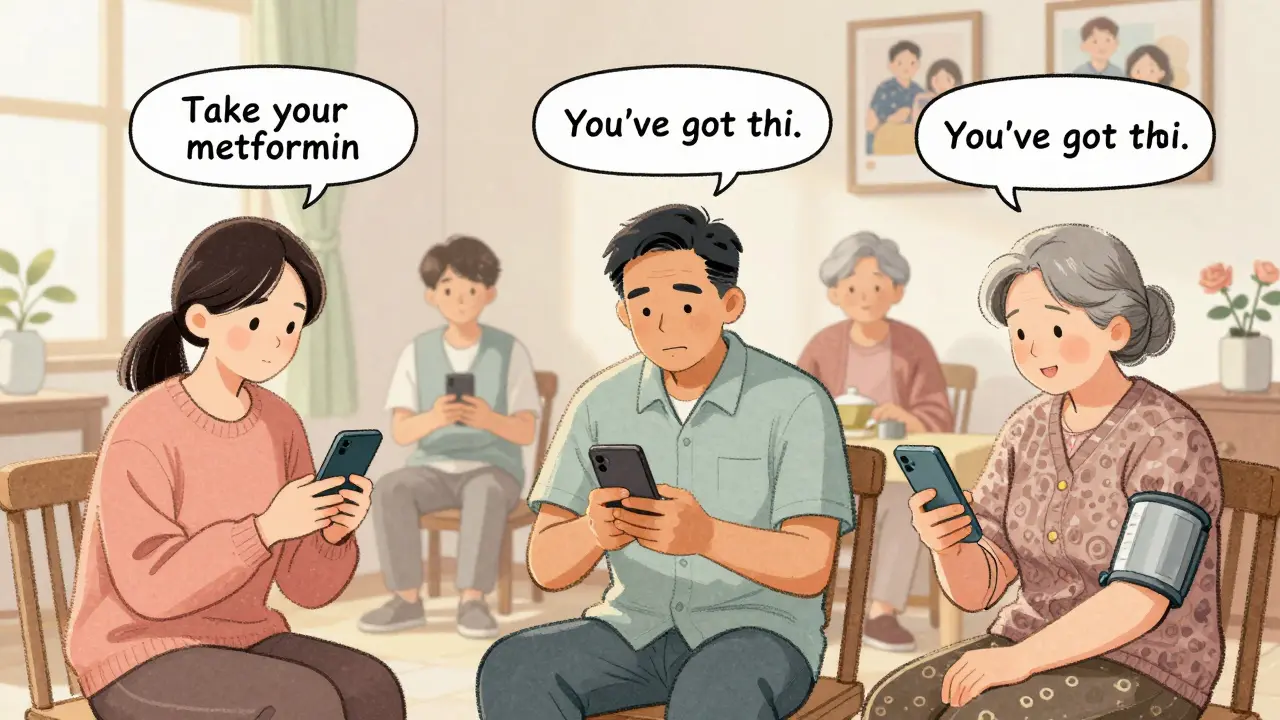
- Personalize the message. Generic texts like “Take your meds” get ignored. Use your name, the drug name, and the reason: “Hi John, it’s 8 a.m. Take your 10mg metformin to keep your sugar steady.”
- Keep it short. SMS limits mean you have about 160 characters. Be clear. Avoid jargon. “Take your warfarin” is better than “Administer anticoagulant as prescribed.”
- Choose the right frequency. Daily reminders work best for most conditions. For long-term maintenance drugs like statins, weekly reminders can be enough. Too many texts? You’ll turn them off. Studies show people stop responding after 3-6 months if messages feel repetitive.
- Use two-way messages if possible. Some systems let you reply “Taken” or “Missed.” That feedback helps your doctor know if you’re struggling-without you having to call.
What Doesn’t Work
Many people try text reminders and give up after a few weeks. Here’s why:- One-size-fits-all messages. If your text says “Take your insulin” but you take it at different times every day, the reminder becomes useless.
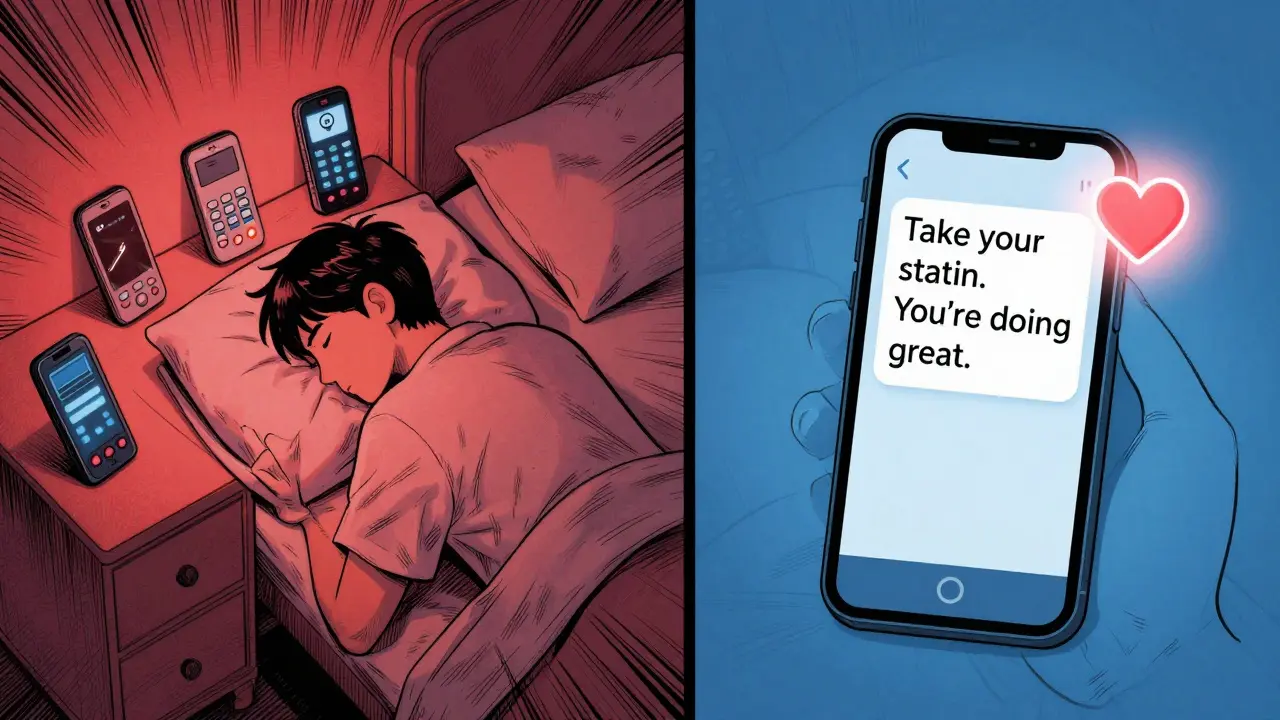
- Too many reminders. Three texts a day for one pill? You’ll mute them. Stick to one-right at your usual time.
- No follow-up. If you miss a dose and no one checks in, the system fails. Texts work best when they’re part of a bigger plan-with a provider, caregiver, or app that tracks progress.
- Wrong timing. A reminder at 11 p.m. for a morning pill? It’s noise, not help.
Who Benefits the Most
Text reminders aren’t equally effective for everyone. They shine brightest in situations where:- Timing is critical-like HIV meds, TB treatment, or epilepsy drugs. Missing a dose by even a few hours can lead to resistance.
- The regimen is complex-multiple pills, different times, or changing doses. A text can break down the confusion.
- Patients are young or tech-savvy-but even older adults respond well if the message is clear and the phone is easy to use.
Privacy and Safety
You might worry: Is it safe to get texts about my meds? In the U.S., healthcare providers must follow HIPAA rules. That means they can’t send messages with your full diagnosis or sensitive details unless you’ve given permission. Most systems use coded messages like “Take your med” instead of “Take your HIV meds.” If you’re unsure, ask your pharmacy or doctor how they protect your info. You can also request to receive reminders only during business hours or to use a different phone number if you share a device.What to Do If Texts Don’t Work for You
Text reminders aren’t the answer for everyone. If you’ve tried them and they didn’t stick, here are other options:- Pill organizers with alarms-physical boxes that split your pills by day and time.
- Medication apps that track doses and send push notifications (often more reliable than SMS).
- Family or caregiver reminders-a loved one calling or texting you daily.
- Pharmacy packaging-some pharmacies now send blister packs with the day and time printed on each pill slot.
The Bottom Line
Text message reminders are a powerful, low-cost tool-if you use them the right way. They’re not a cure-all, and they won’t fix everything. But for millions of people, they’re the difference between staying healthy and getting sicker. Start simple: Get your medication schedule written down. Set one personalized text reminder for the time you actually take your pill. Don’t overdo it. Check in after a week. If it helps, keep it. If not, try something else. Your health isn’t about the tool-it’s about what works for you.Can I get text reminders from my pharmacy?
Yes, many pharmacies offer free text reminder services. Ask at your local pharmacy or check your online prescription portal. Some systems sync with your refill history and send alerts when your prescription is ready or when it’s time to take your dose.
How often should I get text reminders?
Once a day, at your usual medication time, is ideal. For complex regimens (multiple pills at different times), one reminder per dose is fine. More than that leads to fatigue. Weekly reminders work for stable, low-risk medications like statins or daily aspirin.
Do text reminders work for elderly people?
Yes, if the phone is easy to use and the message is clear. Many seniors respond well to simple, direct texts. Avoid abbreviations. Use full names of medications. If they have trouble reading small screens, consider voice-based reminders or pairing texts with a caregiver check-in.
What if I miss a reminder?
Don’t panic. Most systems don’t track whether you actually took the pill-only that the message was sent. If you miss a dose, take it as soon as you remember, unless your doctor says otherwise. If you’re missing doses often, talk to your provider. You might need a different system, like a pill box or a family member’s help.
Are text reminders HIPAA-compliant?
They can be. Providers must get your consent and avoid including sensitive details in messages. Reputable systems use coded language (e.g., “Take your med”) instead of naming conditions. Always ask how your information is protected before signing up.
Do I need a smartphone to use text reminders?
No. Any mobile phone that can receive SMS texts will work-even basic flip phones. You don’t need internet, apps, or data. Just a working number and carrier service.
Can text reminders help with mental health meds?
Yes. Studies show text reminders improve adherence for antidepressants, antipsychotics, and mood stabilizers. For people with depression, even a simple “You’ve got this. Take your pill.” can provide emotional reinforcement alongside the practical nudge.

Nicole Rutherford
December 19, 2025 AT 21:07People still act like text reminders are some revolutionary hack. Newsflash: if you can't remember to take your meds, maybe you need more than a text. I've seen folks set 5 alarms, use pill boxes, and still forget. The real issue isn't the reminder-it's the denial. You're not sick enough to care until you're in the ER.
William Storrs
December 20, 2025 AT 00:21You got this. Seriously. Even if you've messed up before, starting with one simple text reminder is a win. I used to skip my blood pressure meds for weeks-then I set a daily text that said 'Your heart thanks you, 8 a.m.' and it stuck. No app. No fancy stuff. Just a message that felt like someone cared. You don't need perfection. You just need to start.
James Stearns
December 21, 2025 AT 04:19It is imperative to underscore the fundamental inadequacy of SMS-based interventions in the context of chronic disease management. While the article posits a superficially pragmatic approach, it conspicuously neglects the epistemological limitations of behavioral nudges devoid of cognitive behavioral therapy integration. The reliance upon rudimentary telecommunication protocols, without concurrent psychosocial scaffolding, constitutes a regressive paradigm in public health strategy.
Nina Stacey
December 21, 2025 AT 17:28i think the part about personalizing the message is so true like when it says hi maria its time for your lisinopril it just feels different than some robot saying take your pill i used to get these generic ones and ignored them till my sister set one up for me that said hey love you got this take your diabetes med its 8am and i actually cried because no one ever talked to me like that before i still have it set up and its been 2 years now and i dont even think about it anymore its just part of my coffee routine
Dominic Suyo
December 23, 2025 AT 14:06This whole text reminder thing is peak late-stage capitalism. We’re outsourcing accountability to a goddamn SMS because nobody in healthcare has time to actually care. You get a text that says ‘Take your med’ like you’re a pet being fed. Meanwhile, the system ignores the root causes-poverty, lack of access, mental health collapse. Congrats, you’ve turned a medical crisis into a notification. Bravo.
Kevin Motta Top
December 23, 2025 AT 17:32Simple works. I’m 72, use a flip phone. Got a text every morning at 7:30: ‘Take your atorvastatin.’ No emojis. No links. Just the name and time. I’ve been on it for 3 years. No app. No confusion. Just a message that shows up when I need it.
Alisa Silvia Bila
December 24, 2025 AT 06:14I love how this post doesn't treat text reminders as the only answer but just one tool among many. My mom tried texts, hated them, then switched to a pill organizer with a loud alarm-and now she takes everything on time. The real win isn't the tech, it's finding what fits your life. No shame in trying something else if it works.
William Liu
December 25, 2025 AT 19:51For people with depression, a text that says 'You've got this' isn't just a reminder-it's a lifeline. I used to skip my antidepressants for days. Then my therapist set up a daily text that said 'Today matters. Take your pill.' I didn't believe it at first. But after a month, I started believing it. That’s the quiet power of this.
Frank Drewery
December 26, 2025 AT 09:19Just wanted to say thank you for writing this. My dad’s on 7 different meds and the text reminders saved him from three hospital trips last year. He still hates them, but he says the one that says 'Time for your warfarin, Dad. Your team is watching out for you.' makes him feel less alone. That’s the magic right there.