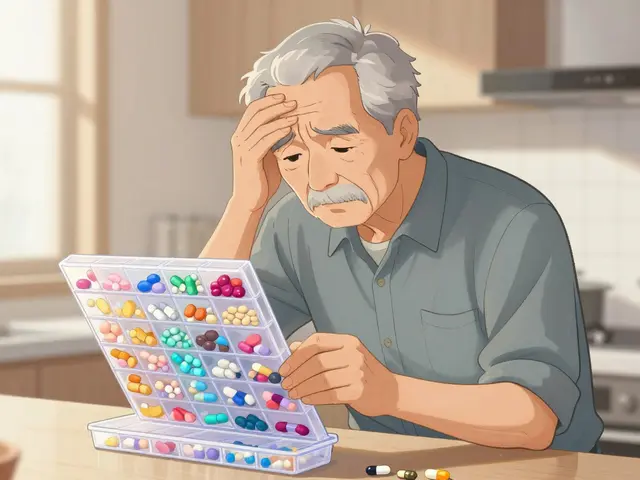
When you pick up a generic medication, you expect it to work just like the brand-name version. But what happens when that pill sits on your shelf for months-or years? Not all generic drugs degrade the same way, and the consequences can be serious. Stability isn’t just a technical term used by labs; it’s the difference between a medicine that saves your life and one that does nothing-or worse, harms you.
What Does Stability Even Mean?
Stability means a drug keeps doing what it’s supposed to do from the moment it’s packaged until the day it expires. That includes its chemical makeup, how it looks, how it tastes, and whether it’s still safe from bacteria or mold. The U.S. Food and Drug Administration (FDA) requires every drug, generic or not, to prove it stays within strict limits over time. If a tablet loses 15% of its active ingredient, or if a liquid turns cloudy or develops a strange smell, it’s no longer considered stable-and it shouldn’t be sold.This isn’t guesswork. Testing follows strict rules laid out by the International Council for Harmonisation (ICH), especially guideline Q1A(R2). For most drugs, manufacturers must test samples every few months over 24 to 36 months under real-world conditions: 24-25°C and 60% humidity. That’s room temperature, not a freezer or a hot attic. And they don’t just check one batch-they test three, to make sure the result isn’t a fluke.
Why Do Generic Drugs Differ in Stability?
Generic drugs are supposed to be identical to brand-name versions. But they’re not made the same way. The active ingredient might be the same, but the fillers, coatings, and manufacturing processes can vary. And those small differences matter.A 2020 FDA study found that 17.3% of generic levothyroxine products had stability issues not seen in Synthroid, the brand version. Why? Moisture. Some generics didn’t seal out humidity as well, causing the drug to break down faster. That’s a big deal for thyroid patients-too little or too much hormone can lead to heart problems, weight changes, or even stroke.
Another example: nanoparticle drugs, like those used for cystic fibrosis. These tiny particles are designed to reach deep into the lungs. But if they clump together and grow past 200 nanometers, they lose their ability to work. One study showed that a generic version failed because its particles stuck together after just 18 months on the shelf. The brand version held up fine.
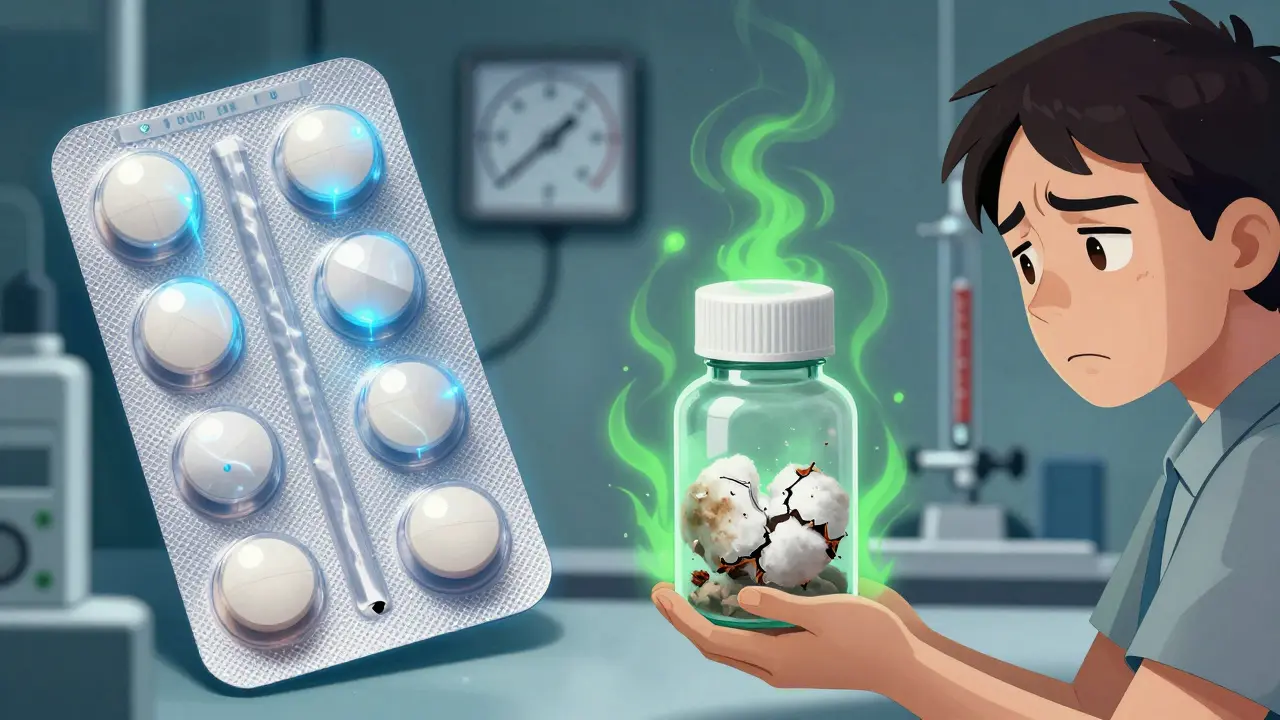
Even packaging matters. A pill in a plastic bottle with a cotton ball inside might last 2 years. The same pill in a blister pack with moisture-absorbing strips might last 3.5 years. It’s not magic-it’s science. And not every generic manufacturer invests in the best packaging.
How Do Labs Test for Degradation?
Testing isn’t just about looking at the pill. It’s about measuring exactly what’s happening inside.- Chemical stability: High-performance liquid chromatography (HPLC) finds even tiny amounts of breakdown products. ICH Q3B says any unknown impurity above 0.1% is a red flag.
- Physical stability: Does the tablet still dissolve properly? Is the liquid still the right thickness? Is the inhaler spraying the right amount? Dissolution tests (USP <711>) and viscosity checks are routine.
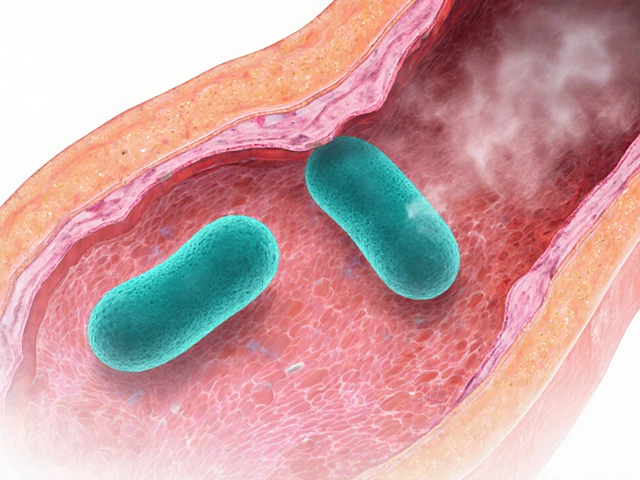
- Microbiological stability: Is there mold? Bacteria? For non-sterile products, the limit is 100 colony-forming units per gram. For injectables, it’s zero-no bugs allowed.
- Functional stability: Does the inhaler still deliver the right dose? Does the eye drop still flow correctly? USP <4> says metered-dose inhalers must deliver 90-110% of what’s on the label.
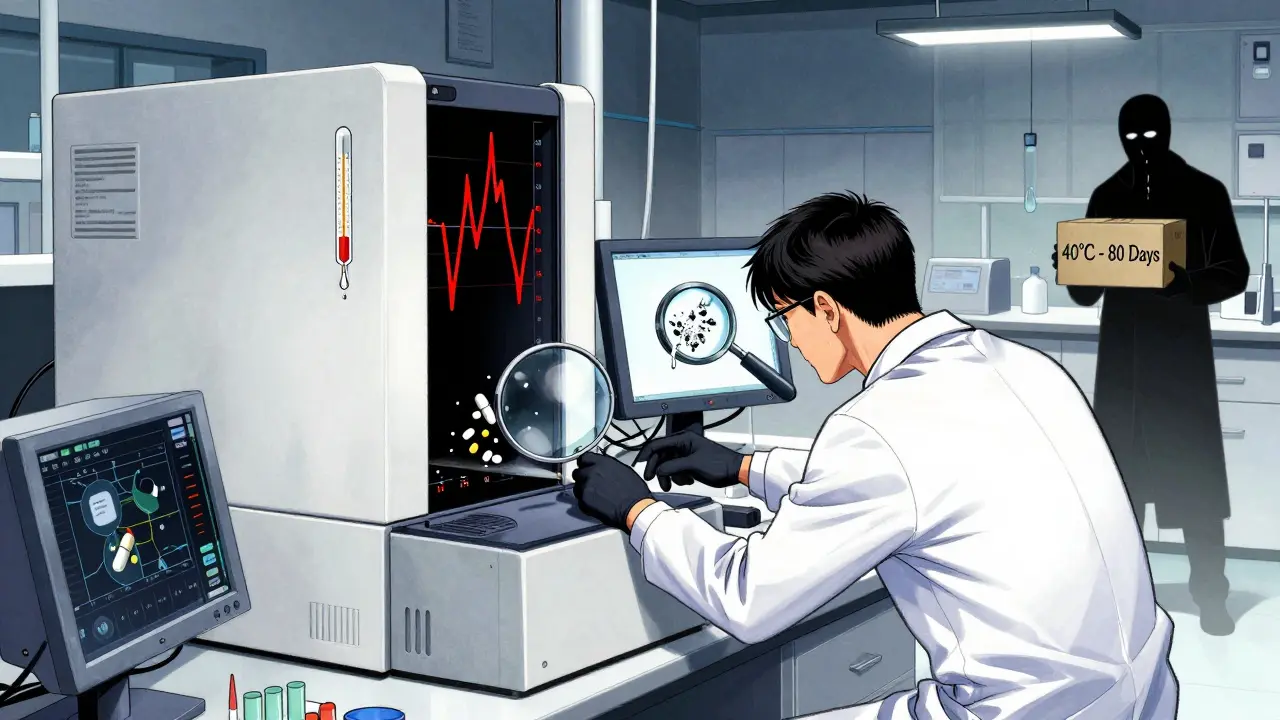
Some companies cut corners. A 2022 survey by the Parenteral Drug Association found that 58.4% of companies didn’t fully validate their testing methods. That means they might not even be measuring the right thing. One quality assurance professional shared a story: their team ran accelerated tests at 40°C and saw no degradation. They approved the drug. But 24 months later, real-time testing showed crystals forming in the liquid-because a hidden polymorphic change only happens at normal room temperature. They lost $250,000 and 18 months of work.
What About Accelerated Testing?
To save time, companies often test drugs under harsher conditions: 40°C and 75% humidity for 6 months. The idea is: if it survives that, it’ll last 2-3 years at room temperature.But that’s risky. High heat can cause degradation paths that don’t happen in real life. One expert with 25 years at the FDA warned: “You can’t just crank up the heat and assume you’re seeing the same breakdown that happens slowly at room temperature.”
Some companies are moving toward smarter methods-Risk-Based Predictive Stability (RBPS). These use data modeling to predict how a drug will degrade based on its chemistry, not just heat. Amgen and Merck used this approach and cut their testing time by 30%. But the FDA and EMA still haven’t fully accepted these methods. Most manufacturers stick to the old way-because it’s what regulators expect.
Storage Matters More Than You Think
Your medicine doesn’t care if you keep it in the bathroom cabinet or the back of a closet. But the system that shipped it? It does.WHO found that 28.7% of medicines in low-income countries failed stability tests-not because they were fake, but because they sat in uncooled warehouses for weeks, hitting 40°C. In high-income countries? Only 1.2% failed. That’s a 24-fold difference.
And it’s not just about temperature. Humidity is just as bad. A pill that looks fine might have absorbed moisture and started breaking down. That’s why the FDA cites “inadequate storage documentation” in nearly 80% of stability-related warnings. Saying “room temperature” isn’t enough. You have to record exact temps, humidity levels, and how long the product was exposed.
One user on a pharmaceutical forum said: “We got a Form 483 just because our log said ‘stored at room temp.’ They wanted the actual numbers. Every day.”
Food Industry Lessons
The food industry has been doing this longer. Soup manufacturers use water activity (aw) and pH monitoring to predict spoilage. One company using Kappa Laboratories’ method extended their refrigerated soup shelf life by 22%-without adding preservatives.Why? Because they focused on what actually causes spoilage: microbes that thrive in certain moisture levels. Drug makers could learn from that. Instead of just testing for chemical breakdown, they could test for how moisture moves through packaging over time. That’s where the real failures happen.
What’s Changing in 2026?
New guidelines are coming. The ICH Q12 rule, effective since late 2023, lets companies make changes to their stability plans after approval-without restarting full studies. That’s good for innovation.The FDA is also testing Continuous Manufacturing Stability Testing (CMST). Instead of making drugs in batches, they’re made nonstop on a production line. Early results show shelf life can be predicted 40% faster.
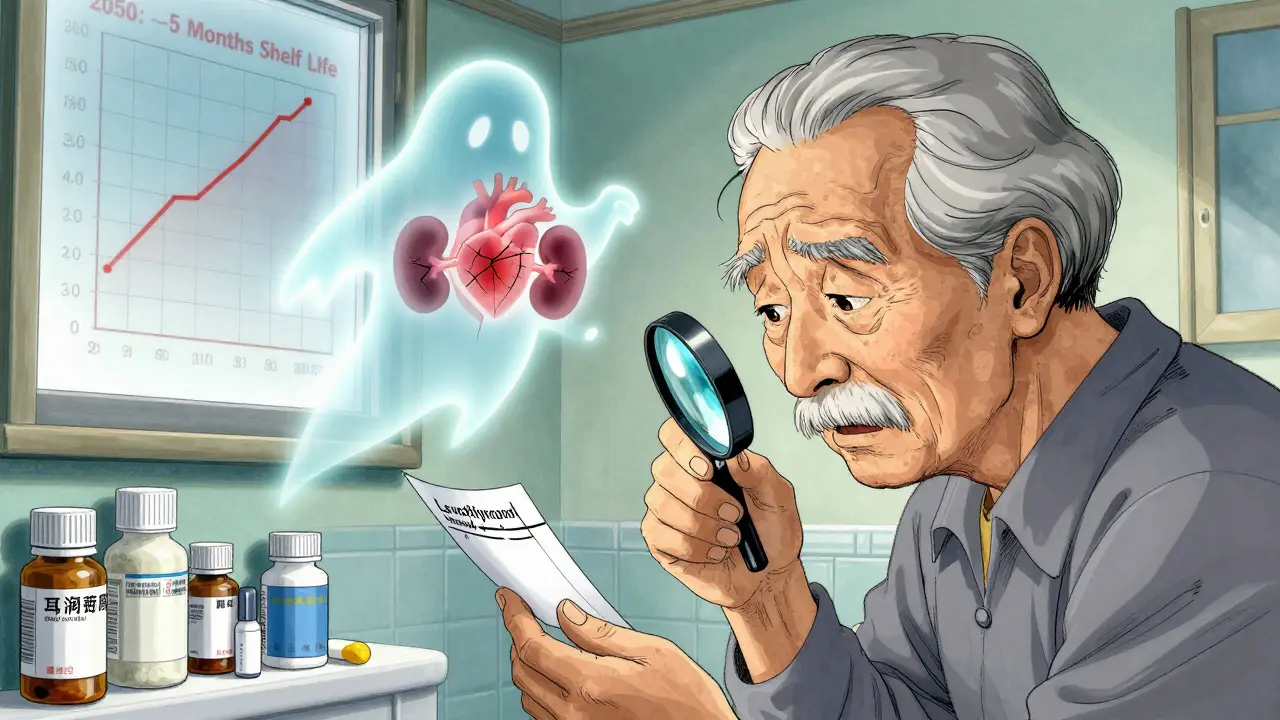
But the biggest threat? Climate change. A 2022 MIT study projected that by 2050, rising global temperatures could shorten drug shelf life by nearly 5 months. Warehouses in Atlanta, Houston, or Mumbai are already hitting 30°C for over 80 days a year. That’s outside the approved range for many drugs.
What Should You Do?
If you take generic drugs:- Check the expiration date. Don’t use it past that date.
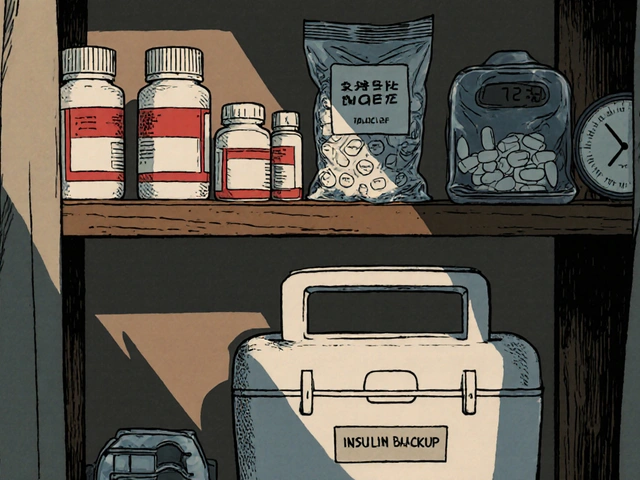
- Store it in a cool, dry place-not the bathroom or near the stove.
- If the pill looks different-cracked, discolored, powdery-don’t take it.
- If you’re on a critical medication (like thyroid, blood pressure, or seizure drugs), ask your pharmacist if there’s a more stable generic version.
For pharmacists and prescribers: Know your suppliers. Not all generics are equal. Ask for stability data. Push for brands with better packaging. The cost difference might be small, but the safety gap can be huge.
Can expired generic drugs be dangerous?
Yes. While some expired drugs may just lose potency, others can break down into harmful substances. For example, tetracycline antibiotics can degrade into compounds that damage the kidneys. Even if a pill looks fine, chemical changes can occur without visible signs. Always follow expiration dates, especially for critical medications.
Why do some generics expire sooner than others?
Different manufacturers use different excipients (inactive ingredients), packaging, and manufacturing processes. One generic might use a moisture-resistant coating, while another uses a cheaper material that lets in humidity. That’s why two identical pills from different brands can have different shelf lives-even if they’re both labeled 24 months.
Is accelerated testing reliable for predicting real-world shelf life?
Sometimes, but not always. Accelerated testing uses high heat and humidity to speed up degradation. But some degradation pathways only occur at normal temperatures. A drug might pass accelerated testing but fail after 2 years in a medicine cabinet. That’s why real-time testing is still required for final approval.
How do I know if my generic drug is stable?
You can’t test it yourself, but you can look for signs: discoloration, unusual odor, crumbling texture, or changes in how it dissolves. If you’re on a critical medication, ask your pharmacist if the generic you’re using has had stability issues reported. Some manufacturers publish stability data upon request.
Are brand-name drugs more stable than generics?
Not necessarily-but they often are. Brand-name drugs usually undergo more extensive testing during development. Generics only need to prove bioequivalence, not identical long-term stability. Some generics match or exceed brand performance, but others don’t. It depends on the manufacturer’s investment in packaging and quality control.