

Fatigue in autoimmune disease isn’t just being tired. It’s the kind of exhaustion that makes getting out of bed feel like climbing a mountain, turns a shower into a major chore, and leaves your brain foggy even after a full night’s sleep. Unlike normal tiredness that fades with rest, this fatigue sticks around - sometimes for years - no matter how much you nap or how early you go to bed. About 98% of people with autoimmune conditions report it, making it the most common and often the most disabling symptom they face - worse than pain or joint damage in many cases.
Why Is This Fatigue So Different?
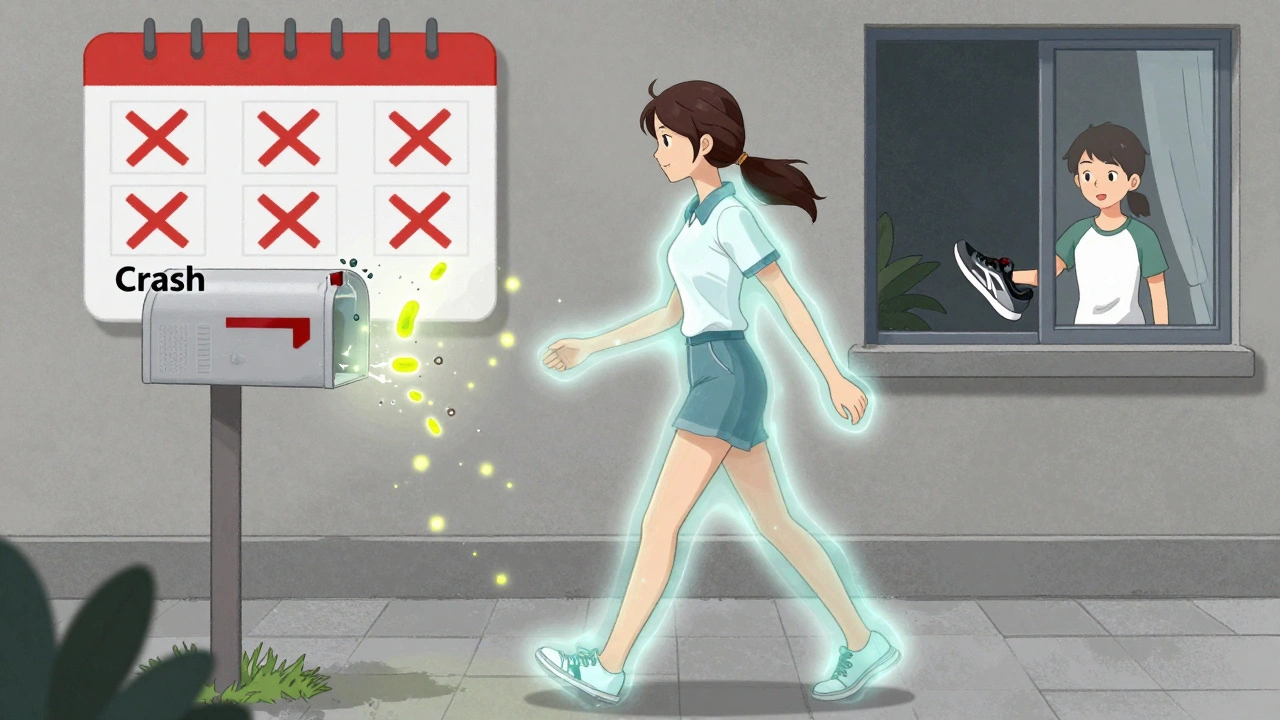
Normal fatigue comes from overwork, lack of sleep, or physical strain. It lifts after rest. Autoimmune fatigue doesn’t. It’s deep, persistent, and often hits without warning. People describe it as being drained of all energy, even when they haven’t done anything. Many say it feels like their body is running on empty while the engine is still revving. Research shows this isn’t in their head. Blood tests reveal elevated levels of inflammatory proteins like IL-1β, IL-6, and TNF-α - up to 3.7 times higher than in healthy people. These chemicals don’t just cause joint swelling or skin rashes; they cross into the brain and disrupt the systems that control energy, mood, and motivation. Brain scans show signs of neuroinflammation in 82% of patients with severe fatigue. That’s not stress. That’s biology. It also messes with your body’s natural rhythms. Cortisol, the hormone that helps you wake up and stay alert, is often 18-22% lower in the morning. Melatonin, which regulates sleep, has a 37% weaker cycle. This means you might sleep through the night but still wake up exhausted. And even small activities - walking to the mailbox, folding laundry - can trigger a crash that lasts 12 to 48 hours. This is called post-exertional malaise, and it’s a hallmark of autoimmune fatigue.Which Autoimmune Diseases Cause the Worst Fatigue?
Not all autoimmune diseases affect fatigue the same way, but nearly all do. The numbers are striking:- Systemic lupus erythematosus (SLE): 98%
- Multiple sclerosis (MS): 96%
- Rheumatoid arthritis (RA): 94%
- Sjögren’s syndrome: 92%
- Celiac disease: 90%
- Type 1 diabetes: 88%
The Real Causes: It’s Not Just One Thing
For years, doctors assumed fatigue came from anemia, poor sleep, or just being sick. Now we know it’s more complex. Three main pathways are involved, and they often overlap:- Neuroinflammation - Inflammatory cytokines directly affect brain regions that regulate energy. This is the most supported theory, backed by 65% of experts.
- HPA axis dysfunction - The system that controls stress response (hypothalamus-pituitary-adrenal) gets damaged by autoimmunity. This leads to low cortisol, which makes it harder for the body to respond to daily demands. About 25% of experts point to this.
- Mitochondrial dysfunction - Mitochondria are the power plants of your cells. In 65% of patients, they’re not producing enough ATP (energy). Muscle biopsies show 40-55% less efficiency. This theory has 10% support, but evidence is growing.
How Do Doctors Measure It?
Fatigue isn’t something you can see on an X-ray. That’s why doctors use validated tools:- Fatigue Severity Scale (FSS) - Scores above 6 out of 7 mean severe fatigue.
- Multidimensional Fatigue Inventory (MFI-20) - Scores above 18.7 indicate clinically significant fatigue.
- FACIT-F - Scores below 34.5 mean fatigue is impacting daily life.
- Visual Analog Scale (VAS) - Patients mark their fatigue level on a 10-cm line.
What Actually Works to Manage It?
There’s no magic pill, but combining approaches makes a real difference. The most effective plan includes four pillars:1. Medication Adjustments
- Low-dose hydrocortisone (10-20 mg/day) helps patients with documented low cortisol. Studies show 35-40% improvement in fatigue scores.2. Cognitive Behavioral Therapy for Autoimmune Fatigue (CBT-AF)
Standard CBT doesn’t always work. But CBT-AF is tailored to the unique challenges: pacing, managing guilt, dealing with unpredictability. In one study, patients using CBT-AF saw 27% greater improvement than those on standard care after six months.3. Graded Exercise - But Done Right
Exercise helps - but only if you don’t push too hard. Graded Exercise Therapy (GET) can improve fatigue by 32%, but if done too fast, it triggers crashes. The key is starting with tiny, consistent movements - 5 minutes of stretching or walking, then slowly adding time. Listen to your body. If you feel worse 24 hours later, you did too much.4. Sleep and Circadian Rhythm Fixing
Sleep isn’t just about hours. It’s about quality and timing. People with autoimmune fatigue often have disrupted melatonin cycles. Simple fixes help:- Get sunlight within 30 minutes of waking.
- Avoid screens 90 minutes before bed.
- Keep a consistent sleep-wake schedule, even on weekends.
- Treat sleep apnea or restless legs if present.
The Best Approach: Integrated Care
A 2021 Cleveland Clinic study tracked 1,247 patients over a year. Those who got a combination of medication review, CBT-AF, tailored exercise, and sleep coaching saw a 45% greater reduction in fatigue than those who got standard care. Sixty-eight percent of them achieved a clinically meaningful improvement - a 30% or greater drop in fatigue scores. That’s not a cure. But it’s life-changing. For many, it means returning to work, playing with kids, or cooking dinner without needing to lie down for hours after.What Doesn’t Work (And Can Make Things Worse)
- Pushing through fatigue - This leads to crashes and long-term worsening.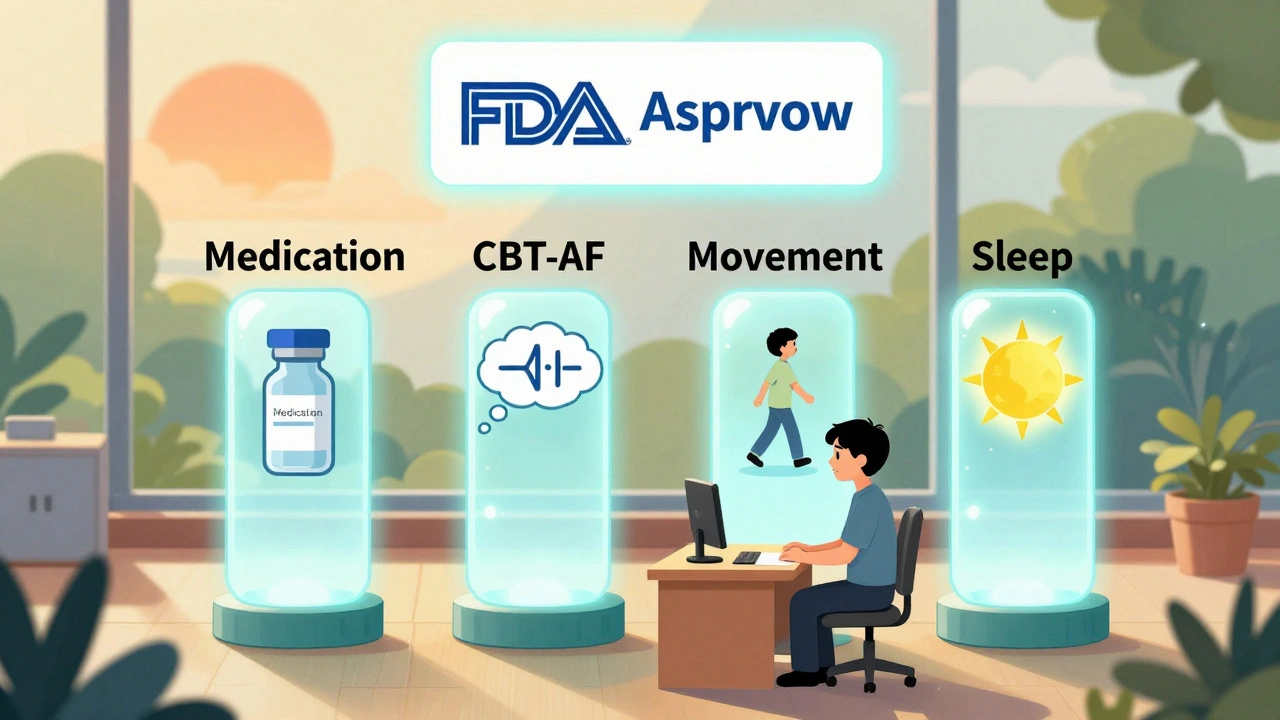
What Patients Say
On Reddit’s r/Autoimmune, 87% of over 1,200 respondents said fatigue was their hardest symptom. Many shared stories of being told they were “just depressed” or “not trying hard enough.” One woman wrote: “I lost my job because I couldn’t stay awake in meetings. My doctor said, ‘Maybe you need more coffee.’” Those who found relief often credit pacing - planning activities around energy levels, not schedules. “I used to do everything on Monday. Now I do a little each day,” said one patient. “It’s not glamorous, but I can actually live.”What’s Next?
The NIH just funded $18.7 million for autoimmune fatigue research. Scientists are now searching for blood tests that can predict fatigue severity - not just inflammation, but specific patterns of brain activity, mitochondrial markers, or hormone rhythms. The goal? A simple test that tells you why you’re exhausted and what to do about it. By 2026, the first FDA-approved treatment specifically for autoimmune fatigue may be available. Until then, the best strategy is to treat it as a real medical condition - not a side effect.What You Can Do Today
1. Track your fatigue - Use a journal or app to rate your energy daily (1-10). Note what you did, slept, ate, and how you felt the next day.Is fatigue in autoimmune disease the same as regular tiredness?
No. Regular tiredness goes away with rest or sleep. Autoimmune fatigue is persistent, often severe, and doesn’t improve with rest. It’s linked to inflammation in the brain and body, disrupts sleep cycles, and causes post-exertional crashes that last days. It’s a biological symptom, not just feeling worn out.
Can medication help with autoimmune fatigue?
Yes, but not always with standard drugs. Low-dose hydrocortisone helps if cortisol is low. Modafinil is effective for MS-related fatigue. CoQ10 supplements and anti-IL-6 biologics show promise in trials. However, medications alone rarely fix it - they work best combined with lifestyle changes like pacing and sleep hygiene.
Why do some doctors dismiss fatigue as psychological?
Because fatigue has no visible sign on X-rays or blood tests - until recently. Many doctors were trained to link symptoms only to measurable tissue damage. Now we know inflammation affects the brain directly, but outdated views still linger. Patients often have to advocate for themselves and bring research or fatigue scales to their appointments.
Does exercise make autoimmune fatigue worse?
Only if it’s too intense or done too fast. Gentle, consistent movement - like walking or yoga - can improve energy over time. But pushing past your limits triggers post-exertional malaise, making fatigue worse for days. The key is pacing: start small, listen to your body, and never push through a crash.
How long does it take to see improvement in fatigue?
Improvement takes time - usually 3 to 6 months of consistent effort. Medications may show effects in weeks, but lifestyle changes like sleep fixes, pacing, and gentle exercise build up slowly. The most successful patients stick with small, daily habits rather than waiting for a quick fix.
Is there a blood test for autoimmune fatigue?
Not yet - but researchers are close. Current studies are looking at patterns of cytokines, mitochondrial markers, and cortisol rhythms to create a diagnostic profile. Right now, doctors rely on symptom scales and ruling out other causes. If you’re experiencing fatigue, ask for a Fatigue Severity Scale (FSS) or FACIT-F assessment - these are the best tools available today.



Ben Choy
December 2, 2025 AT 15:40This hit me right in the soul. I used to think I was just lazy until I got diagnosed with lupus. Now I know it's not in my head-it's in my brain, my cells, my whole damn system. I nap for 3 hours and still feel like I ran a marathon. No coffee fixes this. Just... understanding. Thank you for writing this.
Also, 5 minutes of stretching in the morning? I do that. And it’s the only thing that lets me leave the house without crying. Small wins, right?
🫂
Gillian Watson
December 2, 2025 AT 18:36Been living this for 12 years. Doctors kept telling me to get more sleep. I slept 10 hours. Still couldn’t lift my arms. Turns out my mitochondria are on strike. Who knew.
CoQ10 helped a bit. Pacing saved my life. No magic pills. Just tiny, stubborn consistency.
Also, the part about cortisol being low in the morning? YES. I need sunlight before 9am or I’m useless until noon. Weird but true.
Pavan Kankala
December 3, 2025 AT 01:20They’re hiding the real cause. It’s not inflammation. It’s not mitochondria. It’s the 5G towers and the glyphosate in your oat milk. Big Pharma doesn’t want you to know you can fix this with raw garlic and a Faraday cage. They make billions off your fatigue. The ‘CBT-AF’? That’s just gaslighting with a fancy name. I stopped taking meds. Now I drink moonwater. I feel… lighter. Not cured. But free.
They’re coming for your cortisol next.
Martyn Stuart
December 3, 2025 AT 05:31Important note: The FSS and FACIT-F aren’t just ‘forms’-they’re validated, psychometrically sound tools used in clinical trials worldwide. If your doctor doesn’t use them, ask why. If they say, ‘We don’t have time,’ say, ‘Then I’ll find one who does.’
Also: Modafinil isn’t a ‘smart drug’ for students-it’s a prescription for people whose brains are literally drowning in cytokines. Don’t let anyone shame you for using it.
And PLEASE, if you’re on low-dose hydrocortisone-don’t stop cold turkey. Adrenal insufficiency is not a joke. Taper slowly. I speak from experience.
Also, CoQ10: Take it with food. Absorption is 2-3x better. And use ubiquinol, not ubiquinone. Trust me.
And yes-sleep apnea? Get tested. 40% of us have it and don’t know. CPAP changed my life. I can now play with my daughter without needing a 4-hour nap after.
You’re not broken. You’re just misunderstood.
And if someone says, ‘Just try harder’-you can tell them I said to shove it.
Jessica Baydowicz
December 4, 2025 AT 16:50OMG YES. I cried reading this. I thought I was failing at life because I couldn’t even fold laundry without collapsing. Now I know it’s not me-it’s my immune system throwing a rave in my brain. 🥹
Started doing 5-minute walks every morning. Now I’m up to 10. I’m not ‘getting fit’-I’m just not dying every time I move. That’s a win.
Also, I started tracking my energy like a mad scientist. Turns out I’m a ‘sunrise person’-my energy spikes between 7-10am. Now I do all my hard stuff then. Netflix? After 3pm. Life-changing.
To anyone reading this: You’re not lazy. You’re not broken. You’re a warrior with a glitchy power grid. And you’re not alone.
Love you all. 💛