
Why Sarcopenia in COPD Is More Than Just Weakness
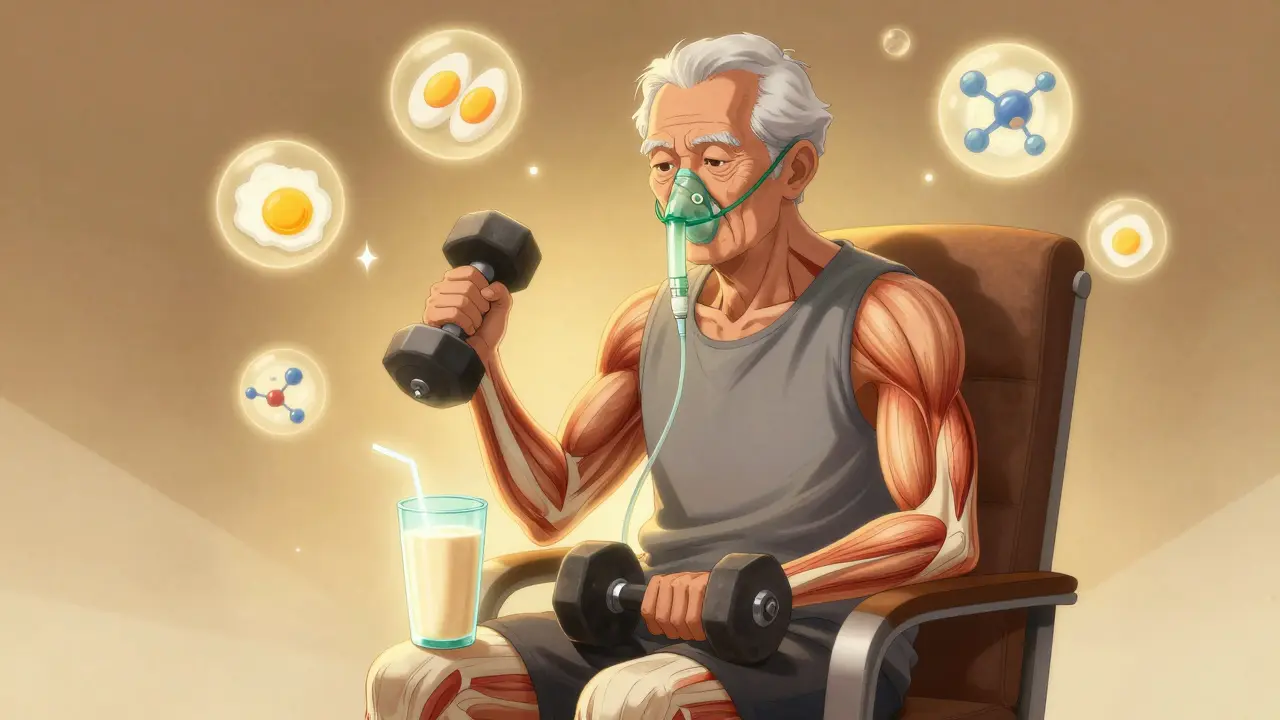
When you have COPD, your lungs struggle to give you enough air. But what many don’t realize is that your muscles are failing too. About 1 in 5 people with COPD also have sarcopenia - the progressive loss of muscle mass, strength, and function. This isn’t just about getting older. It’s about your body being starved of oxygen, fueled by inflammation, and left inactive for too long. And it’s deadly. People with COPD and sarcopenia are 20-40% more likely to die than those with COPD alone. The good news? You can fight back - with the right nutrition and the right kind of strength training.
How Sarcopenia in COPD Is Different From Regular Muscle Loss
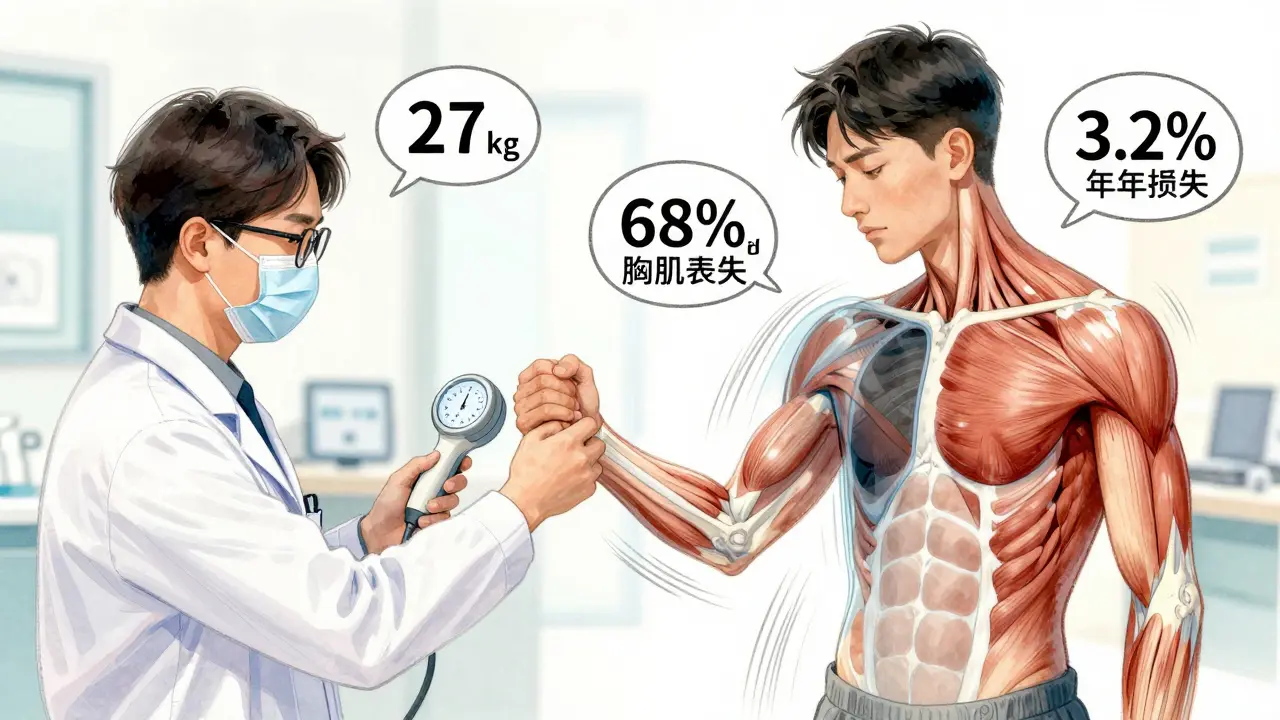
Normal aging causes muscles to shrink slowly, mostly in the legs. But in COPD, the damage hits differently. Your breathing muscles - like the diaphragm and pectoralis major - weaken faster. One study found 68% of COPD patients have noticeable chest muscle loss, compared to just 22% of healthy older adults. Your arms and upper body suffer too, because carrying yourself through daily tasks becomes exhausting. You stop moving. Then you lose more muscle. It’s a cycle.
And it happens quicker. Healthy people lose about 1-2% of muscle mass per year after 60. People with COPD lose 3.2% - nearly double. Why? Low oxygen levels at night, constant inflammation from lung damage, and not enough protein in the diet all team up to break down muscle faster than your body can rebuild it.
How Doctors Diagnose Sarcopenia in COPD
It’s not enough to just feel weak. Doctors need hard numbers. The gold standard starts with grip strength. If you’re a man and your grip is under 27 kg, or a woman under 16 kg, that’s a red flag. Next, they measure your muscle mass. A DEXA scan or CT scan at the L3 spine level can show if your muscle index is below 55 cm²/m² for men or 39 cm²/m² for women. But here’s the catch: standard BMI cutoffs don’t work for COPD patients. Many are thin but still have low muscle mass. That’s why doctors now use the pectoralis muscle index - a CT measurement of chest muscle size adjusted for body weight. A value below 1.06 cm²/BMI is a strong sign of sarcopenia in COPD.
Finally, they test how well you move. The Short Physical Performance Battery (SPPB) looks at how fast you walk 4 meters, how long you can stand on one foot, and if you can stand up from a chair without using your hands. A score of 8 or lower means your physical performance is severely affected. These three things - strength, muscle mass, and movement - together define sarcopenia in COPD.
Why Nutrition Is the First Line of Defense
Most people with COPD eat too little protein. On average, they get only 0.8-1.0 grams per kilogram of body weight per day. The target? 1.2-1.5 grams per kilogram. That means if you weigh 70 kg, you need 84-105 grams of protein daily. Not just once - spread across 4 meals. Why? Your body can only use about 30-40 grams of protein at once to build muscle. Eating it all at dinner won’t help. You need it at breakfast, lunch, snack, and dinner.
Leucine, an amino acid found in whey, eggs, chicken, and soy, is the key trigger for muscle growth. Getting 2.5-3.0 grams per meal boosts muscle synthesis by 37%. That’s why many doctors now recommend whey protein shakes with 10 grams of leucine - especially if you’re not hungry. A shake with 20-25 grams of protein and 3 grams of leucine after a workout can make a real difference.
Don’t forget calories. Many COPD patients burn extra energy just breathing. If you’re not eating enough, your body will eat its own muscle for fuel. Aim for 25-30 calories per kilogram of body weight daily. If you’re losing weight, increase that. Nutritional supplements designed for COPD - like those with high protein, medium-chain triglycerides, and antioxidants - can help if meals are hard to manage.
Resistance Training That Actually Works for COPD
You’ve probably heard “lift weights” to build muscle. But for someone with COPD, traditional gym routines can trigger breathlessness, panic, and quitting. The secret? Start ridiculously light.
Begin with 30-40% of your one-rep maximum (1-RM). That might mean 1-2 pound dumbbells, resistance bands, or even just your own body weight. Focus on major muscles: legs (chair stands, heel raises), arms (bicep curls, overhead presses), and chest (wall push-ups). Do 2-3 sets of 10-15 reps, 2-3 times a week. Rest 2-3 minutes between sets. If you’re short of breath, stop. Breathe. Then try again.
Progress slowly. After 4-6 weeks, increase weight by 5-10%. Most people see strength gains in 8-12 weeks. One study showed patients improved their 6-minute walk distance by 23% after 16 weeks of this approach. That’s the difference between needing help to carry groceries and doing it alone.
Supplemental oxygen is often needed. About 42% of COPD patients require it during training. Don’t be embarrassed. If your oxygen drops below 88%, you’re not working hard enough - you’re risking harm. Use your oxygen as prescribed during exercise. It’s not weakness. It’s strategy.
Real People, Real Results
Mary Thompson, 68, had GOLD Stage 3 COPD. She couldn’t lift a bag of cat food without stopping. After 12 weeks of pulmonary rehab - light resistance bands, protein shakes after each session, and breathing techniques - she carried groceries again. “It didn’t feel like magic,” she said. “It felt like I got my body back.”
John Peterson, 72, tried resistance training without oxygen or guidance. “I got so winded I had to stop,” he wrote online. “I didn’t know I was supposed to use my oxygen.” His story isn’t rare. Many quit because they weren’t prepared. That’s why supervised programs work best - especially at first.
Cleveland Clinic’s program tracked 78 patients. After 16 weeks of combined protein (1.2 g/kg/day) and resistance training, they saw 23% better walking distance, 32% fewer hospital visits, and improved quality of life scores. These aren’t outliers. They’re repeatable.
What Doesn’t Work - And Why
Just taking a walk won’t fix sarcopenia. Aerobic exercise helps your lungs, but it doesn’t rebuild muscle. You need resistance. Just eating more protein without moving won’t help either. Muscle needs the signal from lifting to grow.
And don’t wait for a flare-up to end. Many patients stop exercising during COPD exacerbations. But muscle loss accelerates during these times. Even light movement - seated leg lifts, arm circles, wall push-ups - can slow it down. Talk to your rehab team about safe options during flare-ups.
What’s Coming Next
The GOLD guidelines now include sarcopenia screening as part of routine COPD care. A new algorithm, released in 2024, links nighttime oxygen levels to training intensity. If your oxygen dips below 88% for more than 30% of sleep, your training load should be reduced.
Research is also testing new supplements like HMB (beta-hydroxy-beta-methylbutyrate), which helped preserve muscle in early trials. A drug called PTI-501, designed to block muscle-wasting signals, is in phase 2 trials and could be available by 2027.
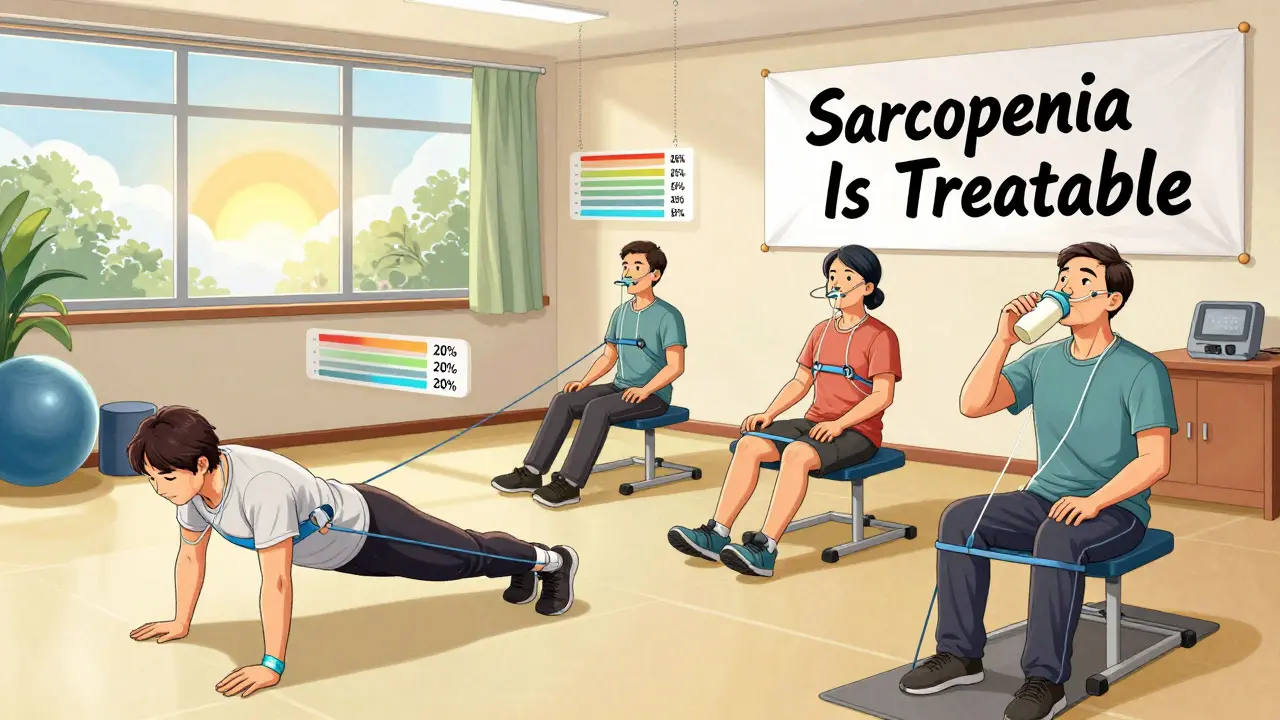
But the biggest shift is cultural. Sarcopenia is no longer seen as an inevitable side effect of COPD. It’s a treatable condition. And the evidence is clear: addressing it saves lives, reduces hospital stays, and gives people back their independence.
Where to Start Today
- Ask your doctor for a grip strength test. If it’s below 27 kg (men) or 16 kg (women), ask about sarcopenia screening.
- Calculate your protein needs: multiply your weight in kg by 1.2-1.5. Aim to hit that number daily, split into 4 meals.
- Start resistance training with bands or light weights. Two days a week. Focus on legs, arms, and chest. Rest between sets.
- If you use oxygen, use it during exercise. Don’t wait until you’re gasping.
- Ask about pulmonary rehabilitation. If your clinic doesn’t offer it, ask why - and push for it.
This isn’t about becoming an athlete. It’s about being able to stand up from your chair, walk to the bathroom, or carry your own clothes. Those things matter. And with the right plan, you can get them back.
Is sarcopenia the same as muscle loss in older adults?
No. While both involve muscle loss, sarcopenia in COPD happens faster and affects different muscles. In COPD, breathing muscles and upper body muscles weaken more severely due to low oxygen, inflammation, and inactivity. Age-related sarcopenia is slower and mainly affects the legs. COPD patients also have higher inflammation markers and lower protein intake, making their muscle loss more complex and harder to reverse without targeted treatment.
Can I do resistance training at home without equipment?
Yes. You don’t need weights. Start with bodyweight exercises: sit-to-stand from a chair (3 sets of 10), heel raises while holding a counter (3 sets of 15), wall push-ups (3 sets of 8-12), and seated arm curls using water bottles or resistance bands. Do them slowly, breathe between reps, and rest 2-3 minutes between sets. Track your progress - if you can do 2 more reps in 2 weeks, you’re getting stronger.
How much protein should I eat if I have COPD and sarcopenia?
Aim for 1.2 to 1.5 grams of protein per kilogram of body weight each day. For example, if you weigh 70 kg (154 lbs), that’s 84-105 grams daily. Split it into 4 meals - about 20-25 grams per meal. Include high-leucine sources like eggs, whey protein, chicken, fish, and soy. A whey shake with 10g leucine after exercise can boost muscle growth by 37% compared to regular protein.
Should I use oxygen during resistance training?
If your doctor has prescribed oxygen for activity, use it during resistance training. About 42% of COPD patients need it. Stopping oxygen to “tough it out” can cause your oxygen levels to drop dangerously low, which harms your muscles and heart. Using oxygen allows you to train harder, longer, and safer. It’s not a sign of weakness - it’s part of the treatment.
How long until I see results from resistance training?
Most people notice small changes - like less breathlessness lifting a cup - in 4-6 weeks. Meaningful strength gains and improved walking distance usually appear after 8-12 weeks. The Cleveland Clinic study showed 23% better walking distance after 16 weeks. Progress is slow, but it’s real. Stick with it. Even small improvements mean more independence and fewer hospital visits.
Can sarcopenia be reversed in advanced COPD?
Yes - even in advanced stages. Studies show patients with GOLD Stage 3 and 4 COPD still gain muscle strength and function with proper nutrition and supervised training. The key is starting low and going slow. You may not regain all your strength, but you can prevent further loss and improve daily function. Even a 10% increase in muscle strength can cut your risk of falling and hospitalization. It’s never too late to start.





Jessica Knuteson
January 26, 2026 AT 12:00Robin Van Emous
January 27, 2026 AT 23:17Angie Thompson
January 29, 2026 AT 21:25James Nicoll
January 30, 2026 AT 14:17Peter Sharplin
January 31, 2026 AT 03:02John Wippler
February 1, 2026 AT 13:26Kipper Pickens
February 2, 2026 AT 09:13Joanna Domżalska
February 4, 2026 AT 05:46Josh josh
February 5, 2026 AT 03:27bella nash
February 6, 2026 AT 00:45Sally Dalton
February 6, 2026 AT 09:05Betty Bomber
February 6, 2026 AT 13:50Mohammed Rizvi
February 8, 2026 AT 09:12