
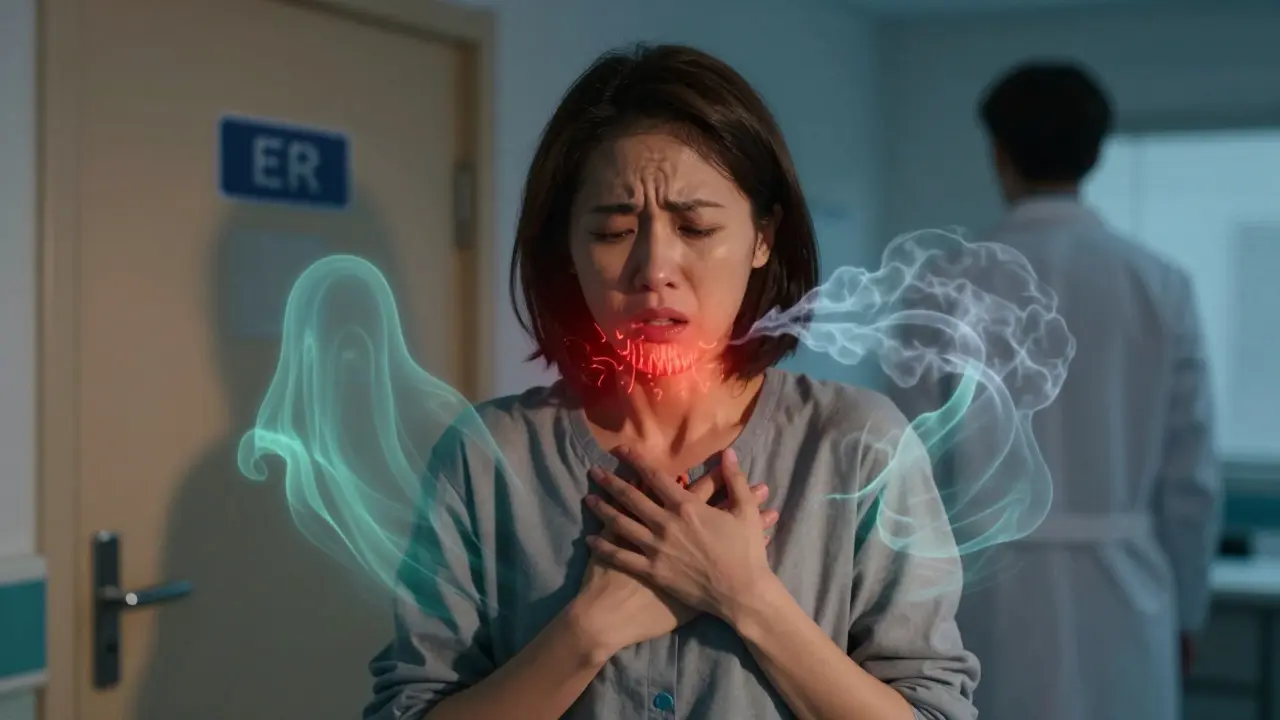
Heart disease kills more women than all forms of cancer combined. Yet, most women still don’t realize it’s their biggest health threat. In the U.S., about 1 in 5 female deaths is caused by heart disease - that’s over 307,000 women every year. But here’s the problem: many of these deaths could be prevented if symptoms were recognized early. The issue isn’t just lack of awareness - it’s a fundamental mismatch in how heart disease presents in women versus men. For decades, medical training, research, and even public messaging focused on the classic male heart attack: crushing chest pain, left arm numbness, sweating. But that’s not how most women experience it.
What Heart Attack Symptoms Look Like in Women
When women have a heart attack, they don’t always feel chest pain - and when they do, it’s often not what you’d expect. Instead of a sharp, crushing sensation, many describe it as pressure, tightness, or a dull ache in the center of the chest. Some say it feels like indigestion. Others say it’s just a strange discomfort that won’t go away.
More than 40% of women who have heart attacks report no chest pain at all. Instead, they experience symptoms that are easy to ignore - or misattribute. Fatigue is the most common, but not the kind you get from staying up late. This is vital fatigue - exhaustion so deep you can’t make your bed, carry groceries, or walk up the stairs without stopping. In fact, 71% of women who’ve had heart attacks describe this level of fatigue in the weeks leading up to the event.
Other frequent symptoms include:
- Shortness of breath - even when resting or doing light chores
- Unexplained nausea or vomiting - not tied to food or illness
- Pain in the jaw, neck, shoulder, or upper back - often on both sides
- Dizziness or lightheadedness - sometimes with cold sweats
- Sleep disturbances - waking up gasping or with heart palpitations
These symptoms often come on gradually over days or weeks. Women might brush them off as stress, aging, or the flu. But when they cluster - say, fatigue + jaw pain + nausea - it’s a red flag. A 2021 study found that women under 55 are seven times more likely than men to be sent home from the ER with no heart testing, even when these symptoms are present. That delay costs lives.
Why Women’s Heart Disease Is Different
It’s not just about symptoms. Women’s hearts and arteries are physically different. Men are more likely to have blockages in the large coronary arteries. Women are more likely to have problems in the tiny arteries - a condition called microvascular disease. These small vessels don’t show up on standard angiograms, so doctors often say, “Your arteries look fine.” But that doesn’t mean the heart is healthy. Women with microvascular disease still suffer chest pain, fatigue, and heart attacks - just without the big blockages doctors are trained to look for.
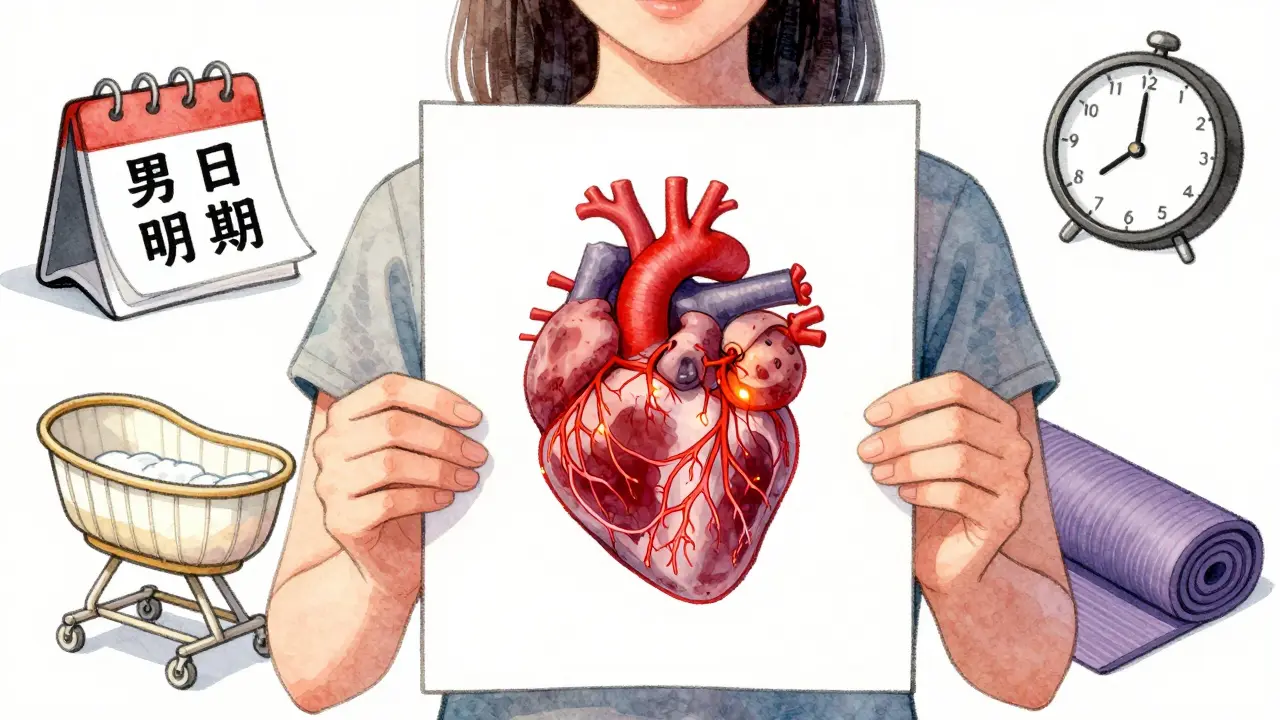
Another condition that affects women far more than men is spontaneous coronary artery dissection (SCAD). It’s when a tear forms in a heart artery, often without warning. It’s not caused by plaque buildup. It’s linked to hormonal changes, pregnancy, intense emotional stress, or even extreme physical exertion - like childbirth or a yoga class. SCAD accounts for up to 40% of heart attacks in women under 50, yet most doctors have never seen a case.
Then there’s Takotsubo syndrome, also called broken heart syndrome. It mimics a heart attack - chest pain, EKG changes, elevated enzymes - but there’s no artery blockage. Instead, extreme emotional stress triggers a temporary weakening of the heart muscle. It’s rare, but women make up 90% of cases. The heart usually recovers, but the event is a warning sign: your heart is more sensitive to stress than you think.
Hidden Risk Factors Only Women Have
High blood pressure, smoking, and cholesterol matter for everyone. But women carry unique risk factors that men don’t. These aren’t just “bonus” risks - they’re game-changers.
- Pregnancy complications: Preeclampsia, gestational diabetes, or giving birth prematurely can double or even triple your future heart disease risk. A woman who had preeclampsia is 80% more likely to develop heart disease later.
- Early menopause: If you go through menopause before 45 - whether naturally or from surgery - your risk jumps. Estrogen helps keep arteries flexible. When it drops, so does protection.
- Polycystic ovary syndrome (PCOS): This hormonal disorder is linked to insulin resistance, high blood pressure, and obesity - all heart disease triggers.
- Autoimmune diseases: Lupus, rheumatoid arthritis, and other conditions that cause chronic inflammation dramatically raise heart risk. Inflammation damages blood vessels over time.
- Mental stress: Women are 37% more likely than men to have angina triggered by emotional stress. Chronic anxiety, caregiving burnout, or grief can literally strain the heart.
And here’s something no one talks about enough: silent heart attacks. About 34% of women over 65 have heart attacks with no obvious symptoms. They don’t feel chest pain. They don’t call 911. They just feel “off.” But the damage is still done. By the time it’s discovered - often during a routine checkup - the heart is already weakened.
Why Diagnosis Is So Often Wrong
Doctors aren’t trying to miss heart disease in women. But bias is real. A 2022 JAMA study found that in 68% of emergency room cases where women had cardiac symptoms, providers assumed the problem was anxiety, depression, or stress - even when the symptoms matched heart disease patterns. One woman described being told, “You’re just anxious,” after vomiting and having jaw pain for two days. She had a heart attack the next morning.
Another issue: most diagnostic tools were built on male data. Stress tests, EKGs, even blood markers like troponin - they were calibrated on men. As a result, women’s heart attacks are often missed. A 2020 FDA-approved test called Corus CAD analyzes gene expression to detect heart disease in women with 88% accuracy - far better than traditional tests, which only hit 72% for women. But it’s still not standard in most clinics.
Women are also less likely to be referred for advanced imaging or cardiac rehab after a heart event. That’s not because they’re less sick - it’s because their symptoms don’t fit the mold.
What You Can Do: Risk Management That Works
Knowing your risks isn’t enough. You need to act. Here’s what actually helps:
- Track your history: Write down your pregnancy complications, when you went through menopause, if you’ve had autoimmune disease or depression. Bring this to every doctor visit.
- Don’t ignore fatigue: If you’ve felt unusually tired for more than two weeks - especially if it’s worse than usual or paired with shortness of breath - ask for a cardiac evaluation. It’s not “just aging.”
- Get tested properly: If you have symptoms but a normal stress test, ask about a coronary CT angiogram or a Corus CAD test. Don’t accept “everything looks fine” if you still feel unwell.
- Manage stress: Chronic stress is a direct heart risk. Therapy, yoga, walking, meditation - they’re not luxuries. They’re medicine.
- Know your numbers: Blood pressure under 120/80. LDL cholesterol under 100. Fasting blood sugar under 100. If you’re over 50, ask your doctor about a coronary calcium scan - it shows plaque buildup before symptoms appear.
- Choose the right hospital: Women treated at hospitals with specialized women’s cardiac programs have a 22% higher survival rate after a heart attack. Ask if your hospital has a Women’s Cardiovascular Center of Excellence.
The American Heart Association’s “Go Red for Women” campaign has helped. Since 2004, women’s awareness of heart disease as their top killer has risen from 30% to 44%. But we need to get to 70% by 2030 - and that means every woman needs to know: your symptoms matter, even if they’re not classic.
When to Call 911
You don’t need to be sure. If you feel something’s wrong - and it’s new, unusual, or lasting more than a few minutes - call 911. Don’t wait. Don’t drive yourself. Don’t wait for your partner to come home.
Call if you have three or more of these symptoms together:
- Unexplained fatigue
- Shortness of breath
- Nausea or vomiting
- Jaw, neck, or back pain
- Dizziness or lightheadedness
It’s not about being dramatic. It’s about survival. Every minute counts. Heart muscle dies quickly when it’s starved of oxygen. And women wait longer than men to seek help - on average, 2.3 hours longer. That’s enough time for irreversible damage.
The Future Is Changing - But You Can’t Wait
Good news: the NIH is investing $150 million in research on women’s heart disease through the RENEW initiative. AI tools are being trained to spot female-specific patterns. More hospitals are opening women’s cardiac centers. But none of that helps you today if you’re having symptoms and no one listens.
Your job isn’t to wait for the system to fix itself. Your job is to speak up - for yourself, your mother, your sister, your best friend. Keep asking questions. Demand testing. Trust your body. Heart disease doesn’t care if your symptoms are “typical.” It only cares if you get help in time.
Do women always have chest pain during a heart attack?
No. While chest pain is common, about 43% of women who have heart attacks don’t feel any chest discomfort at all. Instead, they may have fatigue, nausea, jaw pain, or shortness of breath. Missing chest pain doesn’t mean it’s not a heart attack.
Can stress really cause a heart attack in women?
Yes. Emotional stress triggers heart attacks in women more often than in men - 37% more likely. Conditions like Takotsubo syndrome (broken heart syndrome) can mimic a heart attack without artery blockages. Chronic stress also raises blood pressure and inflammation, both major contributors to heart disease.
Is heart disease risk higher after menopause?
Yes. Estrogen helps protect blood vessels. After menopause - especially if it happens early (before 45) - that protection drops. Women’s risk of heart disease rises sharply in their 50s and 60s. Hormone replacement therapy doesn’t reduce heart risk and may even increase it in some cases.
What’s microvascular disease, and why is it more common in women?
Microvascular disease affects the tiny arteries that feed the heart muscle. It’s harder to detect because standard tests look for blockages in large arteries. Women are twice as likely as men to have this condition, likely due to hormonal differences and smaller vessel size. Symptoms include fatigue, shortness of breath, and chest discomfort without blockages.
Should women get a different kind of stress test?
Traditional stress tests are less accurate for women. If you have symptoms but a normal test, ask about a coronary CT angiogram or the Corus CAD test, which analyzes gene expression and is 88% accurate in women. Don’t settle for “normal” if you still feel unwell.
What should I do if my doctor dismisses my symptoms?
Get a second opinion. Bring a symptom log - note when symptoms happen, how long they last, and what makes them better or worse. Ask specifically about microvascular disease, SCAD, or Takotsubo syndrome. If you’re still not taken seriously, seek care at a Women’s Cardiovascular Center of Excellence.
If you’ve ever been told your symptoms are “just anxiety” - don’t believe it. Your body is giving you signals. Listen. Speak up. And never wait for permission to protect your heart.
Tru Vista
January 4, 2026 AT 21:54Microvascular disease? More like micro-ignored disease. Docs still think if the angiogram's clean, you're fine. Lol. Fatigue ain't 'stress'-it's your heart screaming in a language they refuse to learn. #WomensHealthIsAnAfterthought
Vincent Sunio
January 5, 2026 AT 07:25It is regrettable that the prevailing clinical paradigm remains anchored in a predominantly male-centric model of cardiovascular pathology. The data, while compelling, are not novel; however, the systemic failure to integrate gender-specific diagnostics into standard practice constitutes a profound dereliction of professional duty.
Haley Parizo
January 5, 2026 AT 21:01You think this is about medicine? No. This is about power. Who gets to define pain? Who gets to be believed? For centuries, women’s bodies were called ‘hysterical’-now it’s ‘anxiety.’ Same gaslighting, new jargon. We don’t need more studies. We need doctors who listen like humans, not like textbooks with a pulse.
Ian Ring
January 6, 2026 AT 01:07Wow. This is... really important. 😔 I had that jaw pain + fatigue thing last year-doctor said ‘you’re just working too hard.’ Turned out it was early-stage microvascular disease. Please, if you’re reading this and feel ‘off’-don’t wait. Trust yourself. I’m lucky I didn’t wait longer.
erica yabut
January 6, 2026 AT 01:59Let me get this straight: women die because their symptoms don’t fit the 1950s male heart attack stereotype? And we’re still acting like this is normal? Someone get me a torch and a pitchfork-I’m burning down the ER triage system. This isn’t healthcare. It’s gendered neglect with a stethoscope.
Neela Sharma
January 7, 2026 AT 10:53My mother survived a silent heart attack because her neighbor noticed she couldn't lift her teapot. No chest pain. Just... quiet surrender. We must teach daughters: your body speaks. Learn its language. Silence kills. Speak up. Even if your voice shakes.
Shruti Badhwar
January 9, 2026 AT 05:14While the article presents a compelling case, it is imperative to acknowledge that socioeconomic barriers significantly exacerbate diagnostic disparities. Access to Corus CAD testing, specialized cardiac centers, and even consistent primary care remains inequitable. Awareness without access is performative advocacy.
Liam Tanner
January 9, 2026 AT 08:57Just had my mom get diagnosed with SCAD after she collapsed during yoga. No plaque. Just a tear. No one warned us. If you’re a woman reading this and you’ve ever thought ‘this doesn’t feel right’-you’re right. Go get checked. Don’t let fear or doubt delay your care. I’m here if you need help finding a specialist.
Palesa Makuru
January 10, 2026 AT 01:10Oh honey, I’m sorry you’re still having to explain this like it’s news. My aunt got sent home 3 times before her heart gave out. They called it ‘menopause brain.’ She was 51. We buried her on her birthday. Don’t be polite. Be loud. Be rude. Be the woman who won’t take ‘no’ for an answer.
Hank Pannell
January 10, 2026 AT 17:32It’s fascinating how evolutionary biology intersects with clinical blind spots. Women’s cardiovascular physiology evolved for survival under chronic stress-pregnancy, caregiving, hormonal flux. Yet our diagnostic tools were designed for the ‘standard’ male stress response. We’re measuring a storm with a rain gauge. The science isn’t broken. The framework is.
veronica guillen giles
January 11, 2026 AT 13:17So let me get this straight: the medical establishment needs a 150 million dollar NIH grant to realize women aren’t just men with boobs? Congrats, science. You’ve reinvented the wheel… after 50 years of women dying in the backseat.