
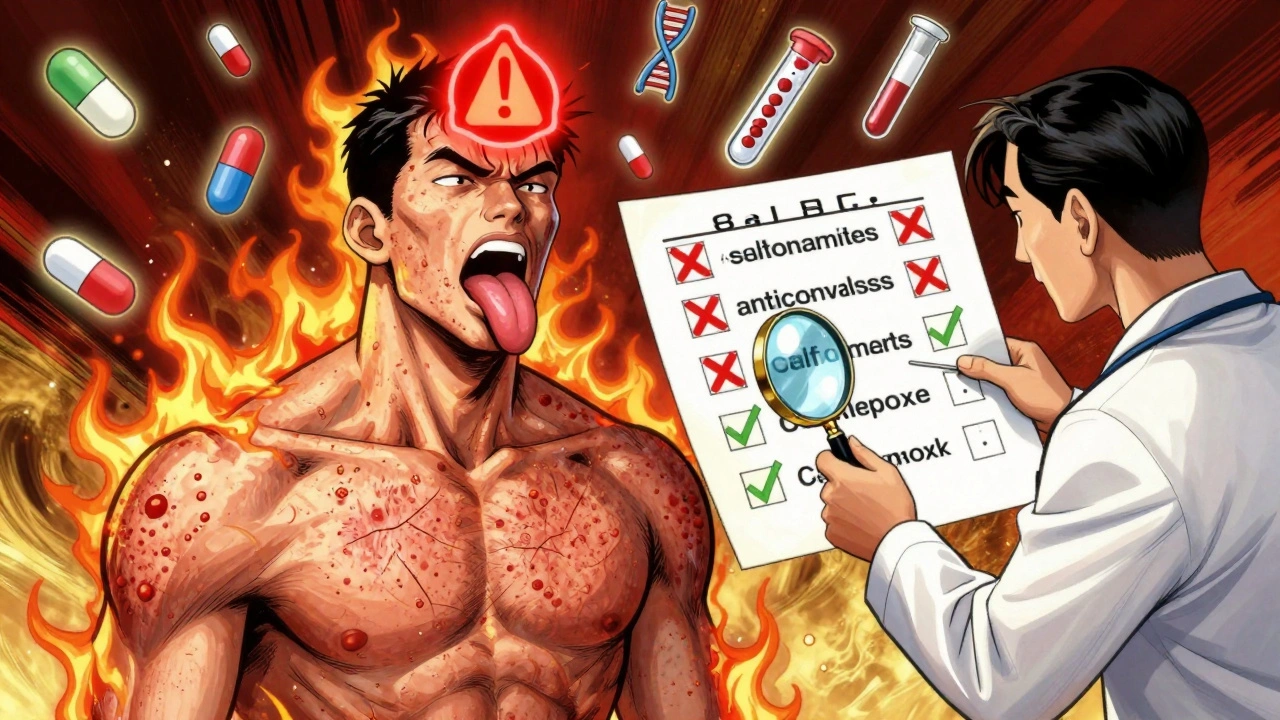
When you’ve had a severe drug reaction, your body isn’t just giving you a warning-it’s screaming. Hives that spread like wildfire. Swelling that cuts off your airway. Skin peeling off in sheets. These aren’t side effects. These are life-threatening events. And when they happen, the instinct is clear: never take that drug again. But what about the whole family of drugs it belongs to? Should you avoid them all? The answer isn’t simple. It depends on what happened, why it happened, and whether the risk is real-or just a myth.
Not All Severe Reactions Are Allergies
Many people think a bad reaction means they’re "allergic" to a drug. That’s not always true. In fact, 80-90% of reported drug reactions aren’t allergic at all. They’re side effects-predictable, dose-related, and often tied to how the drug works in your body. For example, nausea from NSAIDs like ibuprofen? That’s not an allergy. It’s just how those drugs irritate your stomach lining. Same with muscle pain from statins. These aren’t immune responses. They’re pharmacological. True allergic reactions involve your immune system. They come on fast-minutes to hours after taking the drug-and include symptoms like hives, swelling of the lips or tongue, wheezing, or anaphylaxis. These are the reactions that demand serious caution. But even then, avoiding the entire drug family isn’t always necessary.When You Must Avoid the Whole Family
There are some reactions where skipping the whole class isn’t just smart-it’s life-saving. These are called severe cutaneous adverse reactions (SCARs). They include:- Stevens-Johnson syndrome (SJS)
- Toxic epidermal necrolysis (TEN)
- Drug Reaction with Eosinophilia and Systemic Symptoms (DRESS)
Penicillin: The Most Misunderstood Allergy
Penicillin is the poster child for drug allergies. About 10% of Americans say they’re allergic to it. But here’s the shocking truth: 95% of those people aren’t actually allergic. They had a rash as a kid, got labeled "allergic," and the label stuck-even though they’ve never been tested. Studies show that only 10% of people with a penicillin allergy label have a true IgE-mediated reaction. The rest can safely take penicillin or other beta-lactam antibiotics like amoxicillin or cephalexin. Yet, doctors still avoid prescribing them out of caution. This isn’t just inconvenient-it’s dangerous. Patients labeled "penicillin allergic" are more likely to get broader-spectrum antibiotics like vancomycin or clindamycin, which increase the risk of C. diff infections, antibiotic resistance, and longer hospital stays. The fix? Allergy testing. Skin tests and oral challenges under medical supervision can confirm or rule out a true allergy. If you were told you’re allergic to penicillin decades ago and never got tested, ask your doctor about de-labeling. It could open up safer, more effective treatment options.Sulfa Drugs: A Class-Wide Risk
Sulfa antibiotics like Bactrim and Septra are another story. Unlike penicillin, cross-reactivity within the sulfa class is real-and dangerous. If you had Stevens-Johnson syndrome from Bactrim, you should avoid all sulfonamide antibiotics. Why? Because they share the same chemical structure that triggers your immune system. But here’s the nuance: not all sulfa drugs are the same. Sulfasalazine (used for rheumatoid arthritis), furosemide (a water pill), and glipizide (a diabetes drug) are also "sulfa" drugs-but they don’t carry the same risk. They have different chemical structures. The cross-reactivity risk for these is less than 1%. Still, most doctors play it safe and avoid all sulfa-containing drugs after a severe reaction. That’s because the evidence isn’t clear-cut for every case, and the stakes are too high to guess wrong.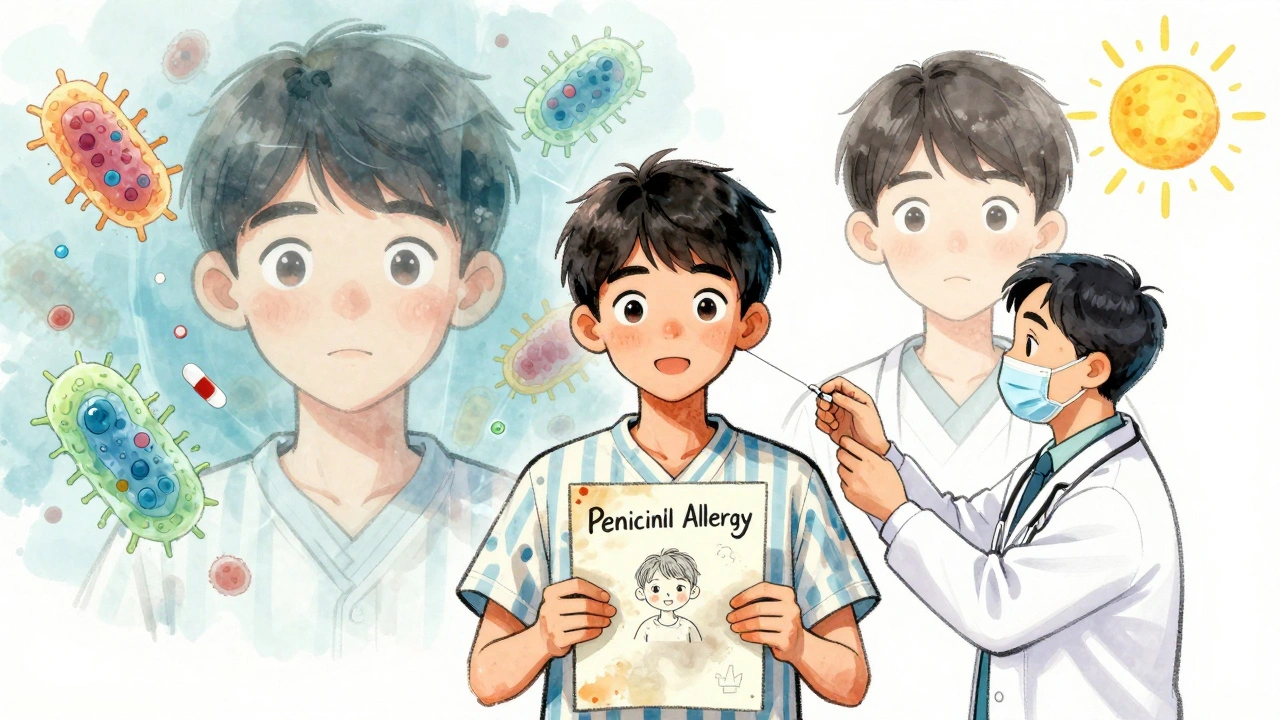
NSAIDs: Not All Created Equal
If you got asthma or nasal polyps after taking aspirin, you might have aspirin-exacerbated respiratory disease (AERD). That’s a non-allergic reaction, but it’s serious. About 70% of people with AERD will react to other traditional NSAIDs like ibuprofen or naproxen. So avoiding all NSAIDs makes sense. But what about COX-2 inhibitors like celecoxib? They work differently. In most cases, people with AERD can take celecoxib without issue. Same with acetaminophen (Tylenol)-it’s not an NSAID and doesn’t trigger AERD. The key isn’t avoiding all pain relievers. It’s understanding the mechanism and choosing the right alternative.Statins, Anticonvulsants, and Other Common Classes
For statins (like atorvastatin or rosuvastatin), muscle pain doesn’t mean you’re allergic to all of them. Only 10-15% of people who react to one statin react to another. Switching to a different statin often works fine. Same with anticonvulsants: if you had a rash from carbamazepine, you might still tolerate lamotrigine or valproate-depending on your genetics. That’s where genetic testing comes in. The HLA-B*57:01 gene variant is a red flag for abacavir (an HIV drug). If you have it, you’re at extremely high risk of a life-threatening reaction. But if you test negative? You can take it safely. This isn’t theory-it’s standard practice now. The FDA recommends testing before prescribing abacavir. Why? Because it prevents reactions and saves lives.What You Should Do After a Severe Reaction
Don’t just assume you need to avoid everything in the class. Here’s what to do next:- Document everything. Write down the drug name, when you took it, what symptoms you had, how long they lasted, and what treatment you needed. Was it a rash? Swelling? Trouble breathing? Hospitalization?
- Ask for an allergy evaluation. Talk to an allergist. Skin tests or oral challenges can confirm if you’re truly allergic-or if the label is wrong.
- Get genetic testing if relevant. For drugs like abacavir or carbamazepine, a simple blood test can tell you if you’re at risk.
- Update your medical records. Make sure your EHR uses precise language: "anaphylaxis to amoxicillin," not just "penicillin allergy." Vague labels lead to unnecessary avoidance.
- Consider a medical alert bracelet. If you’ve had anaphylaxis or SCARs, wear one. It could save your life in an emergency.

Why Over-Avoidance Is a Problem
Avoiding entire drug families without good reason isn’t safe-it’s harmful. Patients labeled with drug allergies get fewer treatment options. They’re more likely to be prescribed broader-spectrum antibiotics, which drive resistance. They wait longer for care. One study found patients with unverified penicillin allergies waited an average of 3.2 days longer for proper antibiotics. And it’s not just about inconvenience. In hospitals, doctors override allergy alerts 23% of the time because the system doesn’t give them enough detail. If your record just says "allergic to penicillin," they might ignore it. But if it says "anaphylaxis to amoxicillin with hypotension requiring epinephrine," they’ll treat it seriously.The Future Is Personalized
The field is changing fast. In 2022, the FDA approved a new test called ImmunoCap Specific IgE that cuts false positives from 40% down to 11%. AI tools like IBM Watson for Drug Safety are helping doctors predict which patients can safely take a drug-even if they’ve been labeled allergic. In Australia, hospitals are starting to adopt "penicillin de-labeling" programs. Patients get tested, their records are updated, and they’re no longer stuck with risky alternatives. The goal? Reduce unnecessary avoidance by 50% by 2025. We’re already seeing progress.Bottom Line
A severe drug reaction doesn’t automatically mean you must avoid the whole family. It means you need answers. Was it an allergy? A side effect? A genetic risk? Only a proper evaluation can tell you. Don’t let a label from 20 years ago limit your care today. Ask for testing. Push for precision. Your next prescription could depend on it.Can I ever take a drug from the same family again after a severe reaction?
It depends on the type of reaction. If you had anaphylaxis or a severe skin reaction like Stevens-Johnson syndrome, you should avoid the entire class permanently. But for milder reactions-like a rash without systemic symptoms-testing may show you can safely take another drug in the same family. Always consult an allergist before re-exposing yourself.
Is a sulfa allergy the same as being allergic to all sulfa-containing drugs?
No. Sulfa antibiotics like Bactrim and Septra are the main culprits in severe reactions. But other drugs like furosemide (a diuretic), glipizide (a diabetes drug), or sulfasalazine (for arthritis) have different chemical structures and rarely cause cross-reactions. Still, after a severe reaction like DRESS or TEN, doctors often avoid all sulfa-containing drugs out of caution. Ask for clarification on which specific drugs are risky.
Why do doctors still avoid penicillin if most people aren’t truly allergic?
Because many doctors don’t have access to allergy testing, and electronic health records often lack detail. A vague note like "penicillin allergy" triggers automatic alerts, and many providers don’t have time to investigate further. That’s why de-labeling programs are growing-hospitals are now testing patients and updating records to prevent unnecessary avoidance.
Can I outgrow a drug allergy?
Yes. Many people lose their drug allergies over time, especially if they were misdiagnosed as children. Penicillin allergies, for example, fade in about 80% of people after 10 years. But you shouldn’t assume you’re no longer allergic. Get tested before taking the drug again. A rash you had as a kid might not mean you’re allergic now.
What should I do if I’m told I’m allergic but never had testing?
Ask your doctor for a referral to an allergist. Skin tests and oral challenges are safe, quick, and highly accurate. If you’ve been avoiding penicillin or other antibiotics for decades, getting tested could open up better, safer, and cheaper treatment options. Many insurance plans cover this testing.




Suzanne Johnston
December 8, 2025 AT 20:47It's wild how we treat drug reactions like they're all the same. I had a rash on amoxicillin at 7 and got labeled allergic forever. Turned out I could've taken it safely at 30. Why do we let childhood mistakes dictate adult medicine? We don't do that with food allergies or anything else. It's lazy medicine.
Andrea DeWinter
December 9, 2025 AT 21:28My mom got mislabeled penicillin allergic in the 80s. She got clindamycin for a tooth infection and ended up with C. diff that nearly killed her. We didn't know until years later that 95% of those labels are wrong. Please get tested. It's not just about convenience - it's about survival.
George Taylor
December 11, 2025 AT 18:45Ugh. Another one of these 'maybe you're not allergic' articles. So what? You're telling me I should just randomly rechallenge a drug that once made me feel like I was dying? That's not bravery, that's stupidity. If my body screamed once, I'm not testing it again. Ever. You want to play Russian roulette with your immune system? Go ahead. I'll be over here alive.
ian septian
December 11, 2025 AT 21:45Get tested. Don't guess. Your life depends on it.
Chris Marel
December 12, 2025 AT 13:00This is so important. In Nigeria, we don’t have easy access to allergy testing, so people just avoid everything. I lost a cousin to sepsis because they couldn’t use the best antibiotic - only because of a childhood rash. We need more education here. Not just in the US.
Sabrina Thurn
December 14, 2025 AT 07:44Let’s be clear: the distinction between pharmacological side effects and IgE-mediated hypersensitivity is critical, yet consistently conflated in both clinical documentation and patient self-reporting. The cross-reactivity profiles among beta-lactams, sulfonamides, and NSAIDs are not monolithic - they are structurally and immunologically heterogeneous. Consequently, blanket avoidance protocols, while risk-averse from a liability standpoint, are pharmacologically unsound and contribute to antimicrobial stewardship failure. Precision phenotyping via skin testing, drug provocation challenges, and HLA genotyping must become standard of care, not exceptions.
iswarya bala
December 15, 2025 AT 01:56my bro got stivens johnson from sulfa and now evry doc avoid all sulfa drugs… but his diabete med is sulfa too and they took it off? he was so confused. why one sulfa bad but other sulfa ok? no one explain good.
Simran Chettiar
December 15, 2025 AT 09:18One cannot help but observe the profound epistemological dissonance that pervades contemporary pharmacological paradigms - wherein the human organism, a marvel of evolutionary biochemistry, is reduced to a binary of ‘allergic’ or ‘not allergic’, despite the intricate, polygenic, and context-dependent nature of immune response. The very notion of a ‘drug family’ as a monolithic threat ignores the structural nuances of molecular topology, the idiosyncrasies of metabolic pathways, and the heterogeneity of HLA haplotypes across populations. To avoid an entire class of therapeutics based on a single adverse event is not prudence - it is intellectual surrender to the myth of categorical certainty in a world governed by probabilistic biology.
Tiffany Sowby
December 16, 2025 AT 19:06Why do Americans always think they know better? In my country, we don’t mess around with this stuff. If you had a bad reaction, you don’t take it again - period. No testing, no guessing. People die because of your ‘maybe it’s not an allergy’ nonsense. You think you’re smart? You’re just lucky you haven’t lost someone yet.
Stacy Tolbert
December 17, 2025 AT 09:59I had a rash from penicillin when I was 12. Never thought twice about it. Then I got pneumonia last year and the ER doc asked if I was allergic. I said yes. They gave me azithromycin. I ended up in the ICU with a bad reaction to that too. Turns out I was never allergic to penicillin - I was allergic to the dye in the pediatric version. Now I take amoxicillin like it’s candy. Why didn’t anyone ever ask me what the rash looked like? Or when? Or how it happened?