
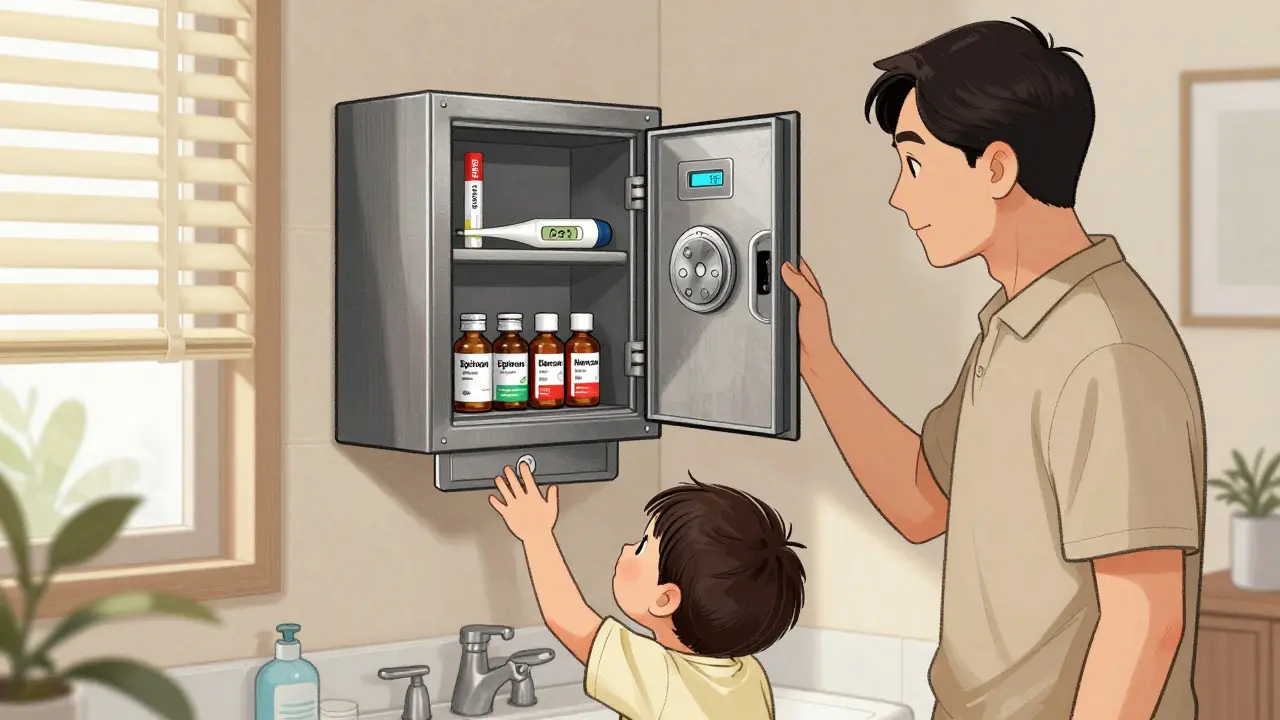
Keeping emergency medications like epinephrine, naloxone, or nitroglycerin ready to use-without making them easy for kids, pets, or strangers to find-is one of the most important but overlooked tasks in home health care. You don’t want to fumble for a bottle during a panic attack or an allergic reaction. But you also don’t want your 5-year-old mistaking it for candy. The solution isn’t just a locked box or a high shelf. It’s a smart system that balances speed and safety.
Know What You’re Storing
Not all emergency meds are the same. Epinephrine auto-injectors (like EpiPens) work best at room temperature-between 68°F and 77°F. Refrigerating them can damage the medicine inside. Naloxone (Narcan), used to reverse opioid overdoses, is also stable at room temperature. But insulin for diabetic emergencies? That one needs to stay cool until it’s opened, then can be kept at room temp for up to 28 days. If you’re storing multiple types, you need separate rules for each.Check the label. Only 43% of prescription bottles include clear storage instructions, according to the FDA. Don’t assume. Call your pharmacist or look up the manufacturer’s guidelines online. A wrong temperature can make your life-saving drug useless.
Home Storage: Lock It, But Not Too Tight
The EPA and CDC both recommend storing all medicines in a locked cabinet, closet, or safe. But here’s the catch: if the key is buried under ten socks in the top drawer, or the code is written on a sticky note next to the lock, you’ve defeated the purpose.Use a small, affordable medicine safe-those cost as little as $25 online. Look for ones with a digital keypad or biometric lock. Avoid the flimsy plastic boxes sold at pharmacies; they’re easy to break open. A sturdy metal box with a combination lock is better than a key-based one, because keys get lost, copied, or stolen.
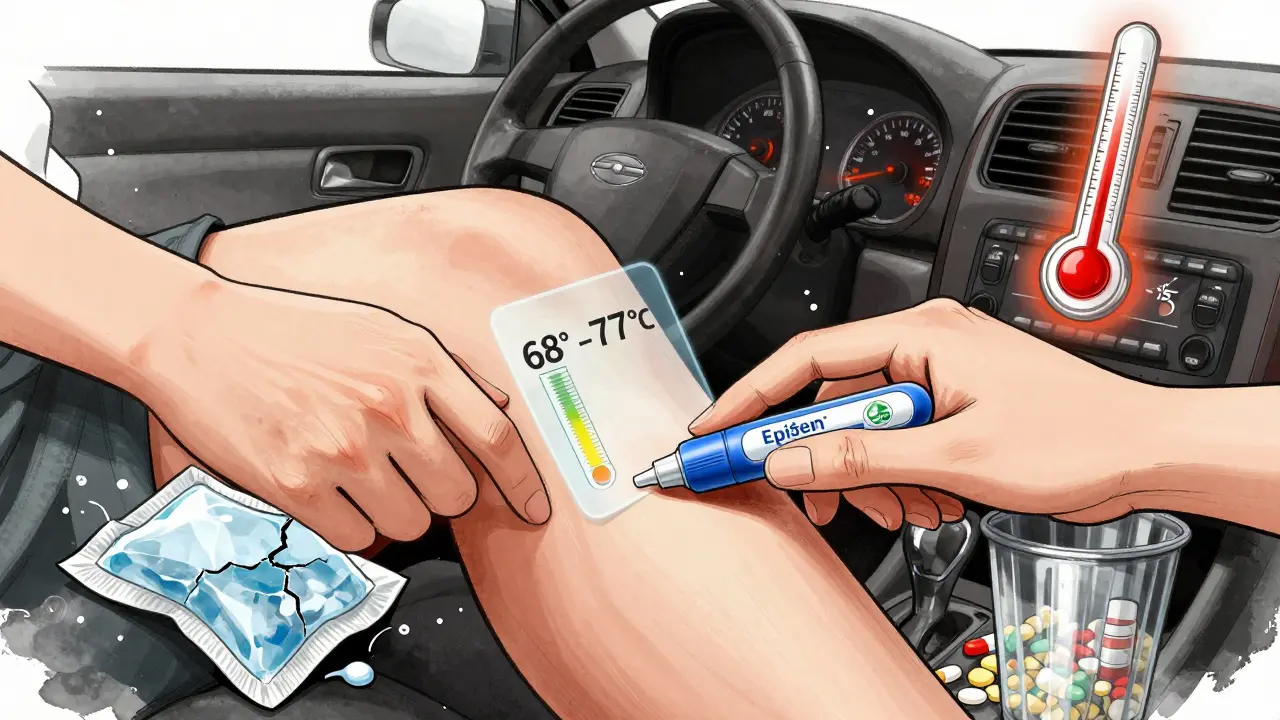
Put it in a spot everyone knows: the top shelf of the bathroom cabinet, inside a bedroom dresser, or even mounted on the wall in the kitchen. Avoid the kitchen counter. Heat and humidity from the stove or sink can ruin meds. Don’t store them in the car-summer temps can hit 120°F inside a parked vehicle. That’s enough to melt pills or break down injectables.
For Families with Kids or Pets
Childproofing isn’t just about locking things up-it’s about placement. The American Academy of Pediatrics says 60% of accidental pediatric poisonings happen because medicines were within reach, even if they were “just out of sight.”Store emergency meds higher than a child can reach-above 5 feet-but not so high that you’ll struggle to grab them during a crisis. A locked cabinet on the wall near the front door or in a hallway closet works well. Make sure everyone who might need to use the meds-parents, grandparents, babysitters-knows where it is and how to open it. Practice the steps: open the safe, pull out the auto-injector, remove the cap, press against the thigh. Do this once a month, even if nothing’s wrong. Muscle memory saves lives.
Keep non-emergency meds-like painkillers or antidepressants-in a separate, more secure location. That way, you’re not tempted to leave everything locked away and forget where the epinephrine is.
Emergency Kits in Cars and Workplaces
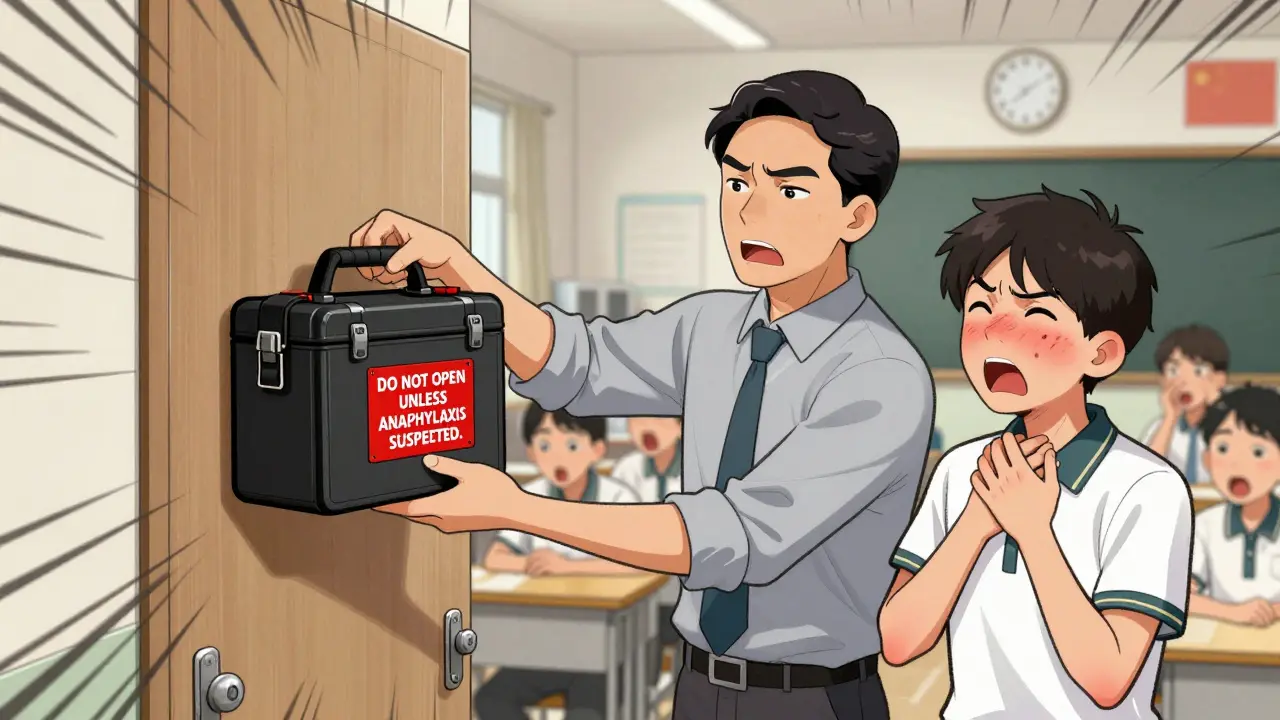
If you drive a child with severe allergies, keep an EpiPen in your glove compartment or center console. Not in the trunk. Not in the door pocket. Those spots get too hot or too cold. A small insulated pouch with a cold pack can help if you’re in extreme weather. Some companies make car-specific medication holders with built-in temperature alerts.At work, especially if you’re a teacher, coach, or daycare provider, keep emergency meds in a locked but accessible box. The box should be labeled clearly: “EMERGENCY: EPIEPEN - DO NOT OPEN UNLESS ANAPHYLAXIS SUSPECTED.” Keep the key or code with the person responsible for first aid. Don’t lock it in the office safe. During a reaction, you don’t have time to hunt for keys.
What About Hospitals and EMS?
In hospitals, emergency meds are stored in code carts or automated dispensing cabinets. These are locked, tracked electronically, and only accessible to trained staff. But even here, delays happen. A 2022 National EMS Survey found that nearly 1 in 6 emergency responders had waited too long to access meds because of over-secure storage.That’s why the Joint Commission now requires every facility to do a risk assessment: “Where could this med be accessed faster? Where could it be stolen?” The answer isn’t always more locks. Sometimes it’s a tamper-evident seal on a wall-mounted box that can be broken open with one hand.
EMS vehicles use lockable cabinets with key access only for paramedics. Temperature logs are required during transport. Some newer ambulances now have real-time sensors that alert dispatch if meds get too hot or cold.
How to Train Everyone Who Might Need It
You can have the perfect storage system, but if no one knows how to use it, it’s useless. A 2023 study in the American Journal of Health-System Pharmacy found that 85% of people became confident with emergency med access after just two 30-minute training sessions.Teach your family this simple routine:
- Where is the safe? Point to it.
- What’s inside? Show the EpiPen or Narcan.
- How do you open it? Practice the lock or code.
- When do you use it? “If someone can’t breathe, turns blue, or passes out after eating peanuts or taking opioids.”
- What’s next? Call 911-even after giving the shot.
Do this before a crisis, not during one. Keep a printed step-by-step guide taped to the safe. Use pictures if someone can’t read well.
What to Avoid
- Don’t store meds in pill organizers-they’re not secure and don’t protect from heat or light. - Don’t keep them in the fridge unless required-most don’t need it, and condensation can ruin them. - Don’t hide them under a mattress or in a shoebox-you’ll forget where they are. - Don’t assume your teenager knows-even older kids may not understand the urgency. - Don’t ignore expiration dates-epinephrine loses potency after 12-18 months. Replace them on time.When to Upgrade Your System
The global market for secure medication storage is growing fast. New tech is making this easier. Some safes now connect to your phone and send alerts if someone opens them. Others have built-in temperature sensors that log conditions over time.Consider upgrading if:
- You’ve had a near-miss where you couldn’t find the meds fast enough
- You’ve moved to a new home and haven’t set up a proper system
- You have multiple emergency meds with different storage needs
- You’re a caregiver for someone with complex needs
Look for FDA-approved devices with tamper evidence and temperature monitoring. They’re not cheap, but they’re cheaper than a hospital visit-or worse.
Final Rule: Accessibility Wins Over Perfection
The goal isn’t to make it impossible for anyone to get your meds. It’s to make it impossible for the wrong person to get them by accident, while ensuring the right person can get them in seconds.Test your system. Ask a friend to find your epinephrine while you time them. If it takes longer than 15 seconds, rethink your setup. Practice with your kids. Make it normal. Make it routine.
Because in a real emergency, you won’t have time to think. You’ll have time to act. Make sure your system lets you do just that.
Can I keep emergency meds in the bathroom cabinet?
Yes, but only if it’s a locked cabinet and not near the shower or sink. Humidity from hot water can damage pills and injectables. A bathroom cabinet on the wall, away from steam, is fine. Avoid medicine cabinets above the sink-they’re often too exposed to moisture.
Should I refrigerate my EpiPen?
No. Epinephrine auto-injectors should be stored at room temperature (68°F-77°F). Refrigeration can damage the device’s mechanism and reduce effectiveness. If you’re traveling in extreme heat, use an insulated pouch with a cold pack, but never freeze it.
What’s the best way to dispose of expired emergency meds?
Never flush them or throw them in the trash. Take them to a pharmacy with a drug take-back program. Many Walmart, CVS, and Walgreens locations have drop-off bins. If that’s not available, mix pills with coffee grounds or cat litter in a sealed bag before tossing them. For auto-injectors, remove the needle and dispose of it in a sharps container-then throw the rest in the trash.
Can I leave my naloxone in the car?
No. Cars get dangerously hot in summer and freezing in winter. Naloxone can lose effectiveness if exposed to temperatures above 86°F or below 32°F. Keep it with you, in your bag or pocket, especially if you’re in a high-risk environment like a recovery center or opioid treatment program.
How often should I check my emergency meds?
Check every 3 months. Look for discoloration, cloudiness, or leaks in injectables. Check expiration dates. Replace anything that’s expired or looks off. Set a phone reminder for the first day of each season.
Are medicine safes worth the cost?
Yes, especially if you have kids, pets, or multiple people in the home. A basic model costs under $30 and prevents accidents, theft, or misuse. More advanced ones with temperature sensors and alerts cost $80-$150 and are worth it for high-risk situations like home dialysis or opioid dependence management.

calanha nevin
January 31, 2026 AT 16:51Storing emergency meds in a locked bathroom cabinet is fine as long as it's away from the sink and shower. Humidity ruins more medications than people realize. I keep mine in a wall-mounted safe above the vanity. No condensation, no heat, no kids reaching it. Simple. Effective. Tested it myself with a timer - 8 seconds to grab the EpiPen. That's the goal.
Blair Kelly
February 2, 2026 AT 16:27Let’s be real - if your first thought is ‘I’ll just hide it under the mattress’ then you’re already one panic attack away from a tragedy. This post isn’t just advice - it’s a lifeline. The fact that 57% of families don’t have a system means we’re all one bad day from losing someone who shouldn’t be lost. Stop being lazy. Buy the $25 safe. Teach your kids how to use it. Do it now.
Melissa Cogswell
February 3, 2026 AT 05:26I’m a school nurse and we’ve had two near misses this year because teachers didn’t know where the Narcan was. We now have a wall-mounted box next to the main office with a photo of the device taped to it. No keys. Just a code. Everyone knows it. Even the custodian. That’s the kind of system that works.
owori patrick
February 3, 2026 AT 22:56In my village in Nigeria, we don’t have medicine safes. But we have community trust. We keep the EpiPen with the schoolteacher who knows the child’s history. The key isn’t the lock - it’s the person who remembers. Maybe we don’t need tech. Maybe we need to remember that care is a shared duty.
April Allen
February 4, 2026 AT 18:01The FDA’s 43% statistic on unclear labeling is a systemic failure. Manufacturers prioritize liability over usability. If your epinephrine doesn’t have a QR code linking to a video tutorial, you’re being set up to fail. We need regulatory mandates for embedded multimedia instructions - not just text. And yes, this applies to insulin, glucagon, and albuterol too. This isn’t niche - it’s public health infrastructure.
Donna Fleetwood
February 6, 2026 AT 02:31My daughter has a peanut allergy. We did the 30-minute training with the whole family - even the dog. Okay, not the dog. But we practiced every Sunday. Now she opens her own EpiPen. She knows the code to the safe. She tells her friends how to help. That’s not fear. That’s power. You can teach anyone - even a 7-year-old - to be the hero in a crisis.
Rohit Kumar
February 6, 2026 AT 15:36Locking medications is not about security - it’s about control. We live in a culture that fears the body, fears the unknown, fears the child who might touch something. But what if the real danger isn’t the medicine? What if it’s the silence around it? The stigma. The shame. The assumption that only ‘experts’ should handle life-saving tools. We don’t need safes. We need education. We need to normalize emergency preparedness like we do fire drills. No locks. No fear. Just clarity.
Rob Webber
February 7, 2026 AT 03:51My cousin died because his EpiPen was in the trunk of his car. It was 107 degrees outside. The epinephrine was crystallized. He had a reaction. He couldn’t find it. He died. I swear to god if you don’t read this post twice and then act - you’re one mistake away from being the next headline. This isn’t hypothetical. This is happening right now. To someone’s child. To someone’s parent. To someone’s partner. Do not wait.
Beth Cooper
February 7, 2026 AT 23:18Did you know the government secretly monitors medicine safe purchases? They track who buys biometric locks and flag it as ‘potential opioid dependency risk.’ That’s why I keep mine in a hollowed-out book on the top shelf - and no, I won’t tell you which one. They’re watching. Always. And if you think your $150 smart safe is secure, you’re the exact kind of person they want to target. Trust no one. Not even the FDA.
Russ Kelemen
February 8, 2026 AT 01:13There’s a difference between safety and accessibility. One is fear-driven. The other is trust-driven. The best system isn’t the one with the most locks - it’s the one where everyone in the house knows exactly where it is and feels calm when they open it. Practice with your kids. Make it part of bedtime. ‘Tonight, we’re going to find the EpiPen.’ No panic. Just routine. That’s how you build resilience - not by locking things away, but by making them familiar.
Kathleen Riley
February 9, 2026 AT 18:17The very notion of storing emergency medications in a domestic setting presupposes a hierarchical, privatized model of care that is fundamentally incompatible with the ethos of collective human survival. The individualized safe, the biometric lock, the temperature sensor - these are symptoms of a neoliberal collapse of communal responsibility. True safety lies not in the enclosure of the pharmaceutical, but in the dissolution of the domestic sphere as a site of medical alienation.
Shubham Dixit
February 11, 2026 AT 16:48Let me tell you something about Western medicine - it’s obsessed with gadgets and locks while ignoring the real problem: education. In India, we don’t have medicine safes in every home. We have grandmothers who remember every pill, every dose, every emergency. We have neighbors who know who has an EpiPen and who needs help. We don’t need a $150 smart box. We need a culture where people care enough to remember. You think your digital keypad saves lives? No. A grandmother’s voice saying ‘Here, take this’ does. Stop outsourcing your humanity to a device. Build a community. Teach your children to be watchful. That’s the real emergency system. Not a lock. Not a sensor. A human heart that refuses to look away.
Lisa McCluskey
February 12, 2026 AT 13:24