Supplement Interactions: What You Need to Know Before Taking Them
When you take a supplement interaction, a reaction between a dietary supplement and a medication that changes how either works in your body. Also known as herb-drug interaction, it’s not just about side effects—it’s about whether your medicine still works at all. Millions of people take supplements like St. John’s Wort, fish oil, or magnesium without realizing they’re quietly canceling out their prescriptions. This isn’t theoretical. A woman on birth control got pregnant after starting St. John’s Wort. A man on warfarin ended up in the ER after adding a new herbal blend. These aren’t rare cases—they’re predictable.
Supplement interactions happen because your body processes everything through the same pathways. The liver enzyme CYP3A4 handles everything from statins to antidepressants to herbal extracts. When something like St. John’s Wort floods that system, it speeds up how fast your body breaks down other drugs. That means your blood thinner stops working. Your antidepressant loses its punch. Your birth control becomes unreliable. It’s not magic—it’s biochemistry. And it’s not just herbs. Even common vitamins like vitamin K can mess with blood thinners. Calcium can block thyroid meds. Iron can make antibiotics useless. The problem isn’t that supplements are bad—it’s that people treat them like harmless candy. They’re not. They’re active chemicals with real, measurable effects.
Some of the most dangerous combinations show up in everyday use. People with diabetes take berberine thinking it helps blood sugar, not knowing it can drop levels too far when combined with metformin. Those with heart conditions add coenzyme Q10 to feel better, unaware it can weaken the effect of blood pressure pills. Even something as simple as grapefruit juice—often grouped with supplements—can cause dangerous spikes in cholesterol or anxiety meds. The FDA doesn’t regulate supplements like drugs, so labels often lie, omit, or hide interactions. If you’re on any prescription, you’re at risk. You don’t need to stop supplements. You just need to know which ones are safe with your meds. Below, you’ll find real cases, proven risks, and clear advice on how to check for conflicts before you swallow another pill.
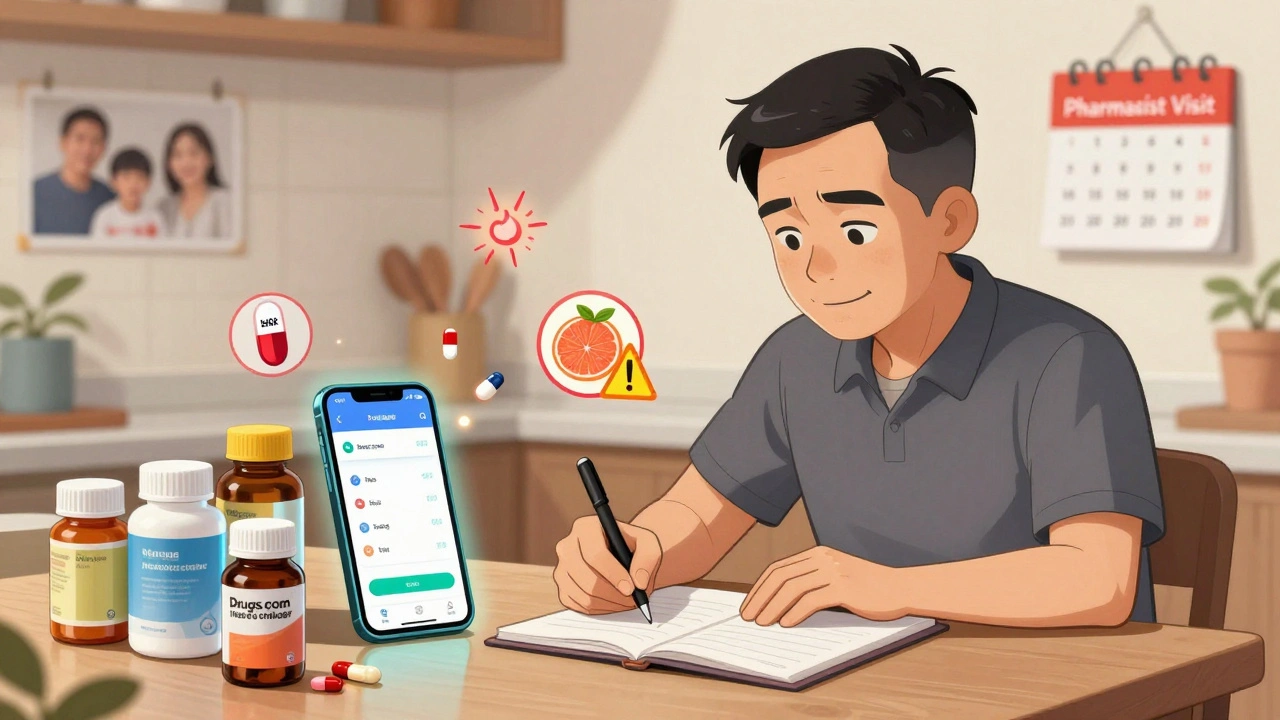
How to Check for Drug Interactions at Home Safely
Learn how to safely check for drug interactions at home using free tools, what to look for, and when to call your pharmacist. Avoid dangerous combos between prescriptions, OTC meds, and supplements.
DetailRelated Posts