Imagine picking up a bottle of medicine and realizing two weeks later that you've been storing it on the counter when it actually belonged in the fridge. It happens more often than you'd think. In the U.S. alone, about 1.3 million medication errors occur every year, and nearly a quarter of those are simply because someone misunderstood the instructions on the bottle. Whether it's a tiny font you can't read or a confusing abbreviation like "q.d." or "bid," the prescription label is the only thing standing between you and a potential medical mistake.
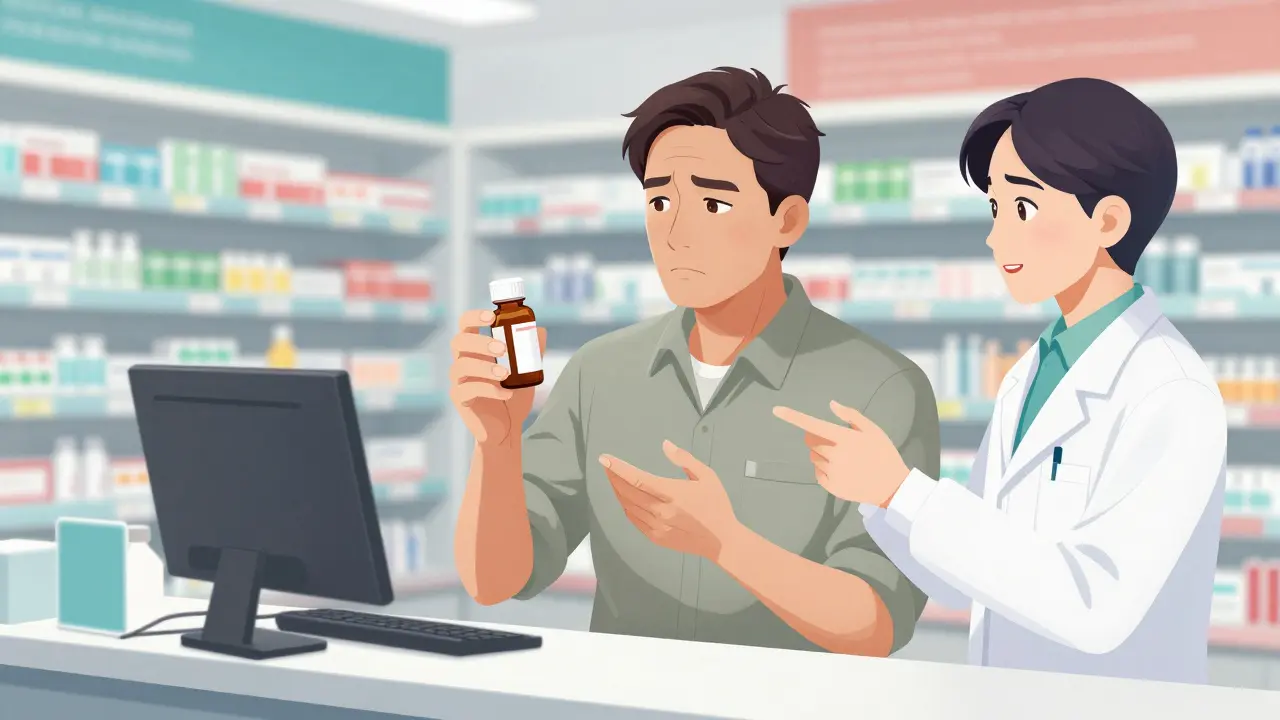
You don't need to be a doctor to ensure your meds are safe, but you do need to be an active participant at the pharmacy counter. Research shows that patients who actually engage with their labels and ask specific questions can cut the risk of adverse drug events by up to 47%. The goal isn't to grill your pharmacist, but to verify that the information on that small piece of adhesive paper is crystal clear before you leave the store.
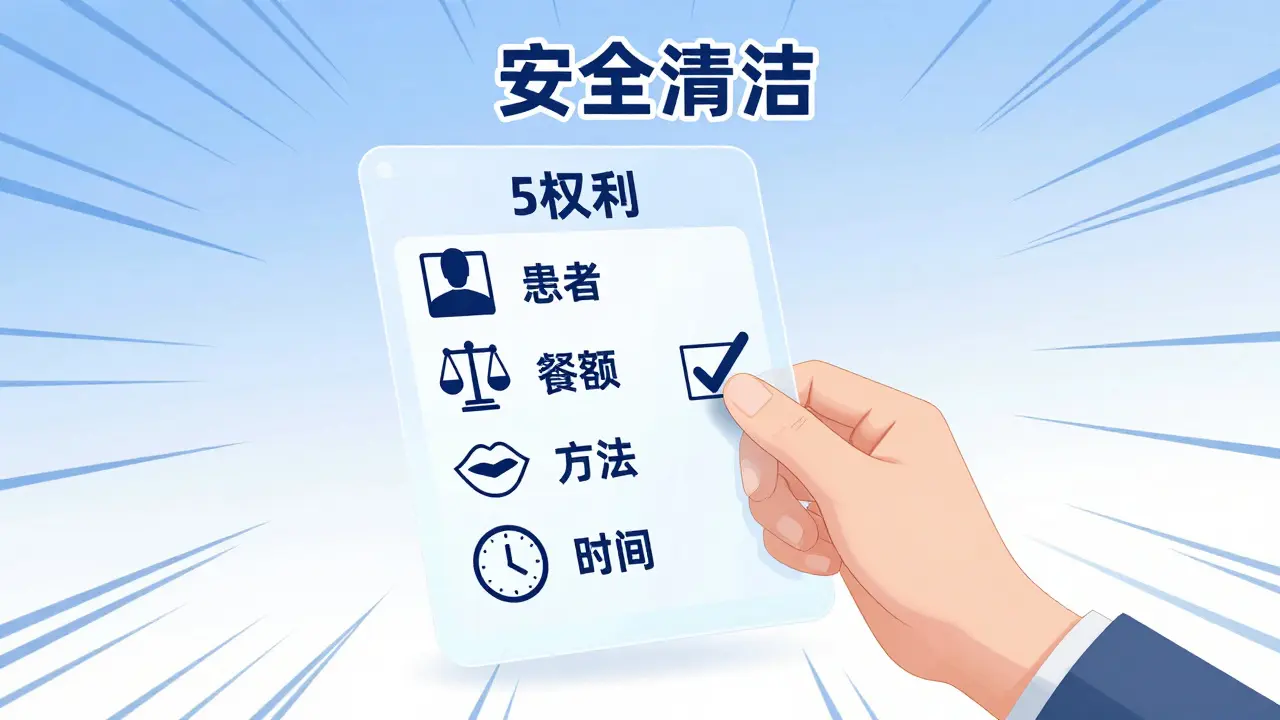
The "5 Rights" Safety Check
Before you even ask about side effects, you should run through what experts call the "5 Rights." Established by the Institute for Safe Medication Practices, this is the gold standard for avoiding errors. Think of it as a mental checklist to verify the basics.
- Right Patient: Does the name on the label match your ID exactly?
- Right Medicine: Is this the drug your doctor told you to take? Does the pill look the way it did last time?
- Right Amount: Is the strength (like 81 mg or 500 mg) correct?
- Right Way: Are you taking it by mouth, as a drop, or a topical cream?
- Right Time: Does the label say "once daily" or "every six hours"?
If any of these feel off, stop immediately. According to the American Society of Health-System Pharmacists, verifying these five points can reduce errors by roughly 58%.
Crucial Questions About Dosage and Timing
The "Directions for Use" section is where most confusion happens. Many labels use shorthand that can be misinterpreted. If you see something you don't recognize, ask these specific questions:
"What exactly does this abbreviation mean?" If the label says "PRN," it means "as needed." If it says "AC," it means "before meals." Don't guess; ask for the plain-English version.
"Should I take this with food or on an empty stomach?" This is a game-changer for how well a drug works. For example, taking certain antibiotics with dairy can stop the medicine from absorbing into your system, making it far less effective.
"What happens if I miss a dose?" Do you double up the next time, or just skip it? The answer varies wildly depending on the medication, and knowing the protocol prevents dangerous spikes in drug levels in your blood.
Storage and Expiration Secrets
Where you put your medicine is just as important as when you take it. Most people assume everything goes in the medicine cabinet, but that's not always true. A survey by the American Pharmacists Association found that while 78% of drugs are fine at room temperature, 15% absolutely require refrigeration.
Ask your pharmacist: "Does this need to be refrigerated or kept away from light?" Some meds break down if they get too warm or are exposed to sunlight. If you're traveling, this is also the time to ask if the medication can be kept at room temperature for a few days or if you need a cooler bag.
Then, check the expiration date. The FDA (Food and Drug Administration) requires medications to maintain their full potency until that date, provided they are stored correctly. If the date is coming up soon, ask if you can get a fresh supply to avoid a gap in your treatment.
Dealing with High-Risk Medications
Some drugs are more dangerous than others. For high-risk meds-like opioids, estrogen products, or isotretinoin-the FDA requires a Medication Guide. This is a detailed paper handout that goes beyond the small label on the bottle.
If you're receiving a high-risk drug, ask: "Are there any 'black box warnings' or critical safety alerts I should know about?" These are the most serious warnings issued by the FDA. Also, ask if your pharmacy provides digital aids. About 57% of U.S. pharmacies now offer QR codes on labels that link to video instructions, which can be much easier to follow than a wall of text.
| Check Point | What to Verify | Typical Time Required |
|---|---|---|
| Patient Info | Name matches ID | 15 Seconds |
| Medication | Name and pill appearance | 30 Seconds |
| Instructions | Read dosage aloud with pharmacist | 45 Seconds |
| Storage | Room temp vs. Refrigerated | 20 Seconds |
| Refills | Number of refills remaining | 10 Seconds |
Overcoming Barriers to Understanding
Let's be honest: medical jargon is frustrating. About 80 million adults in the U.S. struggle with health literacy, meaning they find standard medical instructions hard to grasp. If you're struggling to read the label, you have options.
First, ask for large-print labels. Over 90% of pharmacies can provide these. If English isn't your first language, remember that pharmacies receiving federal funds are required by the Affordable Care Act to provide translation services. Don't feel embarrassed to ask for a translator or a label written in your preferred language.
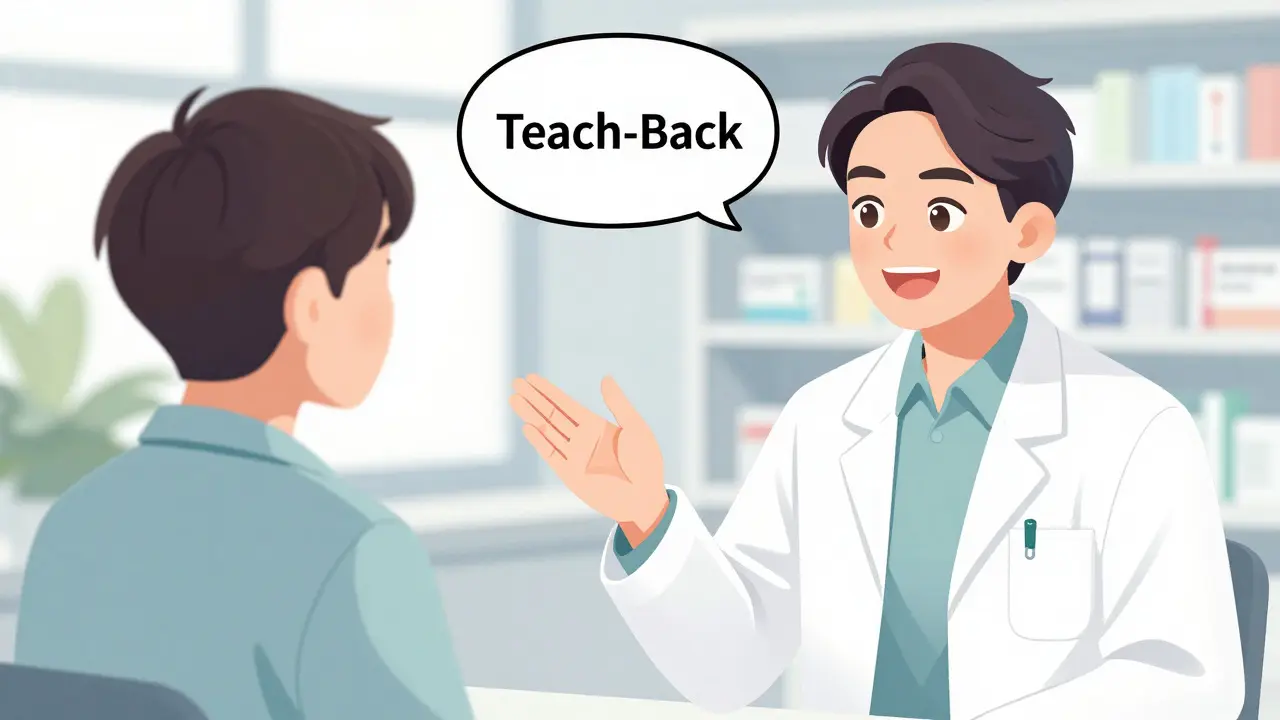
A pro tip for anyone: Use the "Teach-Back" method. After the pharmacist explains the label, say, "Just to make sure I've got this right, I'm taking one pill every morning with food and keeping it in the fridge, correct?" This forces the pharmacist to confirm your understanding and catches any remaining confusion before you leave the store.
What should I do if the drug name on the label is different from what my doctor said?
This is often because the pharmacy filled a generic version of a brand-name drug. Ask your pharmacist to explain the difference between the brand and generic names. If the drug itself seems entirely different, do not take it; ask the pharmacist to double-check the prescription against the doctor's orders.
Can I request a label in a different language?
Yes. Many pharmacies provide translation services, and some states have specific mandates for language-accessible labeling. If the pharmacy cannot print it, you can ask them to use a translation app or a staff member who speaks your language to walk you through the instructions.
How can I tell if my medicine has expired?
Check the "Discard After" or "Exp" date on the label. If you can't find one, the medication typically lasts for one year from the date it was dispensed unless otherwise specified. Always ask your pharmacist for the exact expiration date during pickup.
What is a 'Medication Guide' and do I need one?
A Medication Guide is a detailed FDA-mandated handout for high-risk drugs. You need one if your medication is on the FDA's list of high-risk products (like certain opioids or acne medications). It contains much more detail than the bottle label, including severe side effects and contraindications.
Why does my label have a QR code on it?
Many modern pharmacies use QR codes to provide patients with video instructions or updated safety information. Scanning these with your smartphone can give you a visual demonstration of how to use the medicine, which is often more helpful than reading text.
Next Steps for Medication Safety
If you've just come home from the pharmacy and realized you didn't ask these questions, don't panic. You can always call your pharmacist; they are usually happy to clarify instructions over the phone. For those managing multiple prescriptions, consider using a pill organizer or a medication tracking app to align your schedule with the label's instructions.
If you have a chronic condition or are taking a "high-alert" medication, look for pharmacies participating in the FDA's "Medication Check-Up" program. These locations offer free assessments to help you understand your labels better. Taking five minutes at the counter today can prevent a trip to the emergency room tomorrow.