When your blood sugar is higher than normal but not yet in the diabetes range, you’re in prediabetes. About 1 in 3 adults in the U.S. have it-and most don’t even know. The good news? You can reverse it. Not with pills or magic supplements, but with everyday food choices. Focus on three things: fiber, protein, and the glycemic index of what you eat. Do this right, and you cut your risk of developing type 2 diabetes by more than half.
Why Fiber Is Your Best Friend
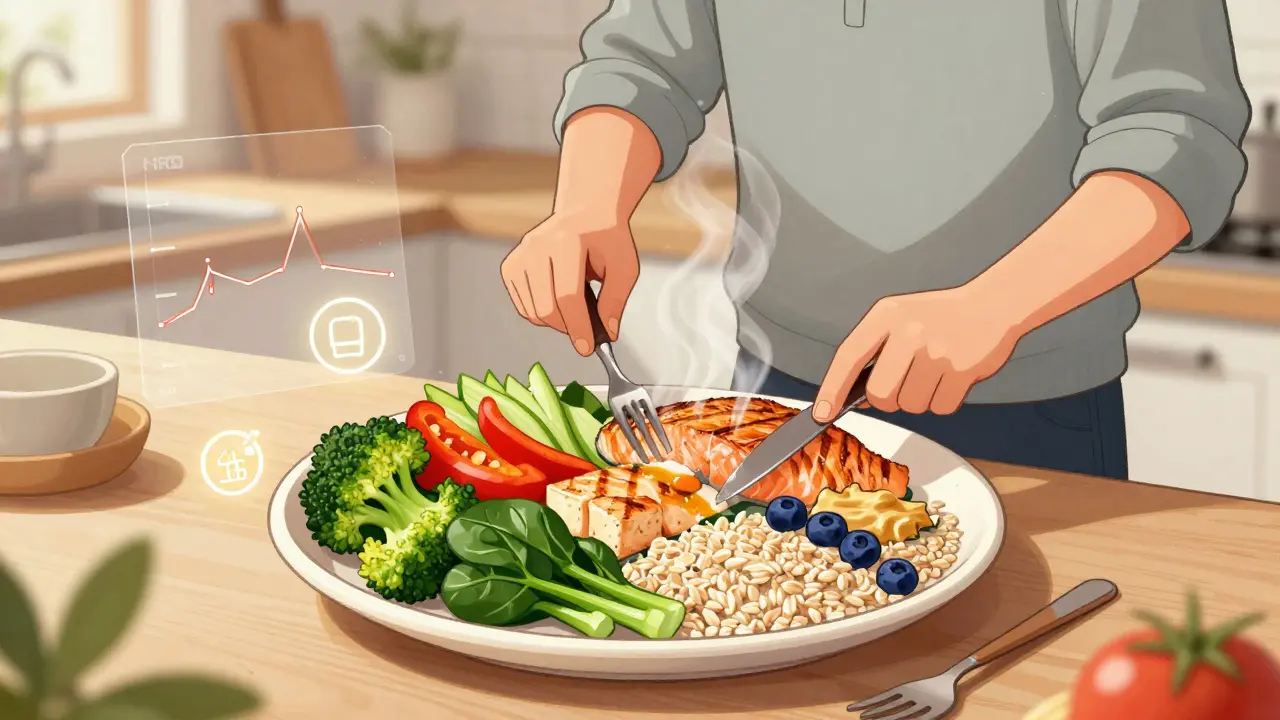
Fiber doesn’t just help you feel full. It slows down how fast sugar enters your bloodstream. That’s huge for prediabetes. The American Diabetes Association says you should aim for 25-38 grams of fiber each day. Most people get less than half that. Start with veggies. One cup of broccoli has about 5 grams. Spinach, peppers, zucchini-these all pack fiber without spiking blood sugar. Fill half your plate with them at every meal. That’s not a suggestion. It’s a proven strategy. A 2021 study in the American Journal of Clinical Nutrition found that every extra 10 grams of fiber you eat daily cuts your diabetes risk by 23%. Whole grains matter too. Swap white bread for whole grain. Choose brown rice over white. Steel-cut oats beat instant oatmeal by miles. One user on Diabetes Daily reported that switching from instant to steel-cut oats dropped their morning blood sugar by 30 points. Why? Because steel-cut oats have more fiber and a lower glycemic index. They digest slowly. No sugar rush. Legumes are another powerhouse. Lentils, chickpeas, black beans-each cup gives you 15+ grams of fiber and 15 grams of protein. They’re a double win. And they’re cheap. A can of beans costs less than a bag of chips but does far more for your health.Protein That Stabilizes, Not Spikes
Protein doesn’t raise blood sugar. In fact, it helps keep it steady. The trick is choosing the right kind and pairing it with carbs. Lean meats like chicken, turkey, and fish are solid choices. Eggs too. But skip the processed stuff-bacon, sausages, deli meats. Those are loaded with salt and saturated fat, which make insulin resistance worse. A 2020 study in Diabetologia found that eating just 100 grams of red meat every day increases diabetes risk by 20%. Plant proteins are even better. Beans, tofu, tempeh, edamame-they come with fiber built in. That’s rare. Most protein sources don’t. The International Diabetes Federation recommends that 15-20% of your daily calories come from protein, with a strong push toward plant-based options. Pair fruit with protein. A banana alone? It’ll spike your sugar. A banana with 2 tablespoons of natural peanut butter? That’s different. The fat and protein slow the absorption. Same with berries and Greek yogurt. One Reddit user said pairing fruit with yogurt kept their post-meal blood sugar under 140 mg/dL instead of spiking to 180. That’s the kind of control you can get.Know Your Glycemic Index
Not all carbs are equal. The glycemic index (GI) measures how fast a food raises your blood sugar. High-GI foods? They’re sugar bombs. White bread: GI 75. White rice: 73. Potatoes: 85. Eat these, and your blood sugar goes up fast. Then crashes. That rollercoaster makes insulin resistance worse. Low-GI foods? They’re your allies. Quinoa: GI 53. Sweet potatoes: 44. Oats (steel-cut): 55. Lentils: 32. Even apples (GI 38) are fine if you eat them with a protein source. A 2022 study in the same journal found that people who followed a low-GI diet (average GI of 45) lowered their HbA1c by 0.5% in just six months. That might sound small, but it’s enough to move you out of the prediabetes range. The goal? Keep fasting blood sugar under 100 mg/dL and post-meal under 140 mg/dL. Avoid sugary drinks. Soda, juice, sweet tea-they’re liquid sugar. Even "100% natural" juice has no fiber. Drink water. Or unsweetened tea. If you crave flavor, add lemon, mint, or cucumber.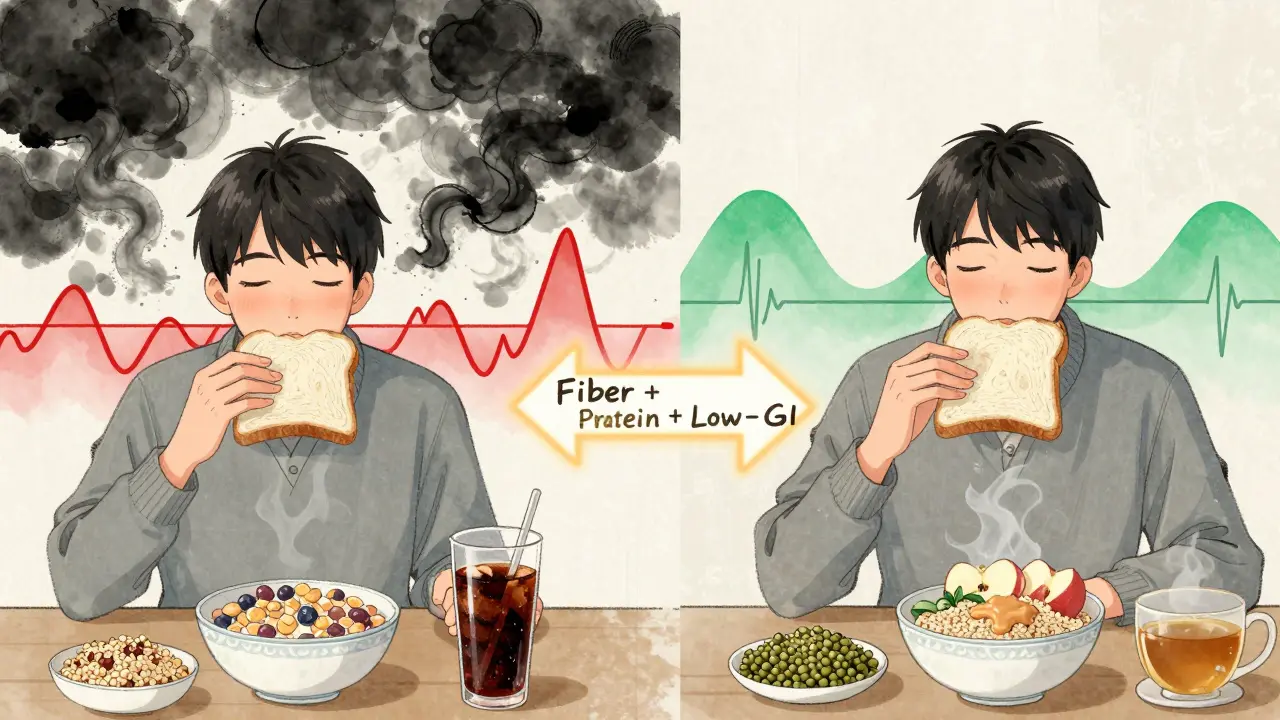
What a Real Day Looks Like
You don’t need to become a chef. Just make simple swaps.- Breakfast: Steel-cut oats topped with 1/2 cup blueberries and 1 tablespoon almond butter. No sugar added. A boiled egg on the side.
- Lunch: Large salad with spinach, chickpeas, cherry tomatoes, cucumbers, and olive oil vinaigrette. Add grilled chicken or tofu.
- Snack: 1 small apple with 1 ounce of almonds. Or a cup of plain Greek yogurt with chia seeds.
- Dinner: Baked salmon, 1/2 cup quinoa, and steamed broccoli. Skip the white rice. Swap it.
- Drink: Water, herbal tea, or sparkling water with lime.
The Mediterranean Diet Isn’t Just a Trend
It’s the most studied eating plan for prediabetes. The Mediterranean diet isn’t about restrictions. It’s about what you eat more of: vegetables, fruits, beans, nuts, whole grains, fish, olive oil. And less of: processed foods, red meat, sugar, butter. The American Diabetes Association says it improves both blood sugar and heart health. That’s important because prediabetes often comes with high blood pressure and bad cholesterol. The Mediterranean pattern tackles both. You don’t need to eat Greek food every night. Use olive oil instead of butter. Add lentils to soups. Snack on walnuts. Have fish twice a week. That’s enough.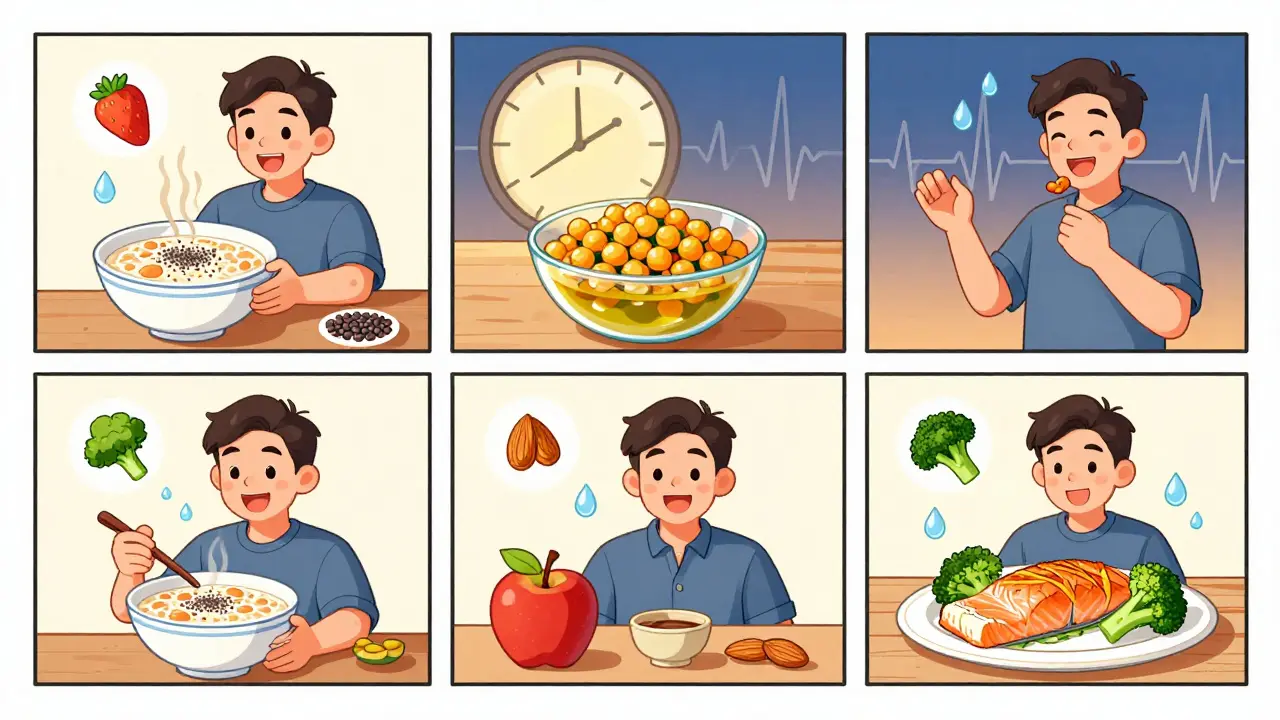
What to Avoid
Some foods are just not worth it.- White bread, white rice, pasta
- Sugary cereals
- Flavored yogurts (they’re loaded with sugar)
- Artificial sweeteners (they may train your brain to crave sweetness)
- Processed snacks: chips, cookies, crackers
- Added sugars-keep them under 10% of your daily calories
It’s Not About Perfection
You won’t get it right every time. That’s okay. What matters is the pattern over weeks and months. The Diabetes Prevention Program showed that people who lost 5-7% of their body weight and exercised 150 minutes a week cut their diabetes risk by 58%. You don’t need to lose 50 pounds. Lose 5-10 pounds if you’re overweight. That’s often enough to reverse prediabetes. Use the plate method: half plate non-starchy veggies, one-quarter lean protein, one-quarter whole grains or starchy veggies. No measuring cups needed. Just eyeball it.Why Most People Fail-and How to Succeed
A survey by Diabetes Victoria found that 42% of people struggled to eat enough vegetables. Another 68% had trouble with portion control. The fix? Make it easy.- Pre-chop veggies on Sunday. Store them in clear containers.
- Keep hard-boiled eggs and nuts in your bag for snacks.
- Buy frozen veggies. They’re just as nutritious, and they last.
- Don’t keep junk food in the house. Out of sight, out of mind.
- Track your meals for a week. Use a free app or just a notebook. You’ll see patterns.
Can I still eat fruit if I have prediabetes?
Yes, but choose wisely and watch portions. Berries, apples, pears, kiwi, and citrus fruits have low sugar and high fiber. Limit portions to 1 cup at a time. Always pair fruit with a protein or healthy fat-like nuts, yogurt, or cheese-to slow sugar absorption. Avoid juice and dried fruit, which are concentrated in sugar and lack fiber.
Do I need to count carbs?
Not necessarily. You don’t need to count every gram. Focus instead on food quality: choose high-fiber, low-GI carbs over refined ones. Use the plate method: half veggies, a quarter protein, a quarter whole grains. That’s simpler and more sustainable than counting. If you’re comfortable tracking, apps like MyFitnessPal can help you see trends over time.
Is the keto diet good for prediabetes?
Some people see short-term improvements in blood sugar on keto, but it’s not the best long-term solution. Cutting out entire food groups like whole grains and legumes means you miss out on fiber and plant-based nutrients that protect against diabetes. The Mediterranean diet and other balanced, fiber-rich plans have more evidence for lasting results. Keto can be hard to maintain, and it may raise LDL cholesterol in some people. Stick with what’s proven and sustainable.
How long until I see results from changing my diet?
You might notice less fatigue and fewer sugar crashes within a week. Blood sugar improvements often show up in 2-4 weeks. A1C levels-your long-term blood sugar marker-take about 3 months to change. That’s why consistency matters. Stick with the changes for at least 90 days before judging.
Should I take supplements like cinnamon or berberine?
Some studies suggest cinnamon or berberine might help, but they’re not replacements for food. The real power comes from eating more fiber, protein, and low-GI foods. Supplements aren’t regulated like medicine, and their effects vary. Focus on whole foods first. If you’re considering supplements, talk to your doctor. They’re not necessary for most people who eat well.
What works for one person might not work for another. But the basics? They’re universal. More fiber. Better protein. Lower-GI carbs. Cut out the junk. Stay consistent. You’re not just eating to avoid diabetes. You’re eating to feel better, sleep better, and live longer.