
Why Air Pollution Makes Asthma Worse
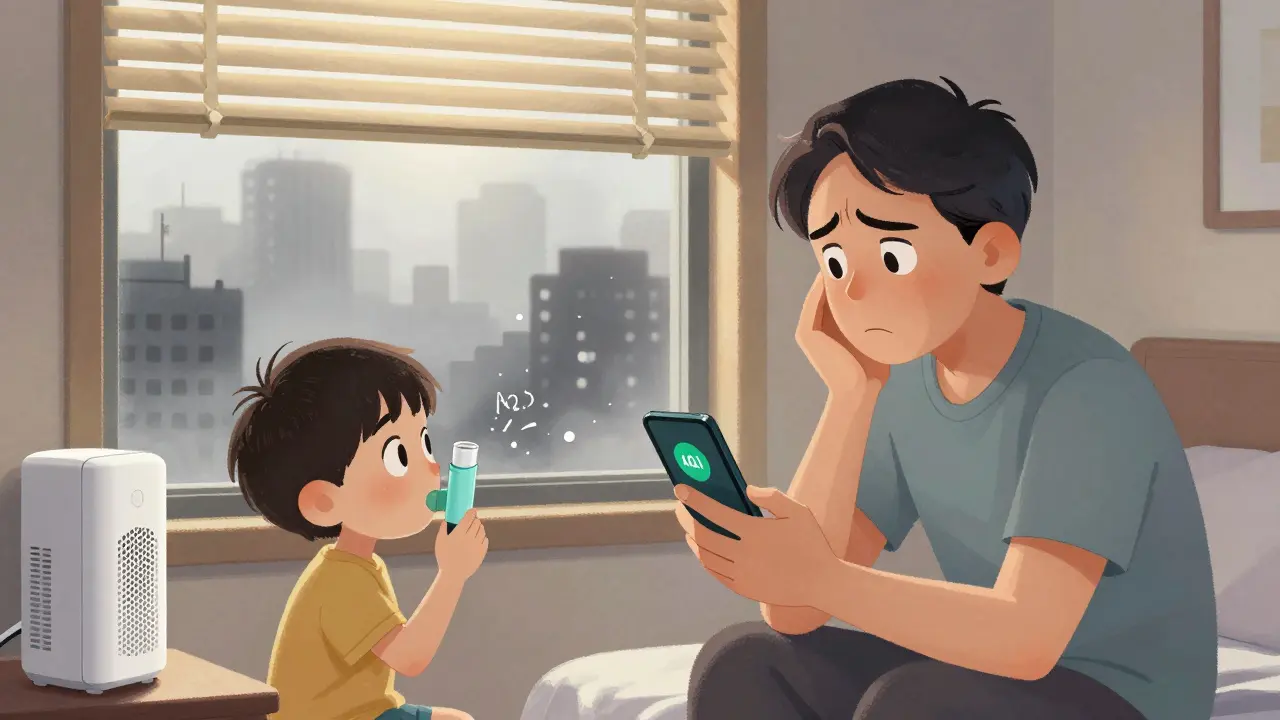
If you or someone you care about has asthma, you’ve probably noticed that symptoms flare up on certain days-especially when the air feels thick, hazy, or smells like smoke. That’s not coincidence. Air pollution directly irritates the lungs, triggering inflammation, tightening airways, and forcing people to reach for their inhalers more often. According to the Global Asthma Report, over 339 million people worldwide live with asthma, and air pollution is a major reason why so many struggle to keep it under control.
Outdoor pollutants like PM2.5 (tiny particles from vehicle exhaust, wildfires, and factories), nitrogen dioxide (NO2) from traffic, ozone (O3) on hot days, and sulfur dioxide (SO2) from industrial sites don’t just hang in the air-they get inside your lungs and set off a chain reaction. A 2024 study found that during periods of cleaner air, like during pandemic lockdowns, asthma patients saw their symptom control scores jump by nearly 14%. That’s not a small change. It means fewer emergency visits, less nighttime coughing, and more days where you can breathe without thinking about it.
Check the Air Quality Index (AQI) Before You Go Outside
You don’t need to guess whether it’s safe to take a walk or let your kid play outside. The Air Quality Index (AQI) tells you exactly what’s in the air-and what level of risk you’re facing. The U.S. Environmental Protection Agency (EPA) rates air quality on a scale from 0 to 500. Here’s what you should do based on the number:
- AQI 51-100 (Moderate): Sensitive groups, including asthma patients, should cut back on long or heavy outdoor activity.
- AQI 101-150 (Unhealthy for Sensitive Groups): Everyone with asthma should limit time outside, especially during exercise.
- AQI 151-200 (Unhealthy): Avoid prolonged outdoor activity. Even short walks can trigger symptoms.
- AQI 201-300 (Very Unhealthy): Stay indoors. No exceptions.
Apps like AirVisual, Plume Labs, or the EPA’s AirNow.gov give real-time updates. One user in Melbourne told us she reduced her daughter’s rescue inhaler use by nearly half after starting to check the AQI every morning before school. It’s simple, free, and works.
Improve Indoor Air with HEPA Filters
Most people think staying inside protects them from pollution-but that’s not always true. During wildfire season or heavy traffic days, outdoor pollutants seep into homes through open windows, doors, and even tiny cracks. Studies show indoor PM2.5 levels can reach 60-80% of outdoor levels within an hour, even with windows shut.
That’s where HEPA filters come in. A true HEPA filter captures 99.97% of particles as small as 0.3 microns-exactly the size of the worst asthma triggers. For best results, look for a unit with a Clean Air Delivery Rate (CADR) that’s at least two-thirds of your room’s square footage. For a 300-square-foot bedroom, pick a purifier with a CADR of 200 or higher.
Don’t just buy any filter. Check the MERV rating on your HVAC system. If it’s 13 or higher, you’re already filtering out most fine particles. If you’re using a portable unit, place it in the center of the room, not against a wall. Seventy-two percent of people place them wrong, cutting effectiveness by up to half. And replace the filter every 3-6 months. Only 43% of owners do this on time, which means many filters become useless-or even spread dust back into the air.
Smart School and Workplace Changes
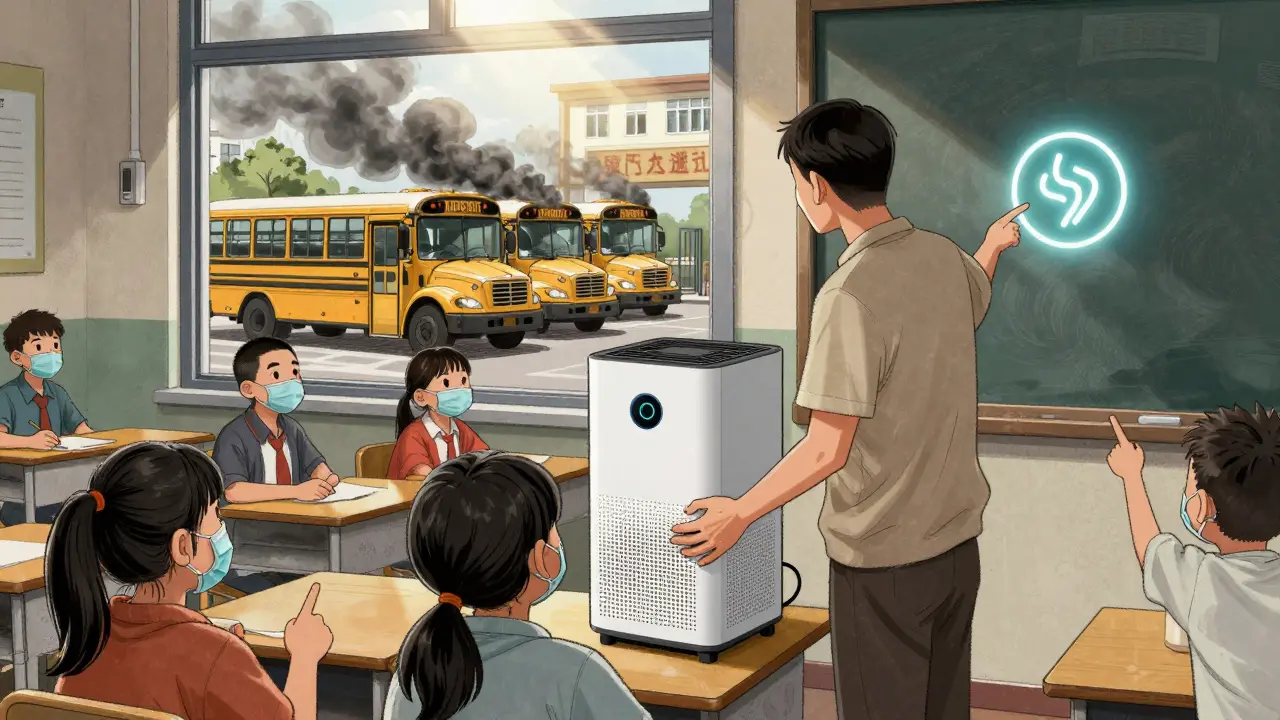
For parents, the biggest pollution exposure often happens at school. Bus idling near playgrounds, classrooms near busy roads, and poor ventilation systems can turn school into a daily asthma trigger. But change is possible-and it’s working.
In Massachusetts, schools that moved bus drop-off zones away from entrances and banned idling saw indoor PM2.5 drop by 22-35%. Asthma-related absences fell by 41%. Similar programs in Los Angeles, after switching to electric school buses, cut indoor pollution near bus depots by 35%.
Workplaces matter too. If you work outdoors or in a warehouse, talk to your employer about OSHA guidelines: keep indoor humidity between 30-50% to prevent mold and dust mites, and install proper ventilation. Even small changes-like turning off the HVAC system during rush hour or installing a portable HEPA unit in your workspace-can make a difference.
What About N95 Masks?
When smoke fills the air, you might think an N95 mask is your best defense. And technically, it filters 95% of particles. But here’s the catch: it only works if it fits perfectly. Most adults don’t wear them right. Kids? Forget it. They move, fidget, and breathe through their mouths. Dr. John Balmes from UCSF warns that masks can give a false sense of safety, especially for children.
They’re useful in short bursts-like walking to the car during a wildfire event-but not for all-day use. If you’re going to use one, make sure it’s NIOSH-approved, has two straps (not ear loops), and you’ve done a seal check. And never rely on them as your only strategy. They’re a temporary fix, not a long-term solution.
Policy Matters More Than You Think
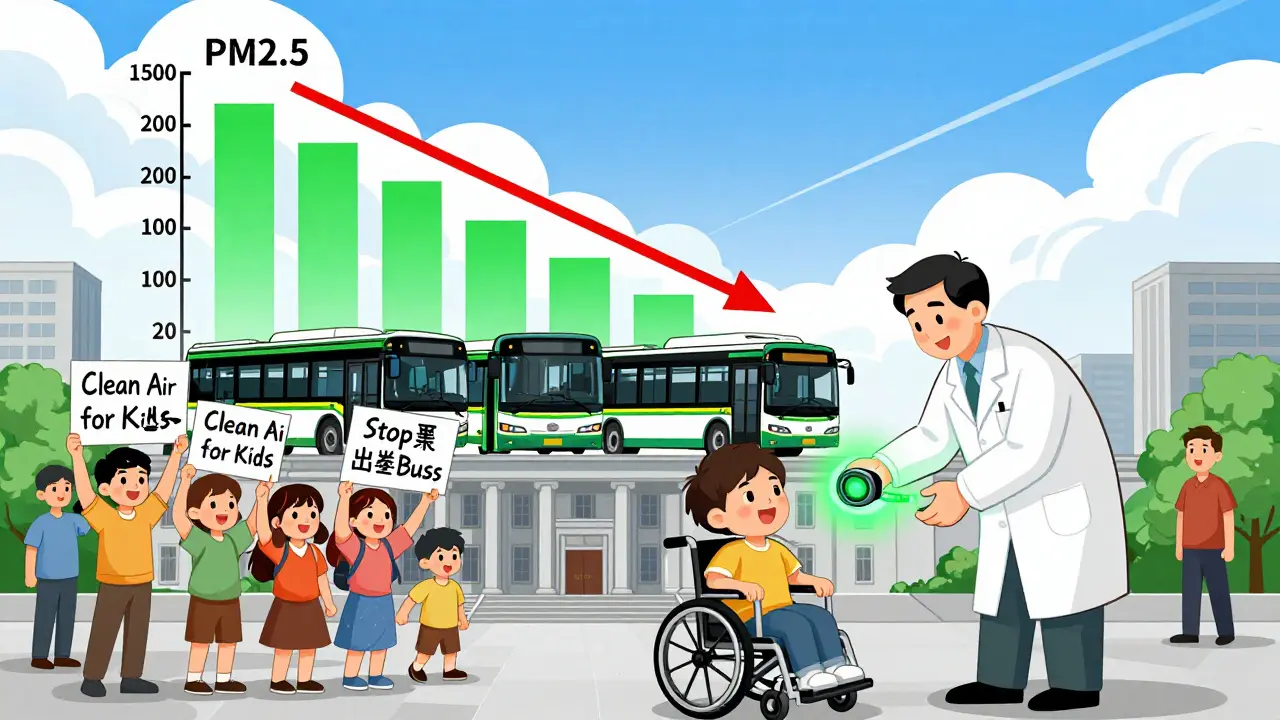
Individual actions help-but they can’t fix what’s broken at the source. The EPA’s current annual PM2.5 standard is 12 μg/m³. But the American Thoracic Society says it should be 8 μg/m³ to truly protect people with asthma. A 2022 study found that for every 10 μg/m³ drop in PM2.5, childhood asthma emergency visits fell by 4.2%.
That’s why policy changes are critical. Cities like London cut childhood asthma hospitalizations by nearly 12% after launching their Ultra Low Emission Zone. California is replacing every diesel school bus with electric ones by 2035. New school buildings are now required to be at least 500 feet from major roads in 47 U.S. cities.
These aren’t just environmental wins-they’re public health wins. The American Lung Association estimates that stricter emissions rules could prevent 1.7 million asthma attacks in the U.S. every year. That’s not a guess. That’s data.
Real People, Real Results
One dad in Ohio switched to an electric car and started using a HEPA filter in his son’s room. Within three months, his son’s nighttime coughing dropped from almost every night to once a week. A teacher in Portland installed a portable purifier in her classroom after noticing students wheezing during outdoor recess. Attendance improved. No more emergency calls to the nurse.
But not everyone can afford a $700 air purifier or quit their job to avoid pollution. A 2022 survey found that 68% of asthma patients check air quality, but only 32% change their behavior-because of work, childcare, or lack of money. That’s why policy changes are so important. Personal effort helps. Systemic change saves lives.
What You Can Do Today
- Download a free AQI app and check it before leaving the house.
- Run your HVAC on recirculate mode during high pollution days.
- Place a HEPA filter in your bedroom or main living area.
- Ask your child’s school if they have anti-idling policies or clean air plans.
- Call your local council and ask what they’re doing to reduce traffic pollution near schools and parks.
You don’t need to do everything at once. Start with one thing. Check the air quality tomorrow morning. That’s it. Then add one more step next week. Small actions, repeated, create real change.
Looking Ahead
The future of asthma management isn’t just about inhalers and pills. It’s about clean air. Researchers are now testing wearable sensors that alert kids with asthma when pollution spikes-sending alerts to their parents’ phones. The NIH is funding projects to link air quality data directly to electronic health records, so doctors can see pollution exposure as part of every patient’s history.
But none of this matters if we don’t keep pushing for cleaner air. Climate change is making ozone levels worse. Without stronger regulations, asthma cases could rise 10-15% by 2050. The tools to fix this exist. We just need to use them-and demand more from those in power.
Can air pollution cause asthma in children who didn’t have it before?
Yes. A 2019 study in The Lancet Planetary Health found that air pollution contributes to about 4 million new cases of pediatric asthma every year worldwide. Children exposed to high levels of NO2 and PM2.5, especially near busy roads, are more likely to develop asthma, even if they have no family history. Pollution doesn’t just worsen existing asthma-it can trigger it in healthy kids.
Are air purifiers worth the cost?
For many families, yes. A 2021 Johns Hopkins study showed HEPA filters reduce indoor PM2.5 by 55-67%. One user reported cutting her inhaler use from 4-5 times a week to just 1-2 times after buying a Coway Airmega 400. While units range from $50 to $800, even a mid-range model ($200-$400) can make a measurable difference in symptoms. The real cost isn’t the machine-it’s the missed school days, ER visits, and sleepless nights you avoid.
Does closing windows really help during high pollution days?
It helps, but not enough on its own. Closing windows reduces pollution entering your home, but studies show indoor levels still reach 60-80% of outdoor levels within an hour during wildfires or heavy smog. To make a real difference, combine closed windows with a HEPA air purifier and HVAC set to recirculate mode. Otherwise, you’re just delaying exposure.
How do I know if my HEPA filter is still working?
Most filters have a replacement indicator, but they’re not always accurate. A better way: check the filter every 3 months. If it’s dark gray or clogged with dust, replace it. Also, if you notice your symptoms returning after months of improvement, your filter might be spent. Consumer Reports found that 57% of users don’t replace filters on time, which turns them into dust reservoirs instead of cleaners.
Can I rely on my smartphone’s air quality app?
Yes-if it pulls data from official sources like the EPA’s AirNow or government air monitoring stations. Apps like AirVisual, Plume, and BreezoMeter use real-time government sensors. Avoid apps that guess pollution levels based on weather or traffic alone. Accuracy matters. A 2024 study showed that people who used reliable apps improved their Asthma Control Test scores significantly over 8 weeks.
Final Thoughts
Asthma doesn’t have to be a daily battle against the air you breathe. The science is clear: reducing exposure to pollution-through personal choices, smarter environments, and stronger policies-works. You don’t need to fix everything at once. Start with one step: check the air quality tomorrow. Then take another next week. Together, small actions add up to cleaner lungs and better lives.




Adam Rivera
January 13, 2026 AT 08:35Acacia Hendrix
January 13, 2026 AT 21:10lucy cooke
January 14, 2026 AT 00:04John Pope
January 14, 2026 AT 22:04Kimberly Mitchell
January 16, 2026 AT 19:20Vinaypriy Wane
January 18, 2026 AT 15:56Diana Campos Ortiz
January 20, 2026 AT 04:54Jesse Ibarra
January 21, 2026 AT 10:05laura Drever
January 22, 2026 AT 10:05Randall Little
January 23, 2026 AT 19:23jefferson fernandes
January 25, 2026 AT 03:54James Castner
January 26, 2026 AT 10:19Rosalee Vanness
January 26, 2026 AT 18:27