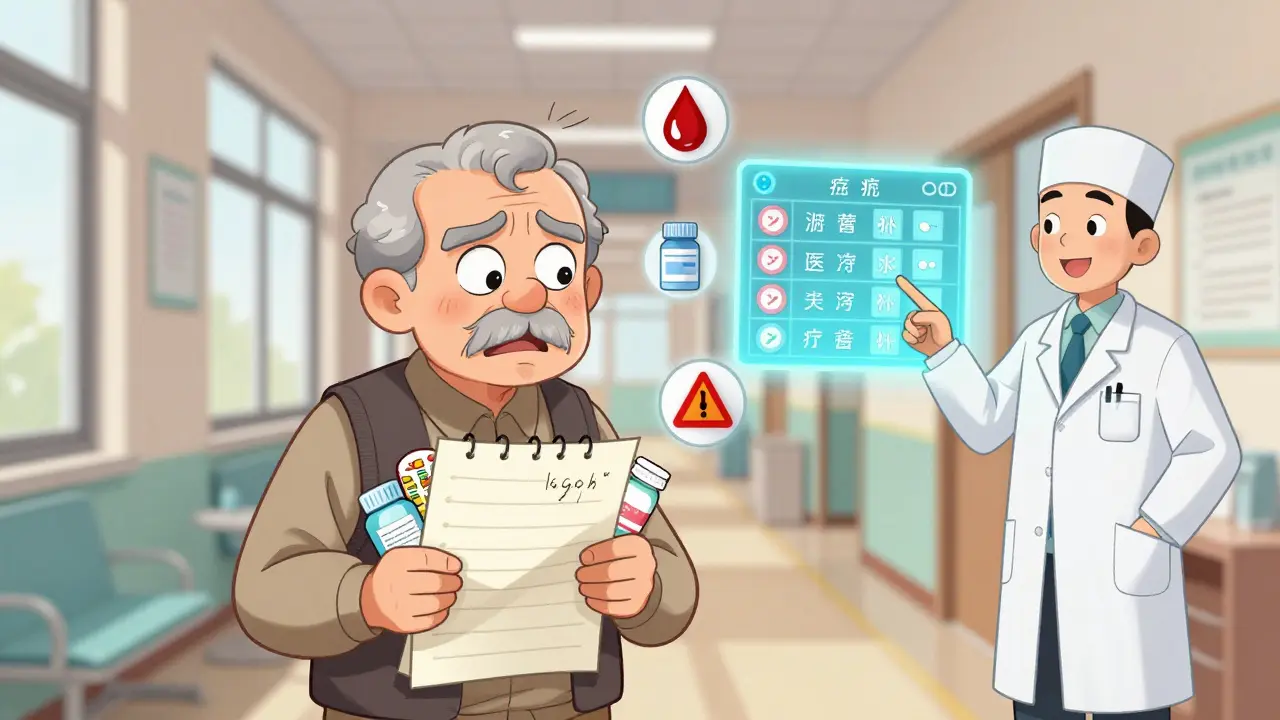
When you leave the hospital, your medication list changes. Maybe you stopped taking blood pressure pills because your numbers improved. Maybe you started a new antibiotic. Maybe your doctor cut your diabetes dose. All of this happens fast - and it’s easy to miss. The problem? Medication reconciliation - the process of comparing your hospital discharge list with your home meds - is one of the most overlooked steps in patient care. And it’s not just a paperwork chore. Getting it wrong can land you back in the hospital.
Studies show that 30% to 70% of patients leave the hospital with a medication error. That means your list at discharge doesn’t match what you were taking before, or what you should be taking now. And 18% to 50% of those mistakes cause harm in the first 30 days after you go home. One common example: a patient gets off blood thinners during hospitalization for surgery, but no one tells them to restart it. Weeks later, they have a stroke. That’s not rare. It’s predictable. And it’s preventable.
What Medication Reconciliation Actually Means
Medication reconciliation isn’t just reviewing your pills. It’s a formal process defined by the National Quality Forum (NQF 0097) and required by Medicare. It means comparing three things: what you were taking before admission, what you were given in the hospital, and what you’re supposed to take when you go home. The goal? Catch the gaps, the overlaps, the wrong doses.
The Centers for Medicare & Medicaid Services (CMS) says this must happen within 30 days of discharge. But here’s the catch: it doesn’t require a doctor’s visit. You can do it over the phone. Or via video call. Or through a pharmacist. The key is documentation. The provider must show they looked at both lists - your old meds and your new discharge meds - and confirmed what’s correct.
There are two official ways this happens:
- CPT II code 1111F: This is for documentation only. No visit needed. Your PCP or pharmacist writes in your chart: "Discharge meds reviewed and reconciled." That’s it. No charge to you.
- CPT codes 99495 or 99496: These are for a full Transition of Care (TRC) visit. You show up in person. The provider spends 30 minutes or more reviewing meds, checking adherence, answering questions. This gets billed and reimbursed. But here’s the rule: only one TRC visit can be billed per hospital stay. Your primary doctor and your cardiologist can’t both bill for it.
That’s where things get messy. Specialists focus on their area - your heart, your kidneys, your joints. They don’t always look at your full med list. Your primary care doctor might not know what was changed in the hospital. The result? Confusion. Double dosing. Missing meds. That’s why pharmacist-led reconciliation works better.
Why Pharmacists Are the Secret Weapon
A 2023 study in the Journal of the American College of Clinical Pharmacy looked at over 12,000 patients. When pharmacists led the reconciliation process, medication errors dropped by 32.7%. Hospital readmissions fell by 28.3%. Those aren’t small numbers. They’re life-changing.
Why do pharmacists win? Because they’re trained to dig. They don’t just ask, "Are you taking your pills?" They ask: "Did you fill that prescription?" "Did the pharmacy tell you to take it with food?" "Are you still taking that old blood thinner your doctor said to stop?" They check your pharmacy fill history. They call your home. They talk to caregivers. They use electronic records from multiple systems - not just one hospital’s chart.
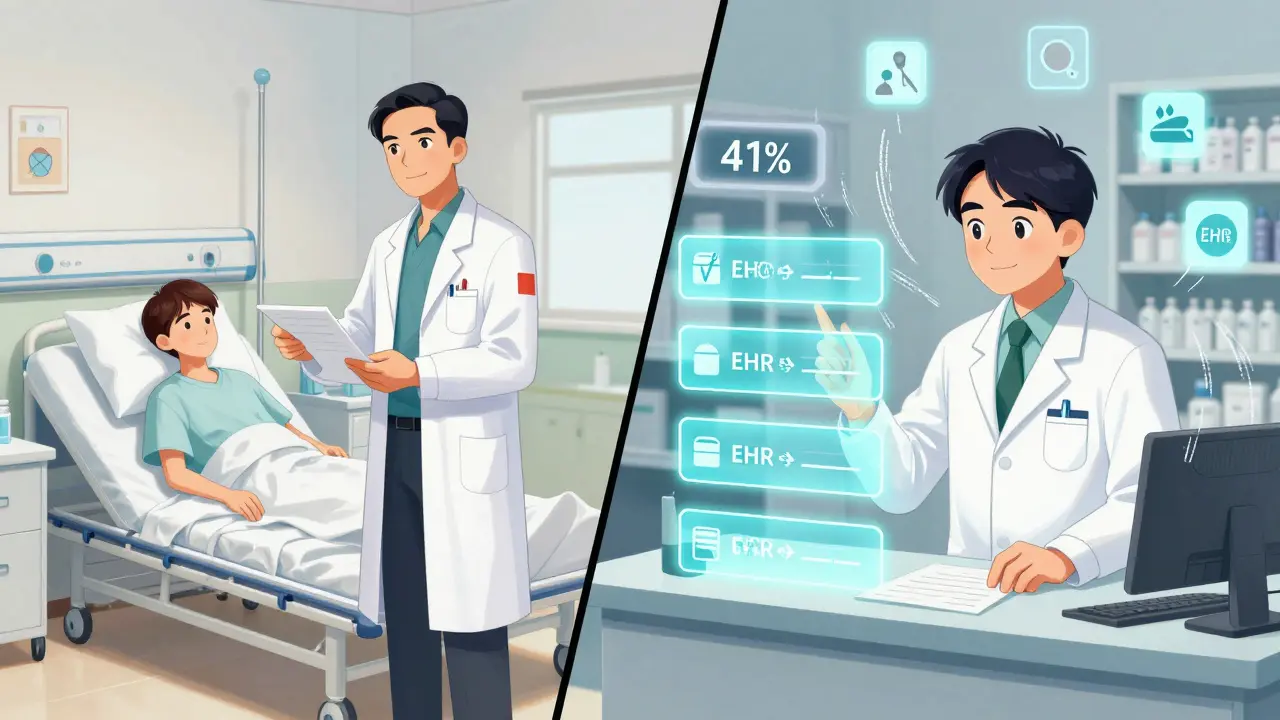
One model, called PipelineRx, combines three sources: your pharmacy records, your provider’s EHR, and direct patient interviews. They found this method improves accuracy by 41% compared to just relying on what the hospital wrote down. That’s huge. Hospitals often get it wrong. A 2022 AHRQ survey found 68% of hospitals had fragmented EHRs - meaning discharge instructions didn’t sync with your primary care system. Pharmacists bridge that gap.
What You Need to Do Before You Leave the Hospital
You can’t wait until you get home to fix this. Start the process before discharge.
- Bring your complete med list. Not just what’s in your pillbox. Include vitamins, supplements, eye drops, creams, herbal teas - everything. Write it down. Even if you think it’s "not important."
- Ask for a written discharge summary. Don’t just take a verbal explanation. Get it in writing. Make sure it says: "Medications reconciled. Changes highlighted."
- Request a pharmacist consult. Ask your nurse: "Can I speak with the clinical pharmacist before I leave?" Many hospitals have them on staff. They’ll walk you through every change.
- Take a picture of your discharge meds. Snap a photo of the prescription labels. Or write them down. You’ll need this when you see your doctor next week.
- Set a reminder. Mark your calendar: "Call my PCP on Day 3 after discharge to confirm meds." Don’t wait for them to call you.
What Happens After You Get Home
You got home. You filled your prescriptions. You’re feeling better. But now you’re confused. Why are you taking two blood pressure pills? Why did they take away your statin? Did they forget to give you your insulin?
Here’s what to do:
- Call your primary care provider within 72 hours. Don’t wait for your 2-week follow-up. Say: "I just got out of the hospital. I need to go over my meds." If they don’t have time, ask for the nurse or pharmacist.
- Don’t assume your pharmacy knows. Pharmacists can’t see your hospital records. They only see what was prescribed. If your discharge list says "Stop metformin," but your home list says "Take 1000mg twice daily," your pharmacy will fill the new script - and you’ll be at risk.
- Use a med organizer. A pillbox with days and times helps. But better yet, use a free app like Medisafe or MyTherapy. They send reminders and let you log whether you took the pill. That data can be shared with your provider.
- Watch for red flags. Dizziness. Confusion. Nausea. Swelling. Unexplained bruising. These aren’t "just side effects." They might mean a drug interaction or missed dose. Call your provider immediately.
Why This Matters More Than You Think
This isn’t just about avoiding mistakes. It’s about money. The U.S. healthcare system spends $21.4 billion a year on hospital readmissions caused by medication errors. CMS penalizes hospitals for high readmission rates. And starting in 2025, doctors who don’t report medication reconciliation may lose up to 9% of their Medicare payments.
But the real cost isn’t financial. It’s human. A 2022 study in JAMA Internal Medicine found that hospitals with embedded pharmacists in discharge teams reduced medication discrepancies by 37%. That means fewer ER trips. Fewer ICU stays. Fewer deaths.
And it’s not just for seniors. This matters for anyone with chronic conditions - diabetes, heart failure, COPD, depression, epilepsy. If you’re on more than three medications, you’re at higher risk. If you’re on a blood thinner, anticoagulant, or insulin, you’re in the danger zone.
What’s Changing in 2026
By 2026, 75% of hospitals are expected to have pharmacist-led discharge reconciliation programs - up from 48% in 2023. Why? Because it works. And because CMS is pushing harder.
New tools are coming. AI systems now scan EHRs and flag potential mismatches with 87% accuracy. Patient apps let you update your med list in real time. Some Medicare Advantage plans now cover full medication therapy management - meaning a pharmacist calls you weekly after discharge to make sure you’re on track.
But the most important tool is still you. No app replaces a conversation. No algorithm replaces asking: "Why did they change this?"
Quick Summary
- Medication reconciliation is a required step after hospital discharge - not optional.
- Errors happen in 30-70% of cases. Many lead to hospital readmissions.
- Pharmacists reduce errors by over 30% and readmissions by nearly 30%.
- Always bring your full med list to the hospital - including supplements.
- Call your primary care provider within 72 hours of discharge to confirm meds.
What if I don’t have a primary care doctor after discharge?
If you don’t have a PCP, contact your hospital’s discharge planner. They can connect you with a community health center or a telehealth provider. Many states now offer free post-discharge medication checks through public health programs. You can also call your local pharmacy - many offer free med reviews. Don’t wait. The first 72 hours after discharge are the most critical.
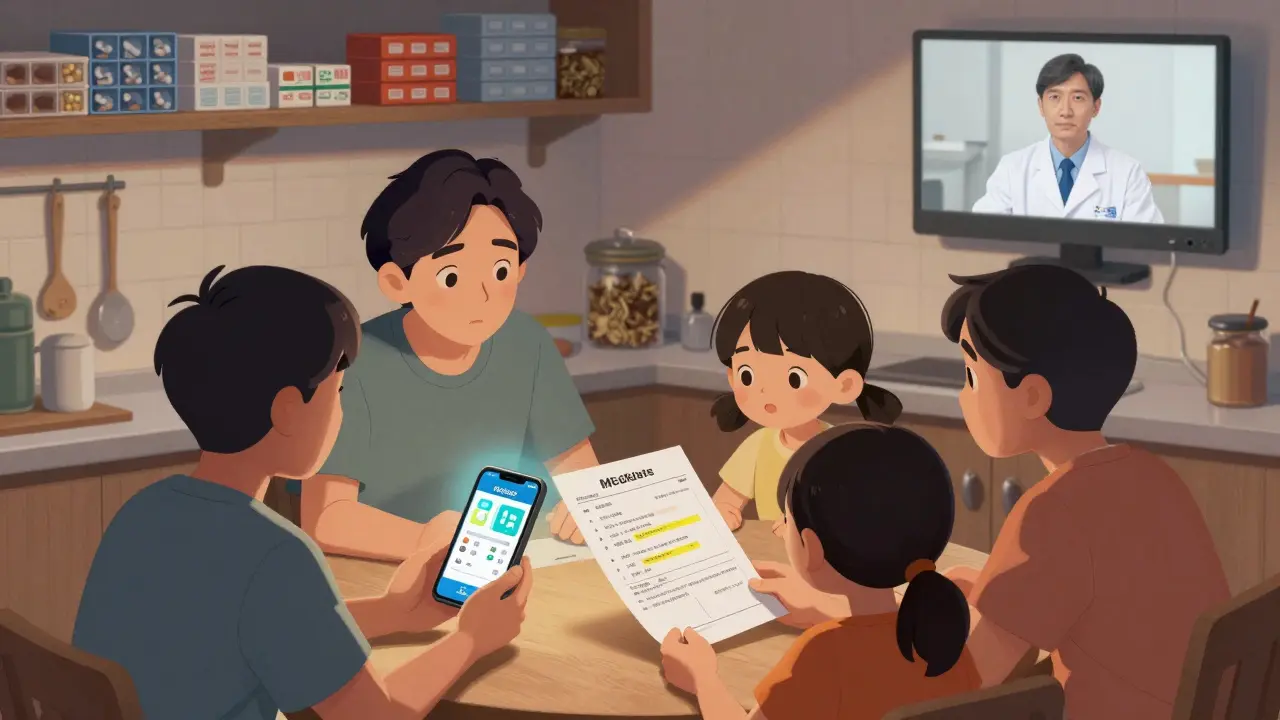
Can my family member help with medication reconciliation?
Yes - and they should. Family members often notice changes you miss. If someone helps you take meds, have them join your phone call with your provider. Ask the provider to explain each change out loud. Write down the reasons: "Stopped because of kidney function," "Increased dose because of high blood sugar." Keep a printed copy. Many patients forget what was said - even if they’re the ones who took the pills.
What if I can’t afford my new prescriptions after discharge?
Don’t skip doses. Instead, ask your pharmacist or provider about patient assistance programs. Many drugmakers offer free or low-cost meds for those who qualify. Pharmacies like CVS and Walgreens have discount cards for common drugs. Some hospitals have social workers who help with medication costs. The key is to speak up before you run out. Running out of insulin or blood pressure meds is more dangerous than not taking them at all.
Do I need to reconcile meds if I was only in the hospital for one day?
Yes. Even short stays change your meds. A one-day surgery might mean you stopped your blood thinner. A 24-hour observation for chest pain might mean you started a new beta blocker. The length of stay doesn’t matter. What matters is whether your medication list changed. If it did, reconciliation is needed.
What’s the difference between medication reconciliation and a med review?
A med review is general - like when your pharmacist checks your pills once a year. Medication reconciliation is specific: it’s comparing your discharge list with your home list after a hospital stay. It’s time-sensitive (must happen within 30 days), requires documentation, and is tied to quality metrics and billing. It’s not optional. It’s a safety protocol.
Coordination doesn’t happen by accident. It happens because someone - a pharmacist, a nurse, a family member, or you - takes the time to make sure the pieces fit. Don’t assume it’s being handled. Ask. Confirm. Document. Your life depends on it.