

Living with celiac disease isn’t just about avoiding bread or pasta. It’s about relearning how to eat, how to survive in a world built on wheat, and how to heal your body from the inside out. If you’ve been diagnosed, you’re not alone-about 1 in 100 people worldwide have it. But here’s the truth most doctors don’t tell you: gluten-free doesn’t automatically mean healthy. Many people stay tired, bloated, or anemic even after cutting out gluten-not because they’re cheating, but because they’re missing key nutrients their bodies desperately need.
What Happens When You Eat Gluten With Celiac Disease
Your immune system doesn’t just dislike gluten-it attacks your own small intestine. Every bite of wheat, barley, or rye triggers inflammation that flattens the tiny finger-like projections (villi) responsible for absorbing nutrients. This isn’t a mild allergy. It’s an autoimmune war inside your gut. Left unchecked, it leads to malnutrition, bone loss, anemia, and even rare cancers. The damage isn’t always obvious. Some people have diarrhea and weight loss. Others have brain fog, joint pain, or missed periods. That’s why celiac disease is often misdiagnosed as IBS, depression, or chronic fatigue.The Only Real Treatment: Total Gluten Elimination
There’s no pill, no shot, no miracle cure. The only proven treatment is 100% gluten-free living-for life. That means no bread, no pasta, no beer, no soy sauce unless it’s labeled gluten-free, and no hidden gluten in medications or supplements. The FDA requires products labeled “gluten-free” to contain less than 20 parts per million (ppm) of gluten. That’s tiny, but enough to cause damage in sensitive people. Studies show that just 50mg of gluten a day-about the size of a crumb-can stop healing in half of patients.What Foods Are Actually Safe?
You’re not stuck eating plain rice and chicken. Safe options include: amaranth, buckwheat, quinoa, millet, teff, corn, rice, potatoes, flax, chia, certified gluten-free oats, and all fresh fruits, vegetables, meats, and dairy. Certified gluten-free oats are safe for 95% of people, but start slow-only 50g per day at first. Watch for bloating or fatigue. If it happens, stop. That 5% who can’t tolerate oats? They’re not being picky. Their immune systems react even to trace gluten in processing.The Hidden Nutrient Crisis
Most people with celiac disease are deficient in at least one nutrient when diagnosed. Why? Because their gut has been damaged for years. Iron deficiency anemia hits 12-63% of newly diagnosed adults. Vitamin D levels are low in 37-75%. Calcium is lacking in 25-40%. B vitamins, especially folate and B12, are often depleted. Magnesium and zinc are common too. These aren’t random gaps-they’re direct results of your intestine’s inability to absorb.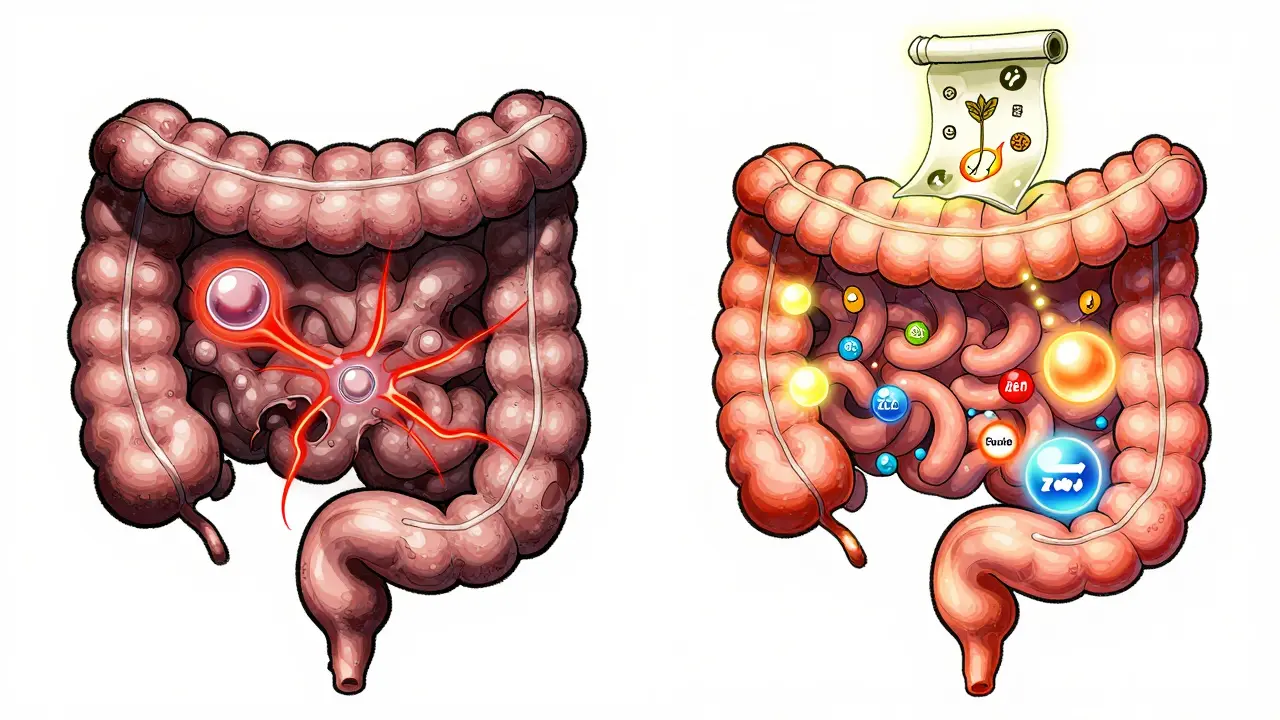
What to Supplement-and How Much
Supplements aren’t optional. They’re repair tools. Here’s what most people need, based on clinical guidelines:- Iron: 18mg daily for women, 8mg for men. If you’re anemic, your doctor may prescribe higher doses or IV iron. Oral iron can cause constipation-take it with vitamin C to boost absorption.
- Calcium: 1,000-1,200mg daily. Don’t rely on dairy alone. Many dairy products are fortified, but if you’re lactose intolerant (common with celiac), get calcium from leafy greens, almonds, or supplements.
- Vitamin D: 600-800 IU daily, but most people need 1,000-2,000 IU to correct deficiency. Get your blood level checked. If it’s below 30 ng/mL, your doctor may prescribe 5,000 IU daily for 3 months.
- B12: 250-500mcg daily. Sublingual (under-the-tongue) forms work best if your gut is still healing. Some need monthly injections.
- Folate: 400mcg daily. Avoid synthetic folic acid-look for methylfolate instead. It’s easier for your body to use.
- Magnesium: 400mg daily. Helps with muscle cramps, sleep, and nerve function. Glycinate or citrate are gentle forms.
Why You Might Still Feel Sick After Going Gluten-Free
If you’re doing everything right but still feel awful, you’re not crazy. About 30% of people continue to have symptoms despite a strict diet. Why? Three big reasons:- Hidden gluten: Cross-contamination is everywhere. A shared toaster, a knife used on regular bread, soy sauce in a stir-fry, or even lipstick with wheat derivatives can trigger a reaction.
- Other food intolerances: Damaged guts often develop sensitivities to dairy, soy, or FODMAPs. A low-FODMAP diet for 4-6 weeks can help reset things.
- Slow healing: It can take 2-3 years for your gut to fully recover. Some adults never regain complete villi structure. That’s why follow-up testing matters.
Getting Your Gut Checked
Don’t just assume you’re “doing fine.” Get tested. At 3 months, check your tTG-IgA antibody levels. If they’re still high, you’re still being exposed to gluten. At 6 months, get a full nutrient panel: iron, ferritin, vitamin D, B12, folate, calcium, zinc, and magnesium. After a year, get a bone density scan (DXA). Most people see improvement within 1-2 years of strict dieting. But if you’re still deficient after 12 months? That’s a red flag. You need more than diet-you need targeted supplementation and possibly IV therapy.
Practical Tips for Real-Life Living
- Read labels like a detective. “Wheat-free” doesn’t mean gluten-free. Watch for malt, hydrolyzed wheat protein, and modified food starch. - Use a dedicated gluten-free toaster. Even crumbs from regular bread can cause damage. Same for cutting boards and utensils. - Carry a restaurant card. The Celiac Disease Foundation offers free cards in 30+ languages explaining your needs clearly. - Check your meds. About 30% of prescription pills use gluten as a filler. Use the University of Chicago’s Gluten-Free Drug Database to verify. - Buy certified gluten-free oats. Not all oats are created equal. Look for the “Certified Gluten-Free” seal. - Join a support group. Reddit’s r/celiac has over 1 million members. You’ll learn what no doctor will tell you-like which brands of gluten-free pasta actually taste good.The Cost of Going Gluten-Free
Let’s be real: gluten-free food costs more. Bread? 159% pricier than regular. Cereal? Up to 200% more. A 2024 Consumer Reports study found gluten-free products average $5.99 per pound versus $2.31 for regular. That’s a financial burden. But here’s the flip side: skipping supplements and ignoring deficiencies costs more long-term. Bone fractures, anemia treatments, hospital visits-all add up. Investing in good food and targeted supplements now saves you money and pain later.What’s Next? The Future of Celiac Care
Science is moving fast. In 2025, new tests like epithelial lymphogram analysis can detect gut damage without a biopsy. Sensors like the Nima device can scan your food for gluten in seconds. Enzyme therapies and vaccines are in trials. But none of these are ready yet. Right now, your best defense is still: no gluten, full nutrition, and regular check-ups.Final Reality Check
Celiac disease isn’t a trend. It’s a lifelong condition with serious consequences if ignored. But it’s also manageable. People who stick to the diet, test regularly, and supplement wisely live full, healthy lives. They travel, eat out, have kids, and thrive. It’s not easy-but it’s possible. You don’t need to be perfect. You just need to be consistent. One meal at a time. One supplement at a time. One check-up at a time.Can I ever eat gluten again if my symptoms go away?
No. Even if you feel fine, eating gluten will keep damaging your intestines and raise your risk for long-term complications like osteoporosis, infertility, and intestinal lymphoma. Celiac disease doesn’t go away-it just becomes silent. Sticking to a strict gluten-free diet is the only way to protect your health.
Are gluten-free oats safe for everyone with celiac disease?
Most people (95%) can safely eat certified gluten-free oats, but 5% develop a reaction. Start with small amounts-no more than 50g per day-and watch for bloating, fatigue, or diarrhea. If symptoms appear, stop. Always choose oats labeled “certified gluten-free,” because regular oats are often cross-contaminated during growing or processing.
Why am I still anemic after going gluten-free and taking iron?
Your gut may still be healing, so oral iron isn’t absorbing well. You might need a higher dose, a different form (like ferrous bisglycinate), or even an IV infusion. Also, check your vitamin C intake-it helps iron absorption. And rule out hidden gluten exposure, which can keep inflammation going and block nutrient uptake.
Do I need to take supplements forever?
Not necessarily. Most people need supplements for 6-18 months while their gut heals. After that, you can often switch to a balanced gluten-free diet rich in whole foods. But some-especially those with long-standing damage or other health issues-may need ongoing support. Get blood tests every year to see what you still need.
Can children with celiac disease grow normally on a gluten-free diet?
Yes-absolutely. Most children catch up in growth within 6-12 months of starting a strict gluten-free diet and proper supplementation. Pediatricians monitor height, weight, and bone age closely. Early diagnosis and nutrition support are key. Without treatment, celiac disease can cause permanent stunting and developmental delays.
Is it safe to eat at restaurants with celiac disease?
It’s risky, but possible. Only 28% of U.S. restaurants have verified gluten-free protocols. Always call ahead, ask about dedicated fryers and prep areas, and use a restaurant card. Avoid fried foods unless they’re cooked in a dedicated fryer. Stick to simple dishes like grilled meat, steamed veggies, and rice. When in doubt, don’t eat it.



Amy Ehinger
January 14, 2026 AT 15:04So many people think going gluten-free is just swapping bread for fancy gluten-free loaves, but this post nails it-real healing takes more than just removing wheat. I’ve been gluten-free for six years and still had brain fog until I started testing my vitamin D and B12. Turns out I was severely deficient, and no one ever told me to check. Now I take methylfolate and sublingual B12 daily, and my energy is finally stable. It’s not glamorous, but it works.
Also, certified oats? Game changer. I started with 25g a day and slowly worked up. No bloating. No fatigue. Just peace of mind.
And yes, cross-contamination is everywhere. I have a separate toaster, cutting board, and even a labeled gluten-free spatula. My partner thinks I’m obsessive. I call it survival.
One thing I wish more doctors said: healing takes time. Two years for me. Don’t give up if you don’t feel better in six months. Your gut isn’t broken-it’s just rebuilding.
Nicholas Urmaza
January 15, 2026 AT 00:33Gluten-free doesn’t mean healthy and that’s the lie they sell you. I’ve seen people eat nothing but gluten-free chips and soda and wonder why they’re still tired. It’s not the gluten anymore-it’s the processed crap they replace it with.
Supplements aren’t optional. They’re mandatory. If you’re not taking iron with vitamin C, you’re wasting your time. If you’re not checking your ferritin, you’re playing Russian roulette with your bones.
And yes, the cost is insane. But compare that to a hip fracture at 45 because your vitamin D was below 15. You do the math.
Stop treating this like a diet. Treat it like a medical condition. Because it is.
Amy Vickberg
January 15, 2026 AT 11:36I’m so glad someone finally said this out loud. I was misdiagnosed for eight years with IBS, depression, and chronic fatigue. When I finally got tested and found out I had celiac, I cried for an hour. Not because I was sad-I was relieved. I wasn’t crazy. My body wasn’t broken. I just needed to stop eating poison.
It took me a full year to feel like myself again. I had to ditch dairy too. And I still take magnesium glycinate every night. My sleep is better than it’s been since college.
To anyone reading this who feels hopeless: you’re not alone. And you can heal. It’s slow. It’s messy. But it’s possible. One meal at a time.
Jami Reynolds
January 17, 2026 AT 06:18Let’s be honest: the entire gluten-free industry is a scam built on fear and corporate greed. The FDA’s 20ppm threshold is a joke-studies show even 10ppm can trigger immune responses in sensitive individuals. And yet, companies still label products as ‘gluten-free’ while using shared facilities with wheat. The government is complicit.
And don’t get me started on ‘certified gluten-free oats.’ The entire certification system is riddled with loopholes. Independent labs have found trace gluten in 40% of certified products. You think you’re safe? You’re not. You’re being lied to.
There’s no such thing as a safe gluten exposure. Ever. And the medical establishment is too lazy to enforce real standards. They’d rather push supplements than fix the system.
Don’t trust labels. Don’t trust restaurants. Don’t trust doctors. Only trust your own body-and your own testing.
Tom Doan
January 18, 2026 AT 04:41So let me get this straight: you’re telling me that after years of being told to ‘just eat gluten-free,’ I’m supposed to now take six different supplements, buy a new toaster, scan my food with a $200 device, and get annual bone scans… just to avoid feeling like garbage?
And the kicker? The only cure is to never eat bread again for the rest of my life.
Wow. What a deal. I didn’t realize I was signing up for a full-time job managing my own autoimmune disorder. I thought it was just a diet. Turns out it’s a full-time career in paranoia and expense.
Thanks for the clarity. I guess I’ll start my new career as a gluten-free compliance officer.
RUTH DE OLIVEIRA ALVES
January 19, 2026 AT 09:39It is of paramount importance to recognize that celiac disease is not a lifestyle choice, nor is it a transient condition amenable to casual management. The pathophysiological consequences of gluten ingestion in genetically predisposed individuals are both systemic and irreversible in their cumulative effects.
While the dietary modifications outlined herein are commendable, they must be accompanied by rigorous, longitudinal biochemical surveillance. Serum ferritin, 25-hydroxyvitamin D, and serum B12 levels must be monitored quarterly during the initial two-year healing phase, with bone mineral density assessments conducted annually.
Furthermore, the utilization of methylfolate over synthetic folic acid is not merely preferable-it is biochemically imperative, given the impaired methylation pathways commonly associated with mucosal atrophy.
It is also essential to note that cross-contamination in institutional settings-such as university cafeterias, military rations, and hospital meal services-remains a critical, under-addressed public health concern.
One must approach this condition with the same rigor as one would manage type 1 diabetes: with precision, discipline, and unyielding adherence to evidence-based protocols.
Mike Berrange
January 20, 2026 AT 19:38You’re all acting like this is some heroic journey. It’s not. It’s exhausting. I spend more time reading ingredient lists than I do watching TV. I’ve had to decline family dinners, skip vacations because I didn’t trust the kitchen, and cry in the grocery store because I couldn’t find a single safe snack.
And now you want me to buy a $300 device to scan my food? Pay for monthly blood tests? Take six supplements? For what? To live like a lab rat?
My doctor says I’m ‘doing fine.’ My labs are ‘normal.’ But I still feel like garbage. So what’s the point? I’m tired of being told I’m not trying hard enough.
Maybe the real problem isn’t me. Maybe it’s a world that refuses to accommodate people like me.
Crystel Ann
January 21, 2026 AT 16:09I just wanted to say thank you for writing this. I was diagnosed last year and felt so alone. I didn’t know where to start. This post gave me a roadmap-not just for food, but for my whole life. I started with the supplement list, bought a new toaster, and joined r/celiac. I still have bad days. But now I know I’m not broken. I’m just healing.
And to everyone else out there struggling: you’re doing better than you think. Even if you slip up. Even if you’re tired. Even if you hate reading labels. You’re still trying. And that’s enough.