

Most people don’t realize they have H. pylori until they start having stomach pain, bloating, or nausea. This tiny bacterium lives in the stomach lining of nearly half the world’s population, and for most, it causes no problems. But for others, it triggers ulcers, chronic inflammation, and even raises the risk of stomach cancer. The big shift in recent years? We can’t rely on old treatments anymore. Antibiotic resistance is making standard therapies fail more often - and that’s changed everything about how we test for and treat this infection.
How H. pylori Survives in Your Stomach
H. pylori doesn’t just tolerate stomach acid - it thrives in it. How? It makes an enzyme called urease. This enzyme breaks down urea (a natural compound in your body) into ammonia, which neutralizes the acid around it. Think of it like building a protective bubble. Once it’s safe, the bacteria burrow into the mucus layer of your stomach lining and stick there. That’s when trouble starts.
It doesn’t always cause symptoms. But when it does, you might feel burning pain in your upper belly, especially when your stomach is empty. You might burp a lot, feel full quickly, or lose your appetite. In severe cases, it leads to bleeding ulcers or even gastric cancer. The good news? It’s curable. The bad news? It’s getting harder to cure.
Testing for H. pylori: Invasive vs. Non-Invasive
There are two main ways to find out if you have H. pylori: tests that need an endoscope and tests that don’t. The choice depends on your symptoms, age, and whether you’ve taken antibiotics or acid blockers recently.
Non-invasive tests are the first step for most people. They’re easy, safe, and don’t require sedation.
- Urea breath test (UBT): You drink a solution with urea labeled with carbon-13 or carbon-14. If H. pylori is present, it breaks down the urea, and the labeled carbon shows up in your breath. This test is 95-98% accurate. But here’s the catch: you must stop proton pump inhibitors (PPIs) like omeprazole or esomeprazole for at least 14 days before the test. Many patients don’t realize this, and when they skip the prep, the test gives a false negative. One patient in Melbourne told me, "I had to go two weeks without my Nexium - my heartburn was unbearable. I almost skipped the test."
- Stool antigen test (SAT): This checks for H. pylori proteins in your poop. It’s just as accurate as the breath test and doesn’t require stopping PPIs. It’s especially useful for kids, because there’s no radiation or strange-tasting drink. The American Academy of Pediatrics recommends it for children. The only downside? You have to collect a stool sample properly - no toilet paper, no water contamination. A parent on a support forum said, "My 8-year-old handled the stool test way better than the breath test. No gagging, no waiting. Just a cup and a quick trip to the bathroom."
- Serology (blood test): This looks for antibodies against H. pylori. It’s cheap and easy, but it can’t tell if the infection is current or past. Once you’ve had it, antibodies stay in your blood for years. So if you got treated five years ago, this test will still say "yes." That’s why it’s not recommended for diagnosing active infection in low-prevalence areas like the U.S. or Australia. It’s mostly used for population studies or when other tests aren’t available.
Invasive tests are done during an endoscopy, usually if you’re over 55, have warning signs like weight loss or bleeding, or if non-invasive tests are inconclusive.
- Rapid urease test (RUT): A tiny piece of stomach tissue is placed in a special gel. If H. pylori is there, it changes the color within hours. It’s fast, cheap ($10-$20), and widely used. But it can miss the infection if you’ve taken PPIs or antibiotics recently. Doctors now recommend taking 2-3 biopsy samples - one from the stomach’s upper part, one from the lower - to improve accuracy.
- Biopsy culture: This grows the bacteria in a lab. It’s the only way to test which antibiotics the bacteria are resistant to. But it takes 3-7 days, needs special equipment, and isn’t available everywhere. Still, if you’ve failed treatment before, this is your best bet.
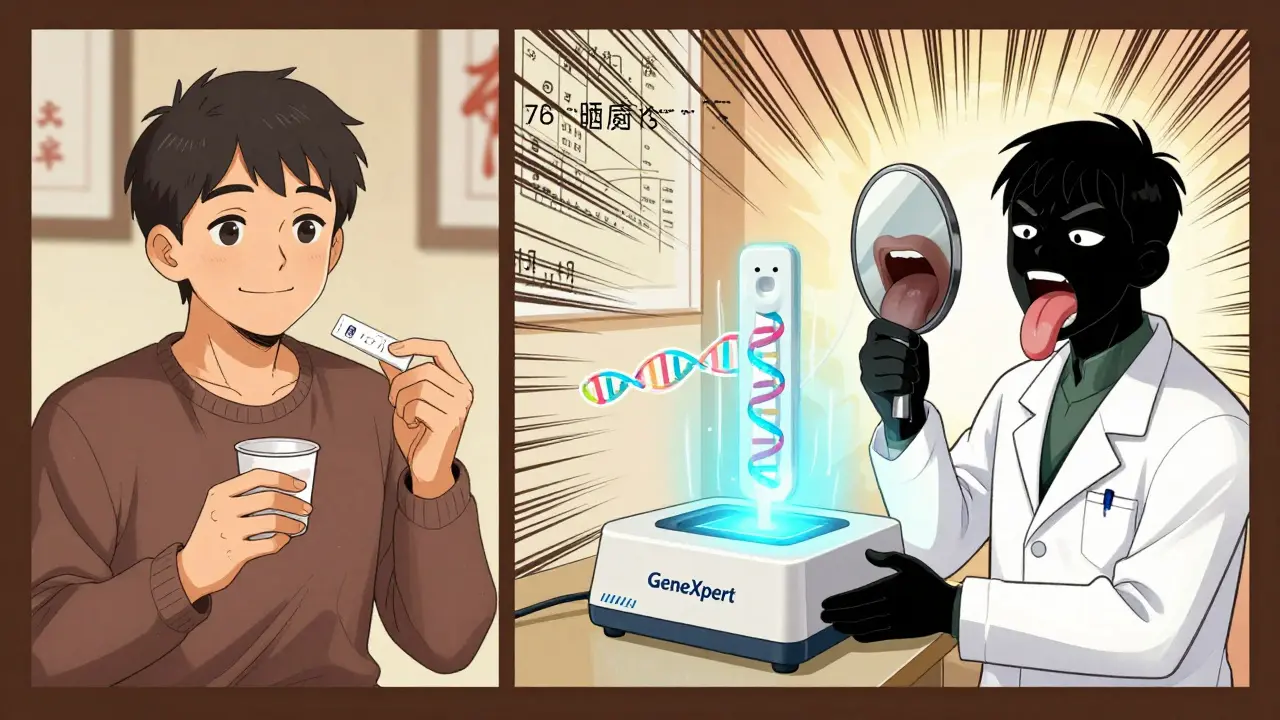
- PCR testing: This looks for H. pylori DNA in the biopsy sample. It’s super sensitive and can detect resistance mutations (like A2143G in the 23S rRNA gene) that make clarithromycin useless. A new FDA-approved machine called GeneXpert can do this in under 90 minutes - but it’s only in about 150 U.S. centers right now and costs $250 per test.
Why Quadruple Therapy Is Now First-Line Treatment
Twenty years ago, the go-to treatment was triple therapy: a proton pump inhibitor (PPI) plus two antibiotics - usually amoxicillin and clarithromycin. It worked in over 90% of cases. Today? In many places, it works in less than 70%. Why? Clarithromycin resistance. In Australia, Europe, and North America, resistance rates are now 20-50%. That means more than half the time, the antibiotic doesn’t kill the bacteria.
That’s why guidelines from the American College of Gastroenterology and the European Helicobacter Study Group now recommend bismuth quadruple therapy as the first-line option in regions with high clarithromycin resistance.
Quadruple therapy means four drugs:
- A proton pump inhibitor (PPI) - like omeprazole or esomeprazole
- Bismuth subsalicylate (Pepto-Bismol)
- Tetracycline
- Metronidazole
You take this for 10-14 days. It’s not pretty - you’ll get a black tongue, dark stools, and maybe nausea. But it works. Studies show eradication rates jump from 75% with failed triple therapy to 92% when you tailor treatment based on resistance testing. Even without resistance data, quadruple therapy still beats triple therapy in high-resistance areas.
Another option gaining traction is concomitant therapy: PPI plus amoxicillin, clarithromycin, and metronidazole - all taken together for 10-14 days. It avoids bismuth and can be easier to tolerate, though it still relies on clarithromycin, which is risky in high-resistance areas.
Antibiotic Resistance: The Silent Crisis
Resistance isn’t just about clarithromycin anymore. Levofloxacin, another common second-line antibiotic, is now resistant in 15-30% of cases in Western countries. Metronidazole resistance is also rising, especially in Asia and Latin America.
Here’s the scary part: resistance spreads through overuse. People take antibiotics for colds. Doctors prescribe them too quickly. Patients don’t finish their courses. And H. pylori? It adapts fast.
That’s why experts are pushing for personalized treatment. Instead of guessing which antibiotics to use, we should test for resistance first. Molecular tests on stool or biopsy samples can detect mutations that make clarithromycin useless. A trial in Australia (NCT05214345) is testing a stool-based resistance panel that could replace endoscopy for first-line treatment decisions. If it works, you could get tested with a poop sample and know exactly which drugs to use - all without a scope.
There’s also new hope in vonoprazan, a potassium-competitive acid blocker approved by the FDA in 2023. Unlike PPIs, it raises stomach pH higher and faster. That means antibiotics stay active longer and work better. Early data shows it boosts eradication rates even with resistant strains.
What Happens After Treatment?
Stopping the meds doesn’t mean you’re done. You need to confirm the infection is gone. That’s called confirmation of eradication.
You can’t use a blood test - antibodies linger. You need either a urea breath test or a stool antigen test, done at least 4 weeks after finishing antibiotics and 2 weeks after stopping PPIs. This is where many patients slip up. They feel better, assume it’s gone, and skip the follow-up. Then the infection comes back - and now it’s tougher to treat.
Doctors recommend testing for cure in patients with ulcers, gastric cancer risk, or those who’ve had treatment fail before. If the infection returns, you’ll need a different combination - maybe rifabutin or furazolidone - and possibly a longer course.

Real-World Challenges
Even with the best science, real life gets messy.
- Patients forget to stop PPIs before a breath test - and get false negatives.
- The taste of the urea solution is awful. One Reddit user said it tasted like "sour candy that made you gag." Some clinics now offer flavored versions, but they’re not widely available.
- Cost and access matter. In the U.S., a breath test costs $100-$250. A stool test is $38-$50. In Australia, Medicare covers both, but wait times for endoscopy can be months.
- Some clinics still use serology as a first test - which is outdated and misleading.
What’s working? Clinics that use stool antigen testing as the default non-invasive test. It’s accurate, low-cost, no prep, and family-friendly. Gastroenterologists in Melbourne are starting to switch because of patient compliance and cost.
What’s Next?
The future of H. pylori treatment isn’t just about stronger antibiotics. It’s about smarter testing. The goal is to match the right drug to the right bug - before you even start treatment.
Research is moving fast:
- Stool-based PCR panels for resistance detection - possibly available in clinics by 2026.
- New drugs like vonoprazan and novel antimicrobials in trials.
- Global efforts to reduce antibiotic misuse to slow resistance.
One thing’s clear: H. pylori isn’t going away. But with better testing, smarter therapy, and patient education, we can beat it - one accurate diagnosis at a time.
How do I know if I have H. pylori?
If you have ongoing stomach pain, bloating, or nausea, especially if you’re over 55 or have a family history of stomach cancer, talk to your doctor. The best tests are the urea breath test or stool antigen test. Blood tests can’t confirm current infection. Avoid testing if you’ve taken antibiotics or PPIs in the last 4-14 days - it can give false results.
Is quadruple therapy better than triple therapy?
Yes, in most parts of the world today. Triple therapy (PPI + two antibiotics) used to work well, but because so many H. pylori strains are now resistant to clarithromycin, it fails in up to half the cases. Quadruple therapy - which includes bismuth, tetracycline, metronidazole, and a PPI - works better, especially in places like Australia, the U.S., and Europe where resistance is high.
Can H. pylori come back after treatment?
Yes, but it’s rare if you complete treatment and confirm eradication. Most recurrences happen because the first treatment failed, not because you got reinfected. That’s why it’s critical to do a follow-up test 4 weeks after finishing antibiotics. If you’re still positive, you’ll need a different combo of drugs.
Why do I have to stop my acid pills before the breath test?
Proton pump inhibitors (PPIs) reduce stomach acid, which makes H. pylori less active. If the bacteria aren’t active, they won’t break down the urea in the test solution - so the test won’t detect them, even if they’re there. That’s why you must stop PPIs for 14 days before a breath test. It’s tough, but skipping it risks a false negative.
Are there side effects from quadruple therapy?
Yes. Bismuth can turn your tongue and stool black - it’s harmless but alarming. Metronidazole can cause nausea, a metallic taste, or a reaction if you drink alcohol. Tetracycline can upset your stomach and make you sensitive to sunlight. Most people tolerate it, but side effects are common. Take the full course even if you feel better - stopping early increases resistance risk.
Can children get tested and treated for H. pylori?
Yes, but only if they have symptoms like recurrent abdominal pain, ulcers, or a family history of gastric cancer. The stool antigen test is preferred for kids because it’s non-invasive and avoids radiation from carbon-14 breath tests. Treatment is similar to adults but uses adjusted doses. Always consult a pediatric gastroenterologist.
Is H. pylori contagious?
Yes. It spreads through contaminated food, water, or close contact - like sharing utensils or kissing. It’s more common in crowded or unsanitary conditions. Most infections happen in childhood. In developed countries, rates are dropping because of better hygiene and sanitation.
What’s the best test for confirming H. pylori is gone after treatment?
The urea breath test or stool antigen test, done at least 4 weeks after finishing antibiotics and 2 weeks after stopping PPIs. Blood tests won’t work - they show past infection, not current. Skipping this test is the #1 reason treatment fails silently.
For most people, H. pylori is a silent visitor. But when it turns hostile, knowing how to test correctly and choosing the right treatment can make all the difference. The days of guessing are over. The future is precise - and it starts with the right test.

Marilyn Ferrera
January 1, 2026 AT 22:12Robb Rice
January 2, 2026 AT 21:58Retha Dungga
January 4, 2026 AT 07:50Jenny Salmingo
January 5, 2026 AT 00:23Aaron Bales
January 6, 2026 AT 09:13Lawver Stanton
January 7, 2026 AT 13:08Sara Stinnett
January 7, 2026 AT 22:55linda permata sari
January 9, 2026 AT 06:57