When you pick up a prescription at the pharmacy, you might not think about why one drug costs $10 and another costs $75 - even if they treat the same condition. The reason lies in your employer’s health plan and its formulary, a hidden but powerful list that decides which medications are covered and at what price. Most people assume their insurance covers what their doctor prescribes. But that’s not always true. Formularies control access, and they’re designed to push you toward generics - not because they’re less effective, but because they’re 80-85% cheaper.
How Formularies Work: The Tiered System
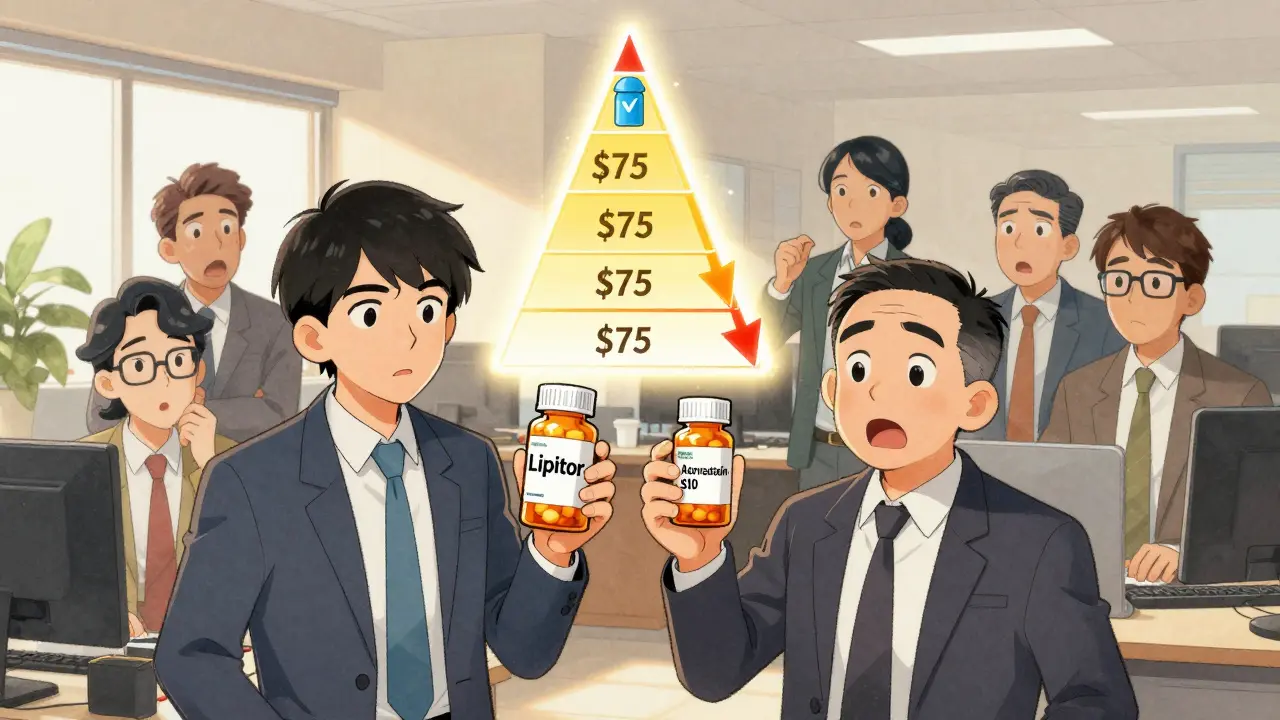
Employer health plans don’t treat all drugs the same. They group them into tiers, like levels in a game, where each level has a different price tag. The goal? Encourage you to choose lower-cost options without sacrificing care. Tier 1 is almost always generic drugs. These are the same active ingredients as brand-name pills, approved by the FDA to work just as well. You’ll typically pay $10 or less for a 30-day supply. Tier 2 includes brand-name drugs that the plan prefers - maybe because they’ve negotiated a good deal with the manufacturer. Copays here are around $40. Tier 3 is for brand-name drugs that aren’t preferred. If your doctor prescribes one of these, you’ll pay $75 or more. And Tier 4? That’s for specialty drugs - things like injectables for rheumatoid arthritis or oral meds for multiple sclerosis. These can cost hundreds, sometimes over $1,000 per month. Here’s the catch: when a brand-name drug loses its patent and a generic becomes available, the plan automatically moves the brand version to Tier 4. So if you’ve been taking Lipitor for years and suddenly switch to atorvastatin (the generic), your cost drops from $75 to $10. But if you insist on sticking with Lipitor? You’re stuck paying the higher price. It’s not a penalty - it’s a financial nudge.Why Employers Push Generics
It’s not about controlling your choices. It’s about controlling costs. The U.S. spends over $150 billion a year on prescription drugs. Generics save $3 billion every single week. That’s not a rounding error - it’s a massive financial lever. Employers, especially large ones, are the ones footing the bill for most group health plans. When drug costs rise, so do premiums, deductibles, and out-of-pocket expenses for everyone. That’s why nearly all large employer plans (99%, according to Kaiser Family Foundation) include some form of prescription coverage - and why almost all of them structure it around generics. The math is simple: if 10,000 employees switch from a $120 brand-name statin to a $15 generic, the employer saves $1.05 million per year. That money can go toward lowering premiums, adding mental health coverage, or even giving employees a bonus. Generics aren’t just cheaper - they’re the backbone of affordable health benefits.Who Controls the List? Pharmacy Benefit Managers (PBMs)
You might think your insurer decides which drugs are covered. But the real power lies with Pharmacy Benefit Managers - or PBMs. These are the middlemen: OptumRx, CVS Caremark, and Express Scripts. Together, they manage prescriptions for over 80% of Americans with employer-based insurance. PBMs don’t just list drugs. They negotiate rebates with drugmakers. Here’s how it works: a drug’s list price might be $500. But the PBM negotiates a rebate, so the net price is $225. That 55% gap - known as gross-to-net pricing - is where the real money is. But here’s the problem: you don’t see those savings. Your copay is based on the list price, not the net price. So even though the plan paid far less, you’re still paying $75 for a brand-name drug because that’s what the formulary says. In January 2024, each of the three biggest PBMs removed over 600 drugs from their formularies. That’s not because the drugs are unsafe. It’s because the manufacturers refused to offer bigger rebates. The drug gets cut. The PBM wins. The patient? They’re left scrambling.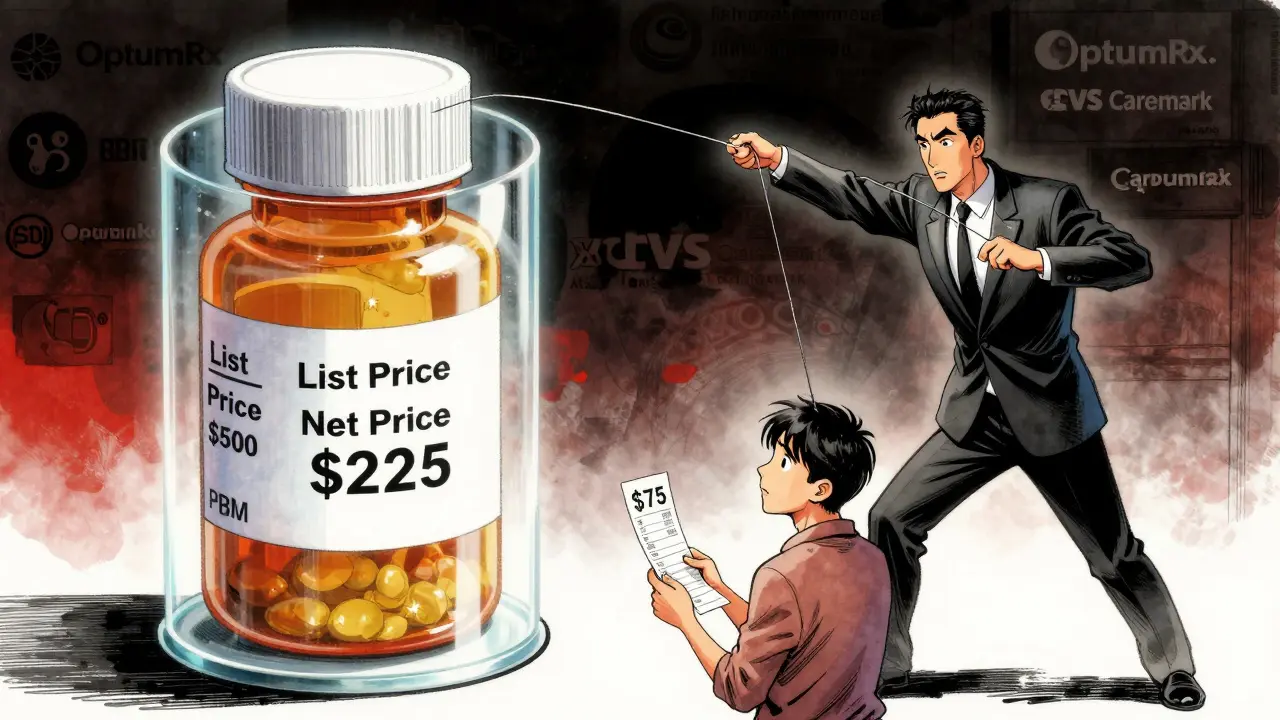
What Happens When Your Medication Gets Removed?
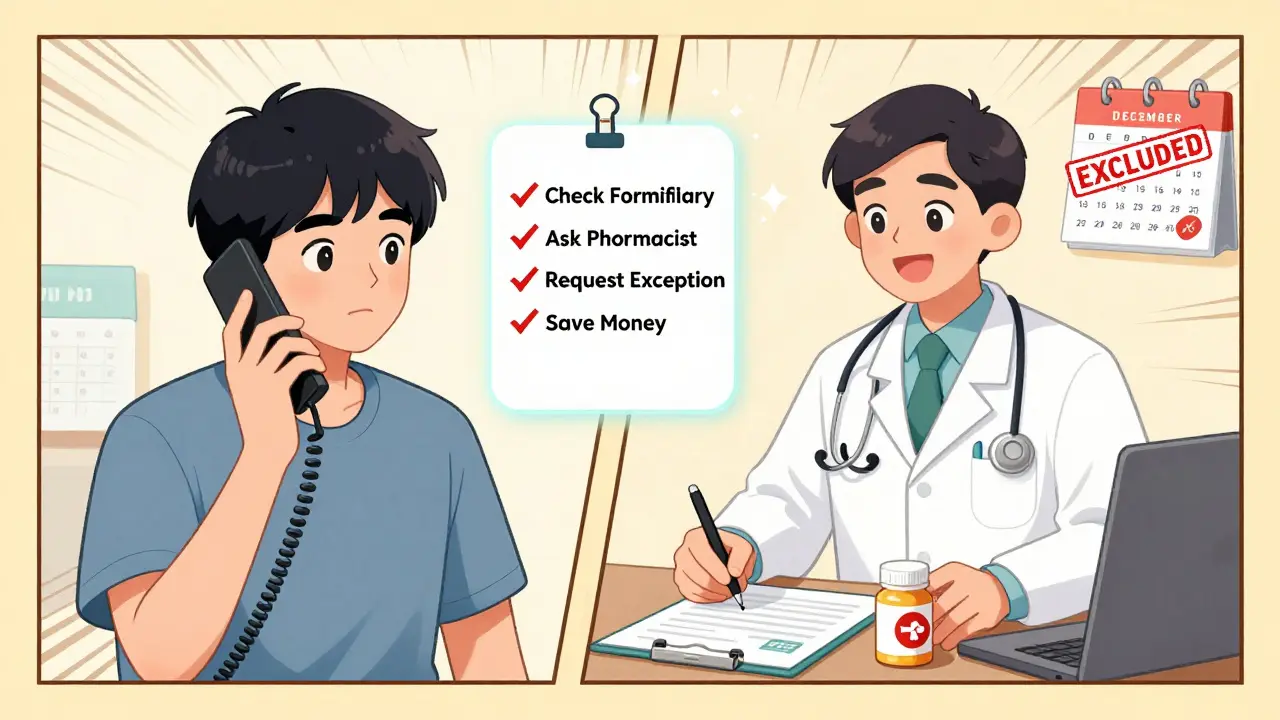
You might wake up one day to find your prescription no longer covered. It’s not rare. Formularies change constantly. A drug you’ve been taking for years could suddenly move to Tier 4 - or get dropped entirely. If this happens, you have options:- Ask your doctor for a generic alternative. Most conditions have multiple generic options.
- Request a formulary exception. If you’ve tried generics and they didn’t work, or you have a medical reason to need the brand-name drug, your doctor can file a prior authorization. Many plans approve these if there’s clinical justification.
- Check if your plan has a transition policy. Some plans allow you to keep your current drug for 30-90 days while you switch.
- Use your plan’s Price Assure Program or similar tools. Some insurers automatically apply discounts when you fill generics at in-network pharmacies.
How to Find Out What’s Covered
You can’t rely on your doctor’s prescription alone. Always check your plan’s formulary before filling a new script. Here’s how:- Log into your insurer’s website. Most have a drug lookup tool. Search by name or condition.
- Download your Summary of Benefits and Coverage (SBC). It’s required by law. Look for the “Prescription Drugs” section.
- Call customer service. Ask: “Is [drug name] covered? What tier is it on? What’s my copay?”
- Ask your pharmacist. They see formulary changes every day. They’ll often tell you if a cheaper generic is available.