
Antihistamine & Alcohol Safety Calculator
This calculator helps determine safe timing between antihistamines and alcohol based on medication type and how long you've waited since taking the dose. The CDC reports that 28% of traffic deaths in 2021 involved drivers with both alcohol and sedating meds in their system.
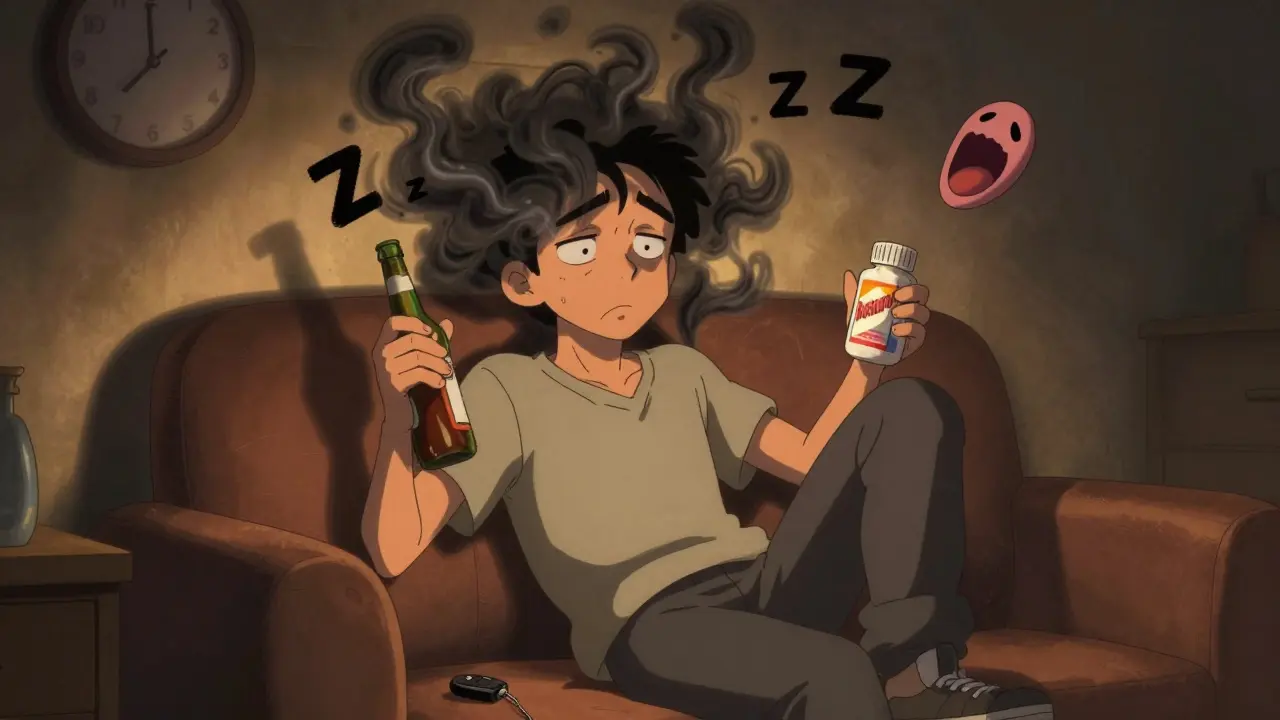
It’s easy to reach for an antihistamine when your allergies are acting up, and even easier to pour a glass of wine or crack open a beer afterward. But what feels like a harmless combo can turn dangerous fast. Mixing antihistamines and alcohol doesn’t just make you sleepy-it can slow your reactions, blur your judgment, and in serious cases, shut down your breathing. The problem isn’t just about feeling tired. It’s about drowsiness that sneaks up on you, often when you least expect it.
Why Your Brain Slows Down When You Mix Them
Both alcohol and antihistamines work as depressants on your central nervous system. Alcohol boosts GABA, a chemical that calms brain activity, and blocks NMDA receptors, which normally keep you alert. First-generation antihistamines like diphenhydramine (found in Benadryl) block histamine in your brain, which is what makes you feel drowsy. When you combine them, they don’t just add up-they multiply. Studies show the drowsiness effect can increase by up to 300% compared to either one alone. That means if you normally feel a little sleepy after a single antihistamine, drinking even one beer can turn that into full-blown grogginess.Not All Antihistamines Are the Same
There’s a big difference between the old-school antihistamines and the newer ones. First-generation drugs like diphenhydramine (Benadryl), chlorpheniramine, and doxylamine are designed to cross into your brain. That’s why they’re used in sleep aids too. About half of people who take them feel drowsy-even without alcohol. Add alcohol, and that number jumps to 60% or more. The effects are so strong that taking two Benadryl tablets with three drinks can mimic a blood alcohol level of 0.12-0.15%, well above the legal driving limit of 0.08% in every U.S. state. Second-generation antihistamines like loratadine (Claritin), cetirizine (Zyrtec), and fexofenadine (Allegra) were made to avoid the brain. They’re labeled “non-drowsy” for a reason. But that label doesn’t mean “safe with alcohol.” Even these can cause drowsiness when mixed. Clinical data shows Claritin’s drowsiness rate goes from 10-15% alone to 30-35% with alcohol. Zyrtec, often thought to be the safest, jumps from 15-20% drowsiness alone to 40-45% with even moderate drinking. The reason? Alcohol interferes with how your liver breaks down these drugs. It clogs the enzymes (CYP3A4 and CYP2D6) that clear antihistamines from your system, leaving more of the drug in your blood for longer. That’s why you might feel fine at first, then crash hours later.Who’s at Highest Risk?
Older adults are especially vulnerable. People over 65 process alcohol and medications slower, and their brains are more sensitive to CNS depressants. The FDA says they experience 2.3 times more brain depression from this combo than younger adults. That translates to a 75% higher risk of falls, confusion, and hip fractures. A 2022 study in the Journal of the American Geriatrics Society found that 53% of seniors who mixed antihistamines with alcohol reported memory lapses or disorientation-even after just one drink. And it’s not just seniors. Women, who generally have less body water and slower alcohol metabolism, are seeing a 48% rise in emergency visits linked to this interaction since 2018.
It’s Not Just Allergy Pills
Many people don’t realize diphenhydramine is hiding in dozens of other products. Over 70 over-the-counter medicines contain it, including sleep aids, cold and flu remedies, motion sickness pills, and even some topical creams. You might take a nighttime cold tablet thinking you’re just treating a stuffy nose, not realizing you’re also loading up on a powerful sedative. Combine that with a glass of wine, and you’re asking for trouble. The FDA requires black box warnings on prescription antihistamines, but OTC products only carry tiny “may cause drowsiness” labels. No mention of alcohol. That’s why 63% of antihistamine users in a 2023 Consumer Reports survey didn’t know the risk.Real Stories, Real Consequences
Reddit users on r/Allergies shared over 1,200 stories about mixing antihistamines and alcohol. Nearly 80% said they felt far more drowsy than expected. One in three reported falling asleep while driving home. On Drugs.com, 65% of negative reviews for Benadryl mentioned “passed out unexpectedly” or “couldn’t wake up the next morning.” Even with Claritin and Zyrtec, users reported “unexpected sleepiness” after a drink. One 68-year-old woman wrote, “I had one glass of wine with my Zyrtec and woke up on the floor with no memory of how I got there.” These aren’t rare accidents-they’re predictable outcomes.
What Should You Do Instead?
If you need allergy relief and plan to drink, avoid first-generation antihistamines completely. Even second-generation ones aren’t risk-free. The safest approach? Switch to alternatives that don’t interact with alcohol. Nasal corticosteroids like Flonase or Nasacort work well for congestion and hay fever. Leukotriene inhibitors like Singulair are another option. Neither causes drowsiness, and neither interacts with alcohol. The catch? They take 3-7 days to build up effectiveness. So if you’re planning a weekend party, start these a week ahead. If you’re stuck with an antihistamine, wait at least 12-16 hours after taking a first-generation one before drinking. For second-generation, wait 8-12 hours. But even then, stick to one drink. Your body’s tolerance isn’t the same when drugs are involved.The Bottom Line
There’s no such thing as a “safe” mix between alcohol and antihistamines. Even the ones labeled “non-drowsy” can turn dangerous with just a little alcohol. The data doesn’t lie: drowsiness increases, reaction times drop, and accident risk spikes. The CDC found that 28% of traffic deaths in 2021 involved drivers with both alcohol and sedating meds in their system. That’s not coincidence-it’s a direct result of this interaction. If you’re managing allergies, your health is worth more than a drink. Choose alternatives. Wait it out. Or better yet, skip the alcohol altogether when you’re on antihistamines. Your brain, your reflexes, and your safety are worth it.Can I take Zyrtec with one glass of wine?
Even one glass of wine can increase drowsiness from Zyrtec by 25-30%. While Zyrtec is less sedating than Benadryl, combining it with alcohol raises your risk of impaired coordination, slowed reaction time, and accidental falls. It’s not recommended.
Is Claritin really safe with alcohol?
Claritin (loratadine) is designed to be non-drowsy, but alcohol can double or triple its sedative effects. Studies show drowsiness jumps from 10-15% alone to 30-35% with alcohol. You might feel fine at first, but your reflexes and decision-making are still impaired.
How long should I wait after taking Benadryl before drinking?
Wait at least 12-16 hours after taking Benadryl. Its effects can last 6-8 hours, but alcohol slows how your body clears it, leaving traces in your system longer. Even if you feel awake, your brain may still be affected.
Can mixing antihistamines and alcohol cause breathing problems?
Yes. Both substances depress the central nervous system, which controls breathing. In high doses or with sensitive individuals, this combo can lead to shallow breathing or even respiratory arrest. Emergency rooms see cases every year where this combination caused severe respiratory depression.
Are there allergy medications that don’t interact with alcohol?
Yes. Nasal sprays like Flonase (fluticasone) and Nasacort (triamcinolone), as well as oral medications like Singulair (montelukast), have no known interactions with alcohol. They’re safer alternatives, though they take several days to become fully effective.



Buddy Nataatmadja
March 11, 2026 AT 18:32Been there. Took Benadryl after a long day, had one beer to unwind. Woke up on the couch with my phone on my face and a half-eaten sandwich in my hand. No memory of how I got there. Not cool.
Turns out I’m not alone. Just... don’t.
mir yasir
March 12, 2026 AT 07:06It is an empirical observation that the pharmacodynamic synergy between central nervous system depressants, namely ethanol and first-generation antihistaminergic agents, constitutes a clinically significant hazard. The pharmacokinetic inhibition of hepatic cytochrome P450 enzymes further exacerbates this risk, leading to prolonged plasma half-lives and heightened sedative potency. One must exercise prudence in the concomitant use thereof.
Stephanie Paluch
March 13, 2026 AT 06:36OMG YES. I took Zyrtec and had a glass of wine last weekend and literally fell asleep mid-convo with my roommate 😵💫
Woke up 3 hours later on the floor. No idea how I got there.
Now I just use Flonase. No drama. No nap zones. 🙌
Lorna Brown
March 14, 2026 AT 09:37It’s not just about drowsiness. It’s about autonomy. When you mix these, you’re surrendering control of your own body to a chemical cocktail you didn’t fully consent to. That’s not a choice-it’s a trap. And the fact that OTC labels don’t scream this? That’s negligence dressed as convenience.
People think ‘non-drowsy’ means ‘safe.’ It doesn’t. It means ‘less likely to knock you out immediately.’ That’s not safety. That’s a loophole.
Jinesh Jain
March 14, 2026 AT 20:03I take cetirizine every day for my pollen allergy. I drink occasionally. Never had an issue. Maybe I’m lucky. Or maybe the dose is low. Either way, I don’t see the panic. One drink, one pill. Not a war zone.
douglas martinez
March 15, 2026 AT 07:13Thank you for this thorough breakdown. Many people underestimate how subtle the effects can be. You don’t black out-you just drive slower, react later, forget why you walked into a room. That’s the danger. Not the dramatics. The quiet erosion of awareness.
Consider this your gentle nudge to switch to nasal sprays. They’re not flashy, but they work. And they let you live.
Sabrina Sanches
March 17, 2026 AT 02:00Ugh I just realized I’ve been doing this for YEARS. Zyrtec + wine on Friday nights. Thought I was just tired. Nope. Was half-dead. Now I’m switching to Flonase and actually feeling awake for once. Thank you for the wake-up call!! 🙏
Shruti Chaturvedi
March 17, 2026 AT 04:09My mom took Benadryl and had two glasses of wine and ended up in the ER. She didn’t even know she was in danger. It’s scary how common this is. We need to talk about it more. Not just in medical journals. In kitchens. At dinner tables. With our parents. With our friends.
Katherine Rodriguez
March 18, 2026 AT 18:33Why are we treating adults like children? If you want to mix poison and call it chill, go ahead. But don’t act like the world owes you a warning label. If you can’t read a bottle, maybe you shouldn’t be drinking. Or taking pills. Or breathing.
Devin Ersoy
March 19, 2026 AT 15:23Oh honey, let me guess-you’re one of those ‘Flonase is the answer’ people? Cute. Like we’re all gonna become nasal spray monks because some overworked pharmacist wrote a study. I’ve had two Zyrtec and a whiskey and still out-drank my buddy who took zero meds. You think science is universal? Nah. It’s just a suggestion with a lab coat.
Scott Smith
March 19, 2026 AT 17:15My brother had a seizure after mixing Claritin and tequila. Not a joke. Not exaggeration. He was 27. Now he uses a neti pot. We all do now. Just say no to the quiet killer.
Alex MC
March 21, 2026 AT 07:21It’s funny how we treat sleep like a bug, not a feature. Antihistamines don’t just make you drowsy-they rewire your brain’s alertness for hours. Alcohol doesn’t just dull your senses-it masks the fact that your body is already overloaded.
Maybe the real question isn’t ‘can I mix them?’
It’s ‘why do I feel like I need to?’
Aaron Leib
March 22, 2026 AT 14:33This is exactly the kind of info that should be on every bottle. Not buried in fine print. Not in a PDF. On the front. Bold. Red. ‘DANGER: ALCOHOL CAN KILL YOU WITH THIS.’
People don’t read. They react. So give them something that screams.