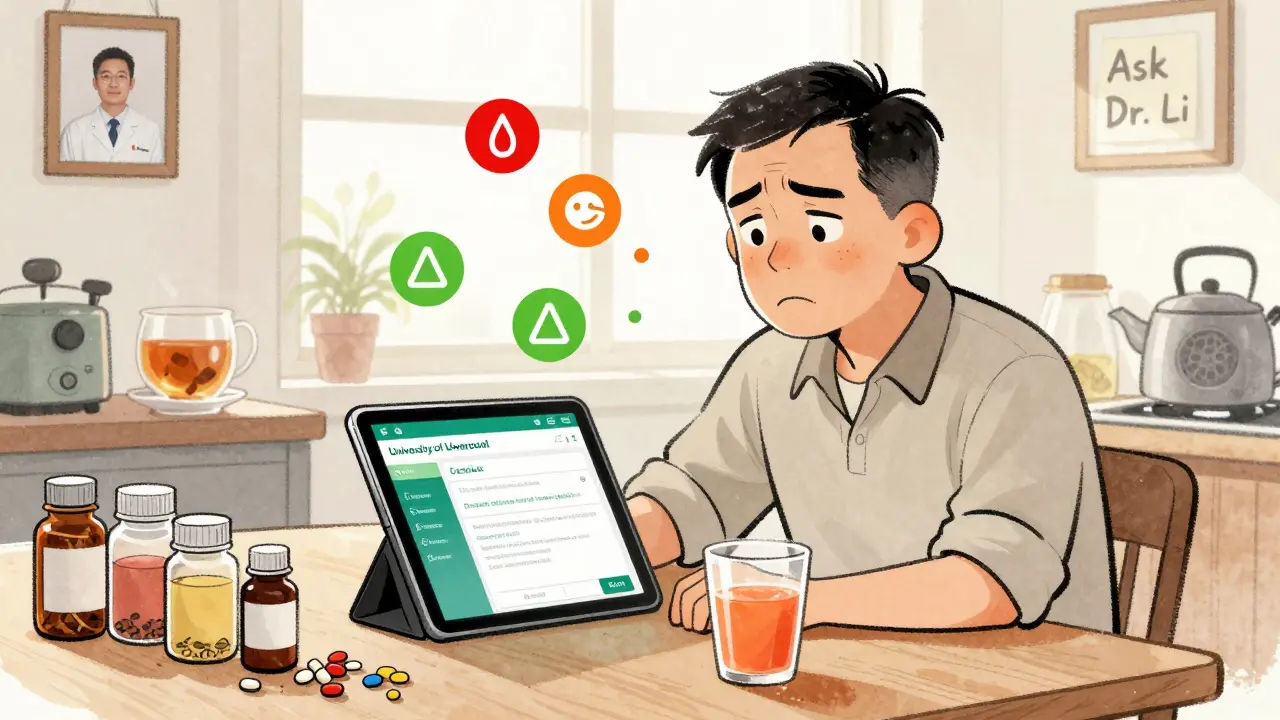
Every year, thousands of people end up in the hospital because of unexpected reactions when they mix medications. Some of these reactions aren’t obvious - like taking a common painkiller with an antidepressant and suddenly feeling dizzy, nauseous, or even having a dangerous spike in blood pressure. The good news? You don’t have to guess. A drug interaction checker can help you spot these risks before they happen. But not all tools are created equal. Using one poorly can give you a false sense of security. Used right, it becomes a powerful shield against avoidable harm.
What a Drug Interaction Checker Actually Does
A drug interaction checker isn’t just a database of warnings. It’s a smart filter that compares the ingredients in your medications - prescriptions, over-the-counter pills, vitamins, and even herbal supplements - against a library of known reactions. It looks for three main types of risks:
- Drug-drug interactions: When two medications change how each other works. For example, the antibiotic clarithromycin can slow down how your body breaks down statins, raising your risk of muscle damage.
- Drug-food/drink interactions: Grapefruit juice can interfere with more than 85 medications, including some blood pressure and cholesterol drugs. Alcohol mixed with sedatives or painkillers can cause dangerous drowsiness or liver damage.
- Drug-condition interactions: Some drugs are risky if you have certain health issues. For instance, decongestants like pseudoephedrine can spike blood pressure in people with heart disease.
These tools use algorithms based on pharmacokinetics (how your body absorbs, breaks down, and gets rid of drugs) and pharmacodynamics (how drugs affect your body). The best ones update regularly - some weekly - to include new findings.
Not All Checkers Are Created Equal
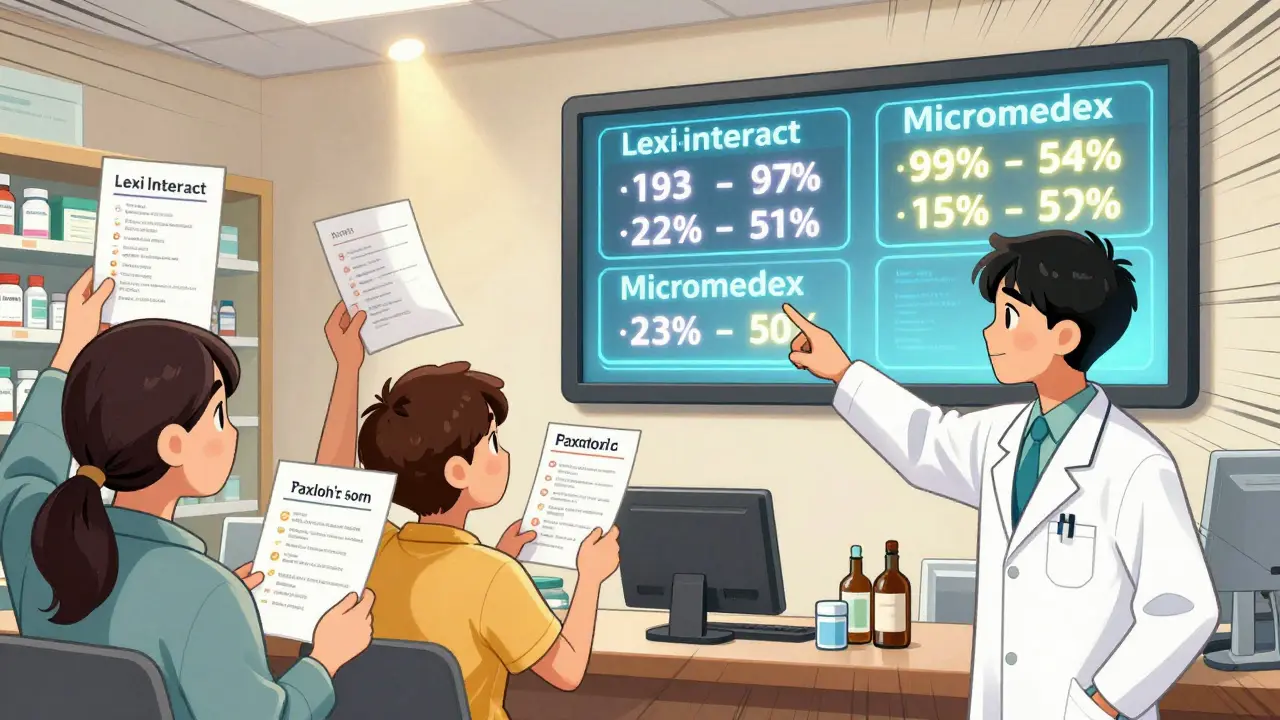
If you’ve searched online for a free drug checker, you’ve probably seen WebMD, Drugs.com, or Medscape. They’re easy to use, but accuracy varies wildly. A 2016 study by the National Institutes of Health tested five major tools and found stark differences:
- Lexi-Interact caught 77% of clinically important interactions - the highest sensitivity. It’s used in hospitals and is great for thorough screening, but it flags a lot of low-risk alerts that may not matter in real life.
- Micromedex was better at ignoring false alarms (78% specificity), making it ideal for professionals who need fewer distractions. But it might miss some rare interactions.
- iFacts had perfect comprehensiveness in testing - meaning it included every known interaction in its database at the time.
- Epocrates and Medscape scored lower in accuracy: 60.3% and 49% respectively. That means nearly half the time, Medscape missed a real risk.
For consumers, Drugs.com and WebMD are the most accessible. But here’s the catch: they’re less reliable than professional tools. A 2022 case in the Journal of Patient Safety showed a patient relying on a free checker missed a dangerous interaction between sertraline and linezolid - a combo that caused serotonin syndrome. That’s a life-threatening condition.
One standout tool is the University of Liverpool’s COVID-19 Drug Interactions Checker. Launched in 2020 and updated weekly, it’s now the gold standard for checking interactions with Paxlovid (nirmatrelvir/ritonavir). It uses a simple color system:
- Red circle: Don’t take together - high risk.
- Orange square: Possible serious interaction - monitor closely or adjust dose.
- Yellow triangle: Minor interaction - keep an eye out.
- Green diamond: No expected interaction.
It’s free, easy to use, and trusted by doctors worldwide. If you’re on Paxlovid or similar antivirals, this is the tool to use.
How to Use a Checker Right - A Simple 3-Step Process
Using a drug interaction checker isn’t just typing in your meds and hoping for the best. Here’s how to do it properly:
- Make a complete list. Write down every pill, patch, liquid, and supplement you take - even the ones you only use once in a while. Don’t forget herbal teas, CBD oil, melatonin, or St. John’s wort. These are often missed, but they cause 23% of clinically significant interactions, according to the Cleveland Clinic.
- Choose the right tool. If you’re a patient, use Drugs.com or WebMD. If you’re a healthcare provider or managing complex meds, use Lexi-Interact or Micromedex. For COVID-19 treatments, use the University of Liverpool tool.
- Focus on the red flags. Don’t get distracted by yellow or green alerts. Look for warnings marked as “severe,” “contraindicated,” or “avoid combination.” These are the ones that matter. Studies show only 5-10% of flagged interactions are truly dangerous.
Pro tip: Always double-check spelling. “Metoprolol” and “metoprolol succinate” might be treated as different drugs in some systems. Tools like Drugs.com accept both brand and generic names, which helps.
What These Tools Can’t Do - And Why You Still Need a Pharmacist
Even the best tool has blind spots. No drug interaction checker can predict every possible reaction. Why?
- New drugs aren’t tested against every other medication before approval. There are too many combinations.
- Herbal supplements and vitamins have weak or incomplete data in most databases.
- They don’t consider your age, kidney or liver function, or how you take the drugs (e.g., with food, at night, or spaced apart).
- They can’t replace clinical judgment. A 2021 study found that 32% of high-severity alerts in hospitals were technically correct but clinically irrelevant.
The American Society of Health-System Pharmacists (ASHP) recommends using at least two different checkers for high-risk patients. Why? Because the tools disagree with each other 15-20% of the time.
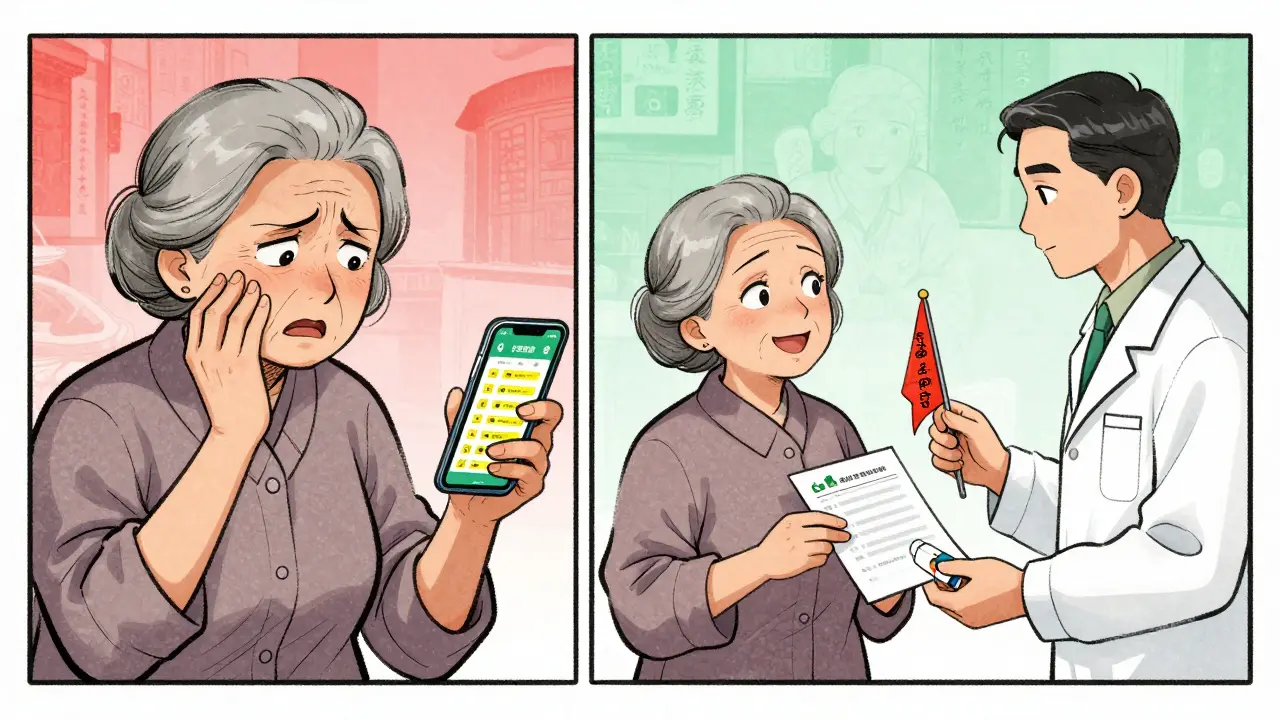
And here’s the hard truth: no checker replaces a pharmacist. The FDA warned in 2022 that no tool can replace pharmacist review for people taking five or more medications. Pharmacists don’t just look at lists - they ask questions. Did you start a new supplement? Are you skipping doses? Are you drinking alcohol? These details change everything.
Real-World Tips from People Who Use These Tools Daily
Pharmacists and patients share common frustrations:
- Mobile apps are clunky. Epocrates has great features but a dated interface. Many users complain it’s hard to navigate on a phone.
- Supplements are poorly covered. A 2023 survey found 65% of negative reviews of WebMD’s tool mentioned missing herbal interactions.
- Alert fatigue is real. Hospital pharmacists using Lexi-Interact say nearly half of the alerts they see are dismissed as noise. That’s why they only trust red flags.
- Positive experiences often come from the University of Liverpool tool. Clinicians say its alternative medication suggestions are the most helpful part - it doesn’t just say “don’t mix,” it says “try this instead.”
One community pharmacist in Melbourne told me: “I tell every patient over 65 to use Drugs.com before they leave the pharmacy. But I always say: ‘Don’t trust it blindly. Bring the results to me.’”
Who Should Use This Tool - And Who Needs More
These tools are most valuable for:
- People taking three or more medications daily
- Older adults (average 4.8 prescriptions per person over 65, per CDC data)
- Anyone starting a new drug, especially antibiotics, antidepressants, or blood thinners
- People using supplements alongside prescriptions
If you’re taking five or more drugs, or have kidney/liver disease, diabetes, or heart failure - you need more than a checker. You need a pharmacist review. The same goes for pregnant women, children, or anyone with complex health conditions.
And if you’re on a new antiviral like Paxlovid - use the University of Liverpool tool and talk to your pharmacist. It’s not optional.
What’s Coming Next
The future of drug interaction tools is smarter, not just bigger. AI-powered systems are being tested to predict interactions using real-world patient data. A 2023 NIH-funded project showed an 18.3% improvement in detection rates using machine learning.
Hospitals are integrating these tools directly into EHRs. Epic’s new “InteractionGuard” feature doesn’t just check what drugs you’re on - it looks at when you take them, how often, and even your lab results. That’s the next level.
But don’t wait for tech to fix everything. Right now, the best tool you have is your own awareness - and the willingness to ask questions.
Can I trust free drug interaction checkers like WebMD or Drugs.com?
Yes - but only as a starting point. Free tools like WebMD and Drugs.com are useful for quick checks, especially for common prescriptions and supplements. But studies show their accuracy is around 60%, meaning they miss or mislabel risks nearly 4 in 10 times. Never rely on them alone if you’re on multiple medications or have a chronic condition. Always confirm results with a pharmacist.
Do drug interaction checkers cover herbal supplements and vitamins?
Some do, but poorly. Many clinical-grade tools (like Lexi-Interact) have limited supplement data. Consumer tools like WebMD are better, but still miss key interactions - especially with herbs like St. John’s wort, kava, or ginkgo. A 2023 survey found 65% of critical reviews pointed to incomplete supplement coverage. Always list every supplement you take, even if the tool doesn’t recognize it. If in doubt, ask your pharmacist.
What’s the most accurate drug interaction checker available?
For clinical use, Lexi-Interact and Micromedex are the most accurate overall. Lexi-Interact catches the most true interactions (77% sensitivity), while Micromedex gives fewer false alarms (78% specificity). For COVID-19 treatments like Paxlovid, the University of Liverpool’s tool is unmatched - updated weekly and focused only on high-risk combinations. For consumers, Drugs.com is the most reliable free option, though still less accurate than professional tools.
Can a drug interaction checker replace a pharmacist’s advice?
No. The FDA and major medical groups agree: no tool can replace a pharmacist’s review, especially for people taking five or more medications. Pharmacists consider your full health history, kidney and liver function, timing of doses, and even lifestyle factors like alcohol use. Tools only look at drug names. They can’t ask if you skipped a dose last week or started drinking grapefruit juice. Always bring your checklist to your pharmacist - it’s the best way to stay safe.
Why do I get so many alerts when I use a drug checker?
Because most tools are designed to catch every possible risk - even ones that rarely happen. In hospitals, up to 45% of alerts are dismissed as clinically irrelevant. A warning might say “possible increased drowsiness,” but if you’re not driving or operating machinery, it doesn’t matter. Focus only on red or orange alerts labeled “severe,” “contraindicated,” or “avoid.” Yellow and green ones are usually low risk. If you’re overwhelmed, ask your pharmacist to help you filter.
How often should I check for drug interactions?
Check every time you start, stop, or change a medication - including over-the-counter drugs and supplements. Even small changes matter. If you’re on long-term meds, check at least once a year. If you’re over 65 or take five or more drugs, check every 6 months. And always check before a new prescription - even if you’ve taken the drug before. New interactions are discovered all the time.
Next Steps - What to Do Today
Here’s your action plan:
- Write down every medication, supplement, and herbal product you take - even if you only use it occasionally.
- Go to Drugs.com or the University of Liverpool’s tool (if you’re on Paxlovid or similar).
- Enter each item one by one. Don’t rush.
- Look for red or orange warnings. Write them down.
- Book a 10-minute appointment with your pharmacist. Bring your list and your results.
You don’t need to be a doctor to protect yourself. You just need to be informed - and willing to ask for help.