
Medication Side Effect Source Finder
Find side effect information sources for your medication
Compare which reliable resources contain side effect data for your medication and understand their unique strengths
Knowing what side effects a medication might cause isn’t just helpful-it can be life-saving. But where do you actually find the full, accurate, up-to-date details? Most people check the pill bottle or ask their pharmacist, but those summaries often leave out the big picture. The truth is, the most complete side effect data doesn’t come from a leaflet-it comes from official databases built by scientists and regulators. And if you’re taking more than one drug, or have a chronic condition, knowing where to look can help you spot risks you wouldn’t otherwise see.
The FDA’s FDALabel Database: The Gold Standard
The most trusted source for side effect information in the U.S. is the FDA’s FDALabel database. This isn’t a website for patients-it’s the official digital library of every prescription and over-the-counter drug’s full labeling document. Every drug manufacturer must submit this document when the FDA approves a new medication, and they’re required to update it whenever new safety data emerges.
Inside each label, you’ll find a section titled “6. ADVERSE REACTIONS” for prescription drugs, or “Warnings” for OTC products. These sections list side effects reported during clinical trials and after the drug hit the market. They’re organized by how common they are: very common, common, uncommon, rare. But here’s the catch: these lists only include side effects that were observed during testing or reported in the first few years after approval. They don’t capture everything.
For example, if a drug causes a rare liver problem that only shows up after five years of use, it might not appear on the label until someone reports it and the FDA reviews the evidence. That’s why FDALabel is authoritative-but incomplete. Still, it’s the only source that carries legal weight. If you’re trying to understand what your doctor meant when they said “this drug can cause dizziness,” FDALabel is where you start.
DailyMed: Your Free, Easy Access to FDA Labels
You don’t need to navigate the FDA’s complex website to find FDALabel documents. DailyMed, run by the National Library of Medicine, is a public portal that pulls in every label from the FDA in real time. It’s updated daily, and you can search by drug name, active ingredient, or even brand name.
For most people, DailyMed is the best starting point. Type in “metformin” or “lisinopril,” and you’ll get the full FDA-approved label with side effects, dosing, warnings, and contraindications-all in plain text. No login, no paywall. It’s free, reliable, and the same information doctors and pharmacists use. If you’re trying to compare two drugs, you can open two labels side by side and see exactly how their side effect profiles differ.
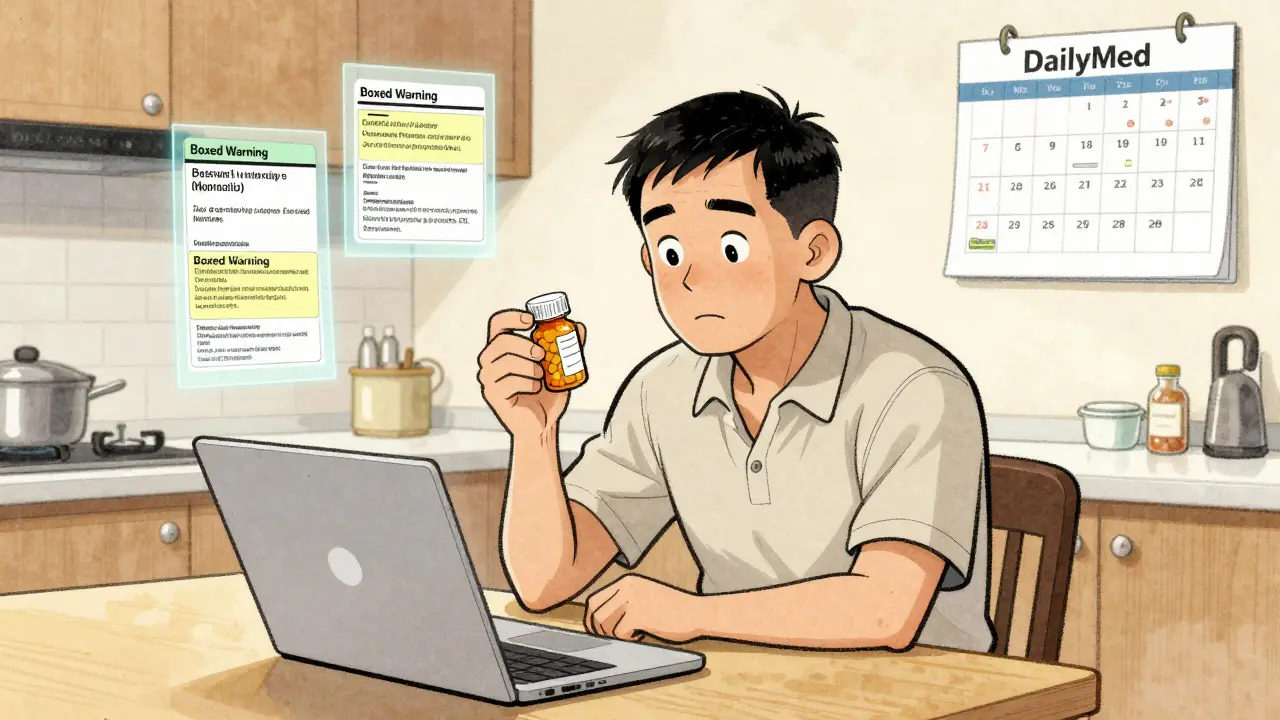
One tip: Look for the “Boxed Warning” at the top of the label. That’s the FDA’s strongest safety alert. If a drug has one, it means there’s a serious risk-like liver damage, heart failure, or suicidal thoughts-that’s been confirmed in real-world use. Don’t skip it.
OnSIDES: The New Powerhouse for Hidden Side Effects
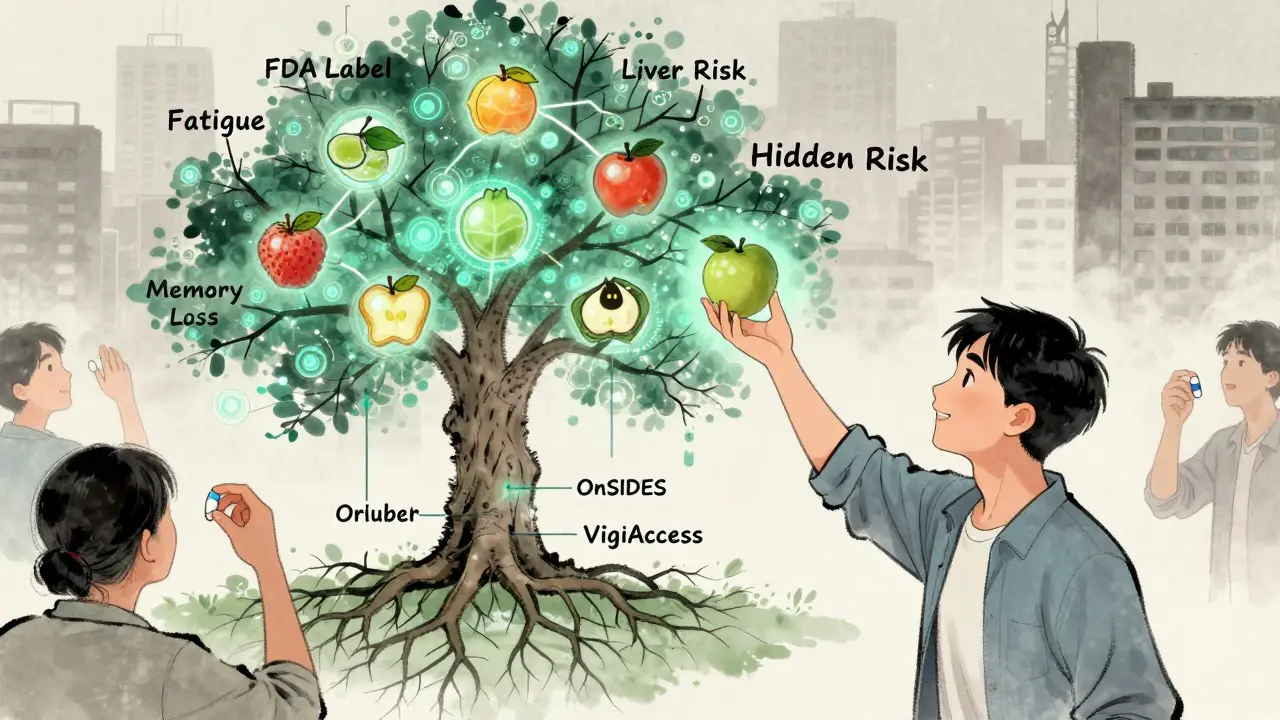
What if you want to know about side effects that aren’t listed on the label at all? That’s where OnSIDES comes in. Launched in late 2023, OnSIDES is the largest and most up-to-date side effect database in the world. It uses artificial intelligence to scan every FDA-approved drug label-over 46,000 of them-and pulls out every possible side effect mentioned, even ones that appear only once.
OnSIDES doesn’t just list side effects-it connects them to the exact drug ingredient. It has over 3.6 million drug-side effect pairs, which is more than seven times the number found in older databases. And unlike older tools, OnSIDES is updated every three months. That means if a new warning is added to a label in December, OnSIDES will reflect it by March.
Here’s why this matters: The average drug label lists about 69 side effects. OnSIDES finds an average of 329 per drug-including ones that only happen in older adults, people with kidney disease, or when the drug is taken with another medication. These are called “off-label” side effects, and they’re not required to be on the label unless they’re common or severe. OnSIDES fills that gap.
It’s not user-friendly for casual browsing, but if you’re a patient with complex health issues, or a caregiver managing multiple medications, OnSIDES can reveal risks you’d never know to ask about. The data is free to download, and researchers have built simple tools to help non-experts search it.

VigiAccess: Real-World Reports from Around the World
What happens after a drug is approved? People take it in real life-not in controlled trials. That’s where VigiAccess comes in. Operated by the World Health Organization, VigiAccess pulls data from VigiBase, the global database of individual patient reports of side effects. As of January 2024, it contains over 35 million reports from more than 100 countries.
Unlike FDA labels, which are based on clinical trials and manufacturer submissions, VigiAccess shows what’s actually happening out in the world. If 287 people reported a strange rash after taking a certain statin, you’ll see that number. If 12 people in Brazil reported memory loss after using the same drug, you’ll see that too.
The downside? VigiAccess doesn’t tell you how many people took the drug. So if 287 people reported a rash, but 10 million people took the drug, that’s actually very rare. If only 500 people took it, then it’s a big red flag. That’s why VigiAccess is best used alongside FDALabel or OnSIDES-not alone. But it’s the only place you can see how a drug behaves in different populations, ages, and cultures.
Healthcare professionals use VigiAccess to spot new safety signals. If a drug suddenly starts showing up in reports with a rare heart rhythm problem that wasn’t seen before, regulators can investigate. For patients, it’s a window into what others are experiencing-especially if you’re taking a less common medication.
MedlinePlus: The Patient-Friendly Alternative
If the FDA labels and AI-powered databases feel too technical, MedlinePlus is your best bet. Run by the National Library of Medicine, it takes the raw data from FDALabel and turns it into clear, easy-to-read summaries. It’s designed for patients, not doctors.
MedlinePlus doesn’t list every single side effect. Instead, it groups them into “common,” “serious,” and “what to watch for.” It also explains what those side effects mean in plain language. For example, instead of saying “dizziness,” it might say, “You might feel lightheaded when standing up-this is common and usually goes away after a few weeks.”
A 2023 survey of nearly 3,000 patients found that 87% found MedlinePlus easier to understand than FDA labels. It’s also mobile-friendly, free, and doesn’t require registration. If you’re worried about a new medication and just want to know what to expect, MedlinePlus is the fastest, most reliable place to go.
What to Avoid: Outdated and Paid Sources
Not all side effect resources are created equal. SIDER, once a popular database, stopped being updated in 2015. Its data is outdated, and the team behind it says they have no funding to fix it. Using SIDER today is like relying on a 2015 map to drive in 2026-you’ll miss new roads and get stuck on closed ones.
Another source to be cautious of is PDR.net. It used to be the go-to for doctors, but now it’s a paid subscription service ($49.99/year) with no transparency about how it selects which side effects to include. Some experts warn it may reflect pharmaceutical company influence more than real-world data. If you’re paying for information, make sure it’s from a source that’s open, updated, and free from conflicts of interest.
How to Use These Tools Together
There’s no single perfect source. Each one tells part of the story:
- Start with MedlinePlus to get a clear, patient-friendly overview.
- Check DailyMed to see the official FDA label and look for boxed warnings.
- Use OnSIDES if you’re on multiple medications or have complex health conditions to uncover hidden risks.
- Look up your drug on VigiAccess to see what’s being reported globally.
For example, if you’re taking a new blood pressure drug and start feeling unusually tired, you might check MedlinePlus and see that fatigue is listed as a common side effect. Then you check DailyMed and see it’s listed as “very common in patients over 65.” You go to OnSIDES and find it’s also linked to low sodium levels in people with kidney disease-which you have. Finally, you check VigiAccess and see 142 reports of severe fatigue in the last year, mostly in older adults. Now you have a full picture.
Why This Matters More Than Ever
People today take more medications than ever. The average American over 65 takes four prescription drugs. That increases the risk of dangerous interactions and unexpected side effects. In 2023, the FDA received over 2.1 million side effect reports-up 37% from five years ago. But experts estimate less than 1% of all side effects are ever reported.
That’s why knowing where to find the full data isn’t just helpful-it’s essential. The FDA is working to make labels easier to search by 2026, and AI tools like OnSIDES are making it easier to find hidden risks. But until then, the responsibility falls on you. Don’t rely on a quick Google search or a pharmacist’s quick answer. Go to the source. Understand the full picture. Your health depends on it.


Jake Moore
January 18, 2026 AT 06:25DailyMed is my go-to. Free, no ads, and it’s literally the same info doctors use. I used to just Google side effects and panic over nonsense-now I check DailyMed first. Saved me from ditching my thyroid med over a rare rash that showed up in 0.02% of cases.
Wendy Claughton
January 18, 2026 AT 16:12I love how you mentioned OnSIDES 😊 I’ve been using it since last year after my mom had that weird reaction to her blood thinner-nothing showed up on the label, but OnSIDES flagged it as a rare interaction with magnesium supplements. She’s fine now, but I almost didn’t know to ask. Thank you for sharing this 🙏
Tyler Myers
January 19, 2026 AT 19:42Of course the FDA’s database is "gold standard"-they’re in bed with Big Pharma. You think they’d list every side effect? HA. They only list what they’re legally forced to. The real dangers? The ones they bury. VigiAccess is the only truth-look at how many people report heart palpitations with statins. They call it "rare"-but millions are taking them. That’s not rare, that’s a cover-up.
Kristin Dailey
January 21, 2026 AT 01:53Just use MedlinePlus. Everything else is overkill.
Stacey Marsengill
January 22, 2026 AT 14:03I used to trust everything the FDA said. Then I got the "mild dizziness" label on my antidepressant. Two weeks later I was in the ER with vertigo so bad I couldn’t walk. The label didn’t mention "sudden loss of balance." It didn’t mention "panic attacks triggered by standing." It didn’t mention "thoughts of driving off a bridge." But OnSIDES did. And I cried. Because I should’ve known. And no one told me.
Zoe Brooks
January 22, 2026 AT 14:52Just wanted to say thank you for writing this. I’m 22 and on 3 meds for anxiety and PCOS. I used to just Google and scroll until I panicked. Now I check DailyMed and MedlinePlus side by side. It’s weirdly calming. Like I’m not just a patient-I’m someone who’s learning. Also, OnSIDES is wild. Found out my birth control might mess with my vitamin D levels. Who knew?
kenneth pillet
January 23, 2026 AT 23:41OnSIDES is legit. I work in pharmacy and we use it to cross-check interactions. Most patients don’t know about it. I tell everyone. Also, VigiAccess is underrated-saw a spike in tremors with a new diabetes drug last month. FDA didn’t update the label yet. OnSIDES caught it.
Jay Clarke
January 25, 2026 AT 13:58You people are so naive. You think these databases are neutral? The FDA gets funded by pharma. DailyMed? Same data, just repackaged. OnSIDES? Built by a startup that got VC money from a drug company. VigiAccess? WHO is a globalist tool. MedlinePlus? Watered down for dumb people. Nobody wants you to know the truth: the system is rigged. You think your doctor cares? They’re paid to prescribe, not to warn you. You’re just a revenue stream. Wake up.
Eric Gebeke
January 26, 2026 AT 08:38Wow. I’ve been taking lisinopril for 8 years. Just checked DailyMed. "Cough" is listed as common. I’ve had a dry cough for 6 years. I thought it was allergies. I didn’t know it was the drug. I’m going to call my doctor tomorrow. Thank you for this. I feel like I’ve been lied to.
Praseetha Pn
January 26, 2026 AT 21:17USA thinks it owns the truth. VigiAccess has 35 million reports? That’s nothing. In India, we have 10x more side effect reports from rural clinics-no one here cares. FDA doesn’t even track how many people die from polypharmacy in low-income countries. You think your "gold standard" is global? It’s colonial. Your database ignores the Global South. Your "patient-friendly" tools are for rich people. I’ve seen people die from side effects no label ever mentioned. And you’re all celebrating a website.