Emergency Medication Storage: Safe Ways to Keep Drugs Ready When You Need Them Most
When you rely on medication for a chronic condition, an allergy, or a life-threatening risk like anaphylaxis, emergency medication storage, the practice of keeping essential drugs accessible, protected, and effective in urgent situations isn’t optional—it’s a lifeline. A pill that’s too hot, too damp, or too old won’t save you. And if your epinephrine auto-injector is sitting in a glove compartment in July, it might not work at all. Proper emergency medication storage, the practice of keeping essential drugs accessible, protected, and effective in urgent situations means knowing where to keep your drugs, how to protect them from damage, and what to avoid at all costs.
Many people don’t realize that heat-sensitive medications, drugs like insulin, nitroglycerin, and certain antibiotics that lose potency when exposed to high temperatures can break down in minutes under direct sunlight. Even your medicine cabinet isn’t always safe—bathrooms get steamy, and cabinets above the stove get hot. The best spot? A cool, dry drawer away from windows, or a dedicated small cooler with a cold pack if you’re on the go. If you carry epinephrine, insulin, or albuterol inhalers in your car, bag, or purse, think about temperature. A study from the FDA found that 40% of expired epinephrine pens had lost potency because they were left in cars. That’s not a risk you can afford.
travel medications, drugs you take with you when leaving home, especially across time zones or climates need special handling too. Flying? Keep them in your carry-on. Checked luggage can freeze or overheat. International travel? Some countries ban common meds—check ahead so you don’t get stuck without your heart pill or seizure med. And always keep a list: drug names, dosages, why you take them. If you’re in an accident or collapse, that list tells responders what’s in your system. Don’t rely on memory.
Don’t forget about kids and pets. A child who finds Mom’s blood pressure pills or a dog that chews through a pill bottle can end up in the ER. Use childproof containers. Store meds out of reach—even if they’re "just in case." And never mix old and new pills in the same container. Label everything clearly. If you have multiple medications for different uses, keep them in separate, clearly marked boxes. A single bottle with ten different pills inside? That’s how mistakes happen.
Emergency storage isn’t about hoarding. It’s about readiness. It’s knowing your asthma inhaler will work if you get caught in a smoggy city. It’s trusting your EpiPen won’t fail when your throat starts closing. It’s having your insulin ready when your flight is delayed and your fridge is miles away. The right storage doesn’t just preserve pills—it preserves your safety, your peace of mind, and your ability to respond when seconds count.
Below, you’ll find real advice from people who’ve been there: how to store meds during power outages, what to pack for road trips, how to tell if your pills are still good, and why some drugs can’t go in the fridge even if the label says "store below 77°F." These aren’t theory pieces—they’re lessons from real-life emergencies, mistakes, and fixes.
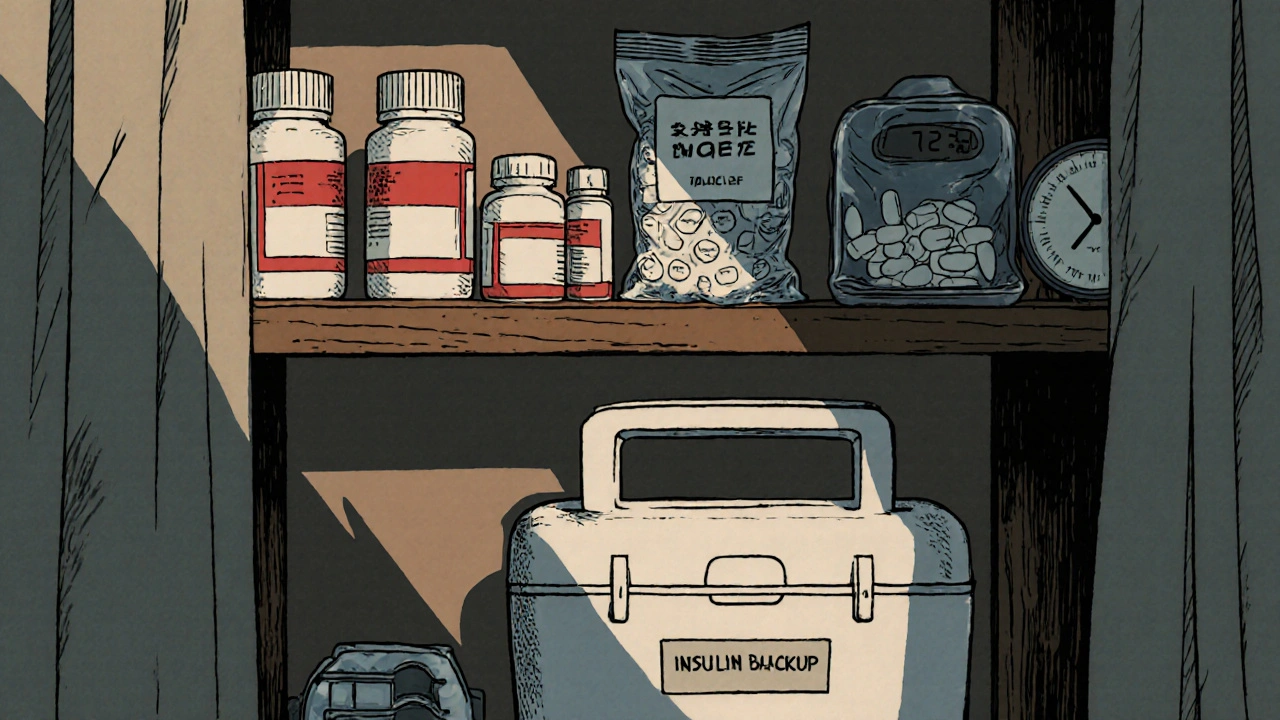
How to Store Emergency Kits to Maximize Medication Shelf Life
Learn how to store emergency medications properly to prevent spoilage and ensure they work when you need them most. Avoid common mistakes and use proven methods to extend shelf life during power outages and disasters.
DetailRelated Posts