
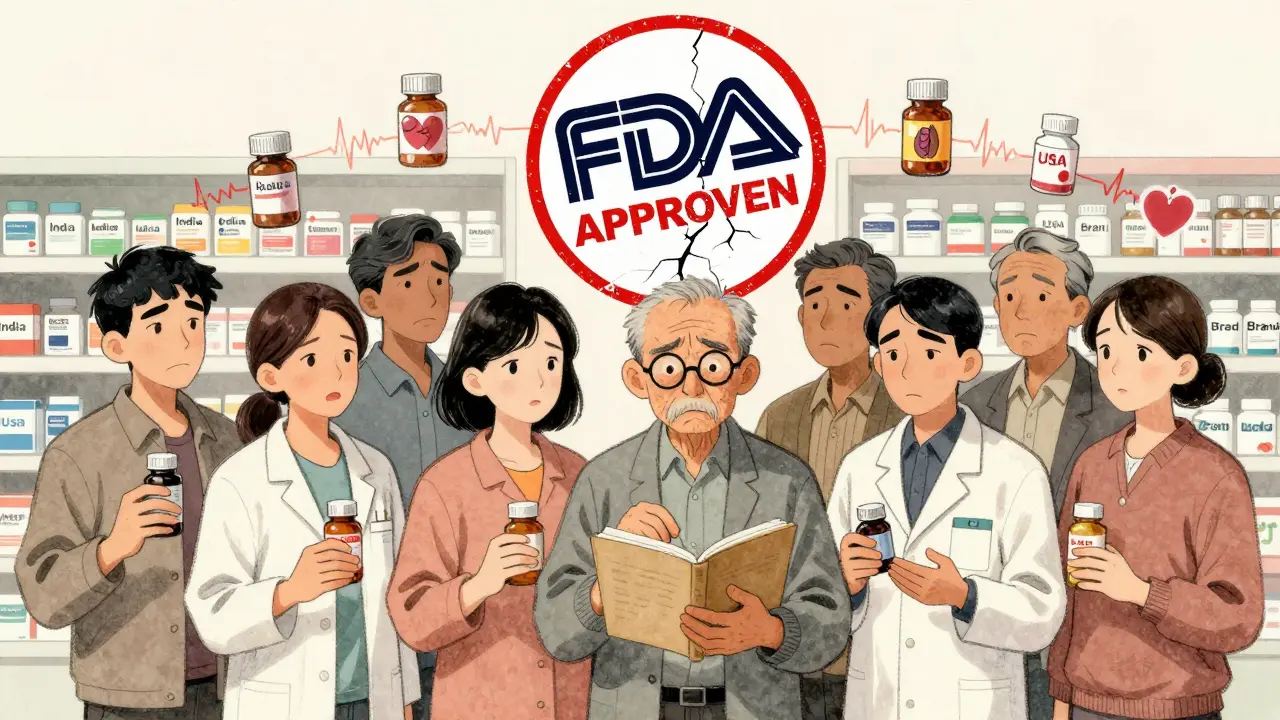
Switching from brand-name medications to generics can save you hundreds, even thousands, of dollars a year. But what happens after the first month? What about after a year? Or five? For millions of people managing chronic conditions like high blood pressure, diabetes, or epilepsy, the real question isn’t whether generics work at first-it’s whether they keep working over the long haul.
Generics Are Approved, But Not All Are Equal
The FDA says generics are bioequivalent to brand-name drugs. That means they deliver the same active ingredient at the same strength and should work the same way. The standard? The amount of drug absorbed into your bloodstream must fall between 80% and 125% of the brand-name version. Sounds precise, right? But here’s the catch: that range allows for a 45% difference in absorption. For most people, that’s fine. For others-especially those on drugs with a narrow therapeutic index-it can mean the difference between control and crisis. Narrow therapeutic index drugs are the ones where small changes in blood levels can cause serious problems. Think warfarin (blood thinner), levothyroxine (thyroid), or seizure medications like phenytoin. A 10% drop in absorption might mean your blood clots when it shouldn’t. A 10% rise might trigger seizures or toxicity. And because these drugs are taken daily for years, even tiny differences add up.What Happens When You Switch? Real Stories
A 2019 survey of 1,200 people on long-term meds found that 43% noticed their symptoms getting worse after switching to generics. One user on PatientsLikeMe, 'HeartWarrior42', switched from brand-name metoprolol to a generic version and over 18 months, his heart rhythm grew unstable. He ended up in the hospital twice with arrhythmias. When he switched back to the brand, his heart stabilized within weeks. His doctors couldn’t explain it-both versions met FDA bioequivalence standards. Then there’s 'MedSafetyAnalyst', a pharmacist with over a decade of experience who posted on Reddit: 'I’ve seen multiple patients with epilepsy, perfectly controlled for years on a generic, suddenly start having breakthrough seizures. They switch back to the original brand-and they’re fine again.' It’s not just about effectiveness. Pill appearance matters more than you think. A 2020 University of Pittsburgh study found that 61% of patients felt confused or anxious when their pill changed color, shape, or markings during a generic switch. That confusion led to 22% of them skipping doses or stopping altogether. If you don’t recognize your pill, you start to doubt it works. And doubt kills adherence.Manufacturing Matters-Where Your Drug Comes From
Not all generics are made the same. A 2021 study from Ohio State University found that generic drugs made in India had 27% higher rates of severe adverse events-including hospitalizations and deaths-compared to those made in the U.S. This wasn’t about the active ingredient. It was about manufacturing quality, impurities, and how consistently the drug was blended and coated. Even more concerning? A 2021 University of British Columbia study detected DNA-damaging contaminants in 37% of generic medications tested. These weren’t dangerous in the short term, but the researchers warned: 'We don’t know what happens after 7 to 10 years of daily exposure.' That’s exactly how long most people take statins, blood pressure meds, or antidepressants. The FDA approves these drugs based on short-term studies. But no one tracks what happens when you take the same generic pill every day for 15 years.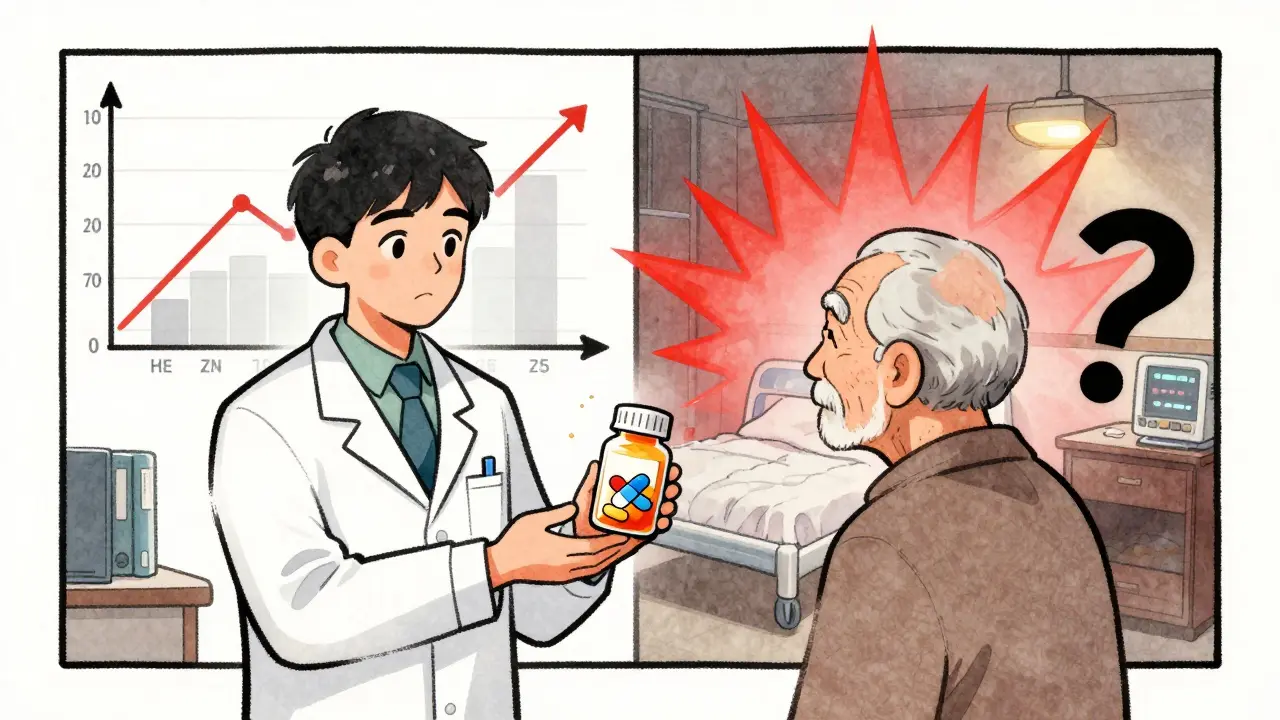
Cost Savings? Not Always
It’s easy to assume generics save money. And they do-at the pharmacy counter. But when you look at the full picture, the math gets messy. A 2015 review in PharmacoEconomics found that 64% of studies showed higher total healthcare costs after switching to generics. Why? Because when patients have side effects or their condition worsens, they end up in the ER, hospitalized, or needing more tests and specialist visits. One study showed that switching to a cheaper generic antihypertensive led to an 8-14% spike in adverse events in the first month-and those higher rates didn’t fade. More hospital visits. More doctor appointments. More lab work. The $5 savings per prescription vanished when you added up the rest. The only clear winner? Statins. A 2006 study found generic statins improved adherence by 77% versus 71% for brand-name versions. That led to an 8% drop in heart attacks and deaths. Why? Because statins are forgiving. A small variation in absorption doesn’t usually cause immediate harm. And the benefits of lowering cholesterol are long-term and measurable.How to Protect Your Health After Switching
If you’re on a chronic medication and your pharmacy switches you to a generic, here’s what to do:- Ask which manufacturer made your new pill. Write it down. If you get a different one next refill, ask why. Don’t let your pharmacy switch you back and forth between brands.
- Monitor your symptoms closely for the first 3 months. Keep a simple log: energy levels, sleep, mood, side effects, or changes in how you feel. If something feels off, don’t ignore it.
- Never let your doctor or pharmacist switch you more than once. The AHRQ recommends a single switch, followed by 3 months of stability. If you’re stable, stay there. Multiple switches increase adverse events by 40%.
- Ask for a prescription that says 'Dispense as Written' or 'Do Not Substitute.' This legally prevents your pharmacy from switching you without your doctor’s approval.
- Check your EHR. Ask your doctor if your pharmacy’s generic manufacturer is recorded in your electronic health record. Only 35% of U.S. systems do this. You should be able to see it.

What’s Changing-And What’s Not
The FDA is starting to catch up. In 2023, they began requiring 36 months of stability data for generics used in chronic conditions. Previously, most data covered only 24 months. That’s progress. But it’s still not clinical outcomes. It’s just chemical stability. In Europe, Germany and France have stricter rules. Germany blocks automatic substitution for epilepsy and blood thinner generics. France requires 24 months of safety data before a generic can be used for long-term conditions. Meanwhile, pharmacy benefit managers (PBMs)-the middlemen who control which drugs insurers cover-still push for the cheapest option. In 2023, 78% of PBMs started including clauses to keep the same generic manufacturer for chronic conditions. That’s a good sign. But it’s not universal.Bottom Line: Generics Are Not One-Size-Fits-All
For many people, generics are a lifeline. They make treatment affordable. For others, especially those on narrow therapeutic index drugs or with complex health histories, switching can be risky. The truth? Generics aren’t all the same. And your long-term health depends on more than just whether the active ingredient matches. It depends on consistency. On quality. On how your body responds over time. If you’re stable on your current medication-whether brand or generic-don’t switch unless you have to. If you’re switched, track your health. Speak up if something changes. And remember: your doctor’s job isn’t just to prescribe. It’s to help you stay healthy-not just for the next refill, but for the next decade.Are generics as safe as brand-name drugs over the long term?
For most people and most medications, yes. But not all generics are created equal. Studies show that for drugs with a narrow therapeutic index-like blood thinners, thyroid meds, or seizure drugs-switching between different generic manufacturers can lead to worse outcomes. Even if they meet FDA bioequivalence standards, small differences in how the drug is absorbed can build up over years and affect your health.
Why do some people feel worse after switching to generics?
There are a few reasons. First, the inactive ingredients (fillers, dyes, coatings) can differ between brands, and some people are sensitive to them. Second, if your pill changes color or shape, you may become confused or anxious and start missing doses. Third, some generics-especially those made overseas-have had issues with impurities or inconsistent manufacturing. These aren’t always caught in short-term tests but can affect long-term health.
Should I avoid generics altogether?
No. Generics have saved patients over $1.6 trillion since 2008 and are essential for access to care. For most people taking statins, blood pressure meds, or antidepressants, generics work just as well. But if you’re on a narrow therapeutic index drug, or if you notice changes in how you feel after switching, talk to your doctor. You may need to stick with one manufacturer or even the brand-name version.
Can my pharmacy switch my generic without telling me?
In most cases, yes-unless your doctor writes 'Dispense as Written' on the prescription. Pharmacy benefit managers often force switches to cut costs. That’s why it’s important to know which manufacturer made your pill and to ask if it changed at refill. If you’re on a chronic condition, ask your doctor to block automatic substitutions.
How do I know if my generic is from a reliable manufacturer?
You can’t always tell by the name on the bottle. But you can ask your pharmacist for the manufacturer’s name and look it up. U.S.-based manufacturers like Teva, Mylan, and Sandoz generally have better track records than some overseas producers. If you’re concerned, ask your doctor to prescribe a brand-name version or request a specific generic manufacturer. Keep a record of which one you’re on.
What should I do if I think my generic isn’t working?
Don’t stop taking it. Call your doctor. Keep a symptom journal for the past 2-4 weeks. Note any changes in energy, sleep, mood, or physical symptoms. Bring this to your appointment. Ask if switching back to the original brand or a different generic manufacturer might help. Many doctors will agree if you have clear evidence of a change after the switch.





McCarthy Halverson
January 10, 2026 AT 02:13Been on a generic BP med for 5 years. No issues. Stick with what works. If it ain't broke, don't fix it.
Paul Bear
January 10, 2026 AT 07:58Let’s be precise here: bioequivalence isn’t a suggestion-it’s a regulatory standard defined by 90% CI of AUC and Cmax within 80–125%. The 45% range is a misrepresentation; it’s the *difference between the upper and lower bounds*, not the allowable variance per formulation. The FDA’s threshold is statistically robust for population-level outcomes. Individual variability? Yes. Systemic failure? No. The anecdotal reports are confounded by adherence, placebo/nocebo, and uncontrolled comorbidities.
Also, the 2021 Ohio State study? It conflated supply chain logistics with manufacturing quality. The adverse event disparity was driven by distribution errors, not active pharmaceutical ingredient (API) potency. And the DNA-damaging contaminants? Those were trace-level nitrosamines, detected at parts-per-billion levels, well below the ICH Q3 threshold for concern. Long-term exposure? We’re talking theoretical risk, not clinical evidence.
Pharmacy benefit managers aren’t villains-they’re cost-containment engines that enable access for 30M+ Americans who’d otherwise skip doses. The 2015 PharmacoEconomics meta-analysis? It included studies where patients were switched *multiple times*, violating AHRQ guidelines. That’s not generics’ fault-it’s system mismanagement.
And yes, statins are the outlier because they’re forgiving. But that’s the point: most drugs are. The narrow-therapeutic-index cohort? < 5% of all chronic med users. Tailored solutions exist: prescriber flags, EHR alerts, and patient education. Not blanket fearmongering.
Christine Milne
January 10, 2026 AT 21:50India-made generics? Of course they’re dangerous. You think the FDA inspects every facility? Ha. They inspect less than 5% annually. And you think the U.S. is clean? Look at the 2020 FDA warning letters to Alabama and New Jersey facilities. But we’re not supposed to talk about that, are we? The narrative is ‘American good, foreign bad’-but the data doesn’t care about patriotism. It cares about contamination rates. And guess what? U.S.-made generics had just as many recalls in 2022 as Indian ones. The real issue? Lack of transparency. No one tells you who made your pill. That’s corporate greed, not foreign malice.
Michael Marchio
January 12, 2026 AT 10:56Look, I get it. You’re scared. You’ve been told generics are ‘just as good’ your whole life. But the truth? The system is rigged. You think your pharmacist cares if your thyroid med causes tremors? No. They care about the rebate from the PBM. You think the FDA really tests for long-term DNA damage? Not unless it kills someone in the first year. And don’t even get me started on how they approve generics based on 24-month stability data when people take these pills for 20 years. That’s not science. That’s corporate convenience dressed up as regulation.
And let’s talk about the real villains: the pharmacy chains. They switch you without telling you. You get a different pill, you don’t recognize it, you think you’re going crazy. And when you go to your doctor, they shrug and say ‘it’s the same drug.’ But it’s not. The fillers, the coating, the dissolution profile-those matter. Especially if you’re sensitive. I’ve seen patients lose their jobs because they couldn’t focus after a switch. No one connects the dots. But I do. And I’m tired of it.
So yes, I’m angry. Not because I don’t understand the science. I understand it too well. It’s the willful ignorance of the system that breaks me. You want to save money? Fine. But don’t do it on the backs of people with epilepsy. Don’t do it on the backs of people who’ve been stable for a decade. You don’t get to gamble with someone’s life because your insurance premium went up.
Jake Kelly
January 14, 2026 AT 00:44My mom switched to a generic for her blood thinner and had a mini-stroke. She’s fine now, but it took three months to get back to baseline. She’s back on the brand now. I wish we’d known to ask about the manufacturer. Don’t assume it’s safe. Ask. Document. Advocate.
Ashlee Montgomery
January 14, 2026 AT 11:45If we’re talking about long-term health, aren’t we also talking about the philosophy of medicine? We treat drugs like interchangeable parts, but the body isn’t a machine. It’s a system shaped by years of context-diet, stress, sleep, even the color of the pill. Maybe the real problem isn’t the generic. It’s that we’ve reduced human health to a cost-benefit spreadsheet. We optimize for efficiency, not embodiment. What does it mean to be stable if you’re constantly doubting your own body? The anxiety of the switch might be the most toxic ingredient of all.
neeraj maor
January 16, 2026 AT 10:54They’re hiding the truth. The FDA and Big Pharma are in bed together. Generics with DNA-damaging agents? That’s intentional. They want you dependent. They want you sick so you keep buying. And the ones made in India? They’re full of heavy metals. The U.S. government knows. They just don’t care because it’s cheaper. You think your EHR records the manufacturer? Of course not. That data is buried. They don’t want you to know. If you switch back to brand, they’ll deny coverage. That’s why you need to fight. Don’t just ask for ‘Dispense as Written’-demand a paper trail. Get your doctor to sign a letter. File a complaint with the FDA. They don’t want you to know how deep this goes.
Ritwik Bose
January 16, 2026 AT 19:33Thank you for this thoughtful post 🙏. I’m from India and work in pharma logistics-what you said about manufacturing variance is spot on. Quality control varies wildly between factories, even within the same company. I’ve seen batches with 15% variation in dissolution rates. It’s not malice-it’s systemic underinvestment. But I also see how generics save lives here. We need better oversight, not fear. Maybe a global database of generic manufacturers with batch-level transparency? That’s the real solution.
Jake Nunez
January 17, 2026 AT 03:11My uncle’s been on the same generic levothyroxine for 12 years. Same batch, same pharmacy. Never had an issue. But when they switched him to a different maker last year? He felt like a zombie for six weeks. Back to the original-he’s back to normal. So yeah, generics aren’t all the same. But they’re not all bad either. It’s about consistency, not cost. Just ask your doc to lock it in.