
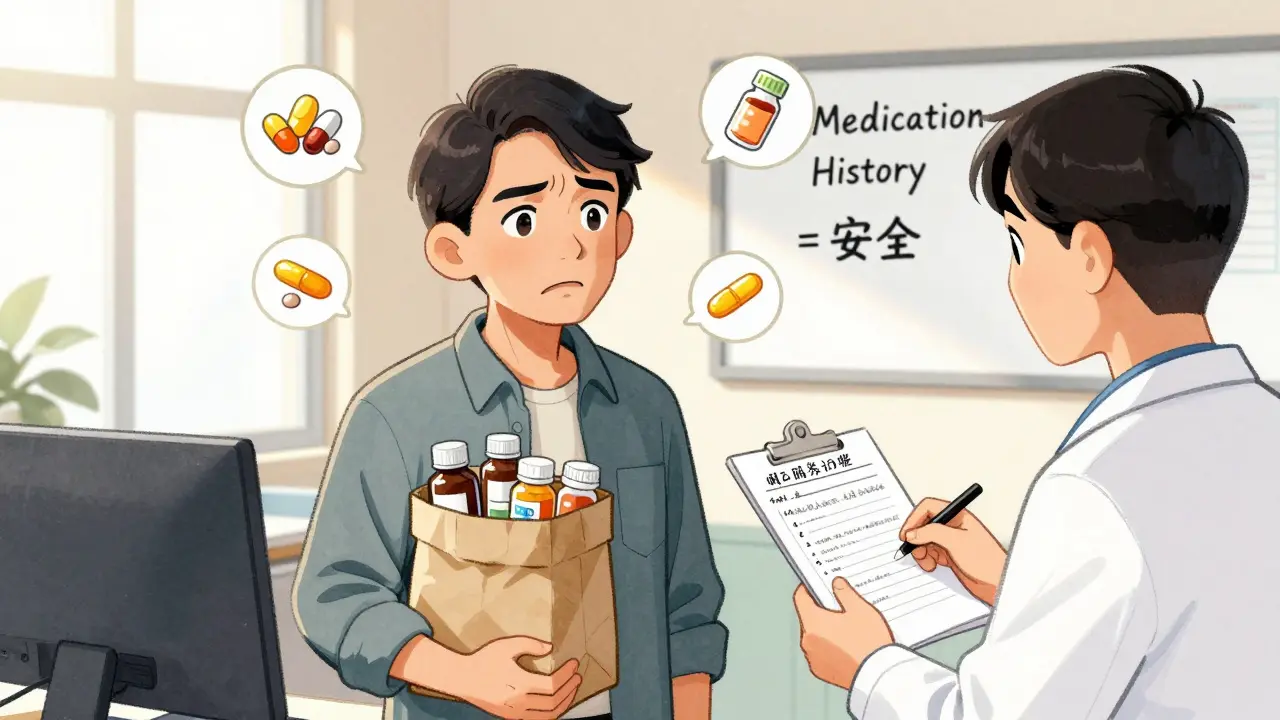
When you walk into a doctor’s office, ER, or hospital, one of the most important things you can do isn’t something the staff asks you to do-it’s something you need to remember on your own. That’s sharing your full medical history, especially your medications. It’s not just a formality. It’s the difference between getting the right treatment and ending up in the hospital because of a mistake that could’ve been avoided.
Every year, tens of thousands of people in the U.S. suffer harm or die from medication errors. Many of these happen because someone didn’t know what drugs the patient was really taking. Maybe they forgot a supplement. Maybe they didn’t think a cough syrup counted. Or maybe their pharmacy records didn’t sync with the hospital’s system. These aren’t rare mistakes. They’re common-and preventable.
Why Your Medication List Matters More Than You Think
Think of your medication list like a car’s maintenance record. If a mechanic doesn’t know what oil you’ve used, what filters you’ve changed, or if you’ve had engine trouble before, they can’t fix it properly. The same goes for your body. Doctors rely on your medication history to avoid dangerous interactions, adjust doses, and choose treatments that won’t clash with what you’re already taking.
Studies show that when patients bring their actual pills to appointments-what’s called the “brown bag method”-medication errors drop by 40%. Why? Because people often forget or misremember. You might say you take “that blue pill for blood pressure,” but it could be a generic version, a different strength, or even a completely different drug. Your memory isn’t reliable. Your pill bottle is.
Even more alarming: 67% of patients don’t tell their doctors about over-the-counter meds, vitamins, or herbal supplements. But those can be just as dangerous as prescription drugs. For example, taking blood thinners like warfarin with garlic supplements or St. John’s wort can cause dangerous bleeding. If your doctor doesn’t know you’re taking them, they might prescribe something that turns a minor issue into a life-threatening one.
What Exactly Should Be on Your List?
Your list isn’t just for prescriptions. It needs to include everything you take, regularly or occasionally:
- Prescription medications (name, dose, frequency)
- Over-the-counter drugs (pain relievers, antacids, sleep aids)
- Vitamins, minerals, and supplements (even “natural” ones)
- Herbal remedies and teas (like ginger for nausea or turmeric for inflammation)
- Topical creams or patches (like nicotine patches or pain relievers)
- Any recent changes (stopped a drug? Started a new one?)
Don’t leave out anything because you think it’s “not important.” That cough syrup with codeine? The melatonin you take every night? The fish oil your cousin says is “good for your heart”? All of it matters. Doctors need the full picture.
Use a simple template: write down the drug name, dosage, how often you take it, and why. For example:
- Atorvastatin 20 mg - once daily - for high cholesterol
- Acetaminophen 500 mg - as needed for headache
- Omega-3 fish oil 1000 mg - twice daily - for joint pain
Keep this list updated after every doctor’s visit, pharmacy pickup, or change in your routine. Don’t wait until you’re sick to update it.
How to Share It Effectively
Bringing your pills to the appointment is the gold standard. But if that’s not possible, here’s what works:
- Use your phone: Take a photo of all your pill bottles. That’s easier than writing everything down.
- Use a free app: Apps like MyTherapy or Medisafe let you log meds, set reminders, and generate printable lists.
- Ask your pharmacy: Many pharmacies now offer printed medication lists. Request one after each refill.
- Check your portal: Most hospitals and insurers let you view your medication list online. Print it out and bring it with you.
When you’re in the room, say this: “Here’s everything I’m taking. I’ve updated it this week. Can we go through it together?”
Don’t assume the doctor already knows. Even if you’ve been seeing them for years, things change. A new prescription from a specialist? A painkiller you picked up last week? That’s new info. Tell them.
What Happens When You Don’t Share
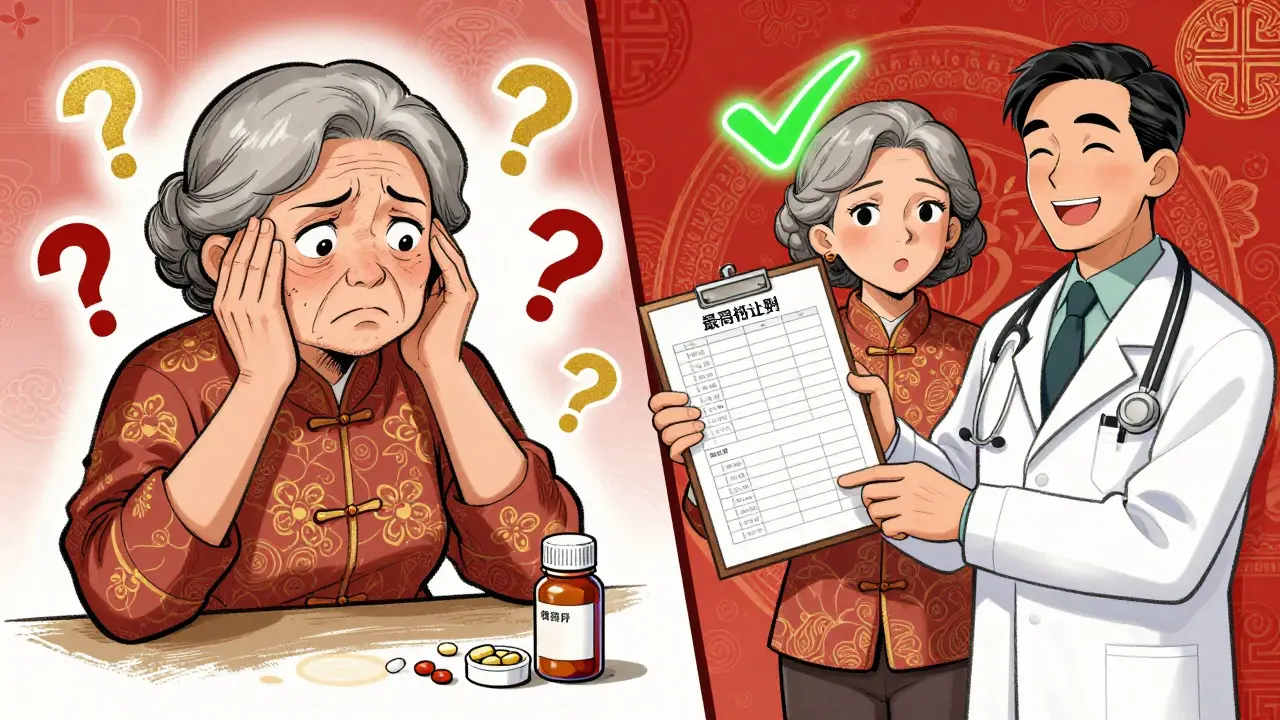
One patient, a 72-year-old man in Melbourne, was admitted for chest pain. He said he took “a few pills for his heart.” He didn’t mention the daily aspirin, the ibuprofen for arthritis, or the ginkgo biloba he took for memory. The hospital prescribed a blood thinner. Within 48 hours, he had internal bleeding. Turns out, ginkgo and aspirin together thin the blood too much. He spent a week in ICU.
That’s not an outlier. In 2023, a study showed that 52% of medication discrepancies at hospital admission were due to patients not reporting what they were taking. And 20% of those discrepancies caused harm-ranging from dizziness and nausea to strokes and organ failure.
High-alert medications like insulin, blood thinners, and sedatives are especially risky. A single mistake with these can kill. That’s why hospitals now use electronic systems to cross-check your list against national databases. But those systems only work if your list is accurate to begin with.
How Technology Helps-And Where It Falls Short
Hospitals and pharmacies now use electronic systems to pull your medication history from pharmacies, insurers, and clinics. In the U.S., services like Surescripts deliver over 3 billion medication records a year. That sounds impressive, right?
But here’s the catch: those systems miss about 15-20% of medications. Why? Cash-pay prescriptions. Medications bought overseas. Supplements bought online. Pills you got from a friend. Those don’t show up in any database.
Even when systems do pull data, they’re not perfect. One study found that pharmacy claims alone only got the list right 61% of the time. That’s why patient input is still essential. No algorithm can replace a patient who says, “Wait-I stopped that drug two months ago.”
Also, doctors are overwhelmed. Alert fatigue is real. If a system flags 10 potential interactions every time a prescription is written, and most are false alarms, clinicians start ignoring them. That’s why your role as the person who knows your body best is more important than ever.

What You Can Do Today
You don’t need to wait for your next appointment. Start now:
- Grab every pill bottle, box, or blister pack you have at home.
- Write down each one, including dose and frequency.
- Include anything you take occasionally-even if it’s just once a week.
- Take a photo of the list and save it on your phone.
- Update it after every doctor visit, pharmacy refill, or change.
Keep a printed copy in your wallet or purse. Give one to a trusted family member. If you’re ever rushed to the hospital, someone else can hand it to the staff.
And if you’re helping an older parent or relative, don’t assume they remember everything. Help them make the list. Go with them to appointments. Ask the doctor: “Can we review all the meds together?”
When Things Go Wrong-What to Do
Even with the best efforts, mistakes happen. If you feel something’s off after starting a new drug-dizziness, nausea, rash, confusion-don’t wait. Call your doctor or pharmacist. Say: “I started this new medication and now I feel X. Could this be a side effect or interaction?”
If you’re told, “That’s normal,” but you still feel wrong, ask: “Is this listed as a common side effect? Can you check if it interacts with anything else I take?”
And if you’re ever unsure about a drug’s name, dose, or purpose-ask. Don’t be shy. It’s your health. You have the right to understand every pill you take.
The Bigger Picture
Medication safety isn’t just about doctors and pharmacies. It’s about communication. It’s about patients speaking up. It’s about systems working together. And it’s about recognizing that no tool-not even the most advanced EHR-is smarter than the person who actually takes the medicine.
By sharing your full medical history, you’re not just helping your doctor. You’re protecting yourself. You’re reducing your risk of harm. You’re making sure the next pill you take is the right one-for you.
It’s simple. But it’s powerful. And it’s entirely in your control.


Tony Du bled
December 21, 2025 AT 18:18Herman Rousseau
December 22, 2025 AT 13:49Ajay Brahmandam
December 23, 2025 AT 00:37Kathryn Weymouth
December 24, 2025 AT 12:22Art Van Gelder
December 24, 2025 AT 13:26Kiranjit Kaur
December 25, 2025 AT 22:30jenny guachamboza
December 27, 2025 AT 05:39Vikrant Sura
December 27, 2025 AT 22:59Jamison Kissh
December 29, 2025 AT 07:29Sam Black
December 29, 2025 AT 17:10Johnnie R. Bailey
December 30, 2025 AT 19:14Nader Bsyouni
December 31, 2025 AT 10:48Sai Keerthan Reddy Proddatoori
January 2, 2026 AT 08:40Cara Hritz
January 3, 2026 AT 05:27Julie Chavassieux
January 3, 2026 AT 18:32